Potobelo

OEM

OEM stovetop kettle for a Canadian heritage kitchenware brand

A 2-quart 18/10 kettle with a folding handle and a spout strainer, built to the brand’s own drawing and finished in the signature colour they specify — on our lines since 2008.

  • OEM
  • 2 qt
  • 18/10 stainless
  • Since 2008
The matte red 2-quart stovetop kettle, whole, with its folding two-position handle raised

The brief

Their drawing, their colour, our lines — since 2008

An established kitchenware brand with a lifetime warranty behind it does its own design work at home and hands the factory a finished drawing. The job is not to interpret it but to reproduce it, run after run, for years: a folding hinge that has to survive the warranty, a signature colour that has to look the same on a reorder a decade later, and a base that works on everything from gas to induction. The brand publishes the kettle as designed in Canada; the manufacturing has been ours since 2008.

The product

What the brand sells today

Published specification of the finished product
Capacity2 quarts
Body18/10 stainless steel, seamless construction
BaseEncapsulated, for even heating
HandleFolds partly to fill, fully to store; two grip positions
SpoutBuilt-in strainer — brews large-leaf tea in the kettle
WhistleYes
CooktopsElectric, gas, ceramic, halogen and induction

Specification as published on the brand’s own product page. “Designed in Canada” is the brand’s own stated wording.

What it takes to build

Why this product is harder than it looks

A folding handle is a hinge that must survive the warranty

A handle with two grip positions that folds to store is a moving joint on a product carrying a limited lifetime warranty. The hinge, not the kettle, is what the warranty gets tested on — it is a tolerance and fatigue problem that has to be settled at tooling.

A signature colourway has to repeat, order after order

When the colour is the product’s name on the shelf, drift between production runs is a returns problem. Finishing runs in-house on our own lines, and bulk is inspected against the approved reference sample so a reorder matches the first run.

Five cooktop types means one base does all of it

Electric, gas, ceramic, halogen and induction from a single encapsulated base is a bonding spec, not a marketing line. Composite base technology is one of the group’s own core processes and sits inside its 300+ patents.

A seamless body leaves nowhere to correct a mistake

Seamless construction is chosen because there is no join to leak, discolour or fail. The trade is that a body drawn in one piece cannot be corrected by welding a section in: a wall that thins in the wrong place is scrap, not rework. That pushes the quality decision back into forming and tool condition, where it can only be held by monitoring, not by inspection at the end.

A strainer in the spout changes the pour

Brewing large-leaf tea in the kettle rather than in a pot means the strainer sits in the flow path. Too coarse and it does not hold the leaf; too fine and it chokes the pour and the whistle with it. It is one of the few features where the functional test is subjective, which makes an approved reference sample more important, not less.

In detail

  • Macro of the matte painted finish on the kettle body

    The signature colour up close. Matching it on a reorder a decade later is a finishing-line problem, which is why finishing runs in-house against an approved reference sample.

  • Close-up of the grey moulded grip on the folding stainless handle

    The grip rides on the folding bail. The hinge underneath it, not the kettle, is what the lifetime warranty actually gets tested on.

  • Close-up of the dark whistle cap on the spout of the matte red kettle, with the riveted handle bracket behind it

    The whistle cap has to seal on the spout and still lift to pour. Behind it the handle bracket is riveted to an already-painted body, so the finish has to survive assembly as well as the years after it.

The engagement

What this one asked of us

The folding two-position handle is where this programme is won or lost, because the brand sells the kettle with a limited lifetime warranty and a warranty is redeemed on the hinge, not on the body.

  1. The hinge is a fatigue problem, and fatigue is settled at tooling

    The handle has to fold partly to fill, fully to store, and carry the weight of a full kettle through years of opening and closing without loosening, rattling or failing. That is a tolerance question before it is a design one; once the mould exists it is too late to adjust.

  2. A seamless body cannot be corrected

    No seam means nothing to leak or discolour, but it also means nothing can be reworked — a wall drawn thin in the wrong place is scrap. Quality control moves forward into forming and tool condition, where it is held by monitoring rather than by inspection at the end.

  3. Five cooktops off one base

    Electric, gas, ceramic, halogen and induction from a single encapsulated base is a bonding specification rather than a marketing line, and it has to be designed in before tooling rather than added later.

Kettle bodies being spun to shape on the forming line
Bodies formed on our own line, where a seamless shell is won or lost.

How the programme ran

Partnership
Since 2008, running
Production
Repeat volume orders for over fifteen years
Colour
Brand supplies the code and a physical reference; we match it on the line

From our own range

Kettles from our own range you can start from

This kettle is built to the brand’s drawing and is not ours to sell. Where a buyer does not have drawings, starting from a structure we already tool is faster and avoids mould development altogether. Body, finish, colour, handle, packaging and accessories are all customisable from there.

See all stainless steel kettles

Common questions

Building a product like this

We have drawings and a colour reference already. What do you need to quote?

The drawing, the destination markets and an indication of annual volume are enough to start. Colour is best sent as a code and a physical reference together, as this programme does: a code alone leaves the finish open to interpretation, and a physical sample settles it. We come back with a manufacturability review before quoting tooling, so anything that would be expensive to make is raised at the start.

Can you hold a signature colour across reorders placed years apart?

That is what the reference sample exists for. Finishing runs in-house on our own lines, and bulk output is inspected against the approved reference rather than against a spec sheet, so a reorder is matched to the physical original instead of re-interpreted. Where a colour is the product’s name on the shelf, drift between runs is a returns problem, so it is treated as a quality characteristic rather than a cosmetic one.

Does a folding or multi-position handle need its own tooling?

Yes, and it is usually the part of the kettle that decides the warranty. A handle that folds is a moving joint carrying the full weight of a filled kettle, so the hinge is a tolerance and fatigue problem to be settled at tooling rather than adjusted afterwards. Moulds and fixtures are cut in our own toolroom, which is what keeps that part in-house through revisions.

Sourcing questions that apply to any programme — minimum order quantity, lead times, and whether production matches the approved sample — are answered on the OEM page and in our sourcing FAQ.

The route

This was built on our OEM route

Same process, whatever you bring: consult, design, sample in 7–10 days, your approval, then production built to match the sample.

How OEM works →

Bring us the product you need built

A drawing, a spec, a reference sample or nothing but a category and a price band. Tell us your market and volumes and we reply with a plan, MOQ and next steps, usually within one business day.

Or reach sales directly: potobelo@zoombo.co · +86-663-3286181

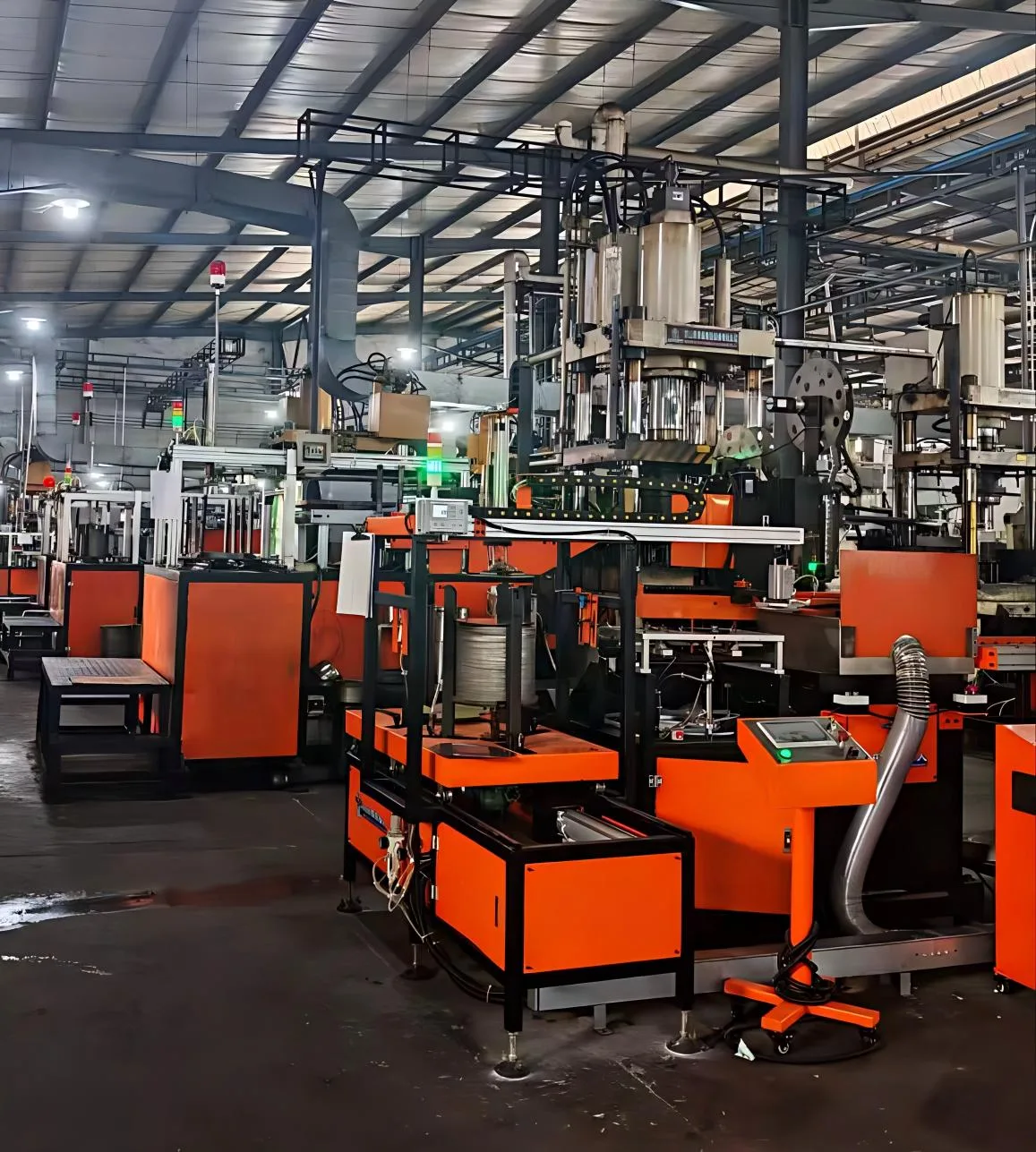
Stainless steel cookware production at the Potobelo / Zoombo factory