Potobelo

OEM

OEM stovetop kettle for a US direct-to-consumer cookware brand

A 1.9-litre brushed stainless kettle with a temperature gauge set into the lid knob, made to the brand’s spec and sold under their name.

  • OEM
  • 2 qt / 1.9 L
  • Gauge-in-knob lid
  • All cooktops
Brushed stainless steel stovetop kettle with a temperature gauge set into the lid knob and a pivoting bow handle

The brief

A premium-feeling kettle that still clears direct-to-consumer margin

A direct-to-consumer brand sells on brand feel and photography, but has to hit a landed cost that leaves room for the margin its model depends on. The kettle carries a built-in temperature gauge, a stay-cool handle with its own sleeve, and a brushed finish clean enough to be the hero of a product page — none of which can push the unit cost past the price the brand can hold.

The product

What the brand sells today

Published specification of the finished product
Capacity2 quarts / 1.9 litres
BodyStainless steel, brushed finish
LidBuilt-in temperature gauge in the knob
HandleStay-cool handle, supplied with a sleeve
WhistleYes
CooktopsGas, electric and induction
Published originMade in China

Specification as published on the brand’s own product page. Origin is the brand’s own stated wording.

What it takes to build

Why this product is harder than it looks

A gauge in the knob is an assembly, not a turned part

Putting a temperature gauge where the knob goes turns a single machined component into a sealed, heat-exposed sub-assembly that has to stay readable and stay tight through thousands of boil cycles. It is a tooling and assembly problem before it is a design one.

DTC photography leaves finish nowhere to hide

A brand whose product page is one large photograph is buying finish consistency as much as function. Polishing and brushing run on our own lines, and bulk output is checked against the approved reference sample — the control that keeps unit 5,000 looking like the sample.

Induction compatibility is a base-bonding problem

Working on induction as well as gas and electric means the base has to be bonded to stay flat and stay attached under repeated thermal cycling. Composite impact-bottom technology is one of the group’s own core processes, covered in its 300+ patents.

A whistle is a tolerance, not a component

Whether a kettle whistles cleanly depends on the spout aperture and the fit of the whistle cap, both of which move within the tolerance band of the forming tools. A kettle that whistles on the sample and rasps on unit 4,000 has not failed a part check; it has drifted a dimension. This is why the whistle is a forming and inspection question rather than a bought-in part.

Landed cost is decided at the tool, not at the invoice

A direct-to-consumer margin is set long before anyone quotes a price, by how many operations the geometry demands: every extra draw, weld, seal and polishing pass is permanent cost designed into the tool. The place to take cost out is the manufacturability review, before steel is cut. Once the tool exists, the cost is fixed for the life of the programme.

In detail

  • Close-up of the lid knob with a dual-scale temperature gauge set into it

    The gauge occupies the knob position, which makes the lid a sealed sub-assembly rather than a turned part.

  • Stainless bow handle raised above the kettle lid and its gauge knob

    The bow handle takes a full kettle through one pivot each side, so pivot position and grip angle are settled at tooling.

  • Interior of the kettle body showing the perforated screen over the spout opening

    A perforated screen covers the spout opening from inside. It sits in the flow path, so its aperture is a forming tolerance.

  • Underside of the kettle showing the concentric stepped base

    The base is drawn in concentric steps and bonded to stay flat on gas, electric and induction alike.

The engagement

What this one asked of us

Putting a temperature gauge where the knob goes turns a solid turned part into a sealed assembly that has to survive steam and thermal cycling for the life of the kettle. Three requirements pull against each other.

  1. The dial cannot fog

    One ingress of steam ends it. Sealing it tighter to prevent that makes assembly harder; sealing it looser brings the fog back.

  2. The reading cannot drift

    The lid is the most thermally violent place on the kettle, and the instrument sits in it.

  3. The lid still has to hold pressure once it has been drilled

    Or the whistle weakens. The answer was settled in the seal between knob and lid rather than by sourcing a better instrument.

The bow handle is its own problem: a full kettle carries its weight forward, so the pivot position and grip angle decide whether it pours steadily, and that can only be judged on physical samples.

Hand-finishing a stainless steel body on the polishing line
Polishing and brushing run in-house, on our own lines.

How the programme ran

Partnership
Since 2024, running
Production
Repeat volume orders since launch

From our own range

Stovetop kettles we already tool and ship

This programme is built to one brand’s drawing, so it is not something you can order. Our own kettle range is, and it is made on the same lines, with the same composite base and the same finishing. Any of it can be taken as a starting structure and customised, which is usually a faster and cheaper route than tooling from zero.

See all stainless steel kettles

Common questions

Building a product like this

Can you build a lid with an instrument set into the knob?

Yes. A gauge, thermometer or similar instrument in the knob position turns the lid into a sealed sub-assembly rather than a turned part, so it is treated as its own tooling and assembly problem: the seal has to hold, the face has to stay readable, and the fit has to stay tight through repeated boil cycles. Bring the instrument you want to use, or the performance you need from it, and we work back to a lid that carries it.

Our kettle has to work on induction as well as gas. Does that change the tooling?

It changes the base rather than the body. All-cooktop capability comes from an impact-bonded composite base that stays flat and stays attached under thermal cycling, which is one of the group’s own core processes and sits inside its 300+ patents. It is designed in from the start rather than added later, so tell us your destination cooktops before tooling, not after.

Can you hold a brushed finish consistent across a full production run?

Polishing and brushing run in-house on our own lines rather than at a subcontractor, and bulk output is inspected against the approved reference sample before it ships. That is the control that matters for a brand whose product page is one large photograph: the requirement is not that unit one looks good, it is that unit five thousand looks like unit one.

Sourcing questions that apply to any programme — minimum order quantity, lead times, and whether production matches the approved sample — are answered on the OEM page and in our sourcing FAQ.

The route

This was built on our OEM route

Same process, whatever you bring: consult, design, sample in 7–10 days, your approval, then production built to match the sample.

How OEM works →

Bring us the product you need built

A drawing, a spec, a reference sample or nothing but a category and a price band. Tell us your market and volumes and we reply with a plan, MOQ and next steps, usually within one business day.

Or reach sales directly: potobelo@zoombo.co · +86-663-3286181

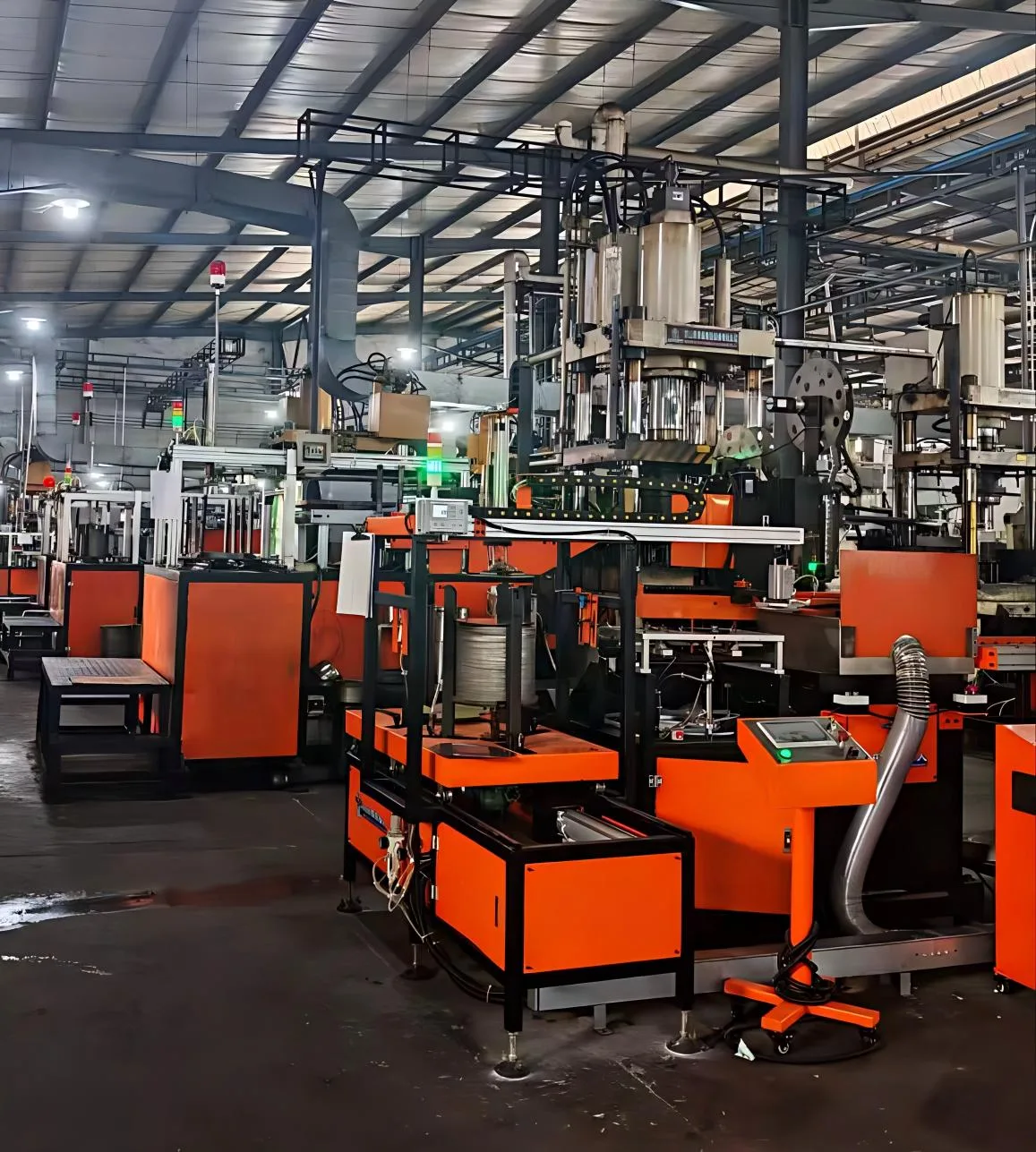
Stainless steel cookware production at the Potobelo / Zoombo factory