Potobelo

OEM

OEM chai brewer for a design-led speciality tea startup

A 600 ml stainless brewer with a ceramic non-stick lining, an integrated strainer and a rim engineered to stop boil-over — a startup’s patented design, manufactured to it.

  • OEM
  • 600 ml
  • 304 stainless
  • Ceramic non-stick lining
Stainless steel chai brewer with a shaped anti-boil-over rim, black ceramic non-stick lining and an integrated strainer

The brief

Someone else’s patent, reproduced exactly

This is OEM in its purest form: the brand arrived with a finished, patented design worked out over three years with an outside design consultancy, and needed a factory that could reproduce it rather than reinterpret it. The geometry is the product — a shaped rim that stops chai boiling over and an integrated strainer that has to seat correctly every time. There is no room to “improve” it during tooling.

The product

What the brand sells today

Published specification of the finished product
Capacity600 ml / 20 oz — brews 1–3 cups
Body304 stainless steel
LiningCeramic non-stick, PFAS-free
StrainerIntegrated; silicone or stainless options
RimShaped to prevent boil-over
Pour360°
CooktopsGas, electric and induction

Specification as published on the brand’s own product page.

What it takes to build

Why this product is harder than it looks

A shaped rim has to be tooled, not trimmed

A rim whose exact profile is the functional claim of the product has to come off the tool right — it cannot be corrected downstream. Our moulds and fixtures are cut in our own toolroom, so a geometry this specific stays in-house through revision.

Manufacturability review before the tool is cut

When a design arrives finished and patented, the place to find problems is before tooling. Our engineers review draft angles, wall thickness, base bonding and weld points against the drawing first, so the sample is right the first time rather than negotiated afterwards.

A lining is a compliance question as much as a coating

A PFAS-free ceramic lining on a food-contact surface has to satisfy the destination market, not just the brief. FDA, LFGB and CE testing is coordinated per market and category, on top of the group’s company-wide ISO 9001 / 14001 and BSCI certification.

An integrated strainer is a fit between two parts

A strainer that is part of the product rather than an accessory has to seat the same way on every unit, which makes it a tolerance stack between two components instead of a single part check. Loose seating does not show up as a broken product, it shows up as a review complaining that the tea gets through, which is worse for a young brand than an outright fault.

A patent narrows what a manufacturability review is allowed to suggest

A normal review is free to propose changes that make a part easier to draw, weld or polish. When the geometry is itself the patent claim, most of those options are closed: the job becomes finding a manufacturable route to the shape as granted, not a better shape. That is a harder review, and it has to happen before tooling rather than after the first sample disappoints.

In detail

  • The brewer separated into three parts: strainer basket, lined funnel and body

    Three parts that have to behave as one. The seating between them is a tolerance stack, not a single part check.

  • Close-up of the funnel interior showing the black ceramic non-stick lining and polished inner ring

    The ceramic non-stick lining covers a food-contact surface that takes direct burner heat, not just hot liquid.

  • Overhead view down through the funnel to the integrated strainer at the base

    Looking down to the integrated strainer, which has to seat identically on every unit for the pour to behave.

  • Underside of the brewer showing cooktop compatibility marks and a production code

    The base carries the cooktop marking and our own production code — the unit is identifiable as ours without the brand on it.

The engagement

What this one asked of us

This brewer goes on a flame, not into a base, so the ceramic lining is not holding hot water: it is taking direct burner heat at the bottom, repeatedly. Three things had to hold at once.

  1. The coating fails at the interface, not on the surface

    Stainless and ceramic do not expand at the same rate, and after a few hundred cycles the loss of adhesion is always at the join — flaking, discolouration, local lifting. Surviving that is decided by substrate preparation and the firing curve rather than by the coating itself: the same material gives very different life depending on what happened before it was sprayed.

  2. The shaped rim has to come off the tool correct

    Its whole function is to stop chai boiling over, and the profile is the patent claim. A rim corrected by trimming is no longer that profile, and the function goes with it.

  3. The strainer has to seat identically on every unit

    It is part of the product rather than an accessory. Loose seating never fails a part check; it becomes a review saying the tea gets through, which for a young brand is worse than an outright fault.

A stainless steel body being formed on the tool
Forming, in our own plant — the step a profile cannot be corrected after.

How the programme ran

Partnership
Since 2024, running
Production
Repeat volume orders since launch

From our own range

Comparable products from our own range

This brewer is built to a patented design we do not own, so it is not available to order. If you are looking for a stovetop brewing or infusing vessel to start from rather than tool from zero, these are ours, and they can be customised on shape, finish, fittings and packaging.

See all stainless steel kettles

Common questions

Building a product like this

We hold a patent on our design. Will you ask us to change it?

Only where the shape as drawn cannot be made, and then we come back with the constraint rather than a redesign. Our engineers review draft angles, wall thickness, base bonding and weld points against your drawing before any tool is cut, so problems surface while they are still cheap. Where the geometry is the claim, the work is finding a manufacturable route to that exact shape.

Can you supply an integrated strainer in more than one material?

Yes. Strainers are one of the parts most often specified differently between markets and price points, and silicone and stainless versions of the same design are a normal split. Fittings, handles, knobs and accessories are all customisable alongside the body, which is usually where a brand differentiates two versions of one product.

Can you produce a PFAS-free food-contact lining for the US and EU?

Food-contact surfaces are specified against the destination market, and testing is coordinated per market and category: FDA for North America, LFGB and CE for the EU. Be explicit about where the product will be sold before tooling, because the lining specification and the test route follow from the market, not the other way round.

Sourcing questions that apply to any programme — minimum order quantity, lead times, and whether production matches the approved sample — are answered on the OEM page and in our sourcing FAQ.

The route

This was built on our OEM route

Same process, whatever you bring: consult, design, sample in 7–10 days, your approval, then production built to match the sample.

How OEM works →

Bring us the product you need built

A drawing, a spec, a reference sample or nothing but a category and a price band. Tell us your market and volumes and we reply with a plan, MOQ and next steps, usually within one business day.

Or reach sales directly: potobelo@zoombo.co · +86-663-3286181

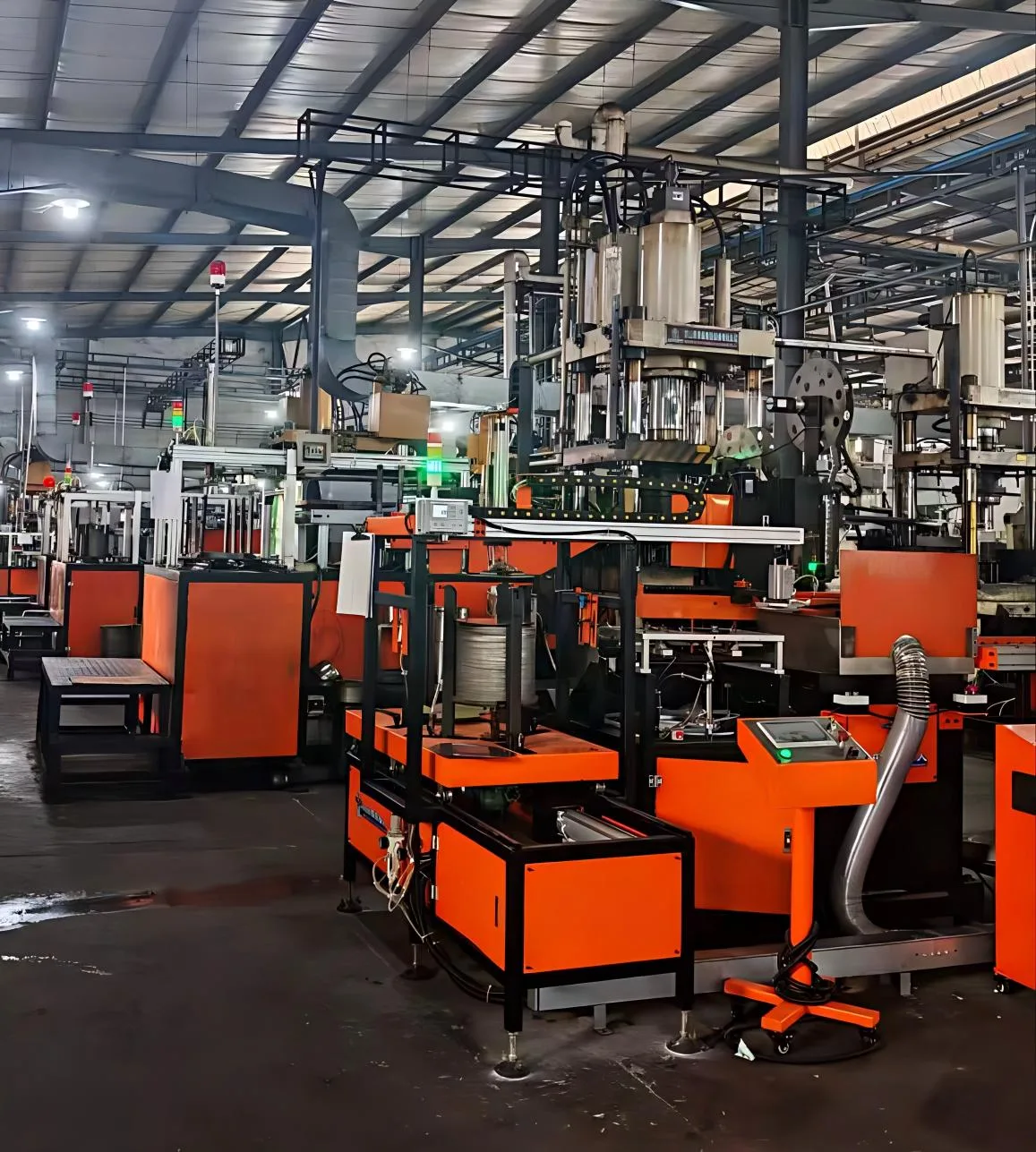
Stainless steel cookware production at the Potobelo / Zoombo factory