
201 vs 304 Stainless Steel for Cookware: A Buyer's Guide
Every cookware quotation from China names a grade — usually 201 or 304. This is the version we give buyers across our meeting table: what each grade costs, what the difference buys in a kitchen, and how to check that the steel in the container is the steel on the invoice.
 Potobelo Editorial Team9 min read
What "201 vs 304" means on a cookware spec sheet
Every cookware quotation from a Chinese factory names a grade, and for most buyers it comes down to two: 201 and 304. They look identical in a finished pot — both are bright, both polish to a mirror finish, both are called "stainless steel." The difference is inside the metal, and it shows up in the price line, in the dishwasher, and in the fine print of a food-safety audit.
The three-digit numbers are AISI designations, and the two grades belong to the same austenitic family but with different chemistry (composition bands below are the standard AISI ranges, as referenced in this stainless steel grades overview):
201 | 304 | |
|---|---|---|
Chromium | 16–18% | 18–20% |
Nickel | 3.5–5.5% | 8–10.5% |
Manganese | 5.5–7.5% | up to 2% |
Nickel substitute | manganese + nitrogen | — |
Family | austenitic | austenitic |
Typical cookware role | lids, outer shells, value lines | cooking surfaces, interiors |
Relative cost | lower | higher |
304 is the default cooking surface: enough chromium to keep the protective oxide film intact through tomato sauce, brine and years of scouring, and enough nickel to draw deeply into a one-piece pot body. 201 substitutes manganese and nitrogen for part of the nickel, which is exactly why it costs less — and why it is measurably less resistant to pitting. For a full walk-through of all the grades you will be quoted, see how stainless steel cookware grades are defined.
This article is not "which grade is better." It is the decision a buyer actually faces: what the price gap buys, where 201 genuinely belongs, and how to make sure the metal in the container is the metal on the invoice.
Why 201 costs less: the nickel economics
The price gap between 201 and 304 is not a factory margin trick — it is chemistry. Nickel is the expensive ingredient in stainless steel, and 304 carries roughly twice as much of it as 201 (8–10.5% against 3.5–5.5%). When nickel prices move, the spread between the two grades moves with it, which is why any article quoting a fixed dollar figure for "201 vs 304" is already out of date. The LME nickel contract is the reference most mills price against — and how nickel pricing shows up in cookware quotations is one of the first things a buyer should understand before comparing quotes.
To translate the spread into a buying decision, run it through your own numbers:
- Per ton. Ask your supplier for the current per-ton difference between 201 and 304 coil in your gauge. This is public-ish information — any mill will quote it — and it is the number everything else follows from.
- Per piece. Divide by the pieces you get from a ton at your pot's size and gauge. On a 2 mm base of a large casserole, the difference is meaningful; on a thin lid, it is small.
- Per container. Multiply by your order volume. A 20-foot container is where a few cents per piece becomes a real line item.
That is the honest case for 201: at volume, the savings are real and they are yours to keep. The question is what you give up for them, which is a question about the cooking environment, not the price sheet.
How the two grades behave in a kitchen
Stainless steel resists corrosion because of a passive chromium oxide film on the surface. The film is what fights rust — and it survives on 304 in environments where it breaks down on 201.
Cooking condition | 201 | 304 |
|---|---|---|
Tomato sauce, lemon, vinegar (acid) | film weakens; pitting after repeated use | film holds |
Salted water, brine, long simmers | tea-staining and pitting within months | holds for years |
Dishwasher cycles | detergent + heat accelerates corrosion | survives routine cycles |
Dry cooking, gentle use | fine | fine |
Deep-drawn one-piece bodies | work-hardens fast; risk of cracking in deep draws | draws deeper before hardening |
The first failure mode of 201 in a kitchen is not dramatic — it is pin-point pitting and tea-staining inside a pot that the buyer resells to a consumer who then returns it. The second is work hardening: 201 hardens faster under deep drawing, so the body of a deep pot is more prone to splitting during forming. A factory can work around it with process adjustments, but the steel itself gives you less margin.
One nuance buyers often misread: a magnet test cannot tell 201 from 304. Both start non-magnetic as austenitic grades, and both become weakly magnetic where they are cold-worked or deep-drawn — 201 more so than 304. So "the magnet stuck to it, therefore it is not 304" is wrong; the magnet can only flag 430 and other ferritic grades, which are magnetic in the sheet. More on verification below.
Where 201 is the right call
201 is a legitimate ASTM grade, and in the right position it is the correct engineering choice, not a compromise.
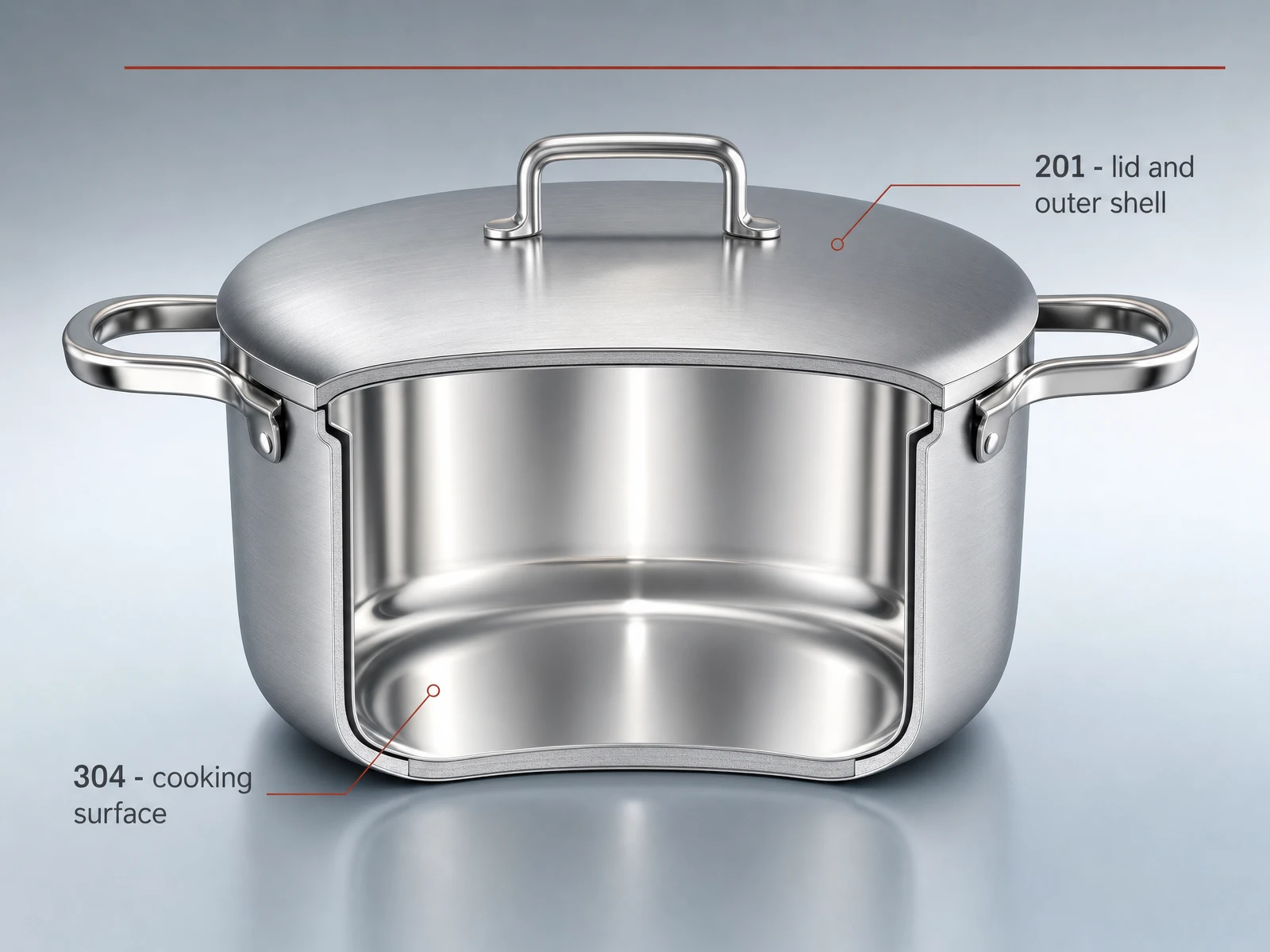
- Lids and outer shells. A lid does not sit in tomato sauce. The outer shell of a pot meets steam, not brine. Corrosion loads are light, so the nickel saving is nearly free.
- Dry-cooking markets. Where the product is used for boiling water or short cooking — think kettle bodies sold into markets that do not leave pots soaking — 201's limits rarely surface.
- Value lines and promotional programs. A price-point SKU that must hit a retail ceiling benefits from every cent of material saving.
- Non-contact components. Handles, trims, and parts that never touch food can be 201 without a compliance discussion.
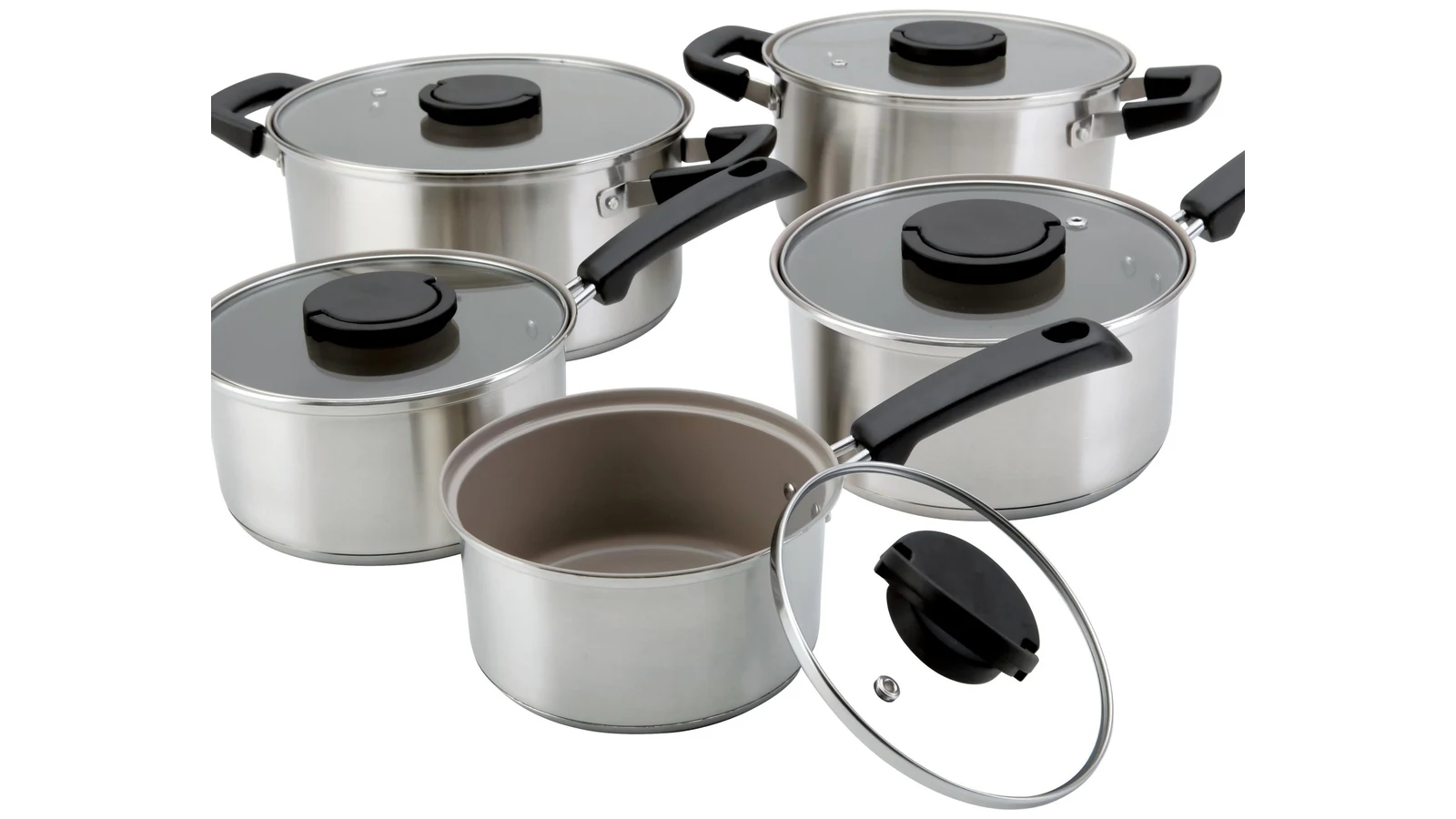
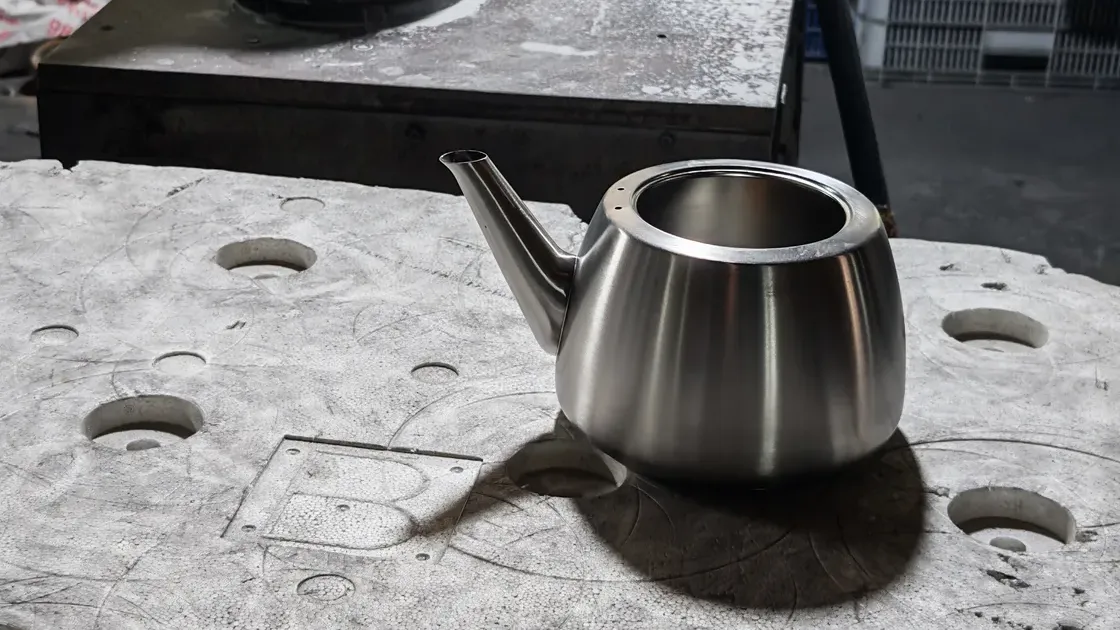
We run both grades through our own line: pressure cookers, saucepans and steamers are built in 304 because they are the cooking surfaces, while some stovetop water kettles in SS201 or SS304 are quoted in 201 for buyers whose market does not demand more. The rule we apply is simple — 201 where the food does not touch it for long, 304 where it does.
Where 304 is non-negotiable
Flip the same logic and 304 stops being a preference and becomes the floor:
- Any surface that holds acid or salt. Tomato sauce, vinegar, brine, or simply regular cooking with salt. This is most of a pot's interior.
- Dishwasher exposure. Retail buyers in the US and EU put cookware in dishwashers; detergent and heat are hard on the passive film.
- Long simmers and pressure cooking. High temperature, moisture and dissolved salts for an hour or more is exactly the environment 201 fails in.
- Markets with enforced food-contact regulation. The US, EU and UK all assess food-contact materials by migration behaviour rather than a list of approved grades, and the grades with established food-contact recognition in practice are the 304 family and above — 201 has no such standing, and compliance for any grade is demonstrated by testing, not assumed. See the EU's food-contact framework regulation and the FDA's food contact substances program. China's GB 4806 series covers the same ground on the manufacturing side.
If your target market is the US, EU, UK or Australia — or anywhere a retailer will ask "what grade is this, and can you prove it?" — spec 304 for every food-contact part and keep the 201 conversation for lids and trim. "Food grade" is not a marketing adjective here; it is a compliance position, and 304 is the minimum position a buyer can defend. It is also why our wholesale pressure cookers are built in SS304 and nothing else — a pressure cooker interior is the most punishing food-contact surface we make.
How to check the grade you were actually shipped
Here is the part of this conversation that no marketing blog covers, because it only exists inside a factory: the price gap between 201 and 304 is also the motive for a supplier to ship the cheaper grade against a 304 order. It happens, it is rarely caught by a visual inspection, and the finished pot gives nothing away — both grades polish to the same mirror.
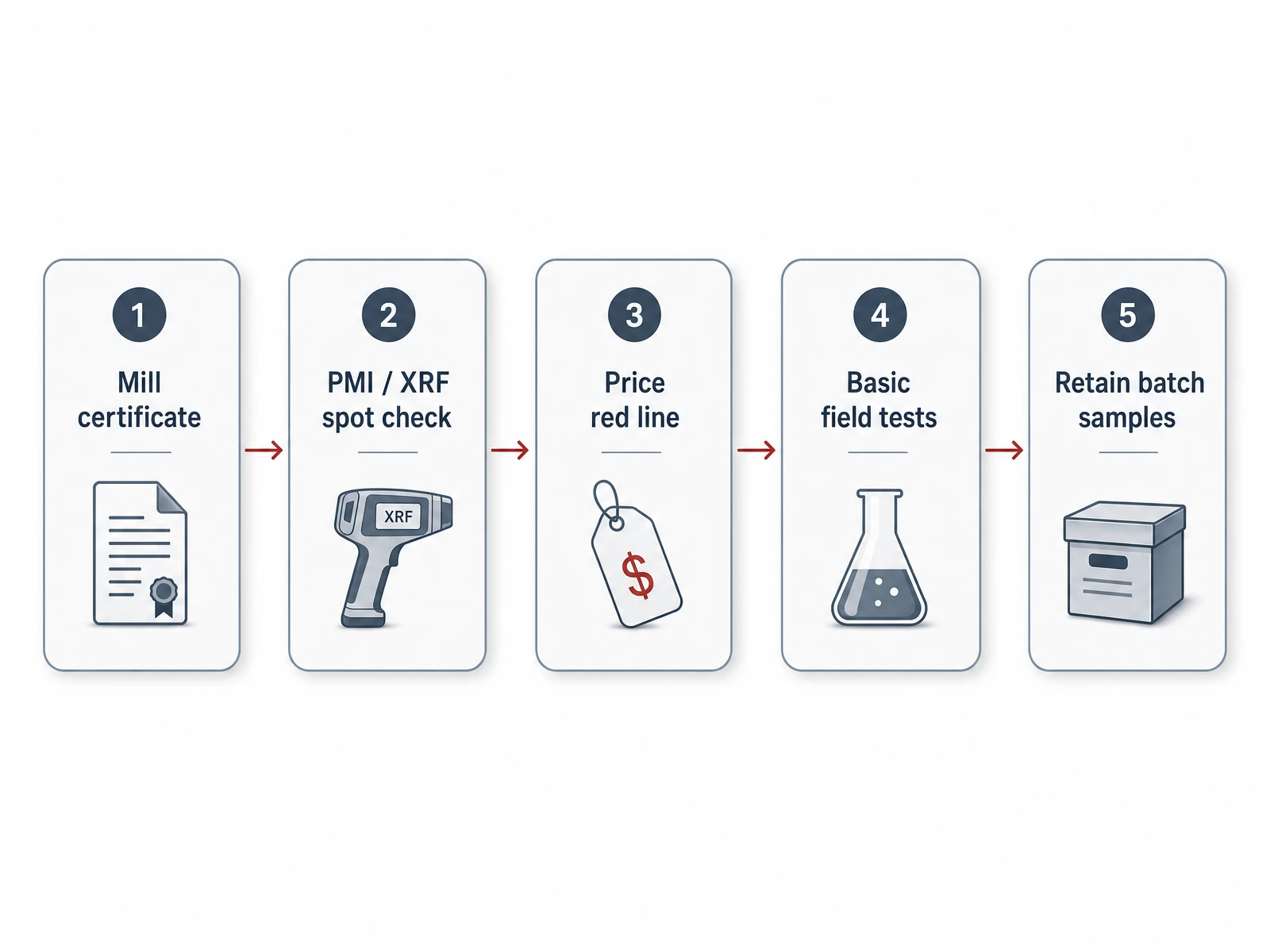
So the verification is paperwork-first, testing-second:
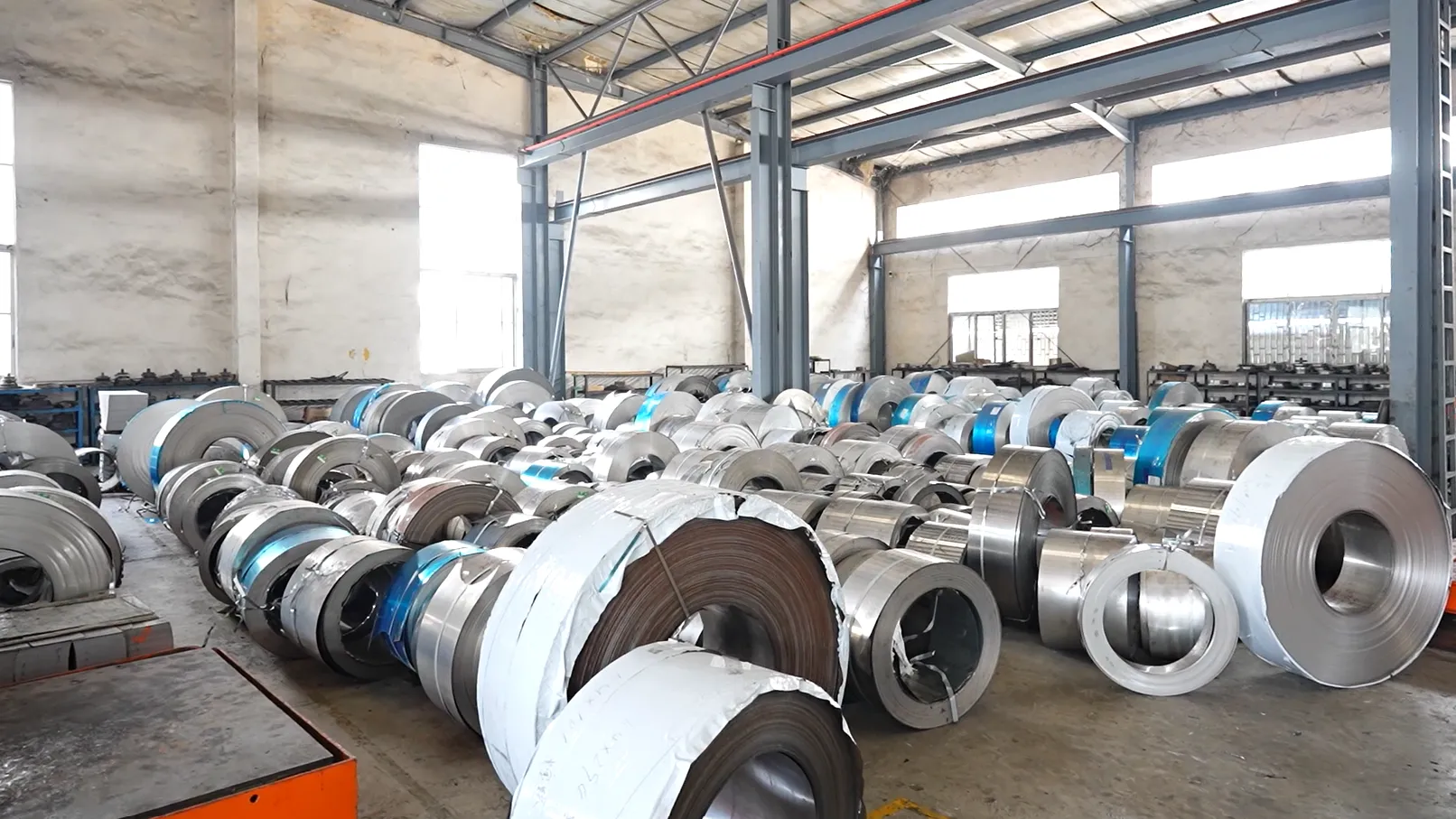
- Mill certificate / material test certificate (MTC). Ask for it per batch, before shipment, not after. The MTC names the grade, the heat number, the mill, and the chemistry of that specific coil. It is the document your QC file is built around, and a supplier who cannot produce one for a 304 order is answering your question.
- PMI / XRF spot check. A handheld XRF spectrometer reads the alloy chemistry of a finished part in seconds. At container-loading, random parts across the batch — a 3–5% sample is a reasonable rule of thumb. If your supplier cannot arrange a third-party PMI check, that is itself an answer.
- Price red line. When 304 nickel content is priced into the coil, a quotation that undercuts every other 304 quote by a wide margin is not a bargain — it is a warning. Use the per-ton spread from the first section as your sanity check.
- Basic field tests, understood correctly. The magnet test only separates 430-type ferritics (see above). A simple salt-water or vinegar soak is a rough screen for very poor material but takes days and is not conclusive between 201 and 304. None of these replace the MTC — they are tripwires, not proof.
- Batch samples. Keep one piece from each production batch. If a problem surfaces in the market nine months later, the retained piece is the evidence.
This is the same discipline that runs through how Potobelo verifies material and finished goods: a factory that treats grade verification as routine paperwork is a factory that will not be tempted to substitute. We run MTC-backed, batch-verified material as standard on every order that leaves our line — it is the only way "we build in both grades" stays an honest sentence.
Writing it into your spec sheet
A grade on a purchase order is a promise; a grade on a spec sheet is a contract. Make the sheet carry the whole decision:
- Grade, per part, not per product. "304" on the drawing for the pot body, "201" on the lid if that is the decision — never a blanket line.
- Gauge alongside grade. 0.5 mm of 304 is not the same pot as 0.8 mm of 304. Grade without gauge is half a spec — the grades guide linked above walks through both in detail.
- Verification terms. MTC per batch, PMI sampling rate, retained samples. If it is not on the sheet, it will not happen at the factory.
- Market compliance. Name the framework your market enforces (EU 1935/2004, LFGB, FDA) so the grade requirement has a legal reason attached to it, not just a preference.
A buyer who writes this spec, verifies against it, and works with a factory that signs it has already done more due diligence than most importers. The rest is execution — and turning a spec sheet into a container is what a factory does best.
Common questions
Will grade 201 stainless steel rust?
Grade 201 stainless steel can rust, and in cookware it rusts sooner than 304. Its lower chromium and higher manganese content leave the protective oxide film less stable when the surface meets salt, acidic food or dishwasher detergent. On a lid or an outer shell used for dry cooking, 201 can last for years without a mark. On a cooking surface that regularly holds tomato sauce, brine or standing water, pitting and tea-staining typically appear within months rather than years. If your market or product puts the steel in contact with moisture and food acids, 304 is the safer call.
Is 201 stainless steel food grade?
201 stainless steel is not among the grades with established food-contact recognition in the US, EU or UK markets. Compliance there is assessed by migration behaviour rather than a list of approved grades, and in practice the recognised food-contact grades are the 304 family (18/8 and 18/10) and above. A supplier claiming food-grade 201 for a pot interior is asking you to take the claim on trust rather than on a recognised standard — treat it as a red flag. If your market demands a defensible food-contact grade on paper, 304 is the minimum.
What are the downsides of 304 stainless steel?
304 stainless steel costs more than 201, weighs more than aluminium, and conducts heat unevenly on its own, which is why cookware makers add an aluminium or copper core. It also carries roughly twice the nickel of 201, and nickel is the price driver in stainless steel. Its practical downsides end there for cookware: corrosion resistance, food-contact acceptance and dishwasher survival are all stronger than in 201. The only environment where 304 genuinely falls short is prolonged contact with chlorides such as seawater, which is where 316 earns its premium.
Will a magnet stick to 201 stainless steel?
A magnet may stick to 201 stainless steel, especially after the steel has been deep-drawn or cold-worked. Both 201 and 304 are austenitic grades that start non-magnetic, but forming converts part of the structure to martensite, and 201 converts more readily than 304. A magnet test therefore cannot tell 201 from 304 — it can only flag 430 and other ferritic grades, which are magnetic in the sheet. To verify the grade of a finished pot, check the mill certificate or run a PMI spectrometer check instead of reaching for a fridge magnet.
Written by
Potobelo Editorial Team
Sourcing and engineering staff at Potobelo, a stainless steel cookware brand built on 30 years of Zoombo manufacturing in Guangdong, China. We write from inside the plant that makes the product, not from reviewing it.