
18/10 vs 18/8 Stainless Steel Cookware: What It Means for Your Product Line
When a supplier's quotation says "18/10 stainless steel", it usually costs more than the one that says "18/8" — but both names describe the same 304-type austenitic family, and neither is a formal grade. This guide is for wholesale buyers and brand owners deciding what those labels should mean on a spec sheet: what the numbers actually say, where the difference shows up in a kitchen, and how to verify you are not paying a marketing name instead of a chemistry.
 Potobelo Editorial Team11 min read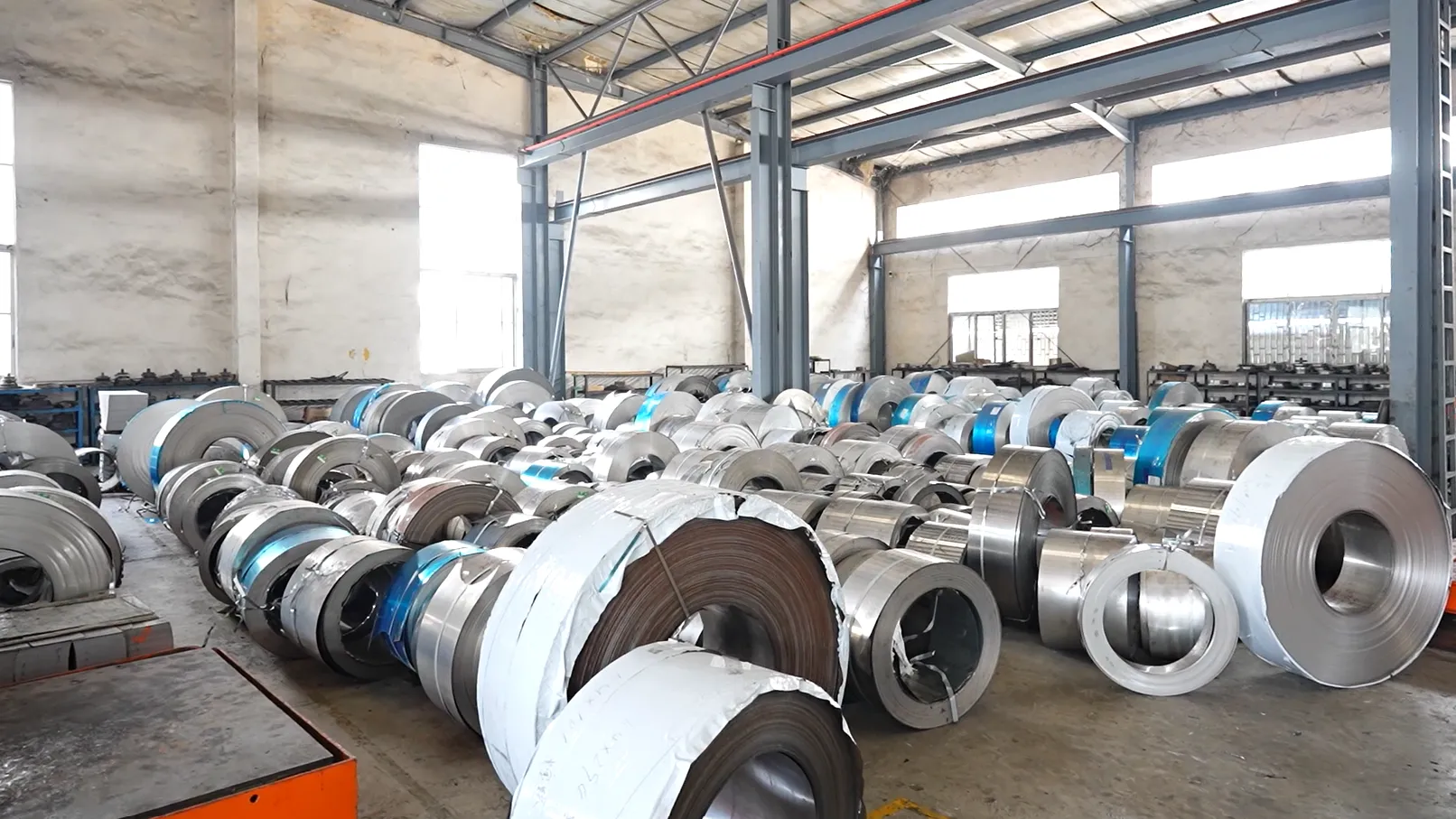
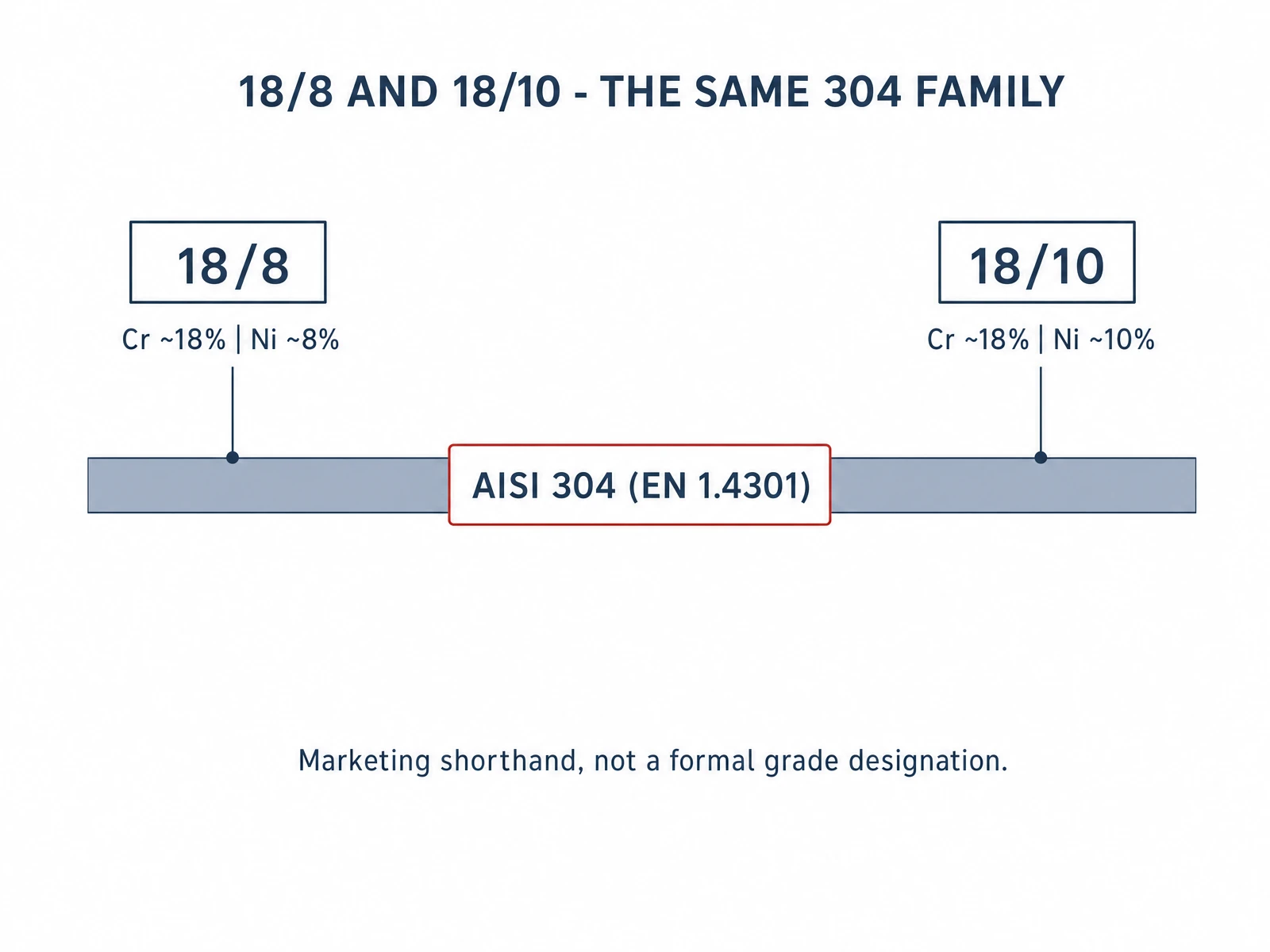
"18/10 vs 18/8 stainless steel" is one of the most common questions on a cookware quotation — and the honest answer is that you are comparing two labels, not two grades. Both are marketing shorthand for the same 304-type austenitic stainless steel: roughly 18% chromium, with nickel at about 8% or 10% of the alloy. Neither "18/8" nor "18/10" appears in the ASTM or EN grade books as a designation. 304 does — and both names live inside its composition band.
That matters when you buy at container scale, because the difference between the two names is priced into quotations, printed on retail boxes, and quoted back to you by your own customers. The question is what that price difference actually buys. This article is the version of that conversation we have across our meeting table with importers and brand owners: what the numbers mean, where the extra nickel earns its keep, and how to check that the steel in the container matches the name on the invoice.
18/10 vs 18/8 stainless steel: what the numbers mean
The "18" in both names is the chromium content: about 18% of the alloy. Chromium is the element that makes stainless steel stainless — it forms the invisible chromium-oxide film on the surface that blocks corrosion. The second number is nickel: about 8% in "18/8", about 10% in "18/10".
Both combinations are simply points inside the specification of type 304, the workhorse austenitic grade of the cookware industry. The table below shows where the two labels sit:
"18/8" | "18/10" | |
|---|---|---|
Chromium (nominal) | ~18% | ~18% |
Nickel (nominal) | ~8% | ~10% |
Formal designation | none — marketing shorthand | none — marketing shorthand |
Actual family | AISI 304 / EN 1.4301 | AISI 304 / EN 1.4301 |
304 band position | low end of the nickel band | top end of the nickel band |
Relative alloy cost | lower | higher |
Type 304's own specification allows nickel from about 8% to about 10.5% — one reason the industry still calls it by its old name 18/8 is that 8% nickel is the nominal starting point, as this type 304 datasheet from thyssenkrupp Materials explains. So a "18/10" pot and an "18/8" pot can both be genuine 304 — one simply sits higher in the allowed nickel range, or claims to.
There is a third label you will meet in the market, and it is worth one sentence because it is a different family entirely: "18/0" means no nickel at all, and it refers to ferritic 430-type steel, not to 304. Nickel-free stainless is cheaper, magnetic like pure iron (ferritic steel is strongly attracted to a magnet, unlike the 304 austenitic family), and has a thinner corrosion margin — which is exactly why you will rarely see it on a cooking surface.
If you want the full map of the grades you will be quoted — 201, 304, 430, 316 and where each belongs in a cookware line — our guide to stainless steel cookware grades walks through the whole family.
Why neither name is a grade
Here is the part that most consumer-facing articles skip, because it is inconvenient for marketing: the "10" in 18/10 does not guarantee that the steel in the pot actually contains 10% nickel.
The British Stainless Steel Association, the UK industry body, is blunt about it: '18/10' is a designation used on cutlery and holloware as an alternative to '18/8', it is claimed to indicate better quality steel, but it is essentially the same 304 (1.4301) grade — and in practice the "10" does not indicate an actual higher nickel content, and is purely a marketing ploy. The steelmaker melts a coil to a target chemistry; the label is applied afterwards. Two pots from the same production run could carry different stamps.
That cuts both ways, and a buyer should understand both directions:
- A supplier can stamp "18/10" on ordinary 304 with nickel at the bottom of the band — the label costs nothing and the sale price goes up.
- A supplier can also genuinely run a melt with nickel targeted above 10%, which costs more per ton, and the label "18/10" is then roughly accurate.
The label tells you the family, not the batch. The chemistry of the batch is on the mill certificate. If you are choosing between alloy families rather than between labels — 201 against 304, for example — our comparison of 201 vs 304 stainless steel for cookware covers that decision separately; it is a different question from the one here.
One more thing the naming confusion produces is outright misinformation in otherwise authoritative places. You will read that 18/10 is more corrosion resistant because it "contains molybdenum" — it does not. Molybdenum is not part of the 304 composition; it is the alloying element that defines type 316, a different grade for chloride-heavy environments. When a spec sheet or an article credits 18/10 with molybdenum, treat everything else on the page with suspicion.
Where the extra nickel shows up — and where it doesn't
Nickel in a stainless pot does real work, and it is worth being precise about what it does and does not do.
Corrosion resistance comes primarily from chromium, and it is the same in both labels. Nickel's contribution is different: it stabilises the austenitic structure (which is what allows a pot body to be deep-drawn in one piece without tearing), and at the top of the 304 band it can measurably improve resistance in aggressive media — chlorides, some acids, environments where the passive film is under stress. In everyday cooking — boiling water, simmering sauce, dishwasher cycles — the difference between 8% and 10% nickel is close to invisible in practice. Both behave like the 304 they are.
What the extra nickel does not do is change the food-contact position. Here is the part worth understanding before you let a retail buyer or a marketing claim push you up the price ladder: 18/10 has no different food-safety standing from 18/8, because regulators do not work with these names.
- The EU regulates food-contact materials through Regulation (EC) No 1935/2004, a framework built on migration behaviour and safety requirements — there is no whitelist of "approved" grade names anywhere in it, and no distinction between 18/8 and 18/10.
- The US FDA evaluates food-contact substances under a science- and migration-based framework; the stainless steels with long-established food-contact recognition in practice are the 300 series, which is the family both labels describe.
- On the manufacturing side in China, GB 4806.9-2023 governs food-contact metals through specific release limits for alloy and impurity elements — again a migration regime, not a list of grades that are "allowed" or "not allowed".
So when a retail partner insists on 18/10 "for food safety", the requirement has no basis in any of these frameworks — both names describe the same recognised family. If the requirement is about corrosion performance or perceived quality, that is a different conversation, and one worth having honestly with numbers.
A note on the health angle you will sometimes meet in consumer forums: nickel can migrate from stainless steel in trace amounts, and regulators set release limits on it for that reason — GB 4806.9, for example, limits nickel migration from stainless steel food-contact articles. Nickel allergy is a real but separate consumer-level matter, and it applies to the 304 family as a whole, not differently to 18/8 versus 18/10. Neither label is a workaround for a genuine allergy concern; that is a decision for the end consumer's doctor, not for a grade on a spec sheet.
What the difference does to your unit cost
Nickel is the price driver in stainless steel, and 18/10's whole cost premium is nickel. When nickel prices move, the spread between low-end and high-end 304 chemistry moves with it — which is why no responsible article quotes you a fixed dollar difference. The LME nickel contract is the benchmark most mills price against, and it swings.
To translate the swing into a product-line decision — the only 18/10 vs 18/8 stainless steel question that matters at volume — run three numbers:
- Per ton. Ask your supplier for the current per-ton difference between 304 coil with nickel at ~8% and coil targeted at ~10%. Any mill will quote it; it is the number everything else follows from.
- Per piece. Divide by the number of pieces you get from a ton at your pot's size and gauge. On a thin lid the difference is pocket change; on the thick base of a large casserole it is real.
- Per container. Multiply by your order volume. This is where a label premium — or a genuine chemistry choice — becomes a line item your margin feels.
The honest framing for a product-line decision: most cookware roles do not need the top of the nickel band. A pot that simmers tomato sauce, survives dishwashers and gets scoured daily needs genuine 304-family material with clean chromium; it does not need 10.5% nickel to do that. Paying an 18/10 premium is defensible when a buyer or a market position demands the top of the band — and it is a waste of margin when you are paying a label without a mill certificate behind it.
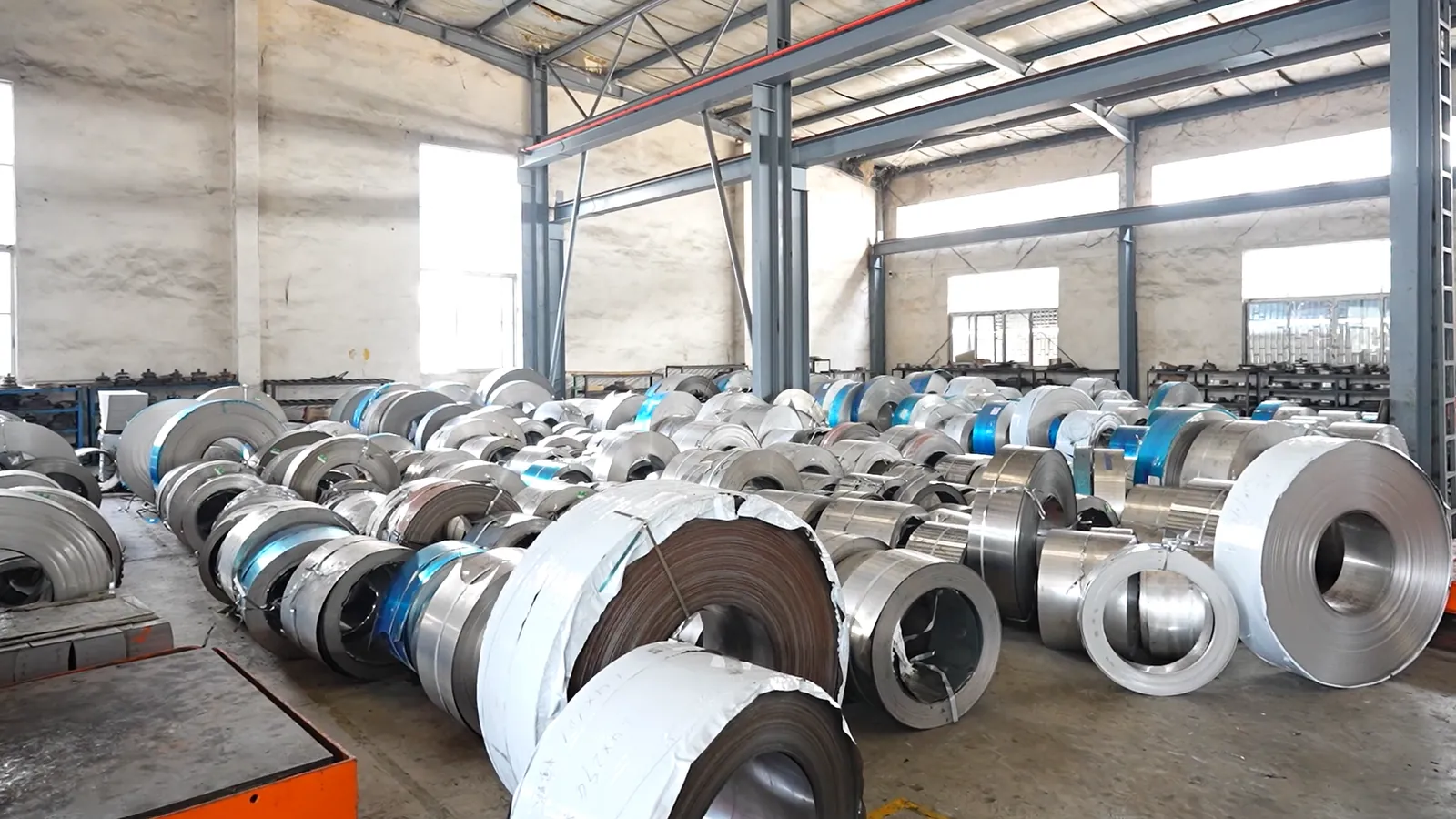
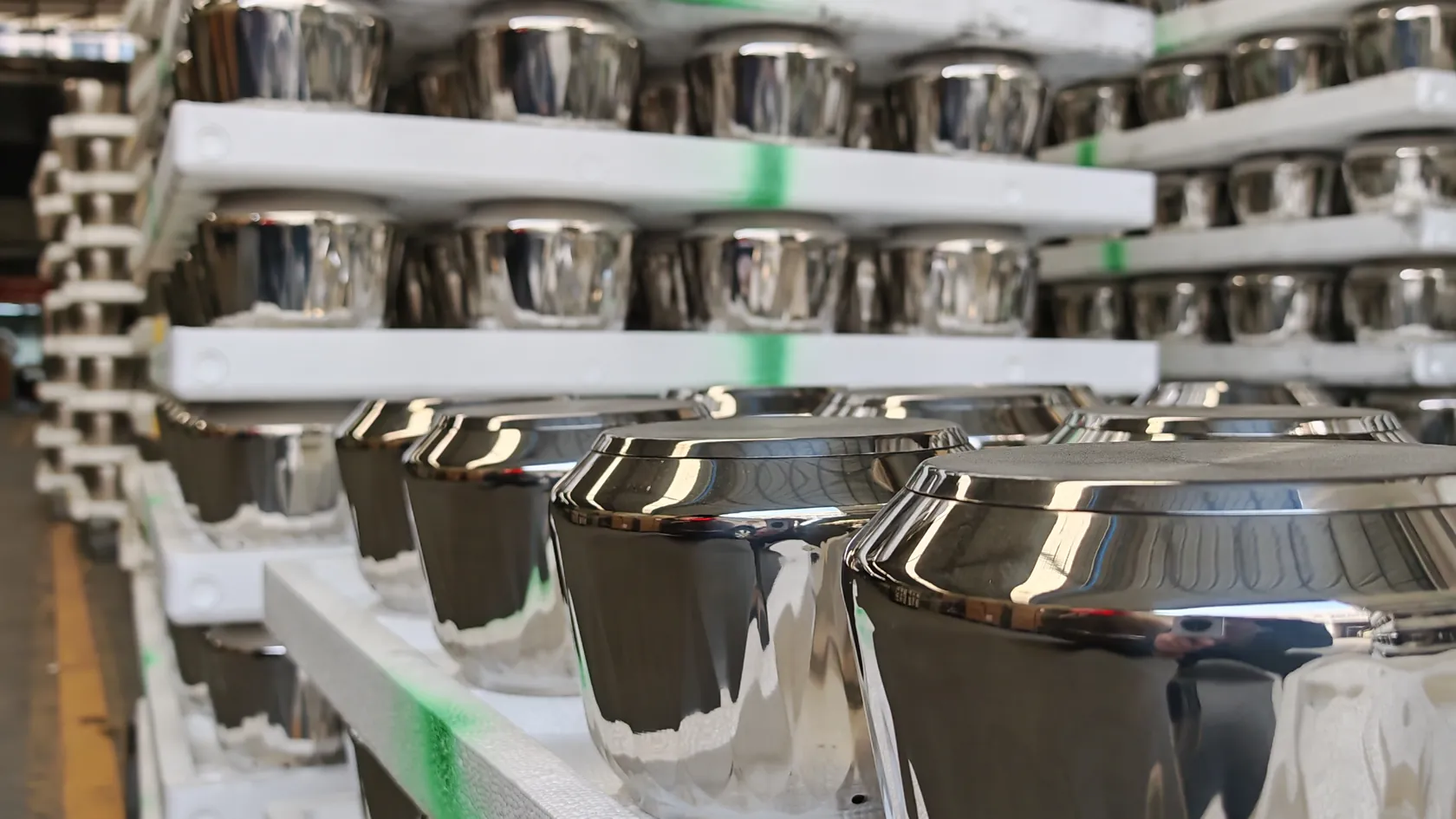
The steel arrives as coil, and the finishing line does not change what it is — the body is drawn and polished from the same material family whether the order says 18/8 or 18/10:
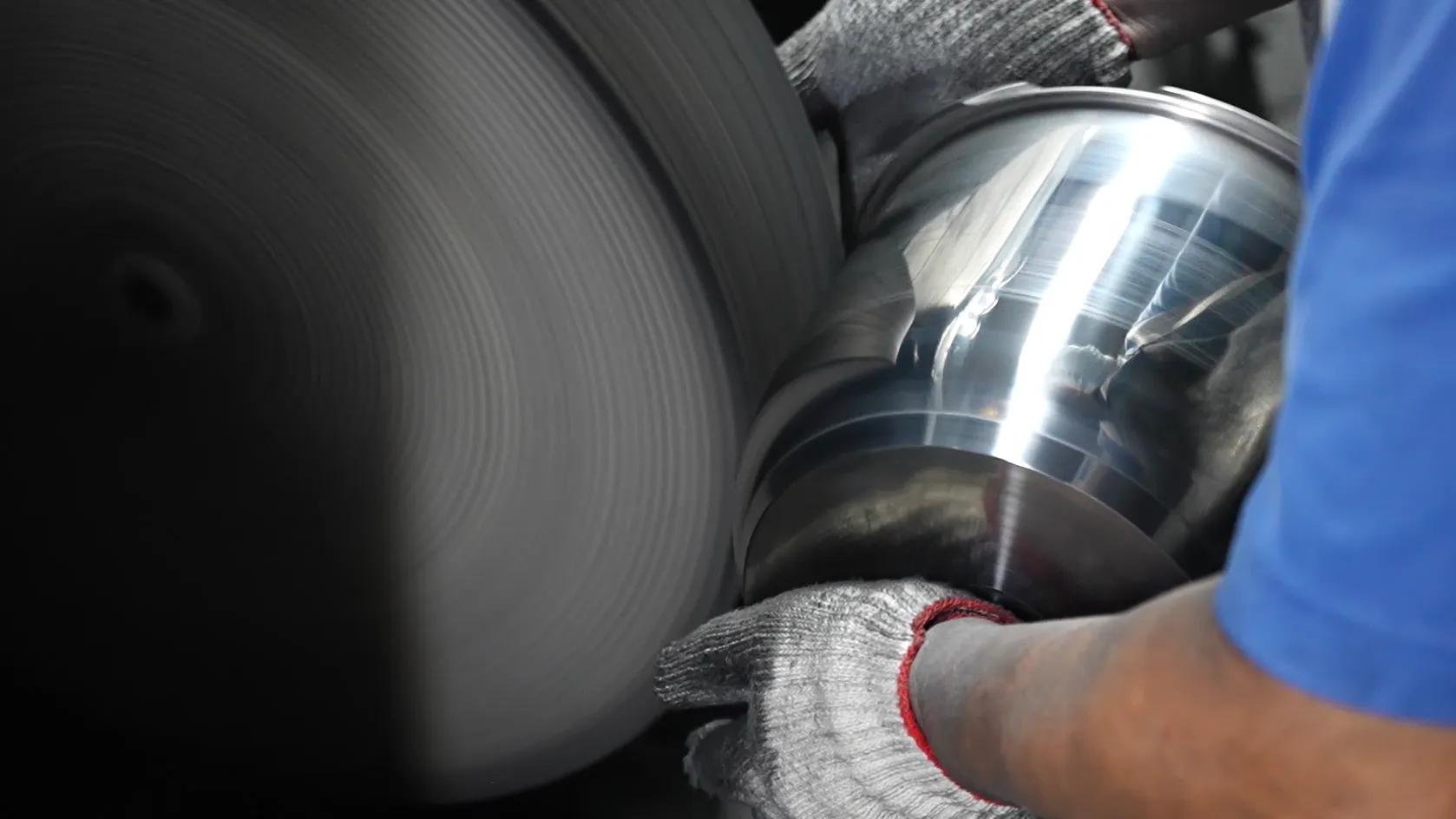
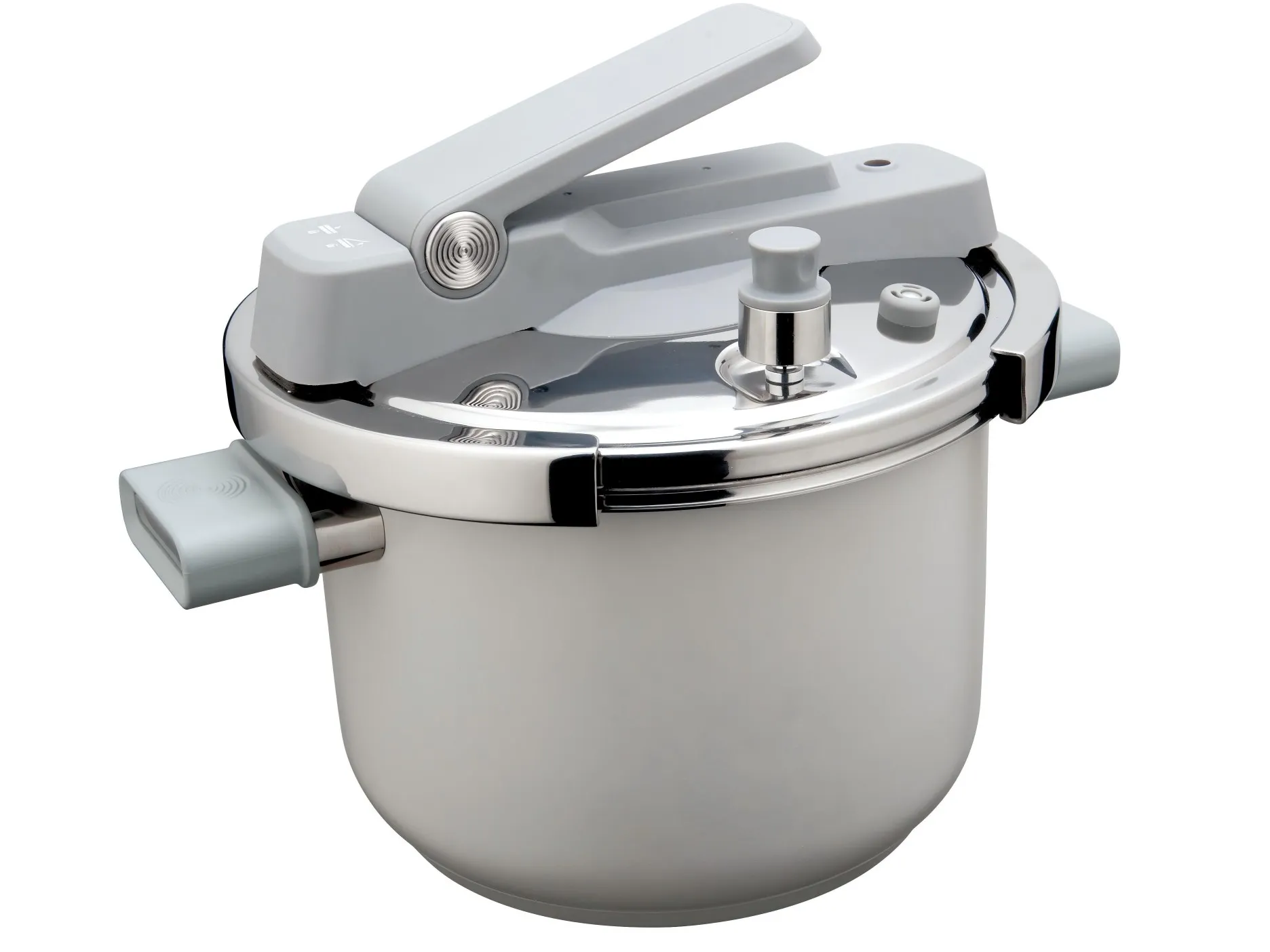
This is also where our own line shows the discipline: our wholesale pressure cookers are specified in SS304 and nothing else, because a pressure-cooker interior is the most demanding food-contact surface we make — but we do not sell "18/10" as a vague upgrade. The grade, gauge and target chemistry are quoted per part, on paper, before sampling.
How to verify the 18/8 or 18/10 you are quoted
The gap between a label and a chemistry is also the motive for substitution, so verification is paperwork-first:
- Mill certificate (MTC) per batch. The MTC names the grade, the heat number, the mill and the actual chemistry of that coil — including where the nickel really sits. Ask for it before shipment, not after. It is the document your QC file is built around, and it is the only place the 18/10 claim can be checked.
- Specify the nickel position, not the label. On the purchase order, write what you want: "304, nickel 9.5–10.5%" if you are paying for 18/10-level material, or simply "304" if low-end 304 is fine. A label on a drawing cannot be tested; a chemistry band can.
- PMI / XRF spot check. A handheld XRF spectrometer reads alloy chemistry on a finished part in seconds. At container loading, sample across the batch — 3–5% is a reasonable rule of thumb. Any supplier who cannot arrange a third-party check is answering your question.
- Price red line. When nickel is priced into the coil, an "18/10" quotation that undercuts every other 304 quote by a wide margin is not a bargain — it is a label. Use the per-ton spread from the previous section as your sanity check.
- Retain a batch sample. Keep one piece per production batch. If a problem surfaces in the market months later, the retained piece is the evidence — and its MTC is the proof.
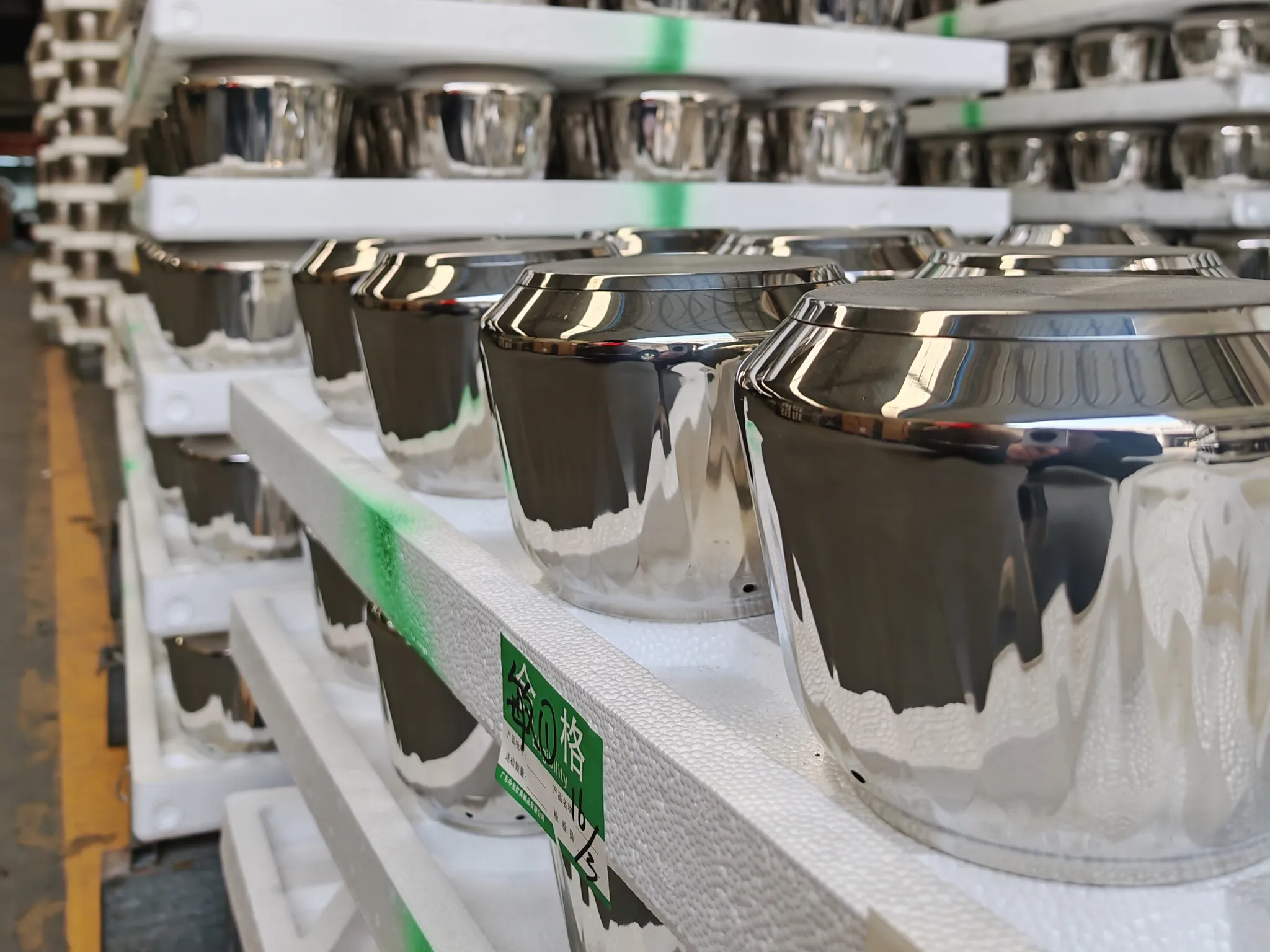
None of this requires exotic equipment — it requires a supplier who treats material verification as routine. It is the same discipline we run on our own line, where material and finished-goods checks are built into production rather than bolted on at the end. Choosing a supplier that can show you coil chemistry per batch is part of choosing a stainless steel cookware manufacturer in the first place — grade discipline is a factory culture, not a line item.
Writing it into your product line spec
A label on a quotation is a promise; a chemistry on a spec sheet is a contract. Make the sheet carry the whole decision:
- Spec by grade and band, not by trade name. "304, EN 1.4301" plus a nickel position if it matters. Let "18/10" live on the box where it belongs — as a consumer-facing description of the family, backed by the chemistry you actually specified.
- Per part, not per product. The base of a large casserole carries different material economics from a thin lid. Decide the band per part, and write it per part.
- Make the verification terms part of the order. MTC per batch, PMI sampling rate, retained samples. If it is not on the sheet, it will not happen at the factory.
- Attach compliance to your market, not to the label. Name the framework your market enforces — EU 1935/2004, the FDA regime, GB 4806.9 — so the grade requirement has a regulatory reason attached to it. And keep the two names in the right column: neither framework distinguishes 18/8 from 18/10.
The short version of this article, for the person signing the purchase order: 18/8 and 18/10 are two labels for one family, the difference is a small amount of nickel at the top of the 304 band, it costs a little more and buys a little more corrosion margin in aggressive conditions — and it has nothing to do with food safety. Buy the chemistry you need, verify it on the mill certificate, and let the marketing names stay on the packaging where they belong.
Common questions
What does 18/10 stainless steel mean?
18/10 is shorthand for a stainless steel with roughly 18% chromium and 10% nickel in its nominal composition. The same shorthand gives 18/8 its name: about 18% chromium and 8% nickel. Both figures sit inside the composition band of type 304 (EN 1.4301), the workhorse austenitic grade of stainless steel cookware. 18/10 is not a formal ASTM or EN grade designation, and in practice a piece stamped 18/10 may carry exactly the same chemistry as one stamped 18/8. What the number is supposed to signal is that the nickel content sits near the top of the 304 band rather than the bottom.
Is 18/10 stainless steel better than 18/8 for cookware?
For most cookware, the practical difference between 18/10 and 18/8 is small. Both are 304-type austenitic steel with the same chromium content, and chromium — not nickel — is what forms the corrosion-resistant passive film. Nickel near the top of the 304 band can improve resistance in some aggressive media such as chlorides, and it costs more, but this is not a quality or safety hierarchy in everyday cooking. Gauge, finish and genuine 304-family material matter more than the label. If a supplier charges a premium for 18/10, ask to see the actual nickel chemistry before you pay it.
Is 18/10 stainless steel safe for cooking?
In food-contact practice, 18/10 has no different standing from 18/8: both are shorthand for the 304 family, the austenitic stainless steels with long-established food-contact recognition in the US and EU markets. Regulators do not approve grades by these names — the EU assesses food-contact materials by migration behaviour under Regulation (EC) No 1935/2004, the FDA works on a science- and migration-based framework, and China's GB 4806.9 sets specific release limits for elements. Because both describe the same family, food-safety claims are never a valid reason for a price difference.
Is 18/8 stainless steel the same as 304?
Essentially yes. 18/8 is the old trade name for type 304 stainless steel, derived from its nominal composition of about 18% chromium and 8% nickel, and 304's own specification allows nickel up to about 10.5%. So 18/8 sits at the low end of the 304 band and 18/10 near the top — both are still 304, and in the European EN 10088 system the same family is grade 1.4301. The label tells you the family, not the exact chemistry of the batch: two pieces both sold as 304 can differ in nickel content, and only the mill certificate shows it.
Written by
Potobelo Editorial Team
Sourcing and engineering staff at Potobelo, a stainless steel cookware brand built on 30 years of Zoombo manufacturing in Guangdong, China. We write from inside the plant that makes the product, not from reviewing it.