
Aluminum vs Stainless Steel Cookware: A Material Comparison for Importers
A stainless cookware manufacturer wrote this, and the article says so in its second paragraph. What follows is the material comparison we give buyers across our own meeting table: what the metal really decides, where aluminium wins outright, where stainless earns its price, and how to price the choice per container before you commit a range.
 Potobelo Editorial Team15 min read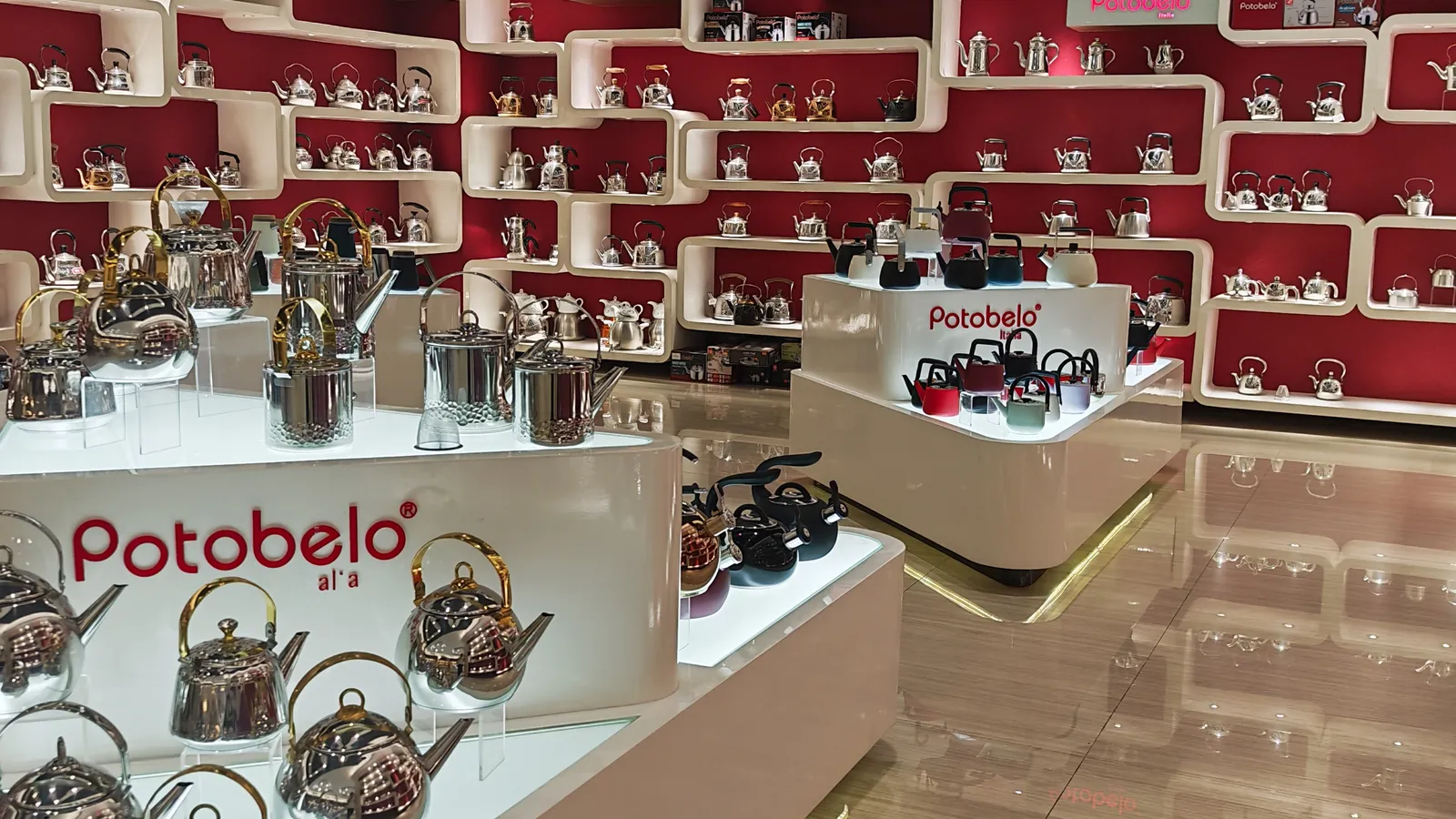
The short answer: pick the material per part, not per range
The comparison is usually framed as a choice between two metals. It is not. For most cookware programmes the correct answer is both materials in the same vessel — a stainless food-contact surface bonded to an aluminium core — and the real decision is how much aluminium, and where. Reach for pure aluminium where the product is a heat conductor and weight is the enemy: kettles, value lines, and markets that wash by hand. Specify stainless where the food-contact surface has to survive acid, salt and dishwashers for a decade — and make that call per part, because a range is not one product.
One declaration before the comparison starts, because it changes how you read it: this article is written by a stainless steel cookware manufacturer, so we have a stake in the answer. The aluminium case below is not a strawman — where aluminium is the better material, section 5 is nothing but the reasons to buy it.
Dimension | Aluminium | Stainless steel |
|---|---|---|
Heat conduction | Very high — the reason it is used as the core | Low on its own; spreads heat through a bonded aluminium core |
Density and weight | About a third of stainless | Heavier per litre of pan, and heavier in the carton |
Corrosion and food reaction | Reactive surface; pitting under acid and salt unless treated | Passive chromium-oxide film; does not react with food |
Food-contact recognition in practice | Not established for bare aluminium in most import markets | 304 family recognised in practice; US practice expects chromium at 16 percent or more |
Induction | Needs a bonded magnetic steel disc | Works when a ferritic outer layer is specified |
Cost | Lower material cost, lower freight weight | Higher; nickel drives the price |
Where it belongs | Kettles, disc-base value lines, hand-wash markets | Cooking surfaces, pressure cookers, dishwasher markets |
Every row of that table is a field on a specification sheet, and the grades have defined identities rather than marketing ones. If you are new to how those grades are named and recognised, start with how stainless steel cookware grades are defined — the parent piece for this one.
What each material actually is — and why the comparison is lopsided
Here is the correction that reframes the whole question, and it is the one thing almost no comparison article on this keyword states.
An aluminium pan is one metal: a single sheet drawn or cast into a body. It has no core, because the whole pan is the core.
A stainless steel pan is not a stainless steel object. It is a composite. The food-contact layer is stainless, the base carries aluminium, and — where induction is required — the outside face is a different, magnetic stainless again. The aluminium has not been removed; it has been moved inside the build, where it spreads heat without meeting the food. That is what "3-ply" and "5-ply" describe, and the details of the stack are worth reading if you are specifying one: 3-ply versus 5-ply construction explains the layer sequences and where they sit.
So the honest framing is not aluminium against steel. It is aluminium used alone against aluminium used inside stainless — which means the material question is really three questions: how much aluminium is in the base, how thick the food-contact layer is, and what the outer layer is made of. The grade labels on those layers are a separate trap: 18/10 and 18/8 are not interchangeable labels.
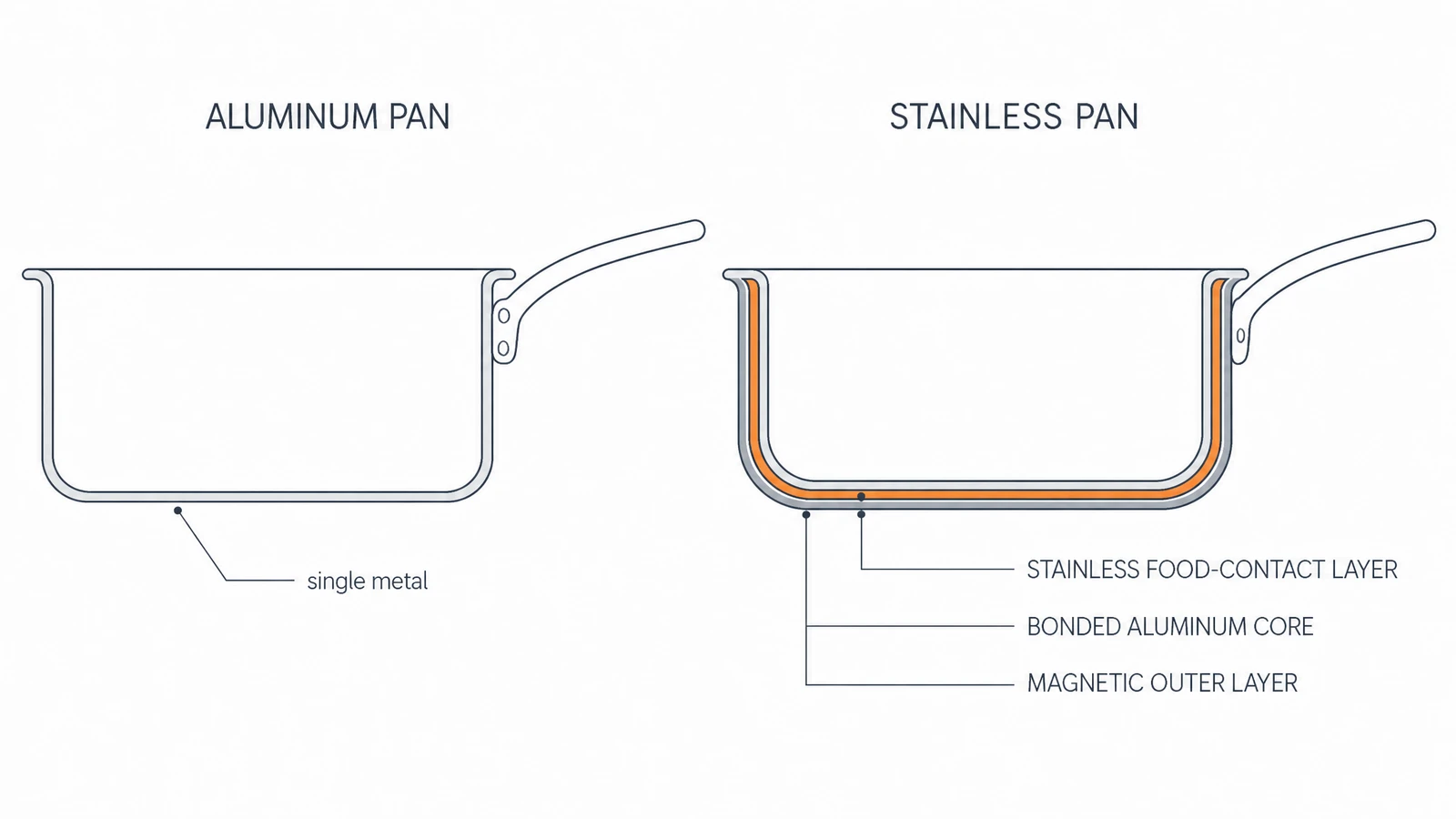
Illustrative render, not a photograph: a single-metal aluminium pan and a clad stainless pan drawn to show where the metal sits in each. Bands are schematic and not to scale.
Where aluminium genuinely wins
Aluminium's advantages are real and measurable, and they are why the metal sits inside most clad stainless cookware rather than being excluded from it.
It conducts heat about ten times better. A 3003-type aluminium alloy runs at roughly 162 W/m·K at room temperature. An austenitic 304 stainless steel runs at around 16.2 W/m·K at 100 °C — different reference rows in their tables (25 °C and 100 °C), and the ratio holds because stainless barely moves with temperature. That gap is not a marketing claim; it is why a clad base exists at all.
It weighs about a third as much. The same two property tables give 3003 aluminium a density of 2.73 g/cm³ against 7.9 g/cm³ for austenitic 304 — same volume of metal, roughly one-third the mass. For a two-litre saucepan a buyer notices it in the hand; for a 40-foot container, in the freight.
It costs less per kilogram. There is no nickel in aluminium, and nickel is the expensive ingredient in stainless — which is why the stainless grades with high nickel content are the ones whose price moves most when the LME nickel contract moves.
It carries no nickel at all. Where nickel sensitivity is a live consumer concern, that is a genuine advantage rather than a footnote.
It can be made induction-ready. Plain aluminium is not magnetic, so it will not couple with an induction coil on its own — but bonded magnetic discs are standard practice on induction-friendly aluminium lines, which is a manufacturing answer to what sounds like a material limit.
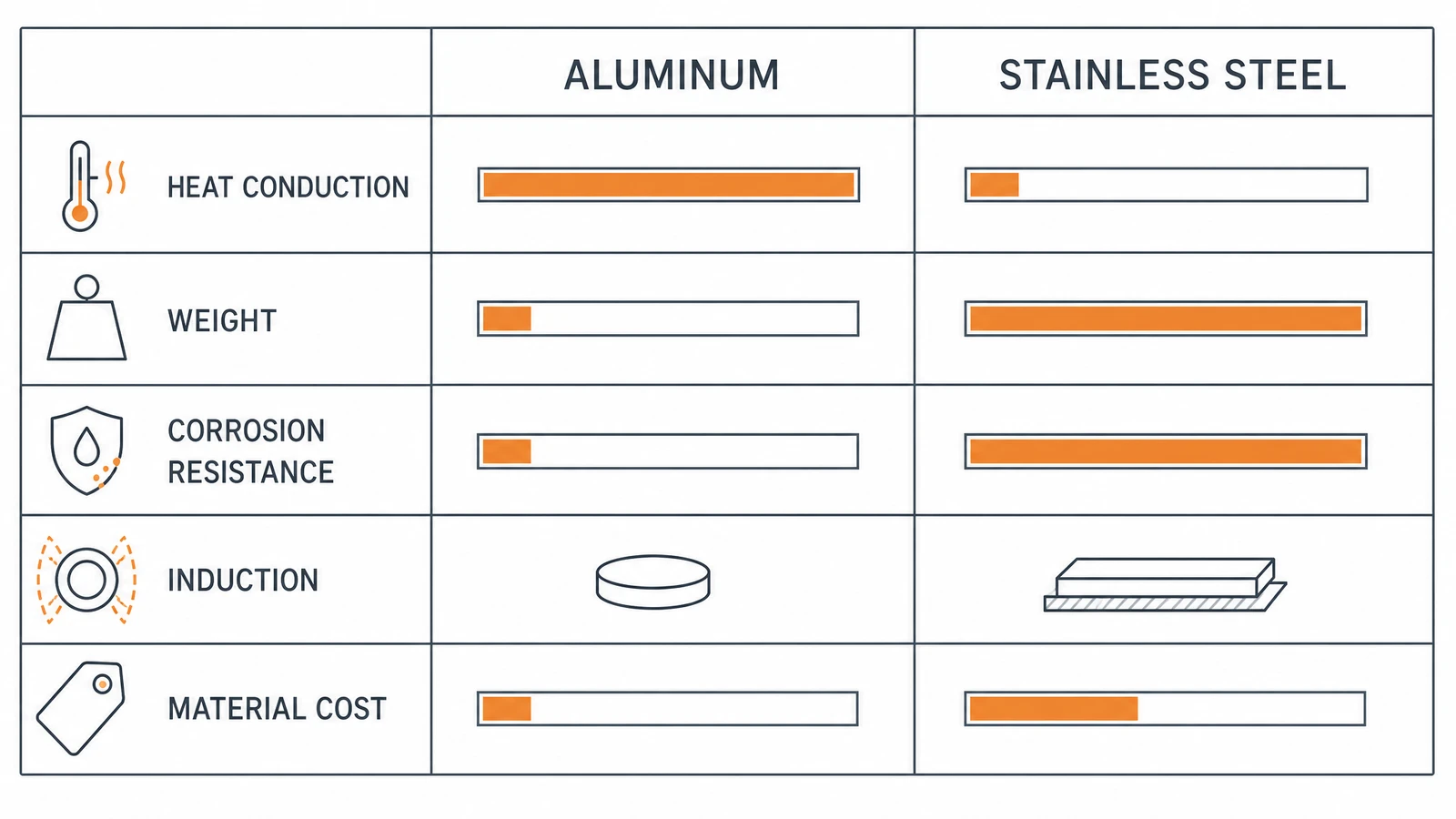
Illustrative render, not a photograph: a qualitative side-by-side panel — relative, not to scale, and not a substitute for the sourced figures above.
Where stainless genuinely wins
The stainless case is narrower than the industry admits, and it is concentrated in one place: the surface that meets food.
It survives things aluminium does not. Stainless protects itself with a passive chromium-oxide film that re-forms when scratched. Tomato sauce, vinegar, brine and dishwasher detergent are the standard acid-and-salt loads in a kitchen, and they are exactly the conditions under which an untreated aluminium surface pits and stains. The same chemistry that makes 201 cheaper than 304 is why the 304 family is the conventional cooking-surface grade: 201 has no established food-contact recognition in practice as a cooking surface. That is a statement about recognition in practice rather than a verdict on the metal, and it is the subject of 201 versus 304 for cookware buyers.
It takes a dishwasher. Retail buyers in the US and EU put cookware in dishwashers, and detergent plus heat is hard on reactive metals. A stainless body survives routine cycles — a shelf-life argument, not a preference.
It holds its shape and its finish. Stainless resists denting and scratching better than thin aluminium, it can be scoured and brought back rather than refinish-pitted, and it tolerates gas rings wider than the base, metal utensils and long dry preheats.
When aluminium is the better choice
This section is not a courtesy. There are programmes where specifying stainless is the wrong engineering answer and the wrong commercial one.
- Markets that wash by hand. Where the product will not see a dishwasher, the single biggest stainless advantage is absent, and the reactivity argument weakens with it.
- Kettles and non-contact bodies. Steam does the work in a kettle and the outer shell meets steam rather than brine; aluminium-family builds are reasonable here, and so are light 200-series stainless shells.
- Price-point and promotional lines. Where the line has a retail ceiling, the per-unit material saving is recovered directly, and an aluminium or disc-base build is the correct answer for the segment, not a compromise.
- Induction-friendly value programmes. A bonded steel disc plus an aluminium body is induction-ready and lighter than the stainless equivalent.
- Where weight decides. Large stock pots and volume-feeding vessels lifted all day are the standard case for aluminium bodies with a clad base.
- Fast-response cooking. Aluminium reacts to burner changes quickly, which is what a sauté or wok-style programme wants.
If your programme is a price-ceiling line for a gas-cooking, hand-washing market, aluminium is the better material — stainless there costs money you cannot recover on the shelf.
Where stainless falls short — honestly
The limitations on our own side are as real as the ones above.
It is heavier, and weight is paid twice. A stainless line is heavier in the hand and in the carton, so fewer units fit a container at the same carton volume — a landed-cost consequence, not just a handling one.
It heats more slowly. The aluminium core spreads heat, but the stainless surface conducts poorly, so a clad pan responds to a burner change more slowly than a solid aluminium pan of similar mass. For slow cooking that is an advantage; for a fast sear it is a limitation.
It needs a compliant base for induction. A plain austenitic 300-series body is essentially non-magnetic when annealed and will not couple with an induction coil. Compatibility comes from a ferritic outer layer or a bonded disc — a base-construction specification, never a property of "being stainless".
It costs more, and it is exposed to nickel. The 304 family carries roughly twice the nickel of 201, and 316 more again — the composition tables linked above give 3.5–5.5 percent for 201 against 8.0–10.5 for 304 — and nickel is the price driver, so a nickel price move shows up in your unit cost between quotation and production.
It contains nickel. Where nickel sensitivity is a stated consumer concern that is a genuine objection; the correct response is a lower-nickel grade on the parts that do not touch food, not a denial.
It needs care to keep its finish. Mirror-polished stainless shows water spots and heat tint, and it can still be scratched by metal utensils; chloride-rich environments can stain even the good grades.
Food-contact compliance: what each material faces in practice
This section decides which material a market will actually accept, and it is the one every consumer comparison on this keyword omits.
The regulatory frameworks here do not hand you a list of approved grades. They work on migration behaviour — how much of a material can move into food under defined conditions. In the European Union that requirement sits in Regulation (EC) No 1935/2004, demonstrated by migration testing against the measures for that material, not by a grade on a whitelist. In the United States the FDA's food-contact framework is a route-based regime in which the manufacturer holds the documentation, and US market practice has settled on the 300-series family, chromium at 16 percent and above, as the stainless recognised in practice for food contact. China's GB 4806 series for food-contact metals works on specific release limits in the same spirit.
The practical consequence for a buyer is short and uncomfortable: bare aluminium has no established food-contact recognition in practice for the markets most importers ship into. That is a statement about recognition in practice, not about what any regime permits — and it is why, as a market observation rather than a regulatory one, uncoated aluminium is uncommon on retail shelves in the US, EU and UK while anodised aluminium is common. Whether a treated aluminium part satisfies a given market is a testing question with a document behind it, not a coating name. Stainless, by contrast, is recognised in practice by series, which is why the food-contact layer of a cookware product is usually stainless even when a cheaper grade would do the rest of the pan.
The compliance path does not end at the specification: grades and surfaces change over a pan's working life, which is covered in whether stainless steel cookware is safe over its working life. What matters at quotation stage is a document trail — regime, test, batch certificate — not an adjective on a page.
For importers: the landed cost of the material decision
Everything above is engineering. Here is where it becomes a purchase order.
Run the comparison in three steps, not one. First, ask for the per-ton spread between the grades in your gauge — the base number, and public enough that any mill will quote it. Second, divide by the pieces you get from a ton at your part's size: on a thick base the difference is material, on a thin lid trivial. Third, multiply by order volume, because at container level a few cents per piece becomes a line item.
Then add the step most buyers skip: freight. "Cheaper per kilogram" is not the same as "cheaper landed." An aluminium build is lighter, so more units fit in a container at the same carton volume — and a stainless build is heavier, so the reverse. Ask for the packed carton weight at both material options and price both per container, not per piece.
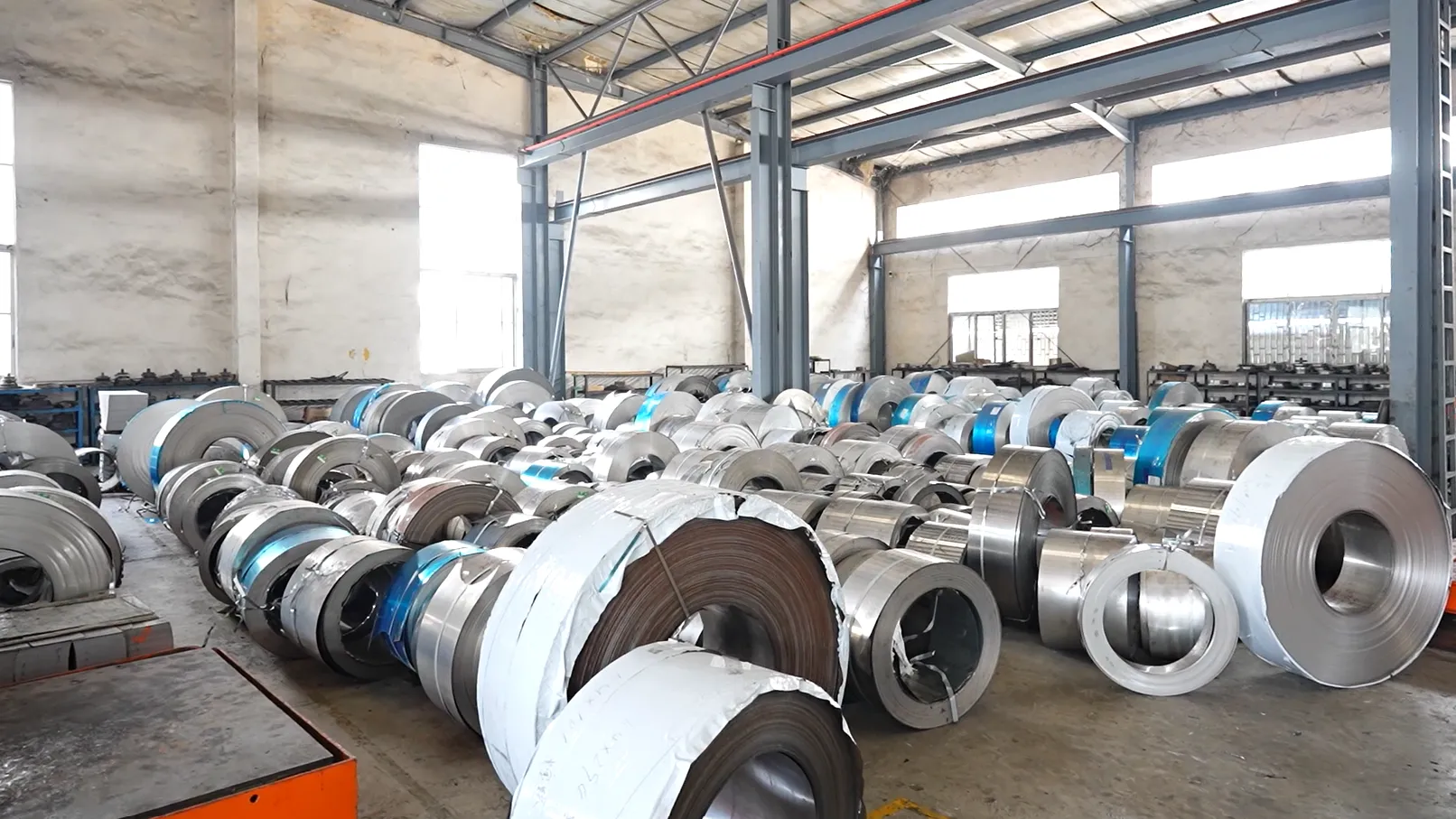
Budget for verification, because the price gap is also the motive. The difference between a 304 cooking surface and a cheaper grade is exactly the incentive to ship the cheaper metal against a 304 order, and the finished pan gives nothing away — both polish to the same mirror. Verification is paperwork-first: a per-batch material certificate traceable to the heat number and to a recognised sheet specification such as ASTM A240/A240M, plus a random PMI spot check across the batch. None of that is exotic; it is routine in a factory that expects to be audited. How nickel pricing and material verification show up in a cookware quotation walks through where those numbers come from on the sourcing side.
And put the material where the order can enforce it. A grade named per part on the specification, with the verification terms written next to it, is a contract. A grade named once for the range is a conversation you will have again after the container lands.
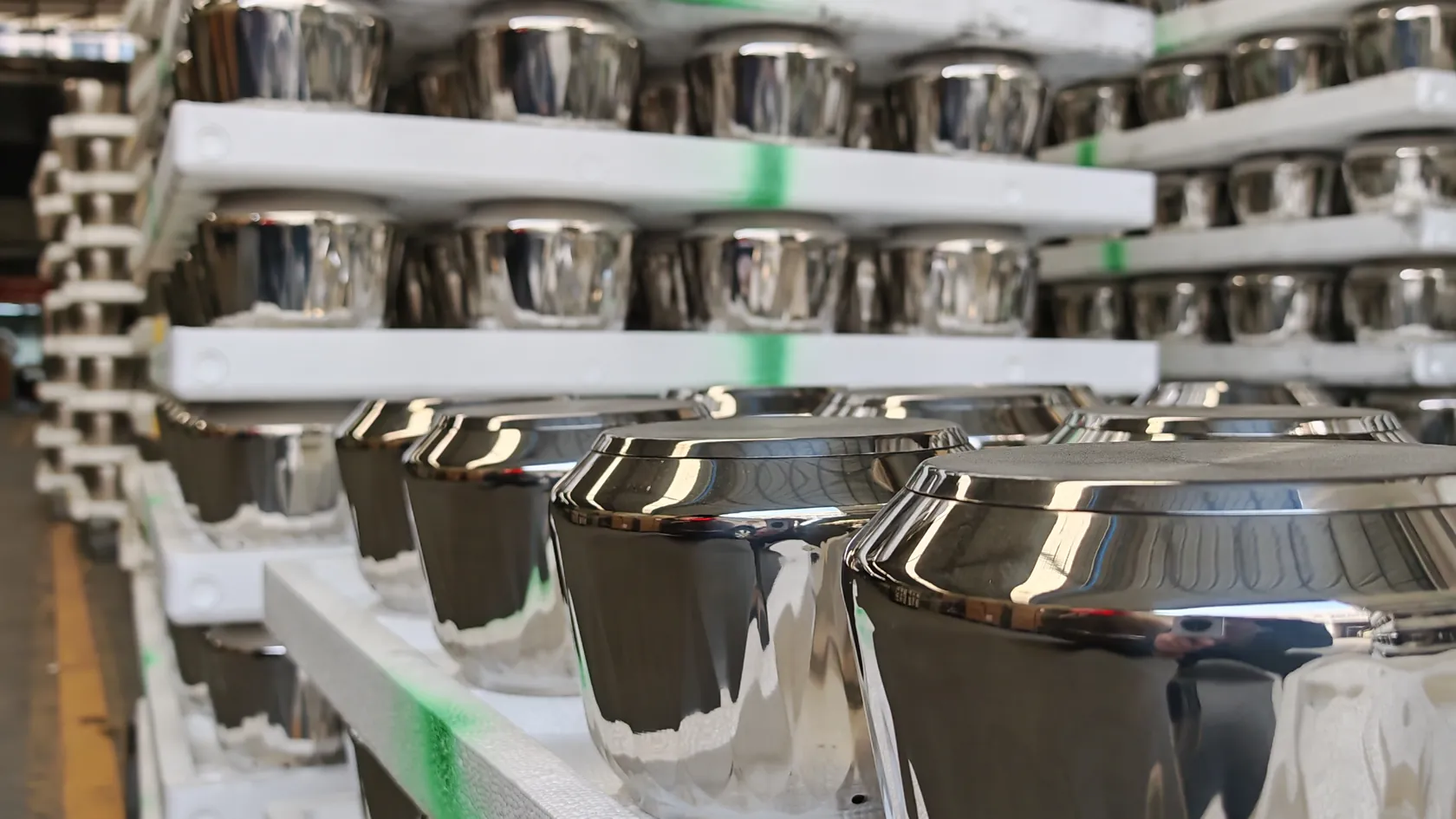
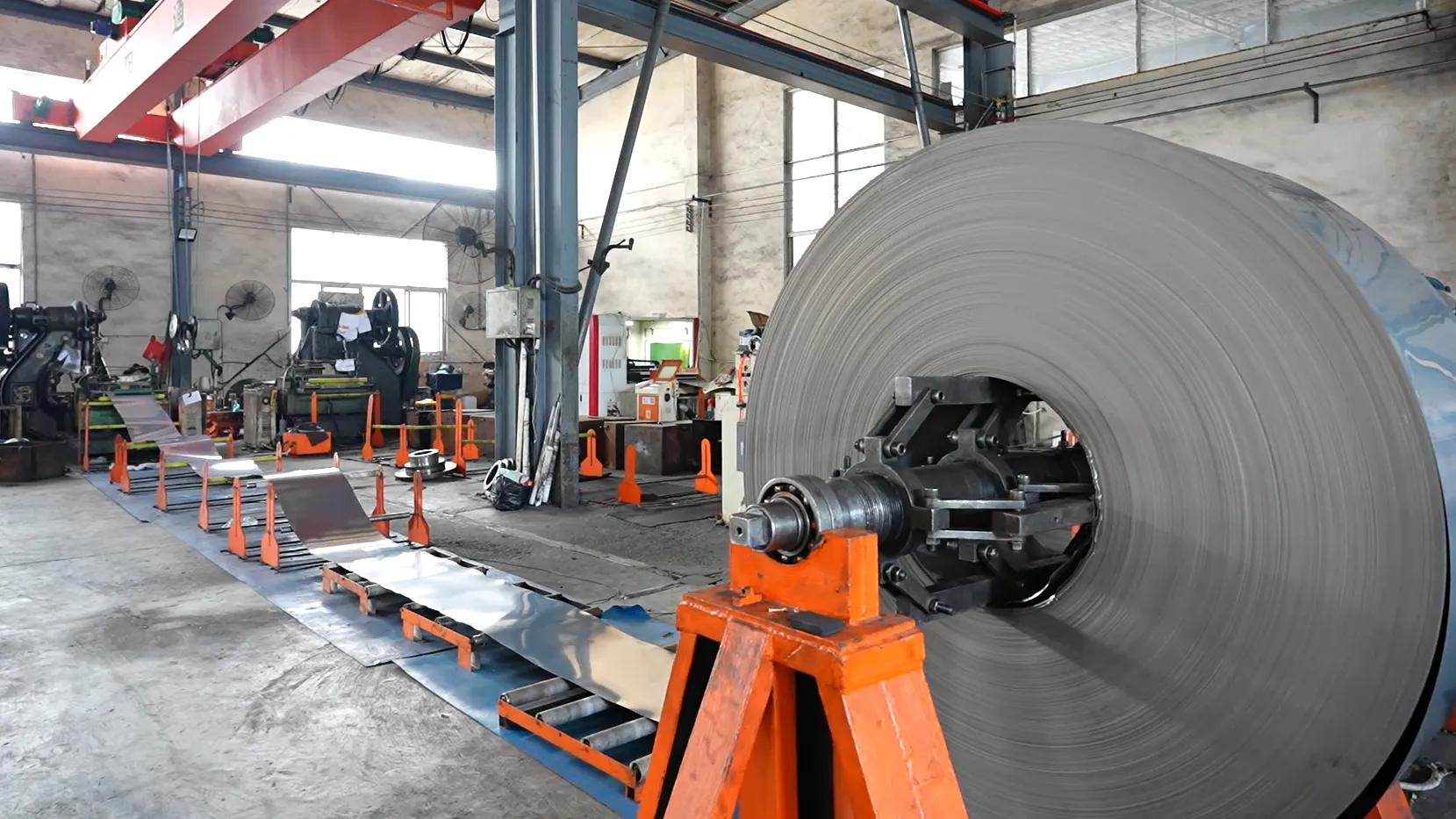
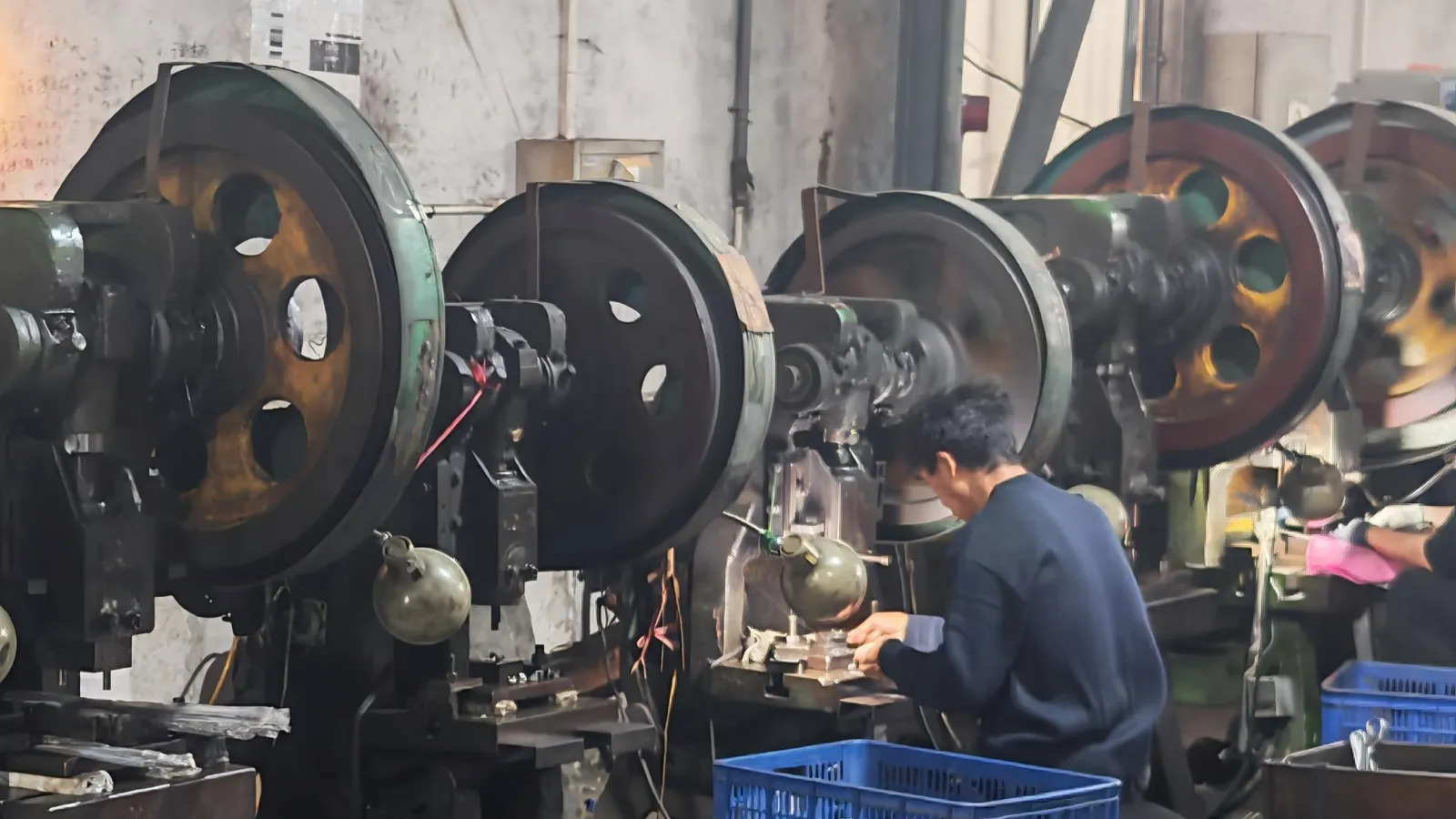
The press shop below is the floor those certificates come off — and the reason a change of base construction is a tooling decision here rather than a re-sourcing exercise.
Placing the material by product line
The material decision falls out of the product. This is the table we start from.
Product line | Starting material and build | Why |
|---|---|---|
Kettle | Single-wall stainless or aluminium body, bonded induction base | Steam does the work; a layered body adds weight and cost for nothing |
Saucepan, 1.5–2.0 L | Clad stainless with an aluminium core; full-body cladding where the wall matters | A cooking surface that meets acid and salt, at a weight a hand can lift |
Casserole / stock pot, 4–8 L | Clad stainless, aluminium-rich base | The food load sits on the base, so base mass is where the value is; weight is the trade-off |
Pressure cooker | Stainless throughout, heavy base | The engineering risk is the safety structure, and food contact is punishing |
Steamer and inserts | Light single-wall or light clad, with a composite bottom | Steam cooks; a composite bottom earns its place on induction and stability, not on heat spread |
Fry pan / sauté, 24–28 cm | Clad stainless, or aluminium for fast response in a price-led line | Centre base thickness and response time decide the choice |
Cookware set | Clad stainless across the set, aluminium-family builds for the non-contact pieces | Keeps the set price workable while anchoring the range on the cooking surfaces |
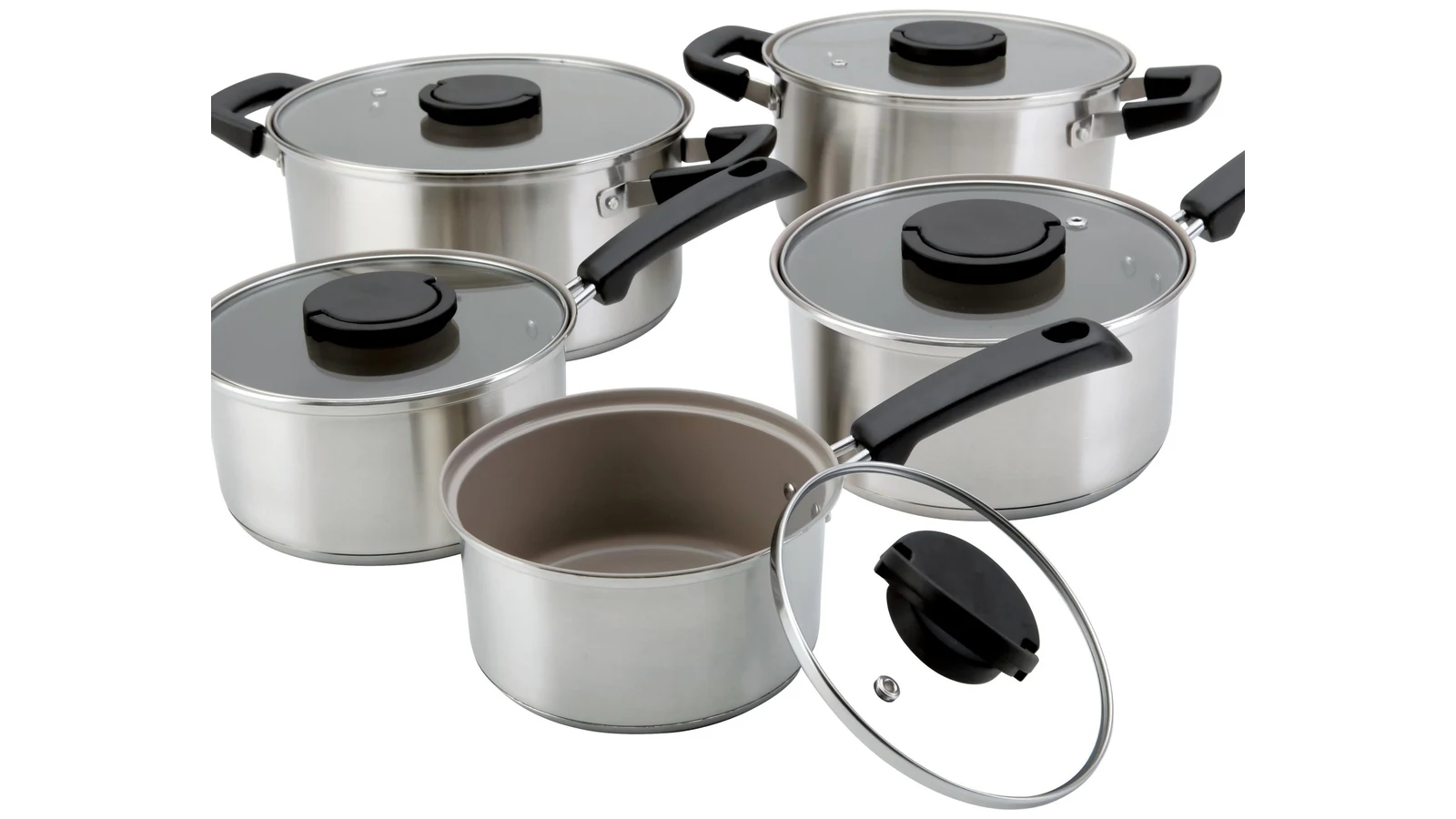
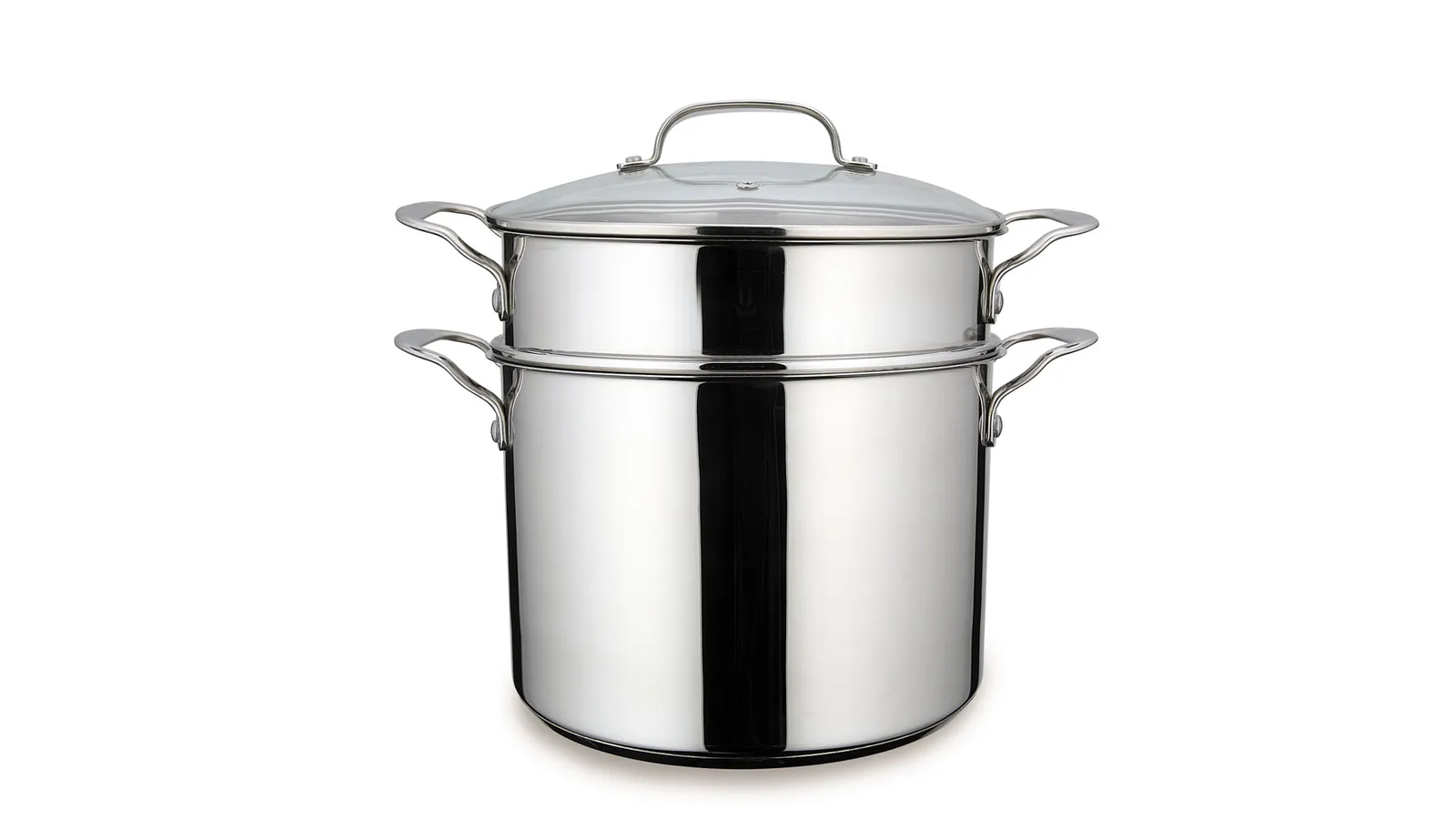
If the material decision lands on our desk, it comes out of one plant rather than a relay of traders. Potobelo is the export brand of Guangdong Zhongbao (Zoombo), a kitchenware manufacturer in Jieyang, Guangdong, with tooling, forming, polishing, welding and packing in house and an impact-bonded composite bottom as a core in-house technology — so changing a base construction or a grade is a tooling conversation rather than a re-sourcing exercise. Minimum order starts from 1,200 pcs per model and depends on the model, finish, packaging and the certification your market needs; we sample first in 7–10 days, then run standard production in 30–50 working days from confirmation, quoted FOB, CIF or DDP before you commit. Our stainless steel saucepans and casseroles are built this way — the composite bottom in the photograph below is the part that carries the induction disc — and the line-planning side of the same decision is covered in building a cookware product line.
Bottom line
Aluminium is the better material where heat and weight decide the product; stainless is the better material where the food-contact surface decides it — and most good cookware is both at once. The mistake is choosing one metal for a range, and the second is choosing on material cost alone: carton weight and freight change the arithmetic more than the per-kilogram spread, and an unverifiable grade is a liability, not a saving.
Key takeaways >- Stainless cookware is not solid steel — it is a stainless-clad aluminium composite. The correct question is how much aluminium is in the base, and where.- Aluminium conducts heat roughly ten times better (162 vs 16.2 W/m·K, quoted at 25 °C and 100 °C respectively) and weighs about a third as much (2.73 vs 7.9 g/cm³). Those are the sourced reasons it sits inside clad stainless cookware.- Bare aluminium has no established food-contact recognition in practice for most import markets; stainless grades are recognised in practice by series, and US practice expects chromium at 16 percent or more.- Induction is a base-construction question in both directions: plain aluminium needs a bonded magnetic disc, and a 300-series stainless body needs a ferritic outer layer.- Price the material per container, not per kilogram. Carton weight and units per container move landed cost more than the per-kilogram spread does.- Verify the metal, not the label: a per-batch material certificate and a PMI spot check are what turn a grade on a quotation into a grade in the container.
Common questions
Is aluminium or stainless steel cookware better for wholesale buyers?
Neither, on its own. For most cookware programmes the right specification is both materials in one vessel — a stainless food-contact surface bonded to an aluminium core — because aluminium spreads heat and stainless survives food and dishwashers. Pure aluminium is the better material where the product is a heat conductor rather than a cooking surface: kettles, value lines, and markets that wash by hand. It is cheaper per kilogram and about a third the density of stainless, which shows in the freight bill. Make the call per part, naming the metal for each component.
Is aluminium cookware safe for food contact?
Bare aluminium has no established food-contact recognition in practice for most import markets — a statement about practice, not about what any regime permits. Compliance is assessed by migration behaviour, not a list of approved grades: in the EU, Regulation (EC) No 1935/2004. Aluminium reacts with acid and salt, so it migrates more than stainless unless treated; hard anodising is the usual retail mitigation, and whether it passes a given market is a testing question, not a label. Stainless is recognised by series, and US practice expects chromium at 16 percent or more.
Does aluminium cookware work on induction cooktops?
Plain aluminium does not work on induction on its own, because induction couples with a ferromagnetic layer and aluminium is not magnetic. Induction-ready aluminium cookware is built with a magnetic steel disc bonded into the base — a manufacturing step, not a property of the metal. Stainless has the same constraint in the other direction: an austenitic 300-series body is essentially non-magnetic in the annealed condition, so induction compatibility comes from the ferritic outer layer of the base, not the body. Either way it is answered by the base construction on the drawing.
Which costs more to import, aluminium or stainless steel cookware?
Stainless costs more, and the reason is nickel: nickel is the price driver in stainless, and the 304 family carries roughly twice the nickel of 201 — 316 more again — which is why the grades spread apart when nickel moves. Aluminium is cheaper per kilogram. The gap that surprises buyers is freight — aluminium is roughly a third the density of stainless, so an aluminium line packs more units per container at the same carton volume, and landed cost per piece falls further than the FOB comparison suggests. Price the two per container before committing a range.
Written by
Potobelo Editorial Team
Sourcing and engineering staff at Potobelo, a stainless steel cookware brand built on 30 years of Zoombo manufacturing in Guangdong, China. We write from inside the plant that makes the product, not from reviewing it.