
Is Stainless Steel Cookware Safe? A Wholesale Buyer's Guide
Stainless steel cookware is not safe or unsafe by material name. It is safe by alloy series and by surface, and it is provable only by what the batch ships with. Written for wholesale importers, distributors and private-label brand owners: the three recognition paths that actually apply in the EU, the US and China, the alloy names your spec sheet will use, and the five lines to add to a purchase specification before the first container.
 Potobelo Editorial Team12 min read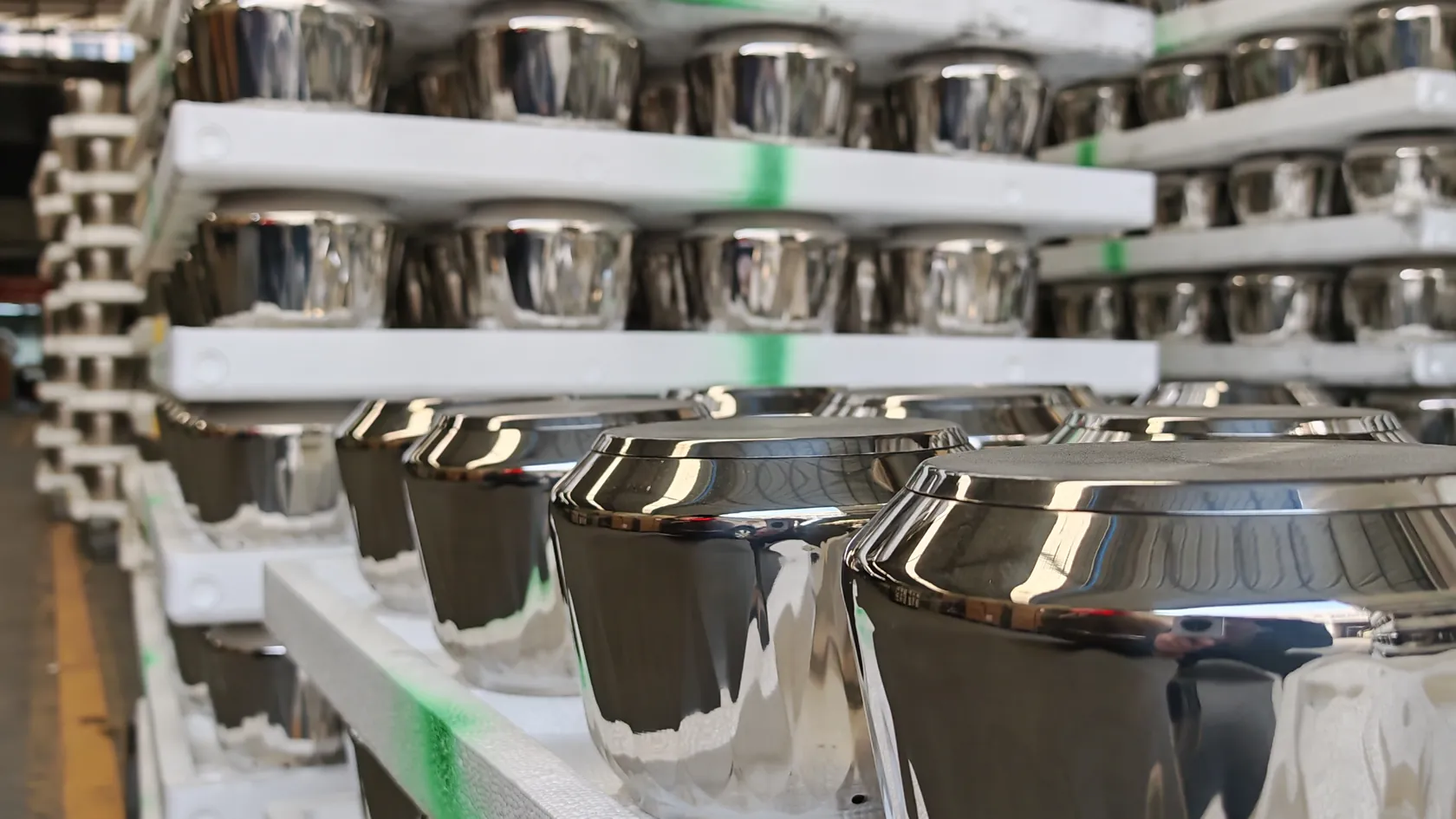
Is stainless steel cookware safe? The short answer
Stainless steel cookware is safe in normal use: it is corrosion-resistant, has no coating that can flake into food, and releases nickel and chromium in microgram amounts — most from new cookware, less as the pan is used. It is not safe or unsafe by material name; it is safe by alloy series and by surface, and it is provable only by the documents that ship with the batch.
That answer is deliberately narrow, because the question is consumer-shaped while its consequence is a buyer's. Almost everything written under the heading of stainless steel cookware safety answers the consumer version — and answers it reasonably — while leaving the buyer's version open: who has to sign off on 20,000 units, and who has to defend the choice in a quality meeting a year later.
For an importer or a brand owner, two decisions sit underneath the question. The first is material: which alloy series is on the surface that touches food, stated per part rather than as a general claim about "stainless steel". The second is evidential: what your supplier can hand you that proves that series, for the batch you actually received. Everything else here serves those two.
Why one answer does not fit three markets
The reason "is it food grade?" produces a different answer in every market is that the three major frameworks regulate different things. None of them publishes a list of approved stainless steel grades, and none produces a certificate you can frame. What they produce is a way of arguing that a specific material in a specific use does not release too much into food.
Market | What the framework actually regulates | What that means for your specification |
|---|---|---|
European Union | Materials must not transfer constituents to food in quantities that endanger health or change the food, across normal and foreseeable use — the migration principle set by Regulation (EC) No 1935/2004. Specific Union legislation exists for plastics and ceramics; the Commission states that other materials, metals included, are covered by national legislation. | There is no EU-wide whitelist of stainless grades to point at. Your EU buyer will ask about migration behaviour and the declaration behind the article, not about a grade number. |
United States | Food-contact substances are reviewed per substance and per intended use. FDA sets out that each component must fall under a rule in Title 21 CFR, GRAS status, a prior-sanction letter, a threshold-of-regulation exemption or an effective food-contact notification — see Determining the Regulatory Status of Components of a Food Contact Material. | The relevant US position for stainless alloys is correspondence, not a list: an FDA reply letter to an alloy supplier, published by that supplier, records that stainless steel with a minimum chromium content of 16% is acceptable for food-contact equipment, that AISI Series 200 and 300 qualify, and that within Series 400 only Type 430 and above do — the lower 400 types, at roughly 10.5% chromium, do not. |
China (export origin) | GB 4806.9-2023, the metal materials standard, works by specific release limits for alloy and impurity elements, and requires three migration tests on repeated-use articles with the third test deciding compliance for stainless steel — see TÜV Rheinland's summary of the October 2023 GB revision. Test method general rules moved to GB 31604.1-2023 at the same revision. | Compliance is measured, not named. When a supplier says a pot is "GB compliant", the meaningful follow-up is which release limits were tested against and on which model. |
Two consequences follow. The framework that matters is the one in your destination market, so one specification sheet cannot serve an EU importer and a US buyer identically. And food grade stainless steel cookware is a phrase buyers use in a specification without a regulator behind it — worth separating the phrase from the concept.
What "food grade stainless steel" does and does not mean
The common answers — "304, or 316, or 420" — are the source of the confusion. As the three frameworks above are written, none of them maintains a regulated category called food grade, and none keeps a register of grades that a material can be on or off.
The consequences change what you ask a supplier:
- No grade is "the" food grade. The criteria in use are series identity plus chromium content, or release limits measured in a lab — not a badge. The pillar guide on this site covers stainless steel cookware grades and what each one is recognised for; this article stays on the food-contact question.
- 201 carries no established food-contact recognition in the markets most of our buyers sell into. That is a statement about trade practice and buyer expectations, not a legal prohibition. Where a framework describes acceptance by series and chromium content, a 200-series grade that meets that chemistry can be argued into it — which is exactly why the defensible position is the document set per batch rather than a grade ban. Grade 201 is still widely specified, and it still runs on part of our own line; but where the cost of being wrong is higher than the cost of the metal, such as a sealed pressure vessel, the specification should not default to it. The grade-by-grade comparison, including where 201 and 304 diverge in service, is in 201 vs 304 stainless steel.
- Family names repeat the trick. "18/10" describes chromium and nickel content, not a safety level, which is why a 316 pan is often written 18/10. Naming convention and performance are two different conversations.
Which surface is actually in contact with the food
Buyers treat "the pot" as one material. In production it is several surfaces, and they are not equally specified:
- The interior of the body — the surface food sits against, and the one your finish specification should name.
- The lid and its interior, which on a pressure cooker is a pressure and safety surface, not a passive cover.
- Weld seams and joints — handle attachments, spout joints and any fitting welded to the food side. A weld is a material transition, and an unfinished seam is a cleanliness problem before it is a chemistry problem.
- The base and its composite build, where an impact or aluminium layer is bonded under the cooking surface. The bond sits outside the food-contact surface on most constructions, but it runs through the same line and process control.
This is where the US commercial food-service rule is unusually concrete, and it is quotable to a factory: the FDA Food Code requires food-contact surfaces of equipment to be durable, corrosion-resistant and non-absorbent, finished to a smooth and easily cleanable surface. "Corrosion-resistant" is defined in the same document by what a material keeps doing under prolonged contact with food and cleaning chemicals — which is the property that separates one interior from another over service life, regardless of what the first lab test showed.
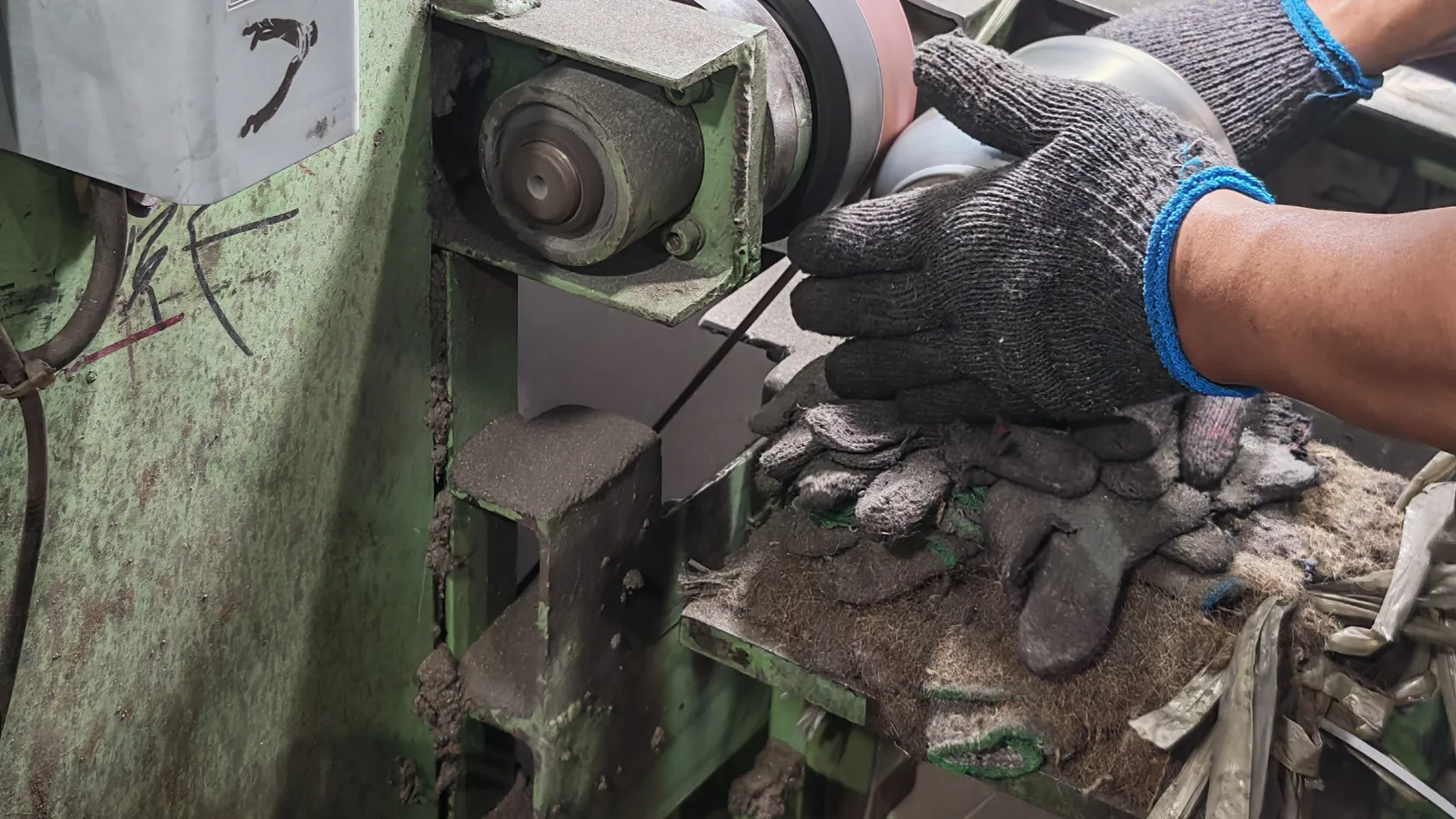
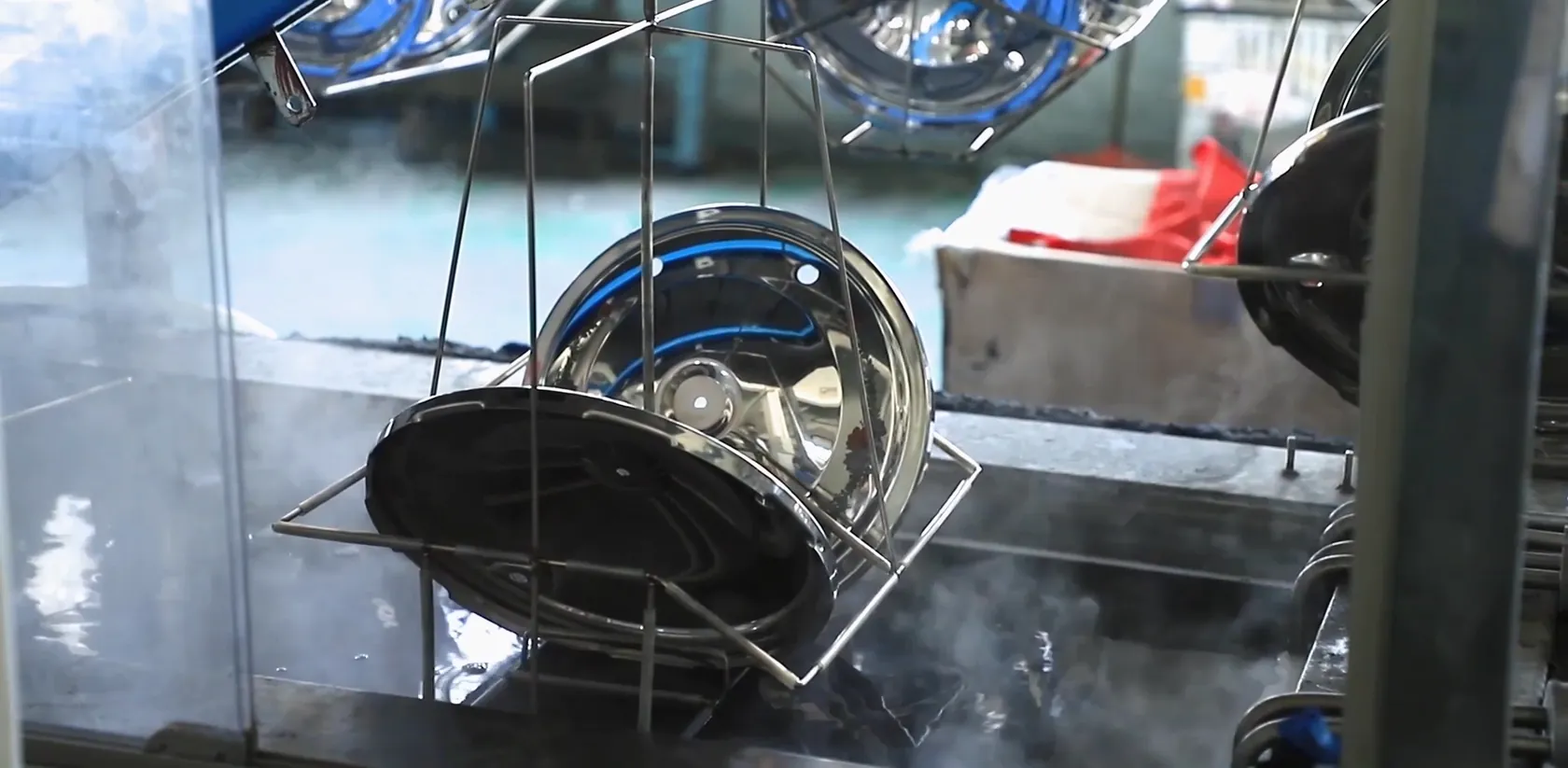
What makes that property fragile is the process, not the grade. Welding locally removes the oxide layer that makes stainless steel corrosion-resistant in the first place, so where a food-side seam exists — a handle boss, a spout joint, a base ring — the seam is dressed and the part goes through surface treatment afterwards: pickling to remove the heat tint, then passivation to restore the passive layer. Ask which of those steps your supplier does in-house, and on which parts; a finish specification that stops at the interior polish describes half of the surface the food meets.
Does the metal keep releasing more as the pan gets older?
No — the opposite, and the number is worth knowing because it is the fact buyers most often get backwards. Nickel leaching from cookware is the most common worry buyers bring to us, and the useful data on it is published rather than argued.
A published study on leaching from stainless steel during cooking, summarised by Oregon State University's food safety programme, cooked tomato sauce in stainless vessels across grades and durations. It found that cooking with new stainless steel produced the largest increases in nickel and chromium, that leaching decreased across sequential cooking cycles and stabilised after the sixth cycle, and that even then the metal contribution to the food was still measurable — an average of 88 μg of nickel and 86 μg of chromium per 126 g serving at the tenth cycle.
Two things follow. First, the first-use wash-in is known behaviour of the material, not a defect in one plant's goods, so a field complaint about a metallic taste in a brand-new pan usually has a technical explanation rather than a materials fault — which is also why the Chinese metal standard tests repeated-use articles three times and decides stainless steel on the third result. Second, release is driven by food and time more than by the name on the box: acid, long cooking and a worn interior all push it up.
And higher alloy does not switch it off. Research on cooking in 18/10 (grade 316) stainless steel pots found measurable nickel and chromium release in ordinary foods, rising with cooking time and with acidity — useful context when a private-label brief specifies 316 as a consumer-facing safety message rather than an engineering choice. The same work found those amounts below known allergy-triggering thresholds and judged 18/10 pots safe under common conditions for the majority of nickel- and chromium-allergic subjects. Both halves matter to a supplier: the release is not zero, and the material is not the health hazard a bare release figure suggests. The naming side of it — why a 316 pan is often written 18/10 — is covered in 18/10 and 18/8.
The surface that does the releasing is set in production, not by the grade name on the invoice: alloy, finish and seam treatment are decided at stations like this one.
Where 304 is specified alone, and where 201 still runs
This is the one place where our own line has an opinion.
Pressure cookers are specified in SS304 only. A pressure cooker is a sealed vessel: it must hold pressure across years of heating cycles, resist a wider range of liquids than an open pan sees, and stay stable at working temperature. That is an engineering requirement first and a materials one second, which is why the pressure cooker line does not offer 201 at all. The buying consequences — device set, sizing ladder, packing, spares — are the subject of their own walkthrough on wholesale pressure cookers.
Across the rest of the range, 201 and 304 both run, and on some water kettles both are offered as options on the same model. That is not a hedge: for an open pan, the choice between them moves cost and service life, and a buyer with a price-point brief is making a legitimate decision — provided the alloy is written per model and per part.
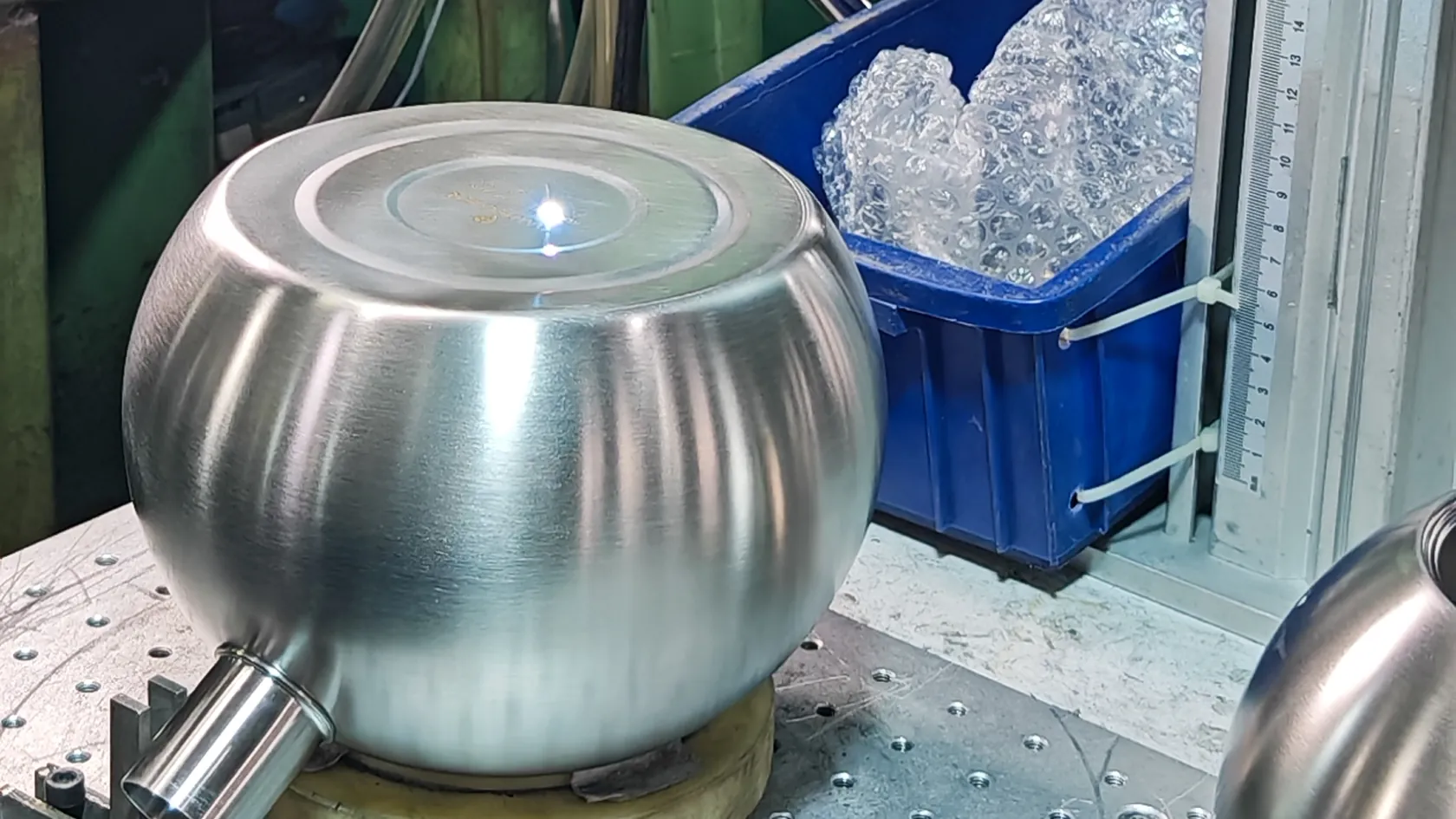
If a brief asks the blunt question — is 304 stainless steel food safe — the answer is the same criteria as above: accepted by series and chromium content, judged by measured release, and not something a certificate stands behind on its own. The interior finish this article asks you to specify is produced on our own polishing lines rather than bought in.
What to put in the purchase specification
The article so far answers the safety question. This section is the part you can paste into an RFQ, and it is where the safety answer becomes enforceable.
Line to add | What you write | What it replaces |
|---|---|---|
Alloy per part | "Body / lid / food-side fittings: SS304" (or SS201 where you accept it) — one line per part, not one line per product | A category-level claim like "food-grade stainless steel" |
Surface and finish | The interior finish in the terms the plant uses — the polish or grit designation you are buying — plus whether food-side weld seams are dressed and treated | Silence, which the factory fills with its default |
Document set | Material certificate for the coil batch (heat number where available), test report naming the model, declaration or compliance statement for the destination market | "Certificate of food safety" |
Test scope | Which release limits or migration tests apply, on which model, tested once or per batch | A report for a sibling product |
Receipt check | What you verify at the port or your DC, on the batch in front of you | Verification implied by the order |
The document question deserves one extra sentence, because it is where buyers lose the most time. A certificate is usually a statement about an entity; a test report is a statement about a product; a material certificate is a statement about a batch of metal. When a supplier sends you a document, the useful question is not "does it say pass" but "which of those three is this, and which model does it name". One question sits outside the three: on a private-label programme, who is treated as the responsible operator in your market — you as the brand owner, or your importer of record. That is settled by paperwork, and better before the first container than after the first complaint. If you are still structuring the buying process itself, the sequence we see work is in how to source cookware from China.
One caveat applies to everything above: this describes how recognition and testing work in practice for the markets named, and it is written for procurement decisions. It is not compliance or legal advice for a specific product or country, and the framework governing your order is the one in your destination market — take that reading from your own compliance resource or importer.
Where this leaves your next order
Three moves, in this order. Write the alloy per part into the specification instead of accepting a category phrase. Ask for the three document types by name and check which model each one covers. And when the material decision carries real consequence — a sealed vessel, an acid-heavy use case, a market with a strict release-limit regime — stop optimising the metal on price and let the framework in the destination market drive it.
If you import into a market we already ship to, send us the model list and the market and we will specify per model rather than per category. The buyer relationships we work through — importers, distributors and private-label programmes — are set out in how we work with importers and distributors.
Common questions
Is stainless steel cookware safe for cooking?
In practice, yes — stainless steel is what the US Food Code's own criteria describe as suitable for a food-contact surface: durable, corrosion-resistant, non-absorbent, smooth and easily cleanable, and it is the material commercial kitchens and food plants use as their default. The metal is not inert in an absolute sense: cooking acidic food, especially for hours, does release measurable nickel and chromium into the food, and the amounts are highest when cookware is new and fall as the pan is used. For a buyer, the practical question is therefore not whether stainless steel is safe but which alloy series is on the food-contact surface and what document proves it for the batch you shipped.
Is 201 stainless steel food safe?
201 has no established food-contact recognition in practice for the markets we export to. That is a statement about how buyers and their regulators treat it, not a legal prohibition: no framework we can point to publishes a list naming grade 201, and you should be sceptical of anyone who says 201 is banned or that another grade is certified by name. Where a framework describes acceptance by series and chromium content, a 200-series grade that meets that chemistry can be argued into it — which is why the defensible position is the document set per batch rather than a grade ban. Grade 201 is nevertheless widely specified in cookware, including on part of our own range, so the useful question is what the material has to carry for your market. Where the material decision carries more risk — a pressure vessel, for example — the specification should not be left to the lower-cost grade.
Do I need a certificate to prove stainless steel cookware is safe?
There is no single certificate that makes stainless steel cookware safe, and any supplier offering one is simplifying. What exists is a document set that answers three separate questions: the alloy actually used per part (a mill or material certificate tied to the coil, ideally with a heat number, proves chemistry); the surface and the finished article as tested (a test report proves a product, and it belongs to one model, not to a catalogue); and the framework the destination market applies (an EU declaration of compliance, a US regulatory position, or a GB 4806.9 release-limit report). Ask for all three, and ask which model each document actually covers — a document that names another product proves nothing about yours.
What is the difference between 304 and 316 stainless steel for food contact?
Both are austenitic chromium-nickel series, and both sit in the same acceptance band in the frameworks that describe metals by series and chromium content, so 316 is not 'the safe one' and 304 is not the compromised one. The real difference is corrosion resistance: 316 adds molybdenum, which raises performance against chlorides and aggressive environments, and it costs more. It is not a lower-release material — published research on cooking in 18/10 (grade 316) stainless steel pots found measurable nickel and chromium release in ordinary cooking, as it does for 304, though the same study found those amounts below known allergy-triggering thresholds. Choose 316 when the service environment justifies it, not as a consumer-facing safety claim.
Written by
Potobelo Editorial Team
Sourcing and engineering staff at Potobelo, a stainless steel cookware brand built on 30 years of Zoombo manufacturing in Guangdong, China. We write from inside the plant that makes the product, not from reviewing it.