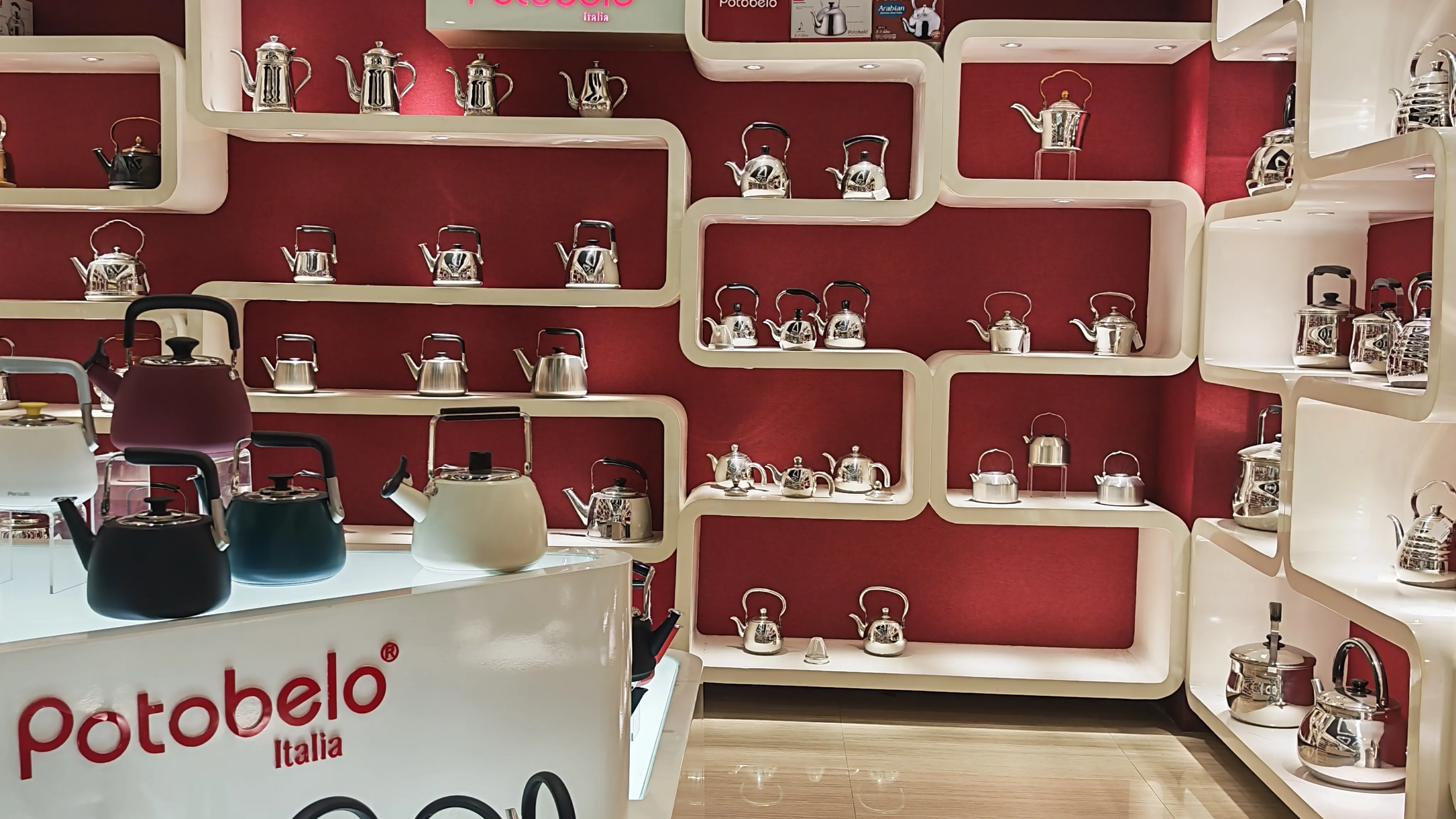

Wholesale Pressure Cookers: What Importers Need to Know Before the First Container
The lid on a pressure cooker is not a cover — it carries every safety device on the product. This guide is written for wholesale importers, distributors and brand owners building a pressure cooker programme: the specifications to lock down before you commit, the documents worth asking for and what each one actually proves, and the packing and receipt checks that keep the second order profitable.
 Potobelo Editorial Team14 min read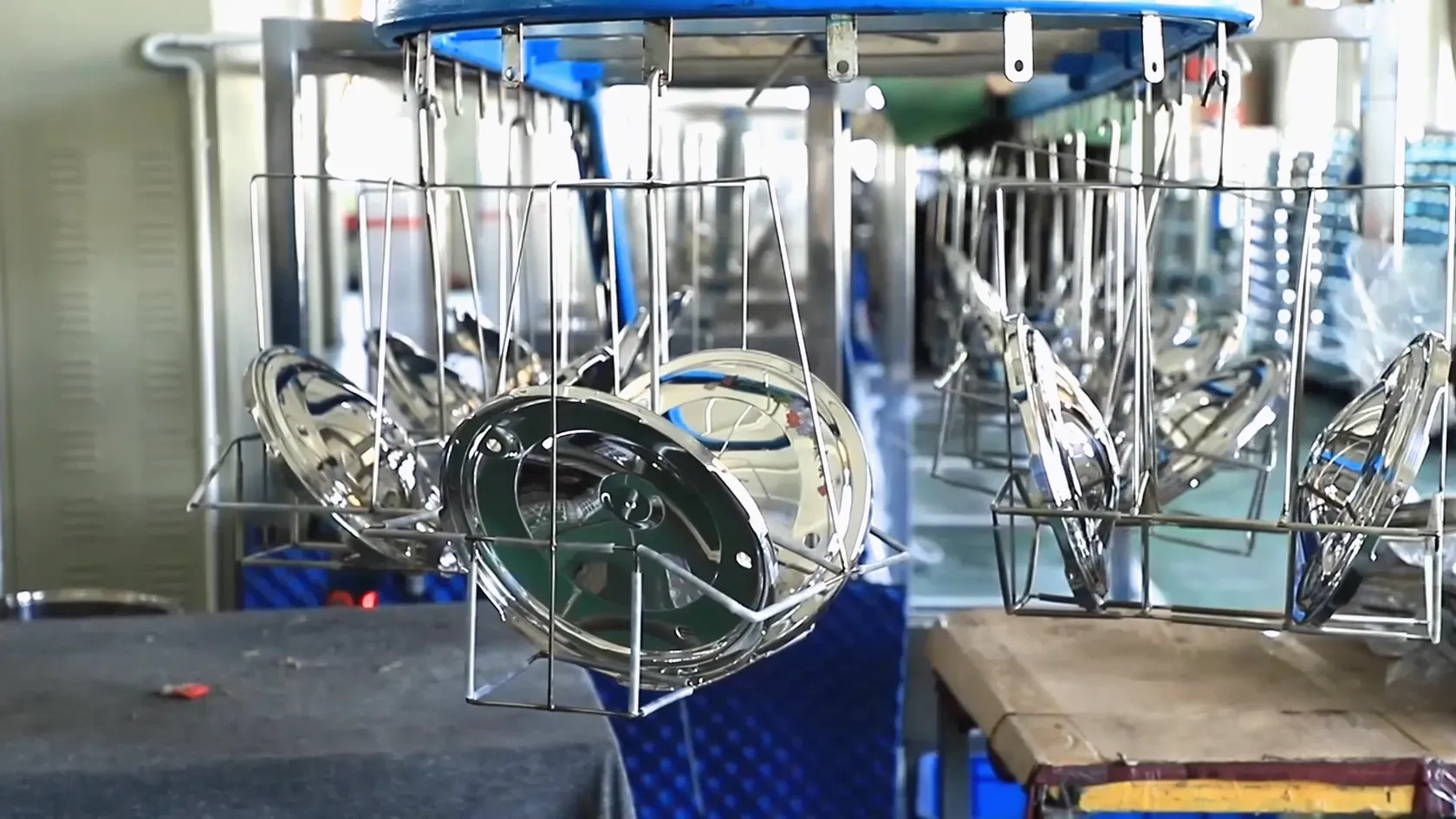
Why wholesale pressure cookers are a specification problem, not a price problem
If you import cookware, wholesale pressure cookers are the one line where a wrong decision comes back as a recall, not as a customer complaint.
The category is harder than the rest of the shelf: the body is a pressure vessel, the lid is a mechanism rather than a cover, the sealing ring (what a factory calls the gasket) is a consumable your customer has to replace, and the rules sit on top of the food-contact rules covering every other pot.
Which is why price is the weakest way to choose a supplier here. Two quotations for the same 6-litre cooker can look identical and differ in four places that are not printed on the quotation: the alloy behind the cooking surface, how many safety devices sit on the lid, whether the sealing ring is a stocked spare, and whether the carton survives a container. Those four decide your landed cost after the first reorder, not before it.
If you are still structuring the programme itself, our walkthrough on starting a cookware wholesale business covers how a first order should be built.
Body material: why pressure cookers are 304-only
Start with the alloy. Every other decision sits on it, and it is the specification most likely to move between the sample and the bulk run.
In practice the industry works across two stainless grades, 201 and 304, and most categories use both depending on the price band a buyer targets. Pressure cookers are different: the body has to hold pressure, resist corrosion from a wider range of cooking liquids than a saucepan ever sees, and keep doing both across years of cycles. Across the Potobelo line, pressure cookers are specified in 304 only — a product fact a supplier should state per model, not "food-grade stainless steel", which describes nothing you can verify.
Aluminium is the other material at the bottom of a pressure cooker price band, and it changes the comparison rather than the price. An aluminium body is lighter and cheaper to make and to ship, which is why it anchors the low end of most markets — but it is softer, dents where stainless does not, and needs a steel base or insert before it will work on induction. Treat an aluminium quote as a different product decision, not a cheaper version of the same vessel: it moves your freight cost, the wall thickness you can hold across a bulk run, and the surface your customer judges at eighteen months. If your shelf carries both, keep them as separate RFQ line items — every pressure cooker on our own line is stainless.
What matters commercially is not the grade name but how the grade claim is evidenced. The US position is not a list of approved grades: FDA reviews proposed uses of metals for food contact case by case, and published FDA correspondence to an alloy supplier sets out the criteria applied — stainless steel with a minimum chromium content of 16%, in wrought AISI 200- or 300-series grades with an appropriate surface finish, is acceptable for food-contact equipment, while the lower-chromium 400-series types are not. There is no "FDA-approved stainless steel" certificate to ask for: you ask for the alloy series, and the mill certificate behind it.
The FDA Food Code requires food-contact surfaces to be durable, corrosion-resistant, nonabsorbent, smooth and easily cleanable — the written reason a rough interior or an unfinished weld is a defect rather than a matter of taste. On why 201 and 304 are not interchangeable, 201 vs 304 stainless steel is worth reading before you send an RFQ.
The alloy and the finish are what the sample run and the bulk run have to agree on.
The safety device stack you should be able to name
Ask a supplier what is on the lid of a wholesale pressure cooker and you will usually hear "double safety". That is not a specification.
A classic domestic pressure cooker lid carries a small stack of devices, and you should be able to name each one:
- The pressure regulating valve — holds the vessel at working pressure and releases steam during cooking.
- The overpressure safety valve — a second, independent path that vents if the primary device is obstructed.
- The anti-block cover over the vent, keeping food debris out of the pressure path.
- The lid interlock — prevents the lid being opened while the vessel is under pressure.
This is not a list we invented. EN 12778 is the European standard for cookware — pressure cookers for domestic use, and its scope is defined by two numbers worth knowing: portable cookers with a gross volume up to 25 litres, and a working pressure above 4 kPa and below 150 kPa. It names the device families above separately — pressure control device, pressure indicator, safety device, decompression device and safety at the opening, each with its own requirement and test as the contents page shows. The 2005 amendment adds spare part identification, including how the sealing ring must be marked when it performs a safety function.
One more line belongs in front of your supplier's compliance colleague: EU Directive 2014/68/EU names all pressure cookers, without qualification, among the pressure equipment that must satisfy its essential safety requirements. Pressure cookers are sometimes filed internally as ordinary kitchenware; the directive text does not.
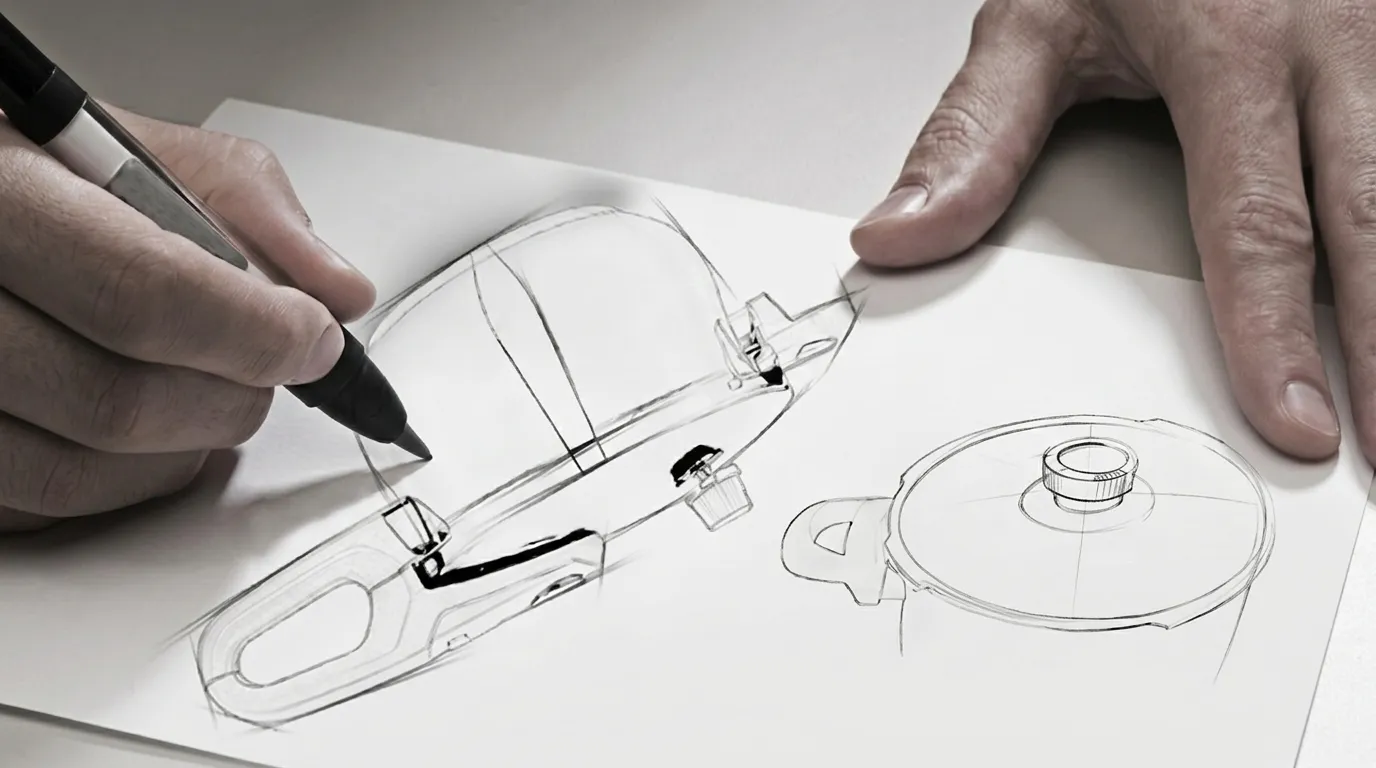
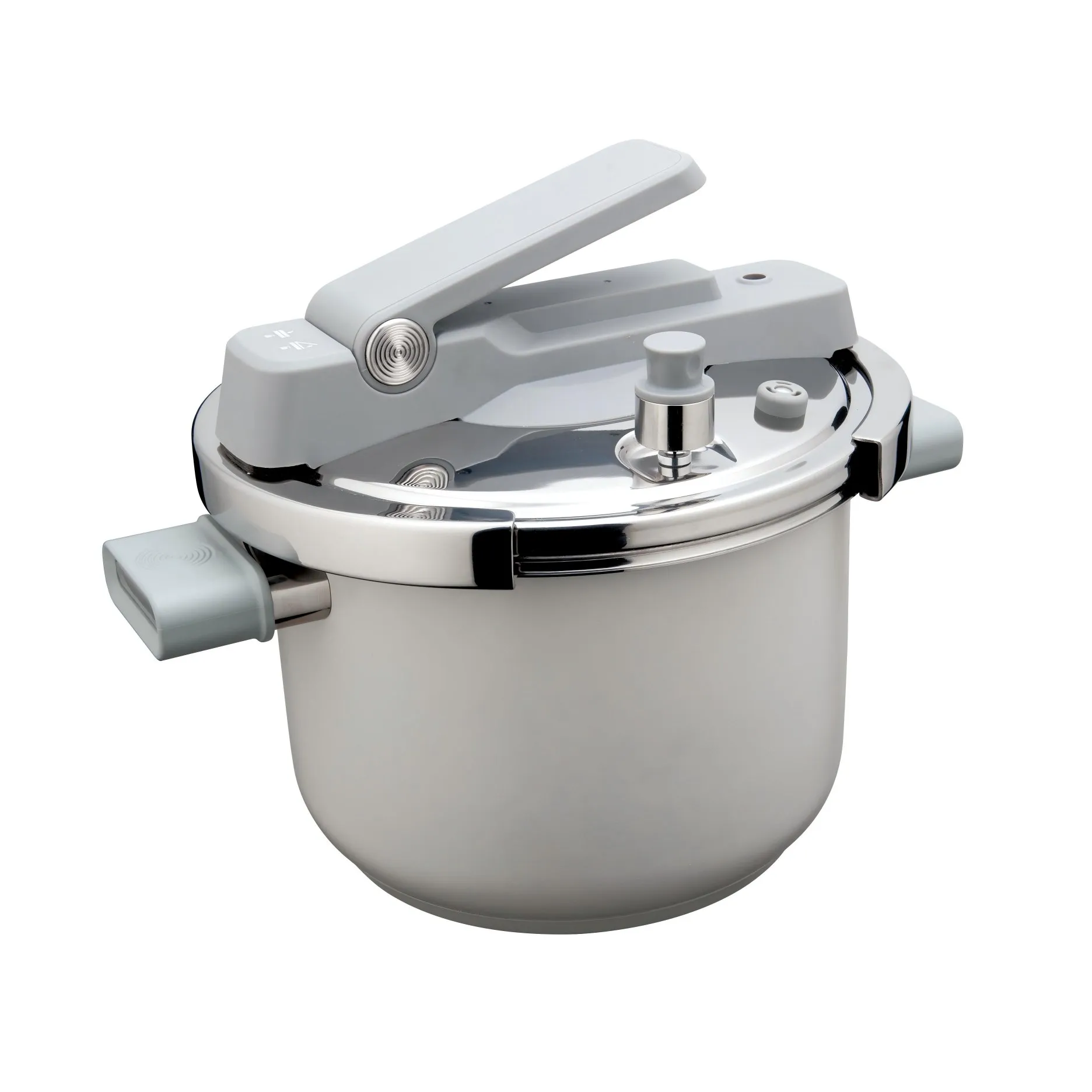
Every device on that list lives on the lid. The body is a formed pot; the lid is the mechanism.
The capacity ladder: sizing a wholesale pressure cooker range
You do not need a full size ladder to open a market — you need three sizes, chosen off your shelf rather than the supplier's catalogue. Diameter drives what fits on your customer's hob and in your carton; capacity drives the price step between models.
Range | Diameters | Capacities available |
|---|---|---|
Venus series (models V1 / V2) | 22 cm | 4 L · 5 L · 6 L · 8 L |
Cook Essential series (model BYPC) | 16–26 cm | 2 L · 3 L · 4 L · 5 L · 7 L · 8 L · 10 L |
Cook-Smart series (model CSBC3) | 20–26 cm | 4 L · 5 L · 6 L · 7 L · 8 L · 10 L |
Micro pressure cooker, low-pressure line (model WY) | 22–24 cm | 4 QT · 5 QT · 6 QT · 8 QT |
Read the last row as its own line: a micro-pressure cooker runs at a lower pressure than a classic one, so its device set follows that pressure regime rather than the four-device stack above. Ask for the safety device list per model, with the supplier flagging where the set differs.
Two things decide more commercial outcomes than the rest of that table. The first is the unit: if your market sells in quarts and the factory quotes in litres, the size on your shelf and the size in the specification are two different numbers — settle the conversion in writing per model before artwork goes to print. The second is the base: a market with a meaningful induction share needs a multi-layer composite base, formed and bonded as part of the vessel rather than fitted afterwards.
The other sizing question sits on the far side of the same ladder. If you supply restaurant, hotel or catering kitchens, this ladder is the small end of that channel: a commercial kitchen buys litres per batch and units per shift rather than household servings. That is also where the domestic boundary of EN 12778 matters — its scope stops at a gross volume of 25 litres, so a vessel above that line sits outside the standard this guide cites. Ask the factory which route it uses for the larger unit.
The ranges above are the ones we quote from, and the full specification for each is published on our pressure cooker range page — a reference for the complete ladder you are choosing three sizes from.
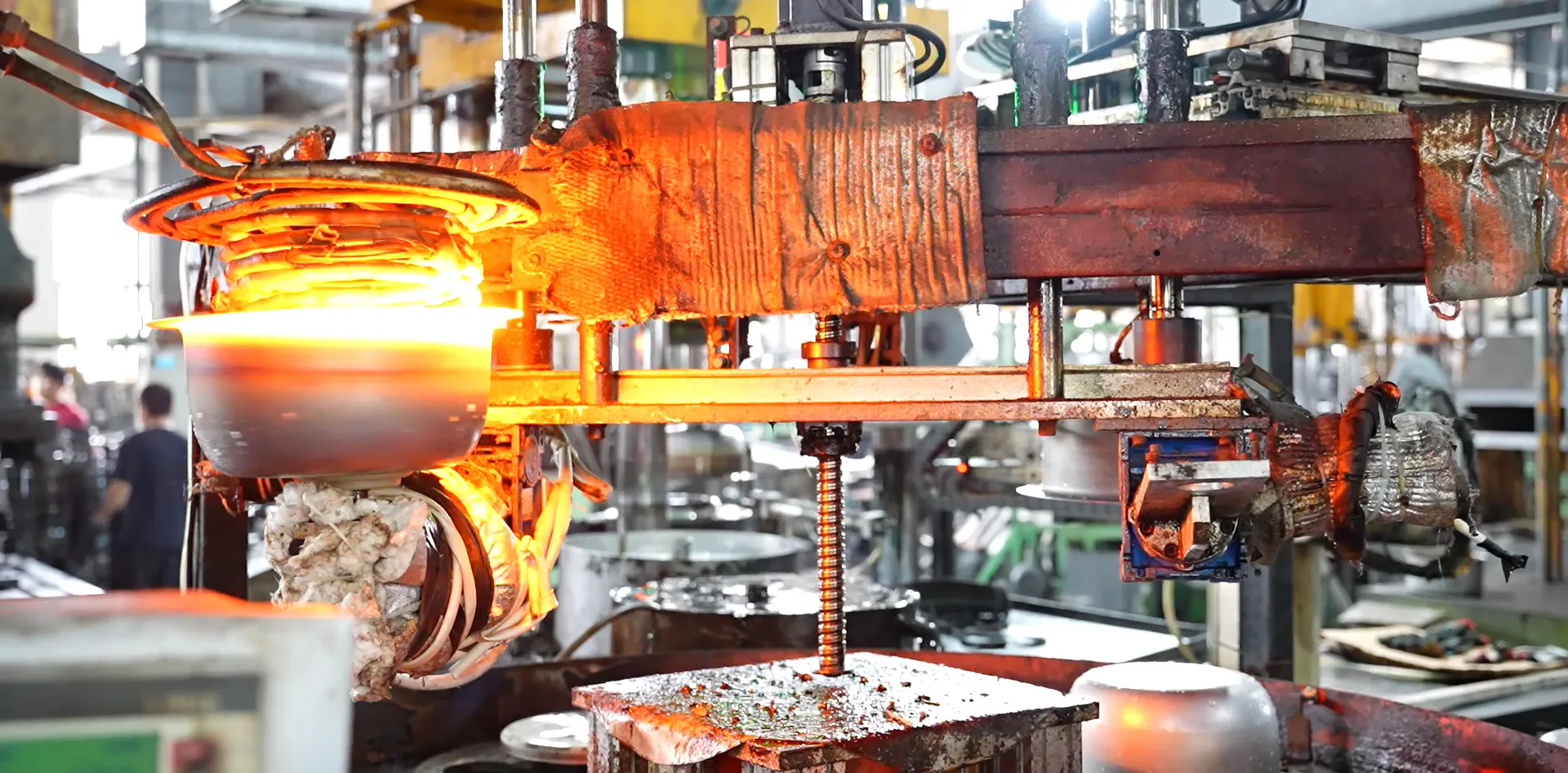
A composite base is made on the line, not bought in — and a quote that gets cheaper when you stop asking about the base got cheaper there.
Rim, lid fit and wall thickness: where a thin spec shows up
When two quotations for the same wholesale pressure cooker differ by more than you can explain, the gap is almost always in three places no photograph shows.
The rim. The body rim has to be flat and concentric enough that the lid seats and seals the same way on the ten-thousandth unit as on the sample. An out-of-flat rim cannot be seen, and cannot be fixed with a new sealing ring.
The wall. Ask for the material thickness of the body and the lid in millimetres, per model. "Heavy-duty" and "thickened" are adjectives; a number is a specification — and thickness is the easiest thing for a supplier to shave silently between the first order and the third.
The sealing ring groove. The channel the ring sits in has to hold it without pinching: a pinched ring leaks, and a leaking ring is a return. Ask how the groove is checked — a go/no-go gauge on the line beats a visual check at the end.
One question cuts across all three: who owns the tooling. A plant with its own toolroom can correct a lid fit or a groove dimension and re-run your sample; one that outsources dies adds a third party and a week to every change. The answer also tells you whether your product has a stable spec at all.
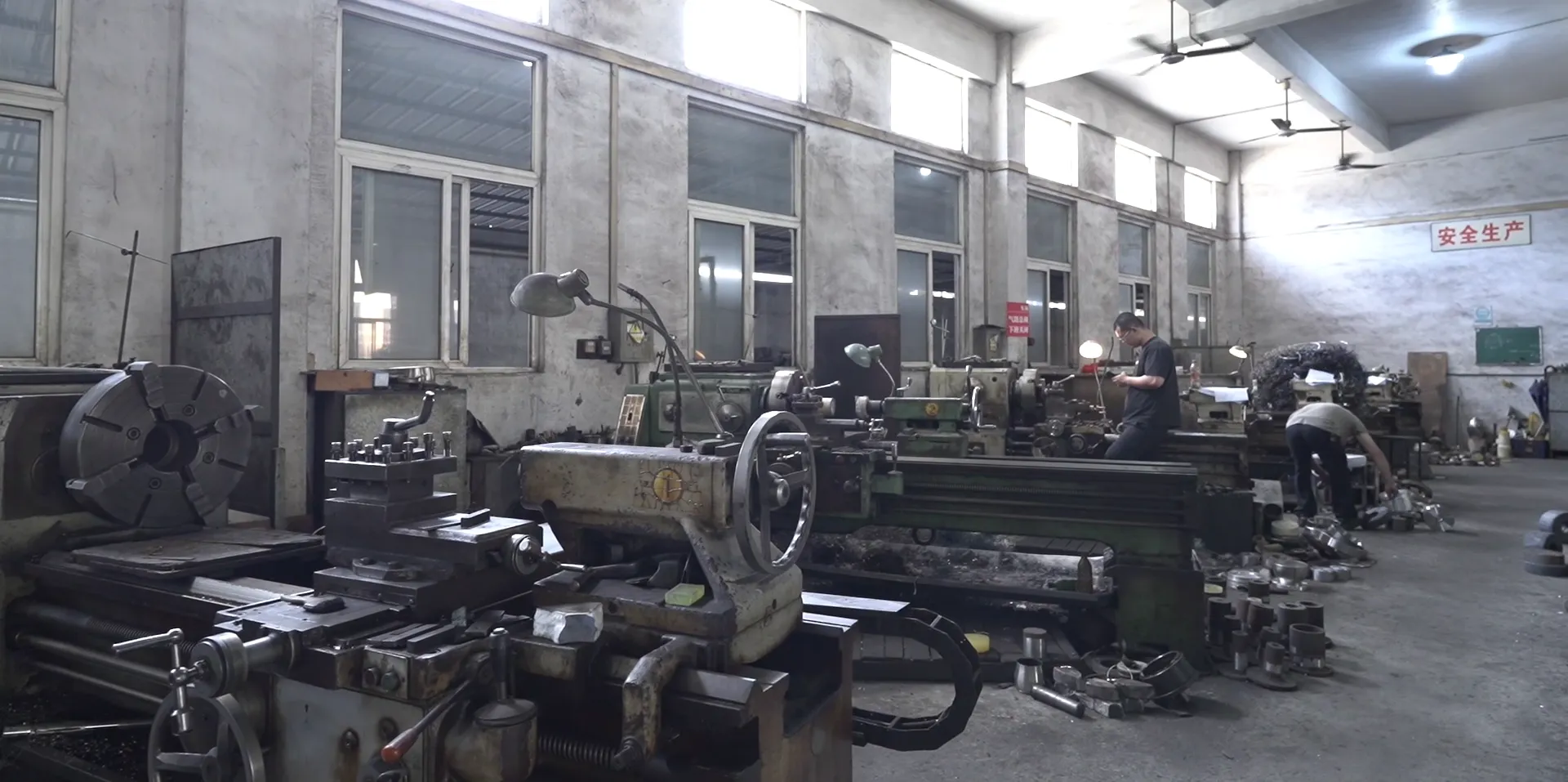
Own tooling means a lid-fit correction is a shop-floor change, not a project with a third party in it.
Compliance documents: what to ask for and what each one proves
Requesting documents for wholesale pressure cookers is easy. Knowing what each one proves is what stops a shipment being held — and the three main markets regulate this differently, none of them the way buyers assume.
The EU regulates behaviour, not grades. Regulation (EC) No 1935/2004 requires materials and articles to be manufactured in compliance with good manufacturing practice so that, under normal or foreseeable conditions of use, they do not transfer their constituents to food in quantities that could endanger health. The limits are not set by the framework regulation itself: it provides for specific limits on the migration of certain constituents, and for an overall migration limit, to be set by specific measures adopted under it — and for stainless steel no such EU-wide specific measure exists. There is no whitelist of "approved" stainless steel grades to point at, which is why the test report and the entity behind it matter more than a grade name in a catalogue.
China works to specific release limits. GB 4806.9 is the national food safety standard for food-contact metal materials; the 2023 revision replaced the 2016 edition with a different set of specific release limits, and base metals and platings on the food-contact surface are not to use lead, cadmium, arsenic, mercury, antimony, beryllium or lithium as alloying elements. A TÜV Rheinland bulletin on the 2023 GB updates summarises the change.
The US is case by case, as covered above: composition and grade series under the FDA's food-contact framework, plus the surface requirements in the Food Code.
Then there is the judgement call that catches most first-time importers. A certificate belongs to an entity, and a test report belongs to a specific product. If the report on your desk names a factory you have never heard of, or a model you did not order, it has told you where the compliance chain starts — and that it is not where you thought. Two questions do most of the work — which legal entity name appears on this report, and which model and size was tested. Our guide to what stainless cookware grades and certificates actually certify goes through the document types one by one.
One caution, stated plainly: this section explains what documents are generally asked for. It is not compliance or legal advice — confirm the requirements for your market and product with your own regulatory adviser.
Sealing rings and spares: the consumable line behind every reorder
Here is the part of a pressure cooker programme most buyers leave on the table.
The sealing ring is a consumable: a food-contact silicone compound that has to stay flexible and sealed through repeated heating cycles, and that your customer has to be able to replace with a part they can actually buy. That one component decides two commercial outcomes — how long the cooker stays in service, and whether your brand shows up in that kitchen again as a cheap part instead of a new pot.
So spares are a real product line, not a rounding error: sealing rings in every diameter you stock, sold as a small pack; replacement valves for the regulating valve and for any part the user removes for cleaning, since removable parts clean better and turn a wear item into a reorder; and the safety valve with its anti-block cover, in case one is damaged through misuse rather than wear.
Three things to settle in writing before you launch. The material and temperature range of the ring, so you can describe it on your own packaging. Whether replacement rings can be ordered separately, and at what minimum quantity. And whether the spares follow the same production batch pattern as the finished goods — a ring from a different run can change how the lid closes, and that is a complaint you cannot see coming.
This is also a useful diagnostic. A supplier who has never been asked about spare rings has probably never watched a pressure cooker stay in a market for five years.
Packing and container loading: test the first container, not the sample
A sample arrives in a way no container ever does: hand-packed, hand-corrected, inspected by the person who wants your order. The container is where the real specification gets tested, so the packing clause deserves the same attention as the alloy clause.
Three things belong in it. The master carton, in millimetres rather than a photo: carton dimensions set your pallet pattern, and the pallet pattern sets how much of the container you are paying for. Whether the lid and sealing ring are bagged separately from the body — a lid riding loose against a polished body for six weeks of ocean freight arrives scratched. And the retail packaging layer: a printed gift box adds a second box, which changes the carton and the pallet.
Then, when the first container lands, run the check that sample approval cannot replace:
- Visual — polished surfaces, lid seams, handle rivets, and the cartons that sat at the bottom of the stack.
- Dimensional — rim diameter and height against the agreed specification per model, not against a photo.
- Functional — pressurising a vessel is not a warehouse improvisation: do it only as that model's instructions for use prescribe, by trained personnel, in a controlled area. Check that the regulating valve holds, that the interlock will not release under pressure, and that the safety valve vents. If you would rather not pressurise at all, ask the factory for its batch pressure-test records, or commission a third-party pre-shipment inspection certificate — and either way, cover the batch, not one unit off the top of the pallet.
- Material — the mill certificate for the alloy of the batch you were shipped, checked against the grade you specified.
- Spares — count the rings and valves against the order, and confirm they fit the models you received.
Move your acceptance decision from the sample room, where everything is correct, to the container, where everything is not; our guide to sourcing cookware from China covers where these checks sit in the wider buying process.
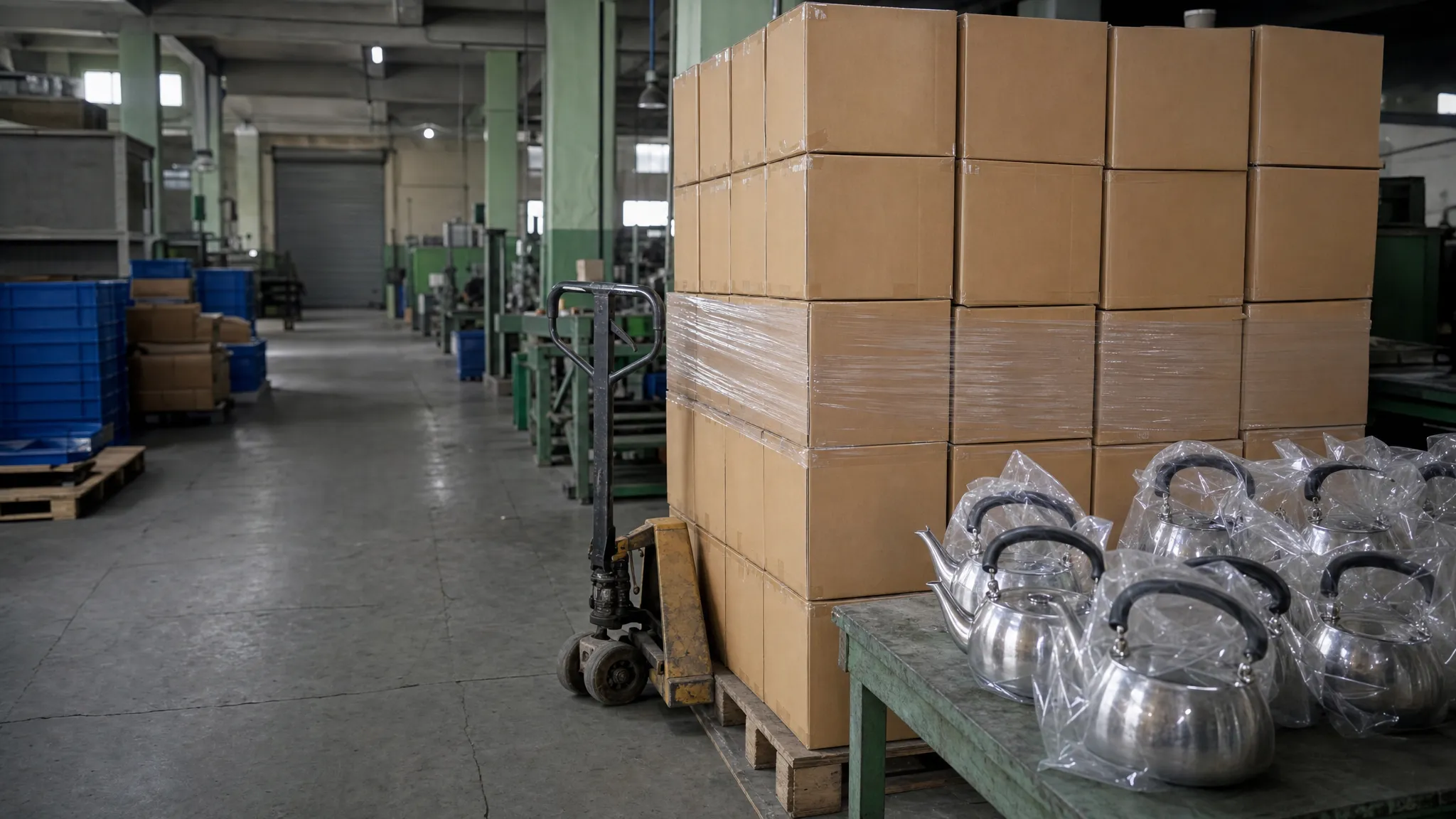
An illustrative render, not a photograph of a shipment: the pallet pattern is decided by carton dimensions long before the container is loaded.
What to put in the RFQ
Condensed to nine lines. Copy them into your next enquiry and you will get comparable answers instead of comparable-looking price lists.
- Alloy series per model — body, lid and any food-contact fitting, with the mill certificate.
- Material thickness for body and lid, in millimetres, per model.
- Safety device list per model, flagging where the device set differs — regulating valve, overpressure safety valve, anti-block cover, lid interlock — by part number.
- Size ladder — the three capacities you want, in the unit your market sells in, with the conversion stated.
- Base construction — composite multi-layer, formed in-house, confirmed compatible with induction.
- Sealing ring — material, temperature range, and the price and minimum quantity for replacements ordered separately.
- MOQ and sampling lead time per model, plus production lead time for a repeat order.
- Master carton dimensions, pallet pattern, and whether the lid and ring are packed separately.
- The compliance file — which documents exist, which legal entity they name, and which model and size each one covers.
Two of those lines are yours to own: the unit your market sells in, and the market you are importing into. A supplier can only quote the specification you hand over — the clearer it is, the less of your margin gets decided later. How we structure this handover with importers and distributors shows the other side of the conversation.
Common questions
What should an importer check before buying wholesale pressure cookers?
Four things decide whether a wholesale pressure cooker order is repeatable: the alloy series behind the cooking surface and the lid, stated per model rather than as a general claim; the safety devices on the lid, from the regulating valve to the overpressure valve and the interlock that stops the lid opening under pressure; the sealing ring, including whether replacements can be ordered separately; and the packing, meaning master carton dimensions, whether the lid is bagged separately, and how cartons are palletised. Price sits on top of these four, not underneath them.
Why are pressure cookers made from 304 stainless steel and not 201?
A pressure cooker is a pressure vessel, so its body must hold pressure across years of heating cycles, resist corrosion from a wider range of cooking liquids than a saucepan sees, and stay stable at working temperature. Grade 304 carries the higher chromium and nickel content, which is why pressure cooker lines are commonly specified in 304 while other cookware categories also use the lower-nickel 201. US rules review metals for food contact case by case: an FDA letter to an alloy supplier describes stainless steel with a minimum 16% chromium as acceptable for food-contact equipment.
What is the minimum order quantity (MOQ) for wholesale pressure cookers?
There is no single industry number, and a supplier quoting one across a whole catalogue is simplifying. MOQ on a pressure cooker is set by the tooling and forming economics of a specific model: the die, the coil buy for body and lid, and the line changeover. Ask for MOQ per model, in writing, together with a sampling lead time before commitment. Models that share a diameter ladder can often be combined to reach a workable first order, which usually gives a lower per-model floor than a single-model order. Treat a category-wide figure as a planning assumption until it is quoted per model.
Can a supplier private label pressure cookers for my own brand?
Yes, and pressure cookers are a common private-label line because the tooling is largely reusable across a range. What changes per programme is branding and packaging: the logo on the body or the lid handle, the exterior finish colour, the handle and knob shape, and the retail carton. The safety device layout usually does not change, because it follows the standard the product is built to. Before you commit, confirm in writing that the safety device set stays identical to the approved sample, and that replacement sealing rings and valves will stay available for your brand after launch.
Written by
Potobelo Editorial Team
Sourcing and engineering staff at Potobelo, a stainless steel cookware brand built on 30 years of Zoombo manufacturing in Guangdong, China. We write from inside the plant that makes the product, not from reviewing it.