
Food-Grade Stainless Steel Cookware: What Certifications Actually Prove
Food grade is not a grade of steel and not a certificate. It is a set of claims, each proved by a different document: a material certificate for the melt, a migration test report for one model under stated conditions, and a declaration for your market. This is written for importers, distributors and private-label buyers who sign off the paperwork before the container ships.
 Potobelo Editorial Team16 min read
What "food grade stainless steel cookware" is actually claiming
Food grade stainless steel cookware is a claim about how a material behaves in contact with food, not a grade of steel and not a certificate. In practice it rests on three separate documents — a material certificate for the melt, a migration test report for a tested article, and a declaration for the destination market — and each one proves a different thing.
The phrase sounds like a status a supplier can hold. It is closer to a claim that has to be supported, by paperwork with three different scopes, three issuers and three expiry patterns: a steel mill signs one, a laboratory signs another, and the third is usually signed by whoever places the goods on the market — often you.
Three questions hide inside the sentence:
- Alloy identity. What steel is on the food-contact surface, on which part, at what chromium and nickel content?
- Release behaviour. Under defined conditions, how much of which elements does the finished article give up into food?
- Market recognition. Which of those facts does your destination market accept as evidence, and in what form?
Each has a document behind it. None is a badge. For the grade-by-grade view of what the numbers mean, the guide to stainless steel cookware grades covers that ground; this article stays on the documents.
One more thing belongs in the opening. Grade 201 has no established food-contact recognition in practice for the markets most of our readers sell into. That is a statement about trade practice and buyer expectations, not a legal prohibition. But when a customer's quality team asks why the spec sheet says 201, the answer has to come from documents and a stated market basis, not from the word food grade. We run 201 on part of our own range, so this is a commercial fact rather than a warning label.
The first document: what a mill certificate proves
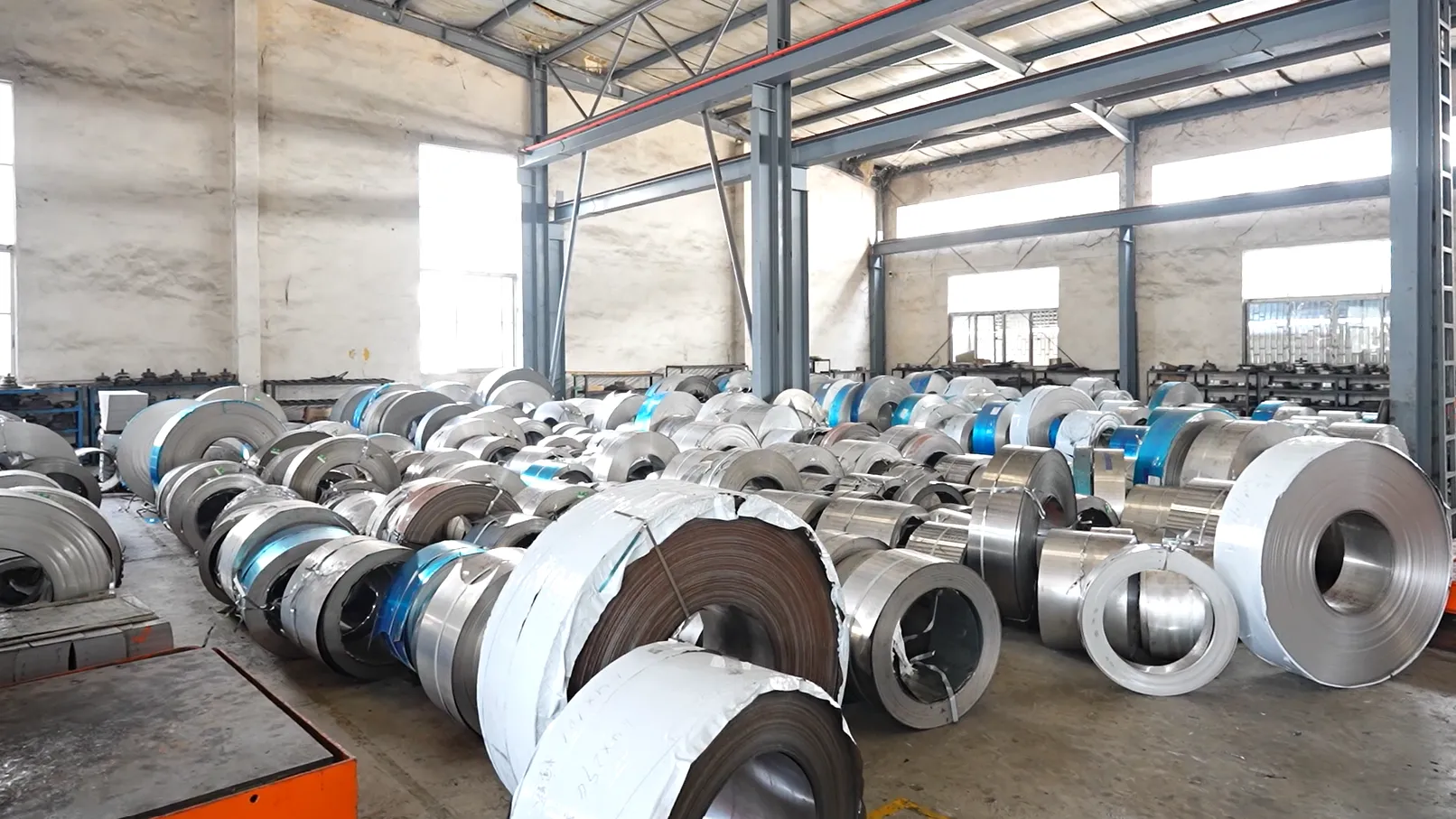
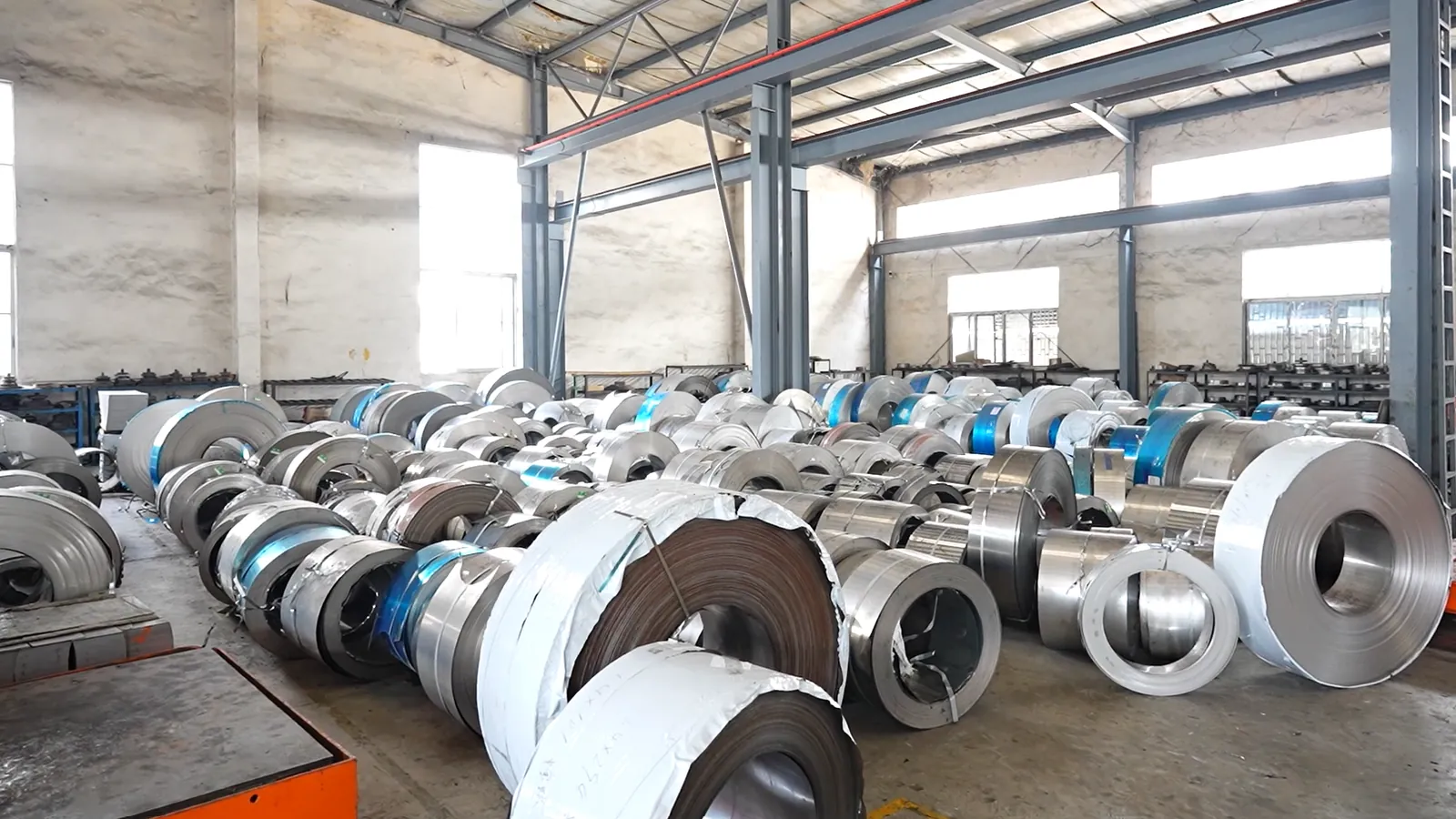
The steel arrives as coil, and the coil carries a heat number — sometimes called a cast number — which identifies the melt it came from. A mill certificate, also called a mill test certificate or material certificate, reports that heat: its chemical composition, and mechanical properties where they were tested. Under EN 10204, the European standard that names these documents, the type matters more than the title. A 2.1 is a declaration of compliance with the order: signed, and silent on test results. A 2.2 is a test report — it carries results, but from non-specific inspection rather than from testing the heat the document is attached to. A 3.1 is an inspection certificate carrying specific results for that heat, validated by the manufacturer's independent inspection representative. A 3.2 carries the same kind of specific results, issued by an independent inspection body.
Three consequences follow.
It proves chemistry, not fitness. Chromium at 18 per cent and nickel at 8 per cent is a statement about a melt, not about a pot. Nothing in the document describes how the steel was formed, welded, brazed, polished or passivated, and nothing in it says the finished article suits food contact. It is the first link in the chain, not the chain.
It covers a heat, not your order. A mill may pour the same grade for months. Your carton contains parts made from some portion of some coil. The certificate is connected to your goods only if the heat number travels with them — on the coil label, then the production record, then the lot code on the carton. Ask to see that connection once, early, with a real shipment. If traceability stops at the coil store, the certificate is decoration.
Who signed it changes what it is worth. A certificate issued by the mill that rolled the steel is one thing. The same PDF forwarded by a trading company that bought the coil from a service centre is another, and extremely common. Neither is fraud; only one tells you who to call when the alloy is wrong. If your supplier is a trader, ask for the mill's name on the certificate and for the purchase chain behind the heat. The comparison of 201 and 304 explains why the composition numbers matter, and why a grade name on an invoice is not the composition on a certificate.
How to read one in a minute. Find the issuer — mill or reseller. Find the standard cited — EN 10204 3.1, or a national equivalent — and check it is not a 2.1 or a 2.2 presented as if it carried specific results. Find the grade designation and compare it with the measured values: the designation is a claim, the values are the evidence, and they occasionally disagree. Find the heat number, then look for the same number on your production record. If any of those four is missing, you have a document, not a proof.
The second document: what a migration test report proves
A migration test report comes from a laboratory, not a steel mill, and it answers a narrower question than most buyers assume. A sample was placed in contact with a simulant — an acidic solution, an oily one, water, or a food-specific medium — at a stated temperature, for a stated time, sometimes across repeated cycles. The liquid was analysed for specific elements, and the results compared with specific limits.
What that proves is precise and limited: this sample, under these conditions, on this date, released no more than those limits for those elements. Everything outside that sentence is inference. It does not prove the next production lot; a type test on a sample submitted in one season is not a batch release for the next. It does not prove a sister model with a different body, lid or food-side fitting. It does not prove elements outside the test scope.
That is why the first thing to look at is not the word PASS but who issued the report and under what accreditation. Laboratories are accredited to ISO/IEC 17025, and the marks on reports — CNAS in China, UKAS in the United Kingdom, DAkkS in Germany — belong to named laboratories with a defined scope. Check that the scope covers the method used, and that the report number can be confirmed with the laboratory. A report from a consultancy that subcontracted the bench work is not the same document as one from an accredited lab, even when the formatting looks identical.
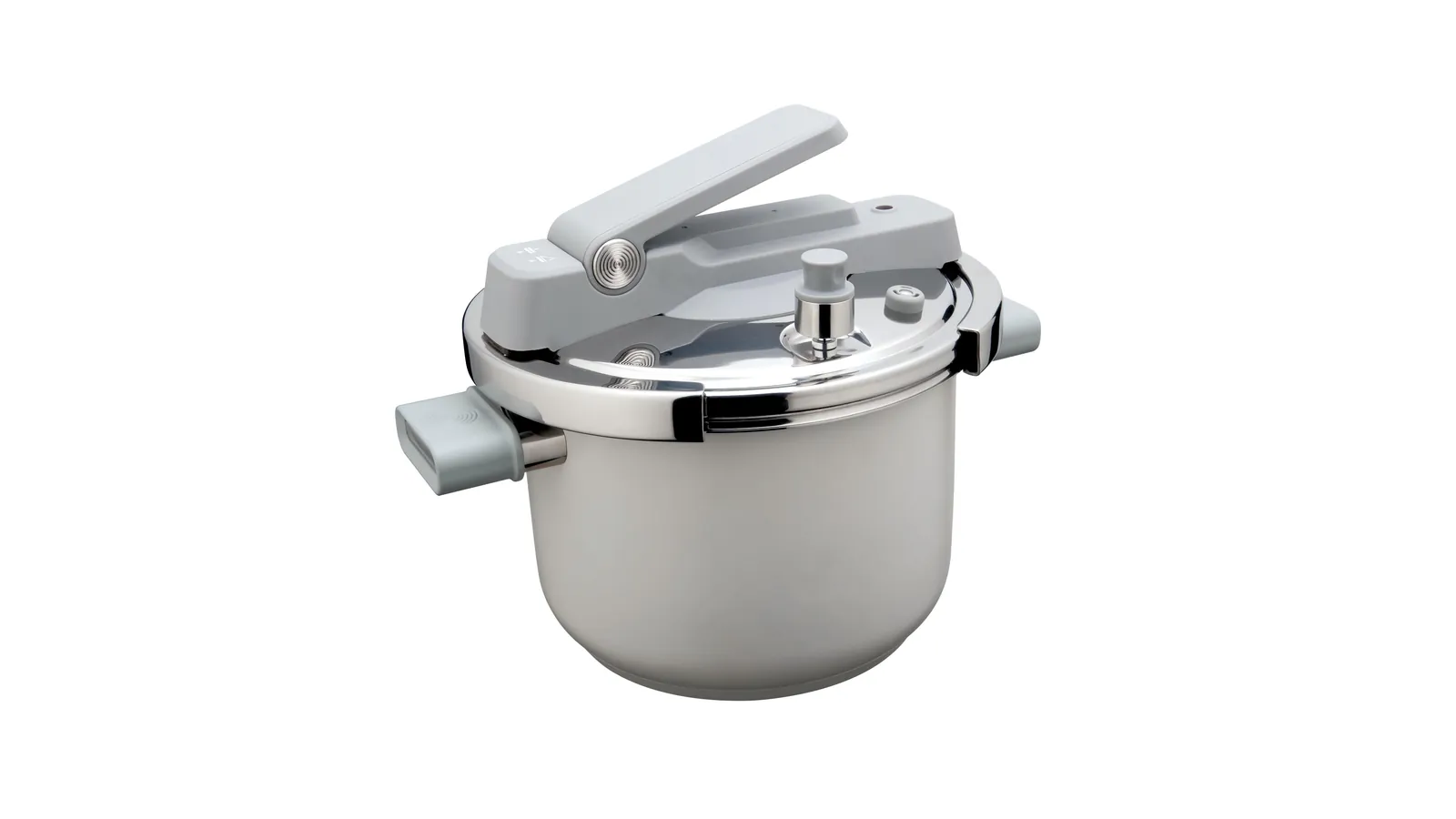
The second thing is the sample description. It should name the model, and ideally the parts: body, lid, and any fitting welded or brazed to the food-contact side. If it says "stainless steel pot, 20 cm" and you are buying a 24 cm casserole with a welded handle boss, you are holding evidence about a different object. This is the most common mismatch in buyer files, and it is invisible unless you compare the description with the purchase order line by line.
The third is a misconception that costs buyers weeks. The FDA does not certify cookware. The agency's premarket regime covers food contact substances — the packaging and food contact substances programme explains what that covers — and in a stainless steel pot the part that usually needs authorisation is a coating or its components, not the alloy. In practice, stainless steel is treated as suitable by series, at a chromium content of 16 per cent or above, with finish and cleanability expectations from the Food Code. A document headed "FDA certificate" is therefore the supplier's statement: a claim to test against a specification and a report, not one to accept because of a logo.
If your question is the underlying one — whether the metal is safe in normal cooking, and how much nickel and chromium it releases — that is a separate article, on whether stainless steel cookware is safe. This one assumes that ground and stays on the evidence layer.
The third layer: what each market actually recognises
The same test report can be exactly the right document in one market and the wrong basis in another, because the frameworks do not ask the same question.
European Union. Regulation (EC) No 1935/2004 is a framework about migration behaviour. Materials must not transfer constituents in quantities that endanger health, change the composition of food unacceptably, or deteriorate its organoleptic properties, and where specific measures exist a declaration of compliance is required. What it does not do is publish a list of approved stainless steel grades. With no harmonised specific measure for metals, practice leans on the Council of Europe and EDQM technical guide, which sets specific release limits and states that all stainless steel families can be used as food contact materials — while noting that some countries add national rules. That is why "an EU report" is not a single thing: the report has to name its basis. The EDQM food contact materials programme is where that guidance sits.
Germany. The LFGB prohibits transferring substances to food in quantities harmful to health, and its later sections provide the basis for specific material requirements. A so-called LFGB report is a laboratory test against that framework, usually together with the recognised test practice for the material. It is a test result, not a government certificate: read the sample, conditions and limits, not the title.
United States. There is no certificate to obtain. The Food Code requires food-contact surfaces to be durable, corrosion-resistant, non-absorbent, smooth and easily cleanable, and coatings are addressed as food contact substances under provisions such as 21 CFR 175.300 for resinous and polymeric coatings. Stainless steel itself is accepted in practice by series and chromium content; the 16 per cent figure is what suppliers and laboratories quote from FDA correspondence rather than from a published grade list, worth knowing before you repeat it in a specification as if it were a citation.
China. GB 4806.9-2023 replaced the 2016 edition and took effect on 6 September 2024. It is a migration-limit standard: each element carries its own limit — chromium at 0.25 mg/kg and nickel at 0.14 mg/kg among them — and articles intended for repeated use are tested three times, with stainless steel judged on the third result. There is no grade whitelist in it either. It also requires the material or grade designation to be marked, which is why Chinese-produced cookware often carries "06Cr19Ni10" or "S30408" on the label.
Market | The document you will be given | What it proves | What it does not prove |
|---|---|---|---|
EU | Test report plus a declaration of compliance, naming the basis used | Release under stated conditions, against the limits of a named framework | That a grade is "approved" EU-wide — there is no harmonised list for stainless steel, though some member states keep national rules |
Germany | An LFGB test report | The same, against the LFGB framework and recognised test practice | That a government body certified the product |
US | Specification, test report, supplier statement | Conformity with a specification the buyer and seller agreed | That the FDA issued anything for the pot |
China | GB 4806.9 report and the marked grade | Release under the standard's limits, on the third of three tests | That the alloy appears on an approved list — the standard is limit-based |
Two misuses recur in buyer files. The first is carrying a German report into a US conversation, or a US statement into an EU one: the documents are real, but they answer a question the other market is not asking. The second is treating a family name as a safety class — 18/10 describes chromium and nickel content, not a level of approval, which is why the 18/10 and 18/8 naming question keeps appearing in specifications that were meant to be about release.
The layer no certificate covers: the process
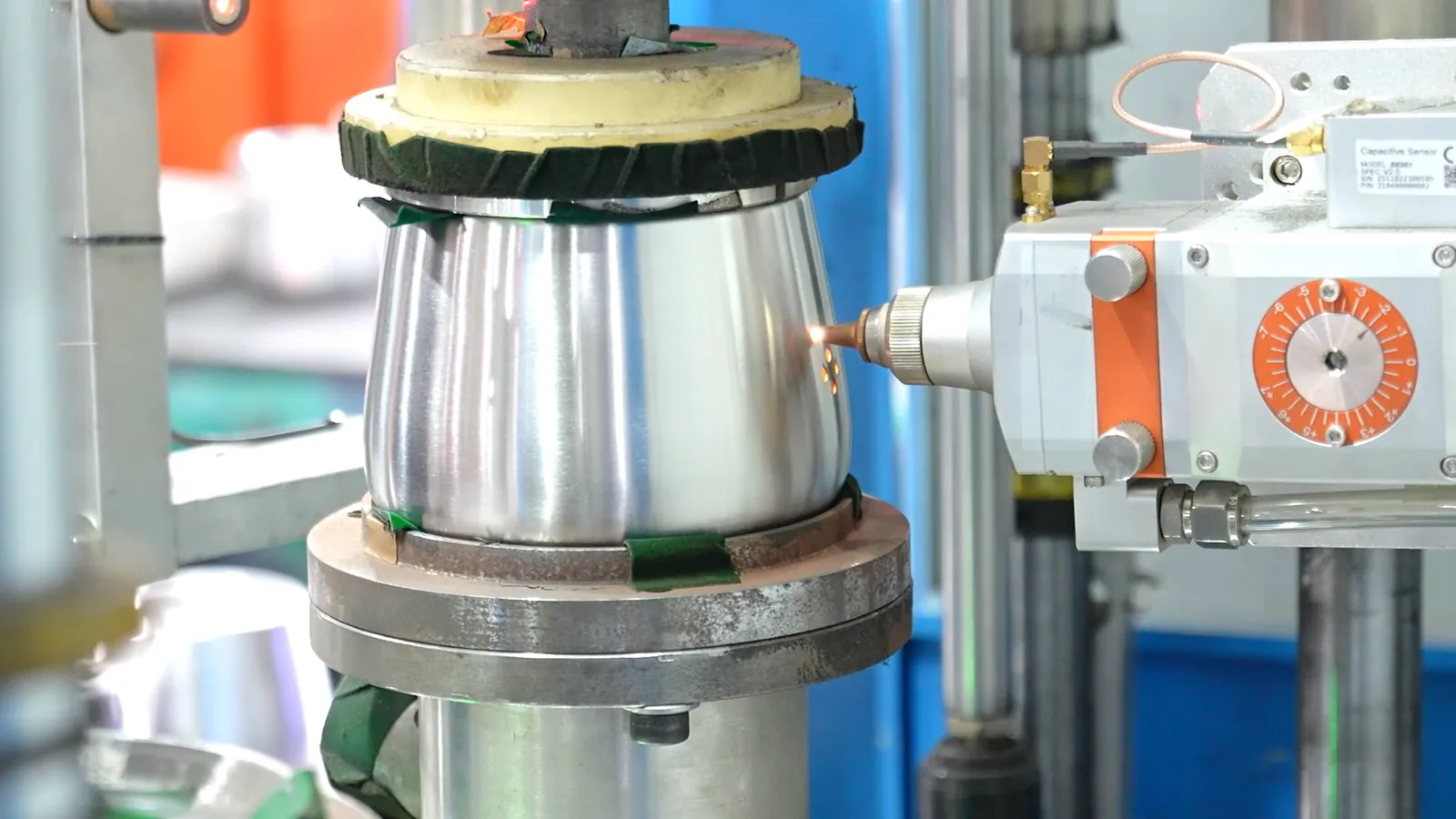
The uncomfortable part: you can hold a true material certificate, a valid test report and a correct declaration, and still ship a pot with a food-side seam that traps residue and corrodes in service. None of the three documents would be lying. They simply do not describe the process.
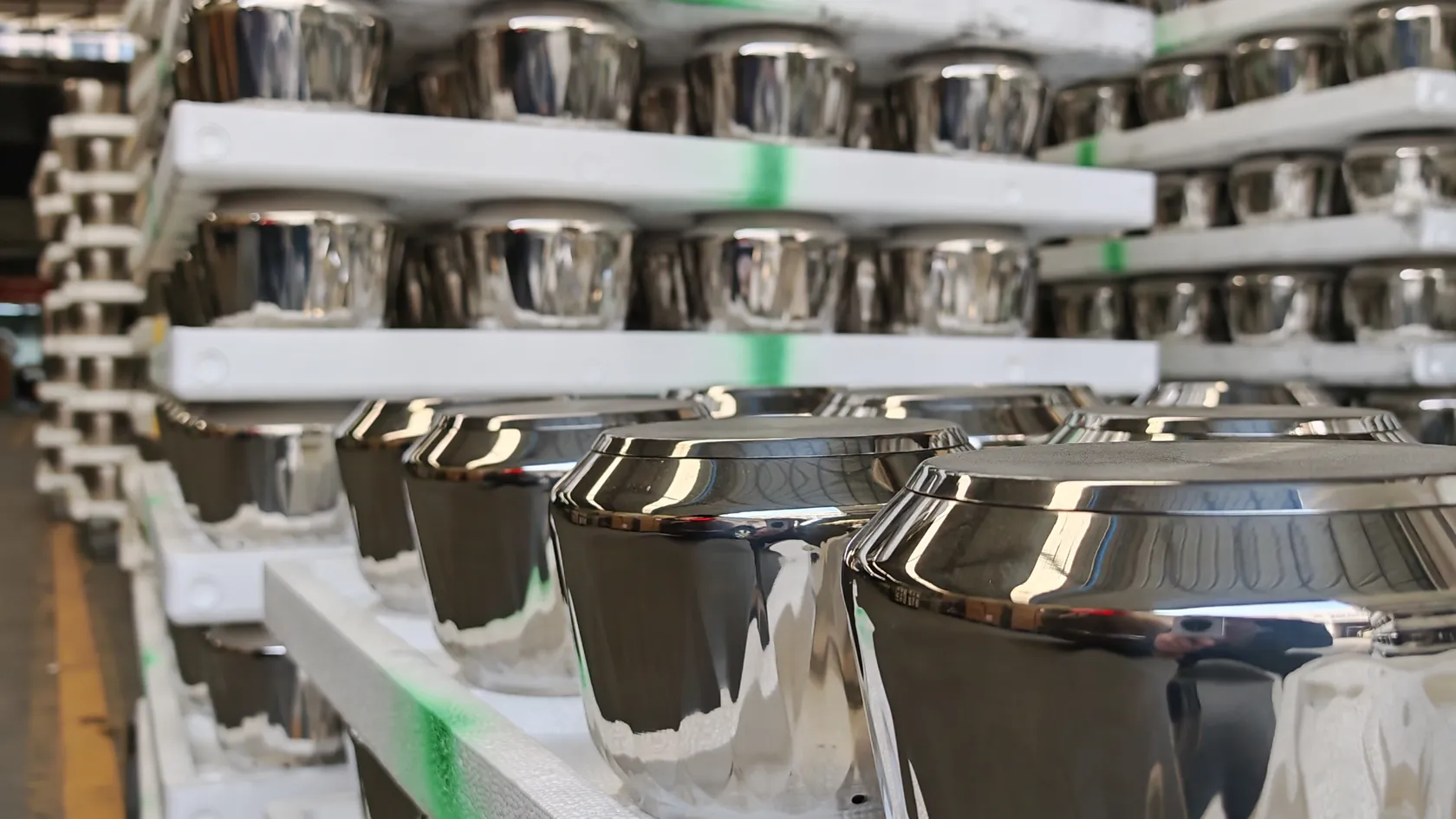
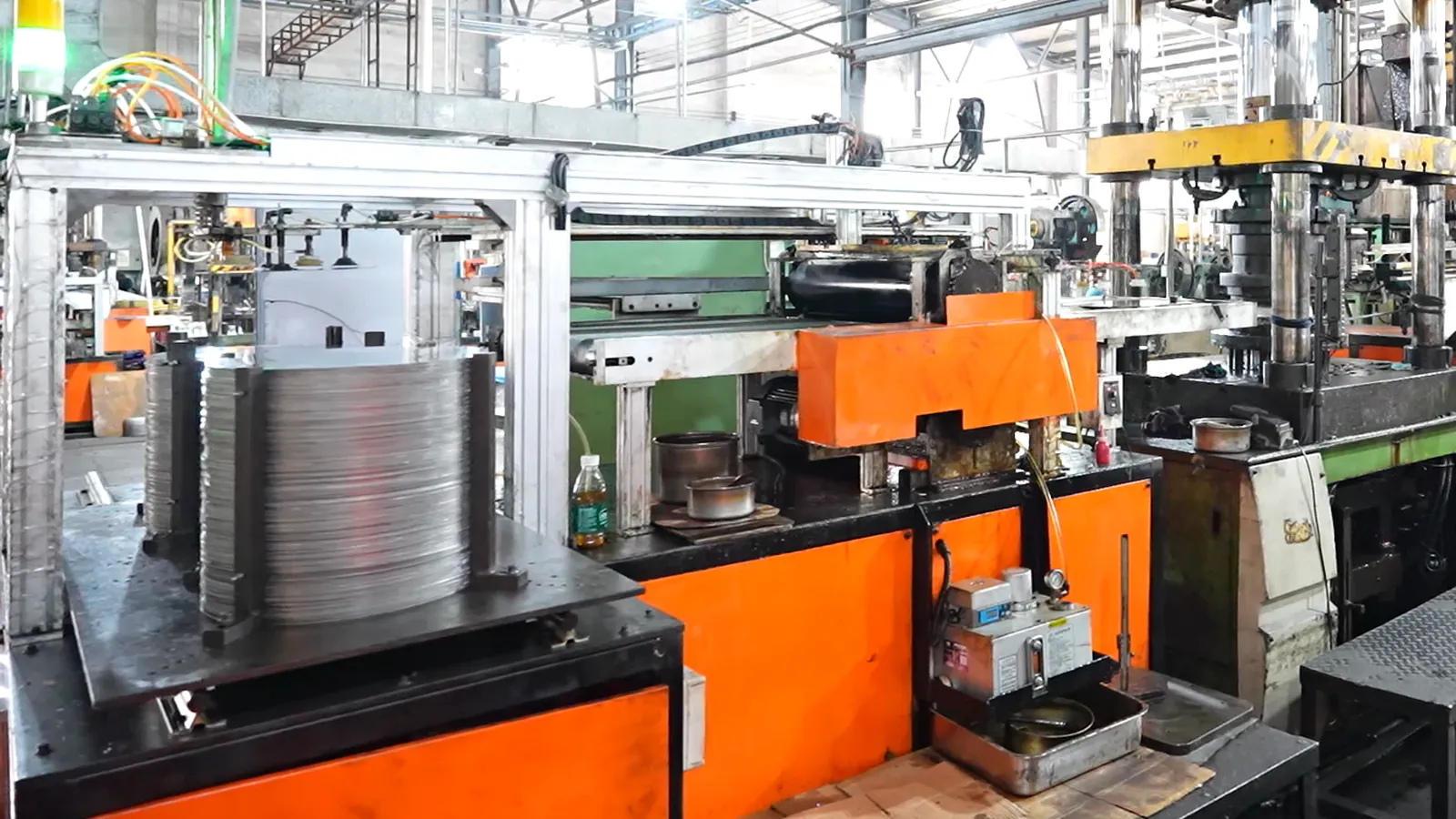
Welding and brazing are where this shows up first. The heat of a join locally destroys the passive oxide layer that makes stainless steel corrosion-resistant, so on a food-contact surface the seam has to be dressed and then treated — pickled to remove heat tint, passivated to restore the layer — before the part goes to polish. Polishing brings its own residue, and a finish specification that stops at "mirror polish" says nothing about what was left behind. Cleanliness is a process output, and process outputs are what an audit examines: which stations exist in-house, which operations are subcontracted, and what the records show at each step.
We make cookware in our own plant, which is why this section exists: the gap between "the certificate is correct" and "the part is right" is visible on a shop floor and invisible in a PDF. To turn that gap into something checkable, the cookware factory audit guide sets out what to look at, in what order.
How to read the stack in ten minutes
Six questions, in this order. They take ten minutes per file. Most food grade stainless steel cookware files we are shown fail at question three.
- Who issued this, and are they accredited for this test? A mill, an accredited laboratory, a consultancy, or the supplier's own quality department. The letterhead tells you which of the three document types you are holding.
- Does the report number exist? Most accredited laboratories will confirm a number and its scope on request. If confirmation is refused, treat the report as unverified however professional it looks.
- Does the sample description match the model you are buying? Including the parts: body, lid, food-side fittings. Different diameter, different lid, different handle attachment means a different article.
- Do the test conditions match your use? A two-hour test in dilute citric acid at 70 °C is a standard condition, not a simulation of six hours of tomato sauce. If your product will mostly meet acid, heat and time, say so and ask what the report modelled.
- Which limit does the pass refer to? A result means something only against a limit. A chromium limit means one thing where total chromium is measured and another where only one oxidation state counts, and "below detection" is a statement about the method's sensitivity, not about zero.
- What is the date, and which batch does it attach to? A type test on a sample from an earlier season establishes a design; it does not release a production lot. Ask what ties the report to the goods: lot code, production date, retained sample.
Four red flags are worth memorising. A single page titled certificate of food safety, with no sample, method or limits. A report for a sibling model — same series, different size — offered as coverage. A trader's report presented as the factory's, with the mill's name missing. And a report described as permanent, with no batch reference at all. None is necessarily dishonest; all mean the document cannot carry the weight you will put on it. How a golden sample relates to a production run is covered in pre-production samples and mass production.
What to write into the purchase order
A document set is only enforceable if it is a contract term. These are the clauses that do the work.
- Alloy per part, with composition. Body, lid and every food-side fitting named separately, with the chromium and nickel range you will accept. "Food grade stainless steel" is not a specification; SS304 on the body and SS304 on the lid is.
- Material certificate per heat, with traceability. EN 10204 3.1 where the mill issues it, the heat number recorded on the production record, and the lot code printed on the carton. If traceability cannot be demonstrated once, it will not exist when you need it.
- Test report per model, with scope. The report must name the model, the elements tested, the simulant, the temperature, the duration and the limit set. Add the declaration of compliance, or the market-specific equivalent, and name the market it is written for.
- Change notification. Any change of mill or heat source, alloy, tooling or die, brazing or welding consumable, or polishing and passivation process gets written notice before shipment, with re-testing where the change touches the food-contact surface. This clause is cheap to write and expensive to live without.
- Retention and lot marking. A retained sample per lot, held for an agreed period, and a lot code on both unit and carton so a report can be tied back to goods months later.
- The mismatch procedure. What happens when documents do not match the shipment: hold or reject, who pays for a third-party re-test, and how many days the supplier has to correct the file. Agree this before the first container, not after the first complaint.
Three actions on your side make the file real: check a sample against the specification at arrival, commission a third-party re-test on a lot you select rather than one the supplier selects, and keep your own retained sample with the packaging lot code attached. None of it needs your own laboratory, and all of it is cheaper than a recall conversation. If you are still choosing between suppliers, the guide to choosing a stainless steel cookware manufacturer covers selection; this article is about what to demand once you have chosen.
What this means for your next order
Three moves, in this order. Write the three document types behind food grade stainless steel cookware into the specification by name, each against the market it is meant for. Require them per model and per heat, with a lot code that connects paper to pallet. And settle the mismatch procedure before the purchase order, while both sides are still being reasonable.
Then read one report end to end before you approve a container. Most buyers only check that a file exists and that someone wrote PASS. The ten minutes on sample description and test conditions will tell you more than the letterhead.
One caveat, and it is not boilerplate: this article describes how recognition and testing work in practice for the markets named, from a procurement point of view. It is not legal or compliance advice for a specific product or country, and the framework that governs your order is the one enforced where you sell. Take that reading from your own compliance resource or importer of record. If you are still structuring the buying process itself, the sequence we see work is in how to source cookware from China.
Common questions
Is there a certificate that makes stainless steel cookware food grade?
No single certificate does that job, and a supplier who offers one is simplifying. What exists is a set of documents, each answering a different question: a material certificate proves the chemistry of the steel heat, a migration test report proves that one submitted sample released no more than stated limits for stated elements under stated conditions, and a declaration of compliance names the framework being claimed. Ask for all three, and ask which model and which heat each covers, because a document naming another product or another batch proves nothing about the goods in front of you.
How can I tell whether stainless steel cookware is food grade?
Check the evidence, not the label. Ask for the material certificate with a heat number, a migration test report whose sample description matches the model you are buying, and the declaration or compliance statement for your market. Then read the report: which elements, which simulant, what temperature and duration, against which limit, on what date. A pass on a 2023 sample from a two-hour test says little about a 2026 lot simmered with tomato sauce. If the answer is one page headed certificate of food safety, the useful question is what that page is a statement about.
Does the FDA certify stainless steel cookware?
The FDA does not issue certificates for cookware, so a document described as an FDA certificate is the supplier's statement rather than an agency one. The premarket regime the agency runs covers food contact substances, which in cookware usually means coatings and their components rather than the steel itself. In practice stainless steel is treated as suitable by alloy series at a chromium content of 16 per cent or above, with finish and cleanability expectations coming from the Food Code. The useful US evidence is a specification plus a test report, not a logo.
What is the difference between a mill certificate and a test report?
A mill certificate is a statement about a batch of metal: it reports the chemical composition of a heat, identified by a heat number, and sometimes its mechanical properties. A test report is a statement about an article: a laboratory tested one sample under defined conditions and compared specific element release against specific limits. Chemistry tells you what the steel is, not what the finished pot gives up once it has been formed, welded, polished and passivated. A complete file needs both, plus a lot code that connects the heat to the carton you received.
Written by
Potobelo Editorial Team
Sourcing and engineering staff at Potobelo, a stainless steel cookware brand built on 30 years of Zoombo manufacturing in Guangdong, China. We write from inside the plant that makes the product, not from reviewing it.