
Stainless Steel Induction Cookware: Why Some Pots Are Magnetic
Every stainless pan looks the same from the outside, and induction does not care how it looks. It couples to one ferromagnetic layer, usually a thin cap bonded to the base, and does nothing at all to the austenitic body above it. This is the physics, the four ways factories get there, and the wording that makes an "induction ready" claim checkable.
 Potobelo Editorial Team15 min read
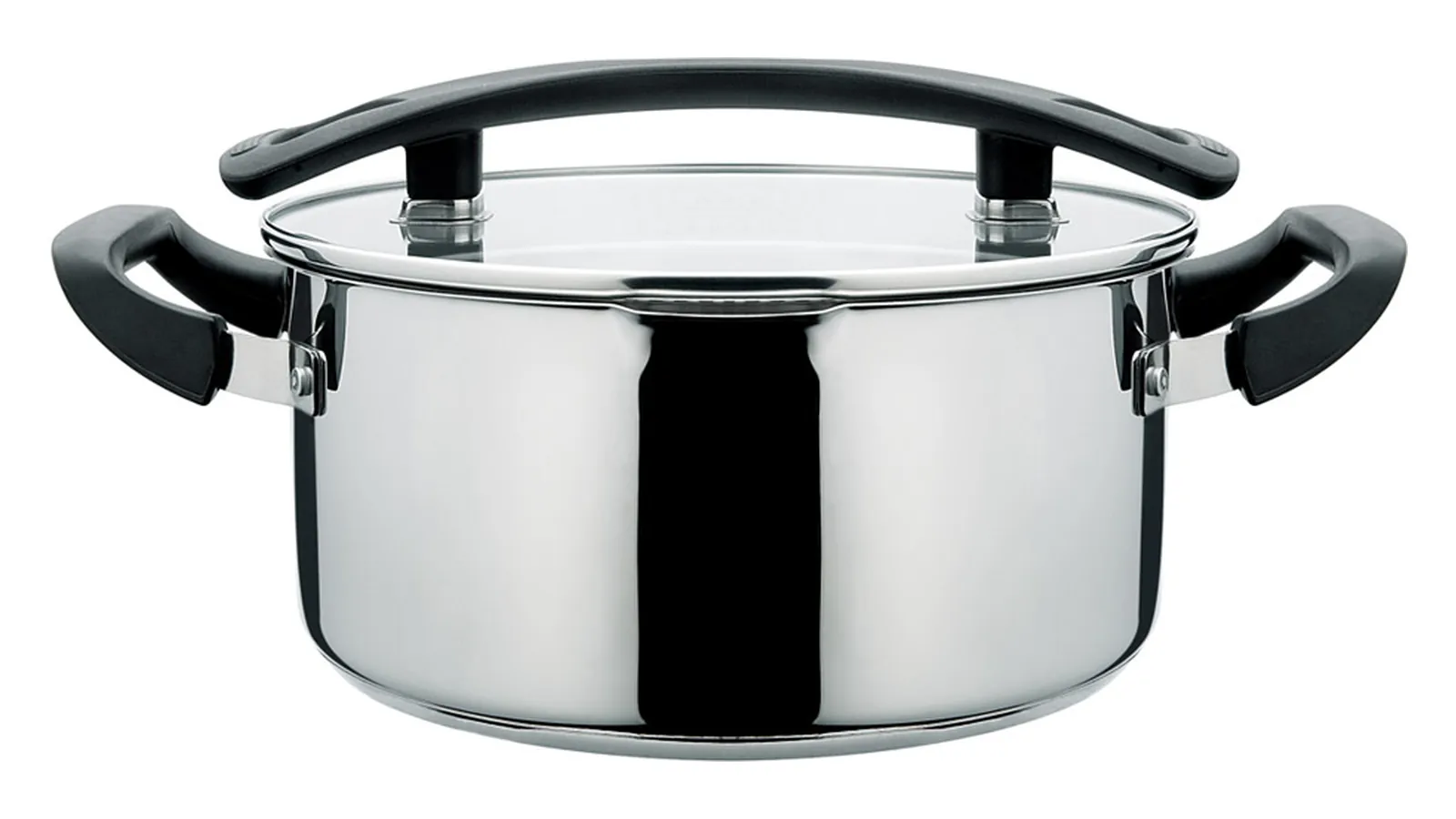
The short answer: an induction hob heats a layer, not a pot
Stainless steel induction cookware is not a material category. No body grade of 300-series stainless decides the question on its own: 304 and 201 are austenitic, and neither couples. What decides the question is one layer — usually a thin ferritic cap bonded to the underside of the base — sitting a few millimetres above a coil; in a monobloc 430 vessel, that layer is the body itself.
Get that layer right and a 304 pan is induction-ready. Leave it out, make it too small, or let the base warp, and the same pan becomes a gas-only product that a hob refuses to detect, even though every square centimetre of it is stainless steel.
For a buyer the practical consequence is simple: "induction ready" describes one part of an assembly, not the pot. It can be true of one model in a series and false of the next, and it cannot be inherited from the body grade, the finish or the brand on the lid. Everything else in this article follows from that — why the body cannot do the job, how factories get a magnetic layer onto a pan, what the layer changes at the hob, and what to write down so the claim survives the first container.
What an induction hob actually asks a pan for
Under the glass of an induction hob — a cooktop, in US usage — sits a flat spiral of copper wire. The hob drives an alternating current through it at tens of kilohertz, which builds a magnetic field that reverses tens of thousands of times a second. Put a conductor in that field and eddy currents are induced in it. Those currents meet resistance, and resistance is where heat appears.
Two properties decide whether enough of that happens. The first is magnetic permeability: a ferromagnetic material concentrates the field lines and couples strongly to them, so the induced currents are large. The second is electrical resistivity: a metal that conducts too well lets current flow with little loss, which is why copper and aluminium spread heat so well and make such poor susceptors.
Stainless is an awkward but workable compromise. It couples only when it is ferromagnetic, and once it couples, its resistivity — 720 nΩ·m for 304 and 600 nΩ·m for 430 in the published grade datasheets — turns the induced current into heat in the layer facing the coil. Resistivity alone would favour 304; what decides it is surface resistance — resistivity divided by skin depth — and the ferritic layer's skin depth is several times thinner. Magnetic hysteresis adds a second, smaller contribution. The MECS research group reduces the whole problem to two variables: the material of the base, and the distance between the base and the coil.
A non-magnetic metal is not physically barred from heating. In controlled tests on an induction stove, MECS reports 82% energy efficiency for aluminium pots against 91% for enamelled iron and 87% for stainless. What stops an aluminium pan in a domestic kitchen is not physics but firmware: many hobs run a pan-detection routine that needs a magnetic load, and will not energise a zone without one. So does stainless steel work on induction? Yes — but only where the metal in front of the coil is ferromagnetic, which, in a bonded-base pan, is never where the food is. The coil does not care what the pan is called. It cares what the metal in front of it does to a moving field.
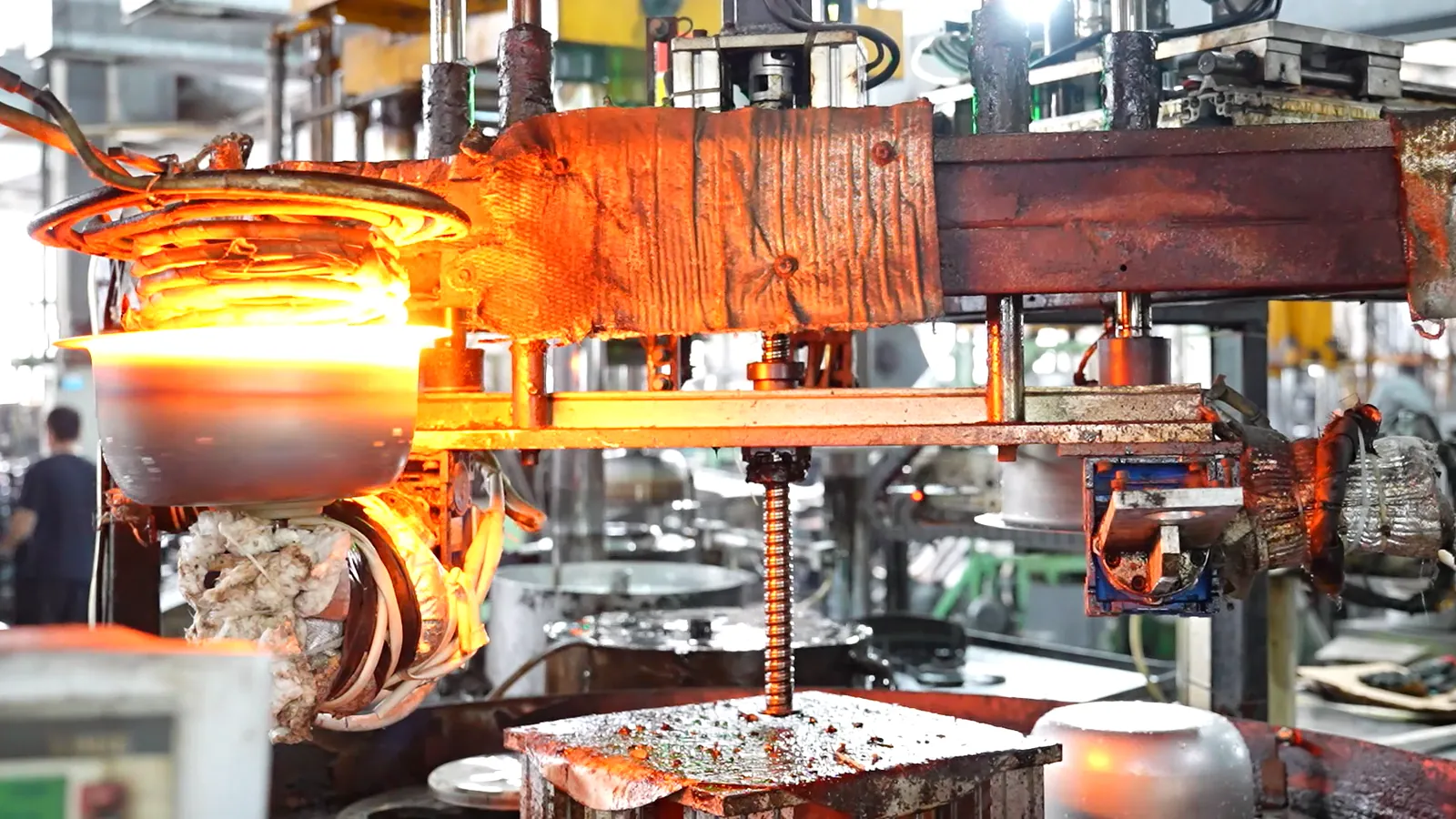
Why a 304 or 201 body cannot do the job
Annealed austenitic stainless — 304, 316, 201 — has a relative magnetic permeability of essentially 1 — 1.0, or slightly more — against about 14 for a ferromagnetic steel, according to the British Stainless Steel Association. A body made of it presents the field with something close to the magnetic response of the air in the kitchen. Little current is induced, little heat appears, and the detection routine sees nothing worth switching on.
The 400 series is the other family. Grade 430 is ferritic: chromium, essentially no nickel, and ferromagnetic in the same way ordinary carbon steel is. That single property is why a stainless pan can work on induction at all.
Then come the two complications that make this harder than a magnet.
304 is not perfectly inert. Balanced austenitic grades contain a few percent of delta ferrite to keep them weldable, which lifts permeability slightly above 1. Deep drawing and spinning also shear the crystal structure, and some of the austenite converts to martensite, which is ferromagnetic. The effect is concentrated where the metal worked hardest — the corner radius of a pot, a sheared edge, a machined face. BSSA notes that a full solution anneal, followed by rapid cooling, reverses it, which is the reason a pull measured on a finished pan tells you about the last forming step rather than about the melt.
201 is less stable than 304, not more magnetic by design. Its austenite transforms under cold work more readily: BSSA's Md30 figures put grade 201 at +20 °C and 304 at −20 °C, meaning 201 needs less strain before martensite appears. A cold-formed 201 body can therefore pull a magnet harder than a 304 body, in exactly the places a buyer is likely to test. That is the trap: the magnet test the trade still uses tracks how hard the steel was formed, not whether the pan will heat. Sorting 201 from 304 is a chemistry question, and a different article covers why the two grades are not interchangeable.
The same logic disposes of "18/10": it describes nickel content, not magnetic behaviour, so a buyer who specifies it for the body has said nothing about induction — the 18/10 versus 18/8 comparison has the detail.
Which is why the phrase "magnetic stainless steel cookware" is accurate and misleading at once. The magnetism is real, and it is the whole reason the pan works — but it lives in one layer you cannot see from the inside of the pot.
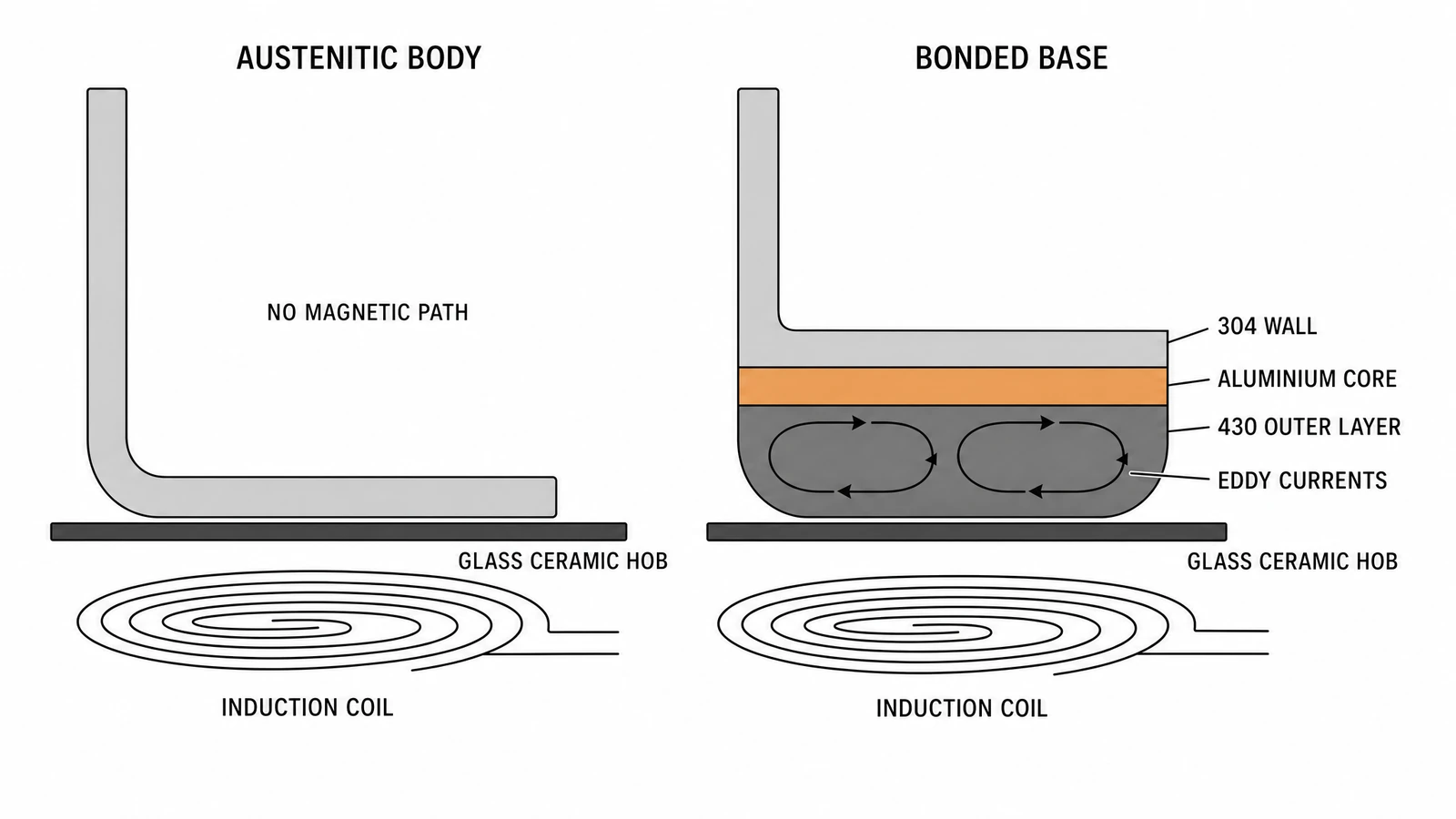
Illustrative render, not a photograph: the layer stack and the eddy-current path are diagrammatic and not to scale.
Four ways a pan ends up magnetic
Once the body is ruled out as the coupling layer, the magnetic metal has to be added somewhere. Four constructions cover most of what a Chinese factory will quote, and they are not interchangeable on cost, weight or behaviour.
Impact-bonded disc base. The body is drawn as a single layer — 304 or 201 — and an aluminium disc is placed against its underside. A thin stainless cover disc goes over the aluminium, and the stack is heated and then pressed under high tonnage so the aluminium deforms and bonds to both steel faces without a melted filler. In the trade this is an impact-bonded base, sometimes an encapsulated base. One granted patent on the process describes heating the cookware and the aluminium plate by induction to about 400 °C, then pressing them in an impact bonding machine at high pressure. The cover disc is the susceptor — normally 430 (sold as 18/0), though any ferritic grade does the job, and one induction-cookware patent specifies 410. The aluminium is the heat spreader. Walls stay thin, the base gets thick, and the ferromagnetic area is exactly the diameter of the disc.
Brazed disc base. The same geometry, joined differently: a brazing alloy is applied at the interfaces and the assembly passes through a furnace that melts the filler, which wets and joins the layers. Lower thermal mass, lower cost, and the joint shows as a thin line around the base when the pan is inverted.
Clad through the wall. Three or more layers are roll-bonded into sheet before forming, and the pot is drawn from that composite, so the aluminium core and the magnetic outer layer continue up the sidewall. Heat reaches the wall as well as the base, and the balanced layer structure resists warping better. It also costs more, weighs more, and uses more magnetic steel than a disc base needs. The 3-ply versus 5-ply comparison deals with how the layers are counted; the point here is only that the outer layer is the one that couples.
A fully ferritic body. In a kettle, a stockpot or a bowl, the vessel can simply be made from 430 throughout, so the whole body is the susceptor and no bonding step is needed. It is the cheapest route to induction and the whole wall heats, which is an advantage in a kettle and a liability in a pan where you want heat at the base.
Route | Where the magnetic layer is | What it does to weight and cost | Typical failure |
|---|---|---|---|
Impact-bonded disc | Base cap, disc diameter only | Heavy base, light wall; typical mid cost | Interface fatigue under repeated thermal shock |
Brazed disc | Base cap, disc diameter only | Typically the lightest of the three, and the lowest cost | Joint line corrosion or separation at high heat |
Clad through wall | The whole outer surface | Typically the heaviest; highest material cost | Delamination at the edge if the draw is wrong |
Ferritic body | The whole vessel | Typically light and cheap; limited forming | Lower corrosion resistance than 304 |
In the two disc routes the susceptor is the outside face of the base — the surface that also touches the hob and the dishwasher. That is the part buyers under-specify.
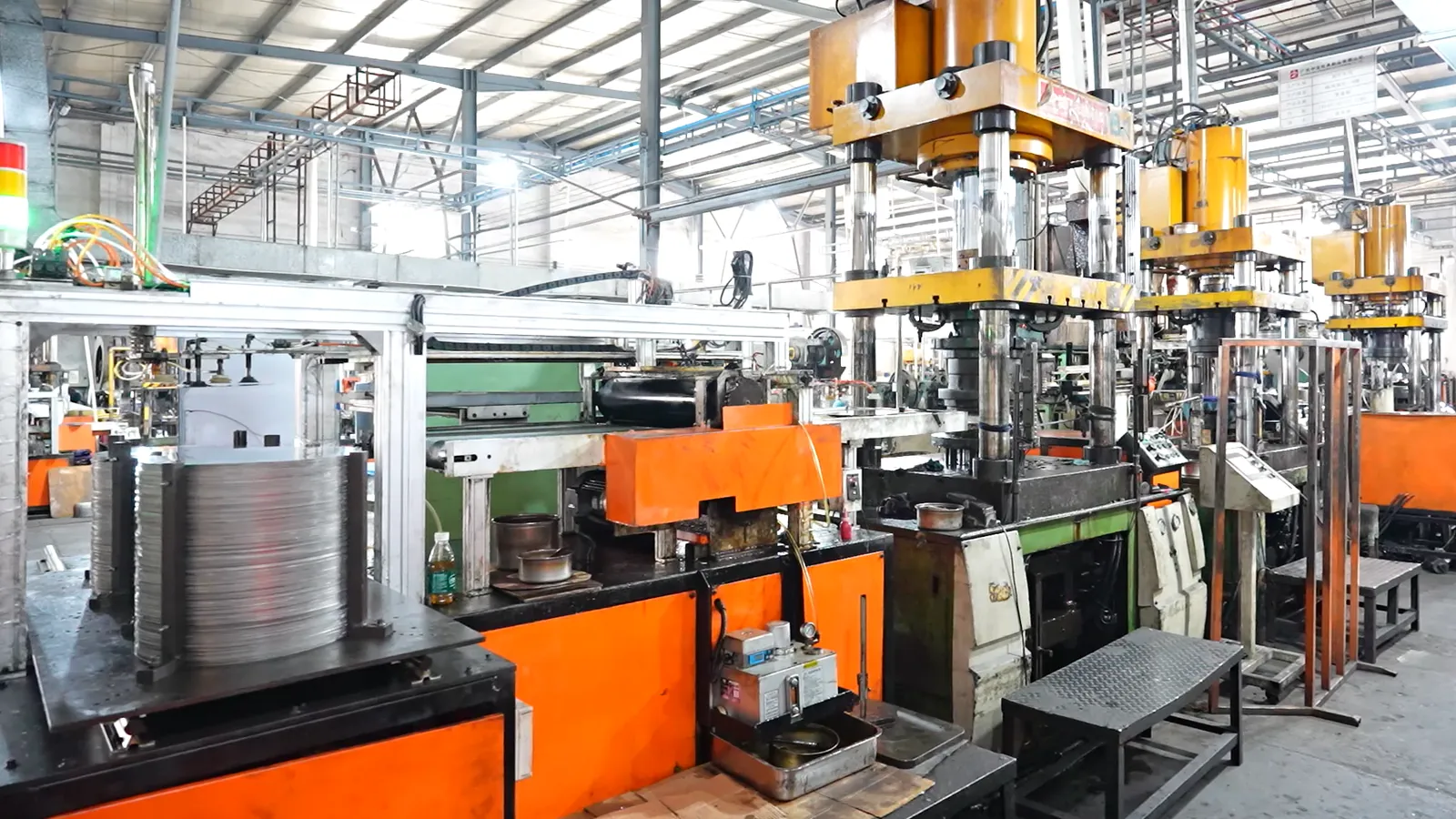
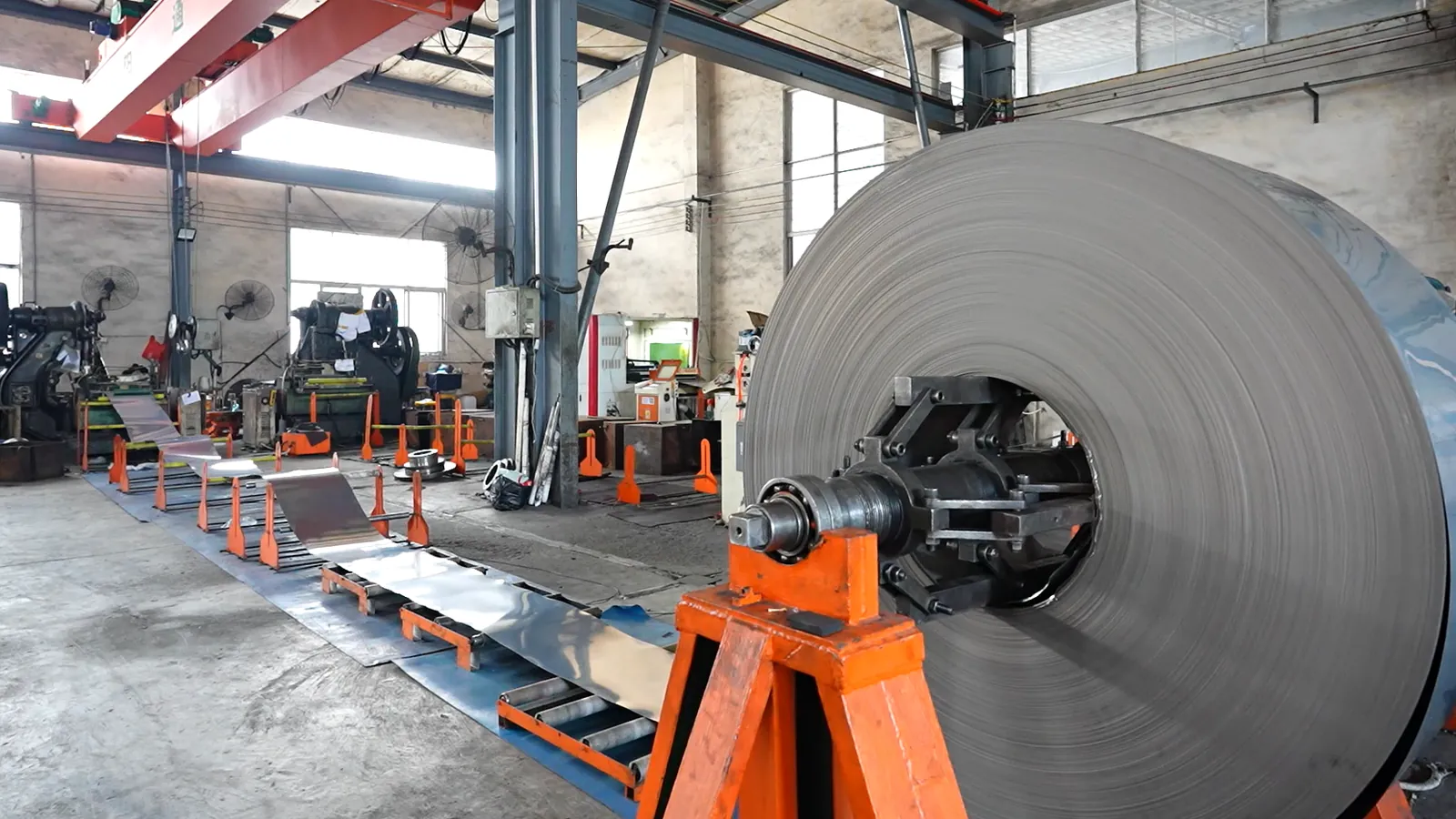
All four start on the press floor, with the body drawn from coil — and in the two disc routes, the discs blanked from their own coil as well; but only those two press a base on in a die; the clad sheet is bonded before it is drawn, and the ferritic body gets no bonding step at all. Which is why a base specification is only as good as the tooling that makes it, and why a change of base diameter is a tooling conversation rather than a paperwork one.
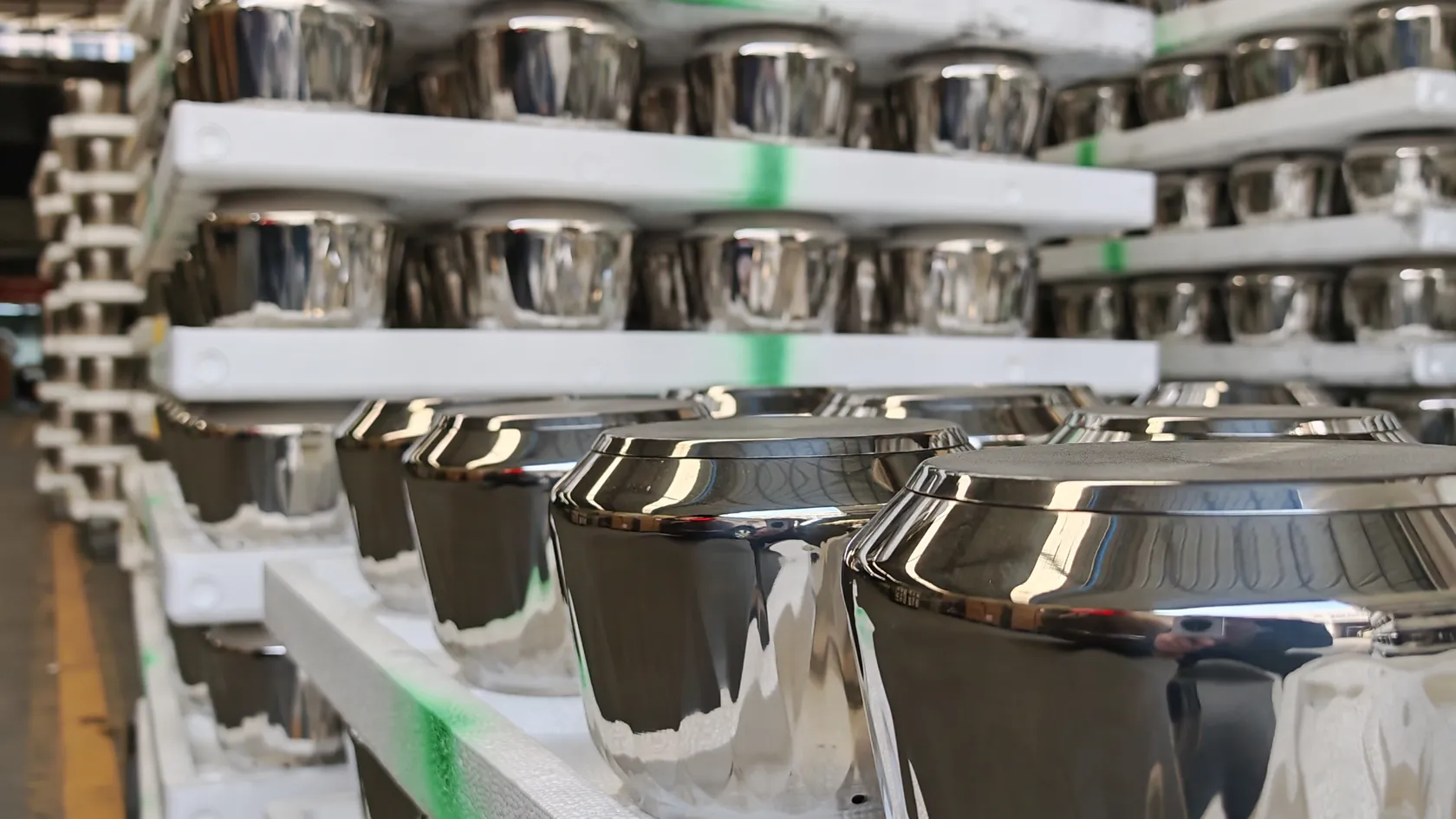
The impact bottom described above — the bonded composite base — is one of our own core production technologies, and our lines run composite multi-layer bases across saucepans, steamers and kettles.
Where the magnetic layer comes from, and why the certificate matters
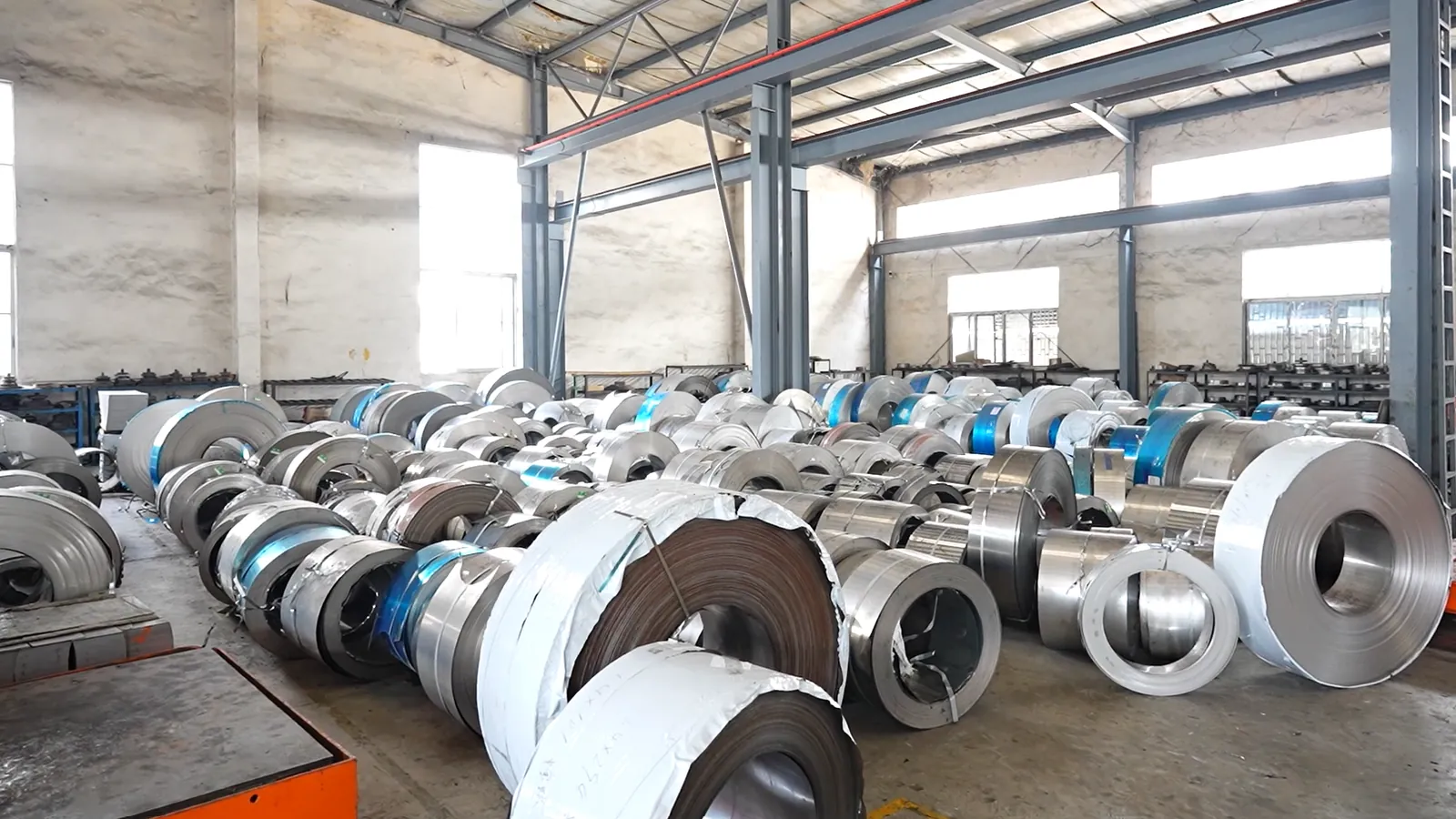
The magnetic layer starts as coil or sheet, not as a pan. Grade 430 is supplied in the thin gauges a base cap is cut from — the same worldstainless datasheet lists it as readily available in sheet and coil up to 1.2 mm thick, and as a ferritic, straight-chromium, non-hardenable grade with 16.0 to 18.0% chromium and a maximum of 0.75% nickel.
That is also the reason the grade cannot be read off the finished product. A polished base cap carries no legible marking, and "18/0" on a carton is a claim, not a measurement. The only document that names the grade with authority is the mill certificate that travels with the coil; what ties that heat number to a model is the factory's batch record — together they are what proves, six months after the order shipped, which steel went into the base you are importing.
What changes at the hob: diameter, flatness, noise, heat
A base that satisfies the material requirement can still disappoint in a customer's kitchen, for reasons that are geometric.
Diameter against the zone. Hob manufacturers ask for a base that matches the cooking zone, and some publish minimums: one manual lists 90 mm of pan base for a 145 mm zone and 130 mm for a 210 mm zone. A small pan on a large zone leaves the outer turns of the coil doing nothing. A large pan overhanging a small zone is not a problem for coupling, but it concentrates heat in the middle.
Magnetic area against base diameter. Where the cap is smaller than the base — the normal result of a bonded disc — only the capped area heats. Bosch states the consequence directly in its induction manuals: if the ferromagnetic area is smaller than the base, only that area gets hot and the heat is not distributed evenly. A 200 mm pan with a 150 mm cap behaves like a 150 mm pan with a skirt.
Flatness. The base has to sit flat and smooth on the glass, and the manuals are explicit that bases must be. A base that dishes or crowns after a few dozen cycles lifts off the surface, the coupling drops, and the hob either derates or loses detection — a failure the customer reads as "the pan stopped working on induction".
Noise. A buzz or a tick is usually the base, not the brand. Electrolux notes that sandwich bases vary in how well they transfer energy and can be noisy as they heat, because the layers have different rates of thermal expansion. More layers and a thicker base generally mean less of it; a thin cap on a thin body means more.
Heat and abuse. Repeated thermal shock is what attacks a bonded or brazed interface, and a dishwasher cycle adds a chloride environment to the same joint. Neither destroys the steel; both work on the bond.
That geometry is worth drawing once. The ring between the magnetic area and the base edge is where a buyer's customers will notice the difference between two pans that both passed a magnet test.
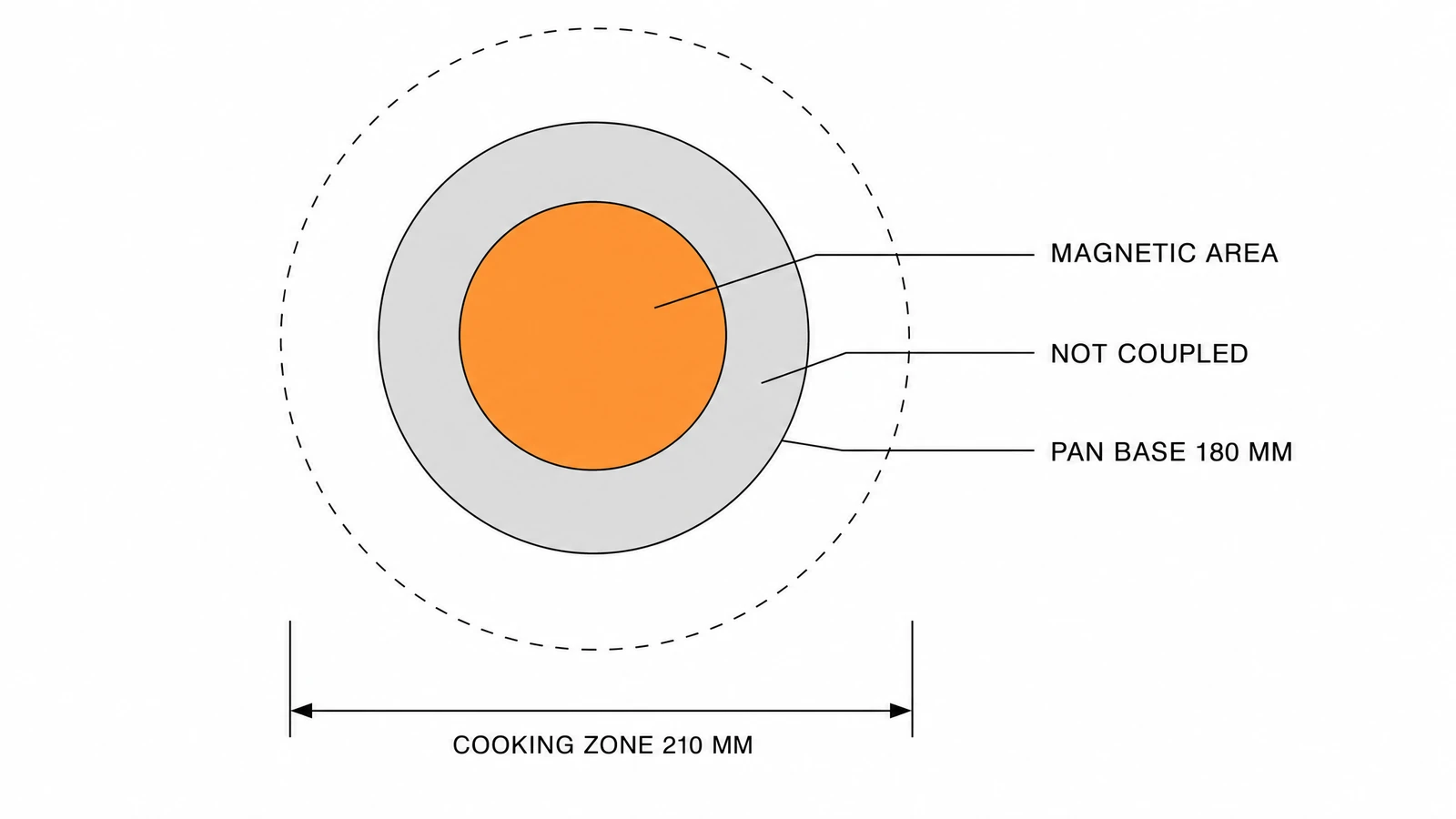
Illustrative render, not a photograph: the diameters are diagrammatic and do not describe a specific model.
The magnet test, and what it cannot tell you
The magnet is the fastest field check there is, and it answers one question: is there ferromagnetic material in this base at all? That is worth knowing, because it rules out a pan with no susceptor.
It cannot tell you how much. A cap covering a fraction of the base holds a magnet as firmly as a full one, and the hob heats only what the cap covers — or refuses the pan if that area is under the zone's minimum. Bond life and flatness are the failures set out above; neither shows up on a magnet.
A magnet confirms the presence of a magnetic layer. It does not confirm the size of that layer, which is the number the hob actually reacts to.
Why a stainless steel induction cookware line is really a base specification
Everything above collapses into a short list of fields. This is a base specification — the document you hand a supplier — not an inspection checklist; the questions to put to a factory are a separate article. Each field is dimensional or material, and each can be accepted or rejected on a document:
Spec line | What it must say | What it prevents |
|---|---|---|
Body grade | 304 or 201, by designation and standard | A quotation that says "stainless steel" |
Base layer grade | 430 / 18/0, by designation | "Induction bottom" with no material named |
Layer sequence | Steel / aluminium / steel, with each thickness in mm | A "3-ply" claim that counts anything |
Base diameter | mm, plus the zone range it is sold against | A cap too small for the market's hobs |
Flatness | Acceptance limit after a stated thermal cycle | Warping that appears after the first shipment |
Documents | Mill certificate with grade and heat number per batch | Any argument about what was actually shipped |
Compare two lines. "Induction compatible stainless steel saucepan" cannot be accepted or rejected, because there is nothing in it to measure. "304 body, 430 outer base layer, 3.0 mm base over a 160 mm disc, flat within the stated limit after 50 cycles" — an example of the shape, not of a model — can be checked against the first-off, the certificate and a sample, and it is the same sentence in every language your supplier quotes in.
A closing point on reading claims. "Induction ready cookware" and "induction compatible" on a carton are marketing phrases with no fixed definition; treat them as a prompt to ask for the six fields above. There is, though, a standard that does define induction-specific requirements — EN 12983-1 covers cookware for use on hobs including induction plates, and its scope note puts the additional induction requirements in Part 3. If a customer's market tests against it, that standard is the reference to quote, not a supplier's data sheet. And because a base specification only means something if the sample and the bulk run match, the discipline described in pre-production sample versus mass production applies here more than anywhere.
Bottom line for a product line
Decide per SKU, not per range.
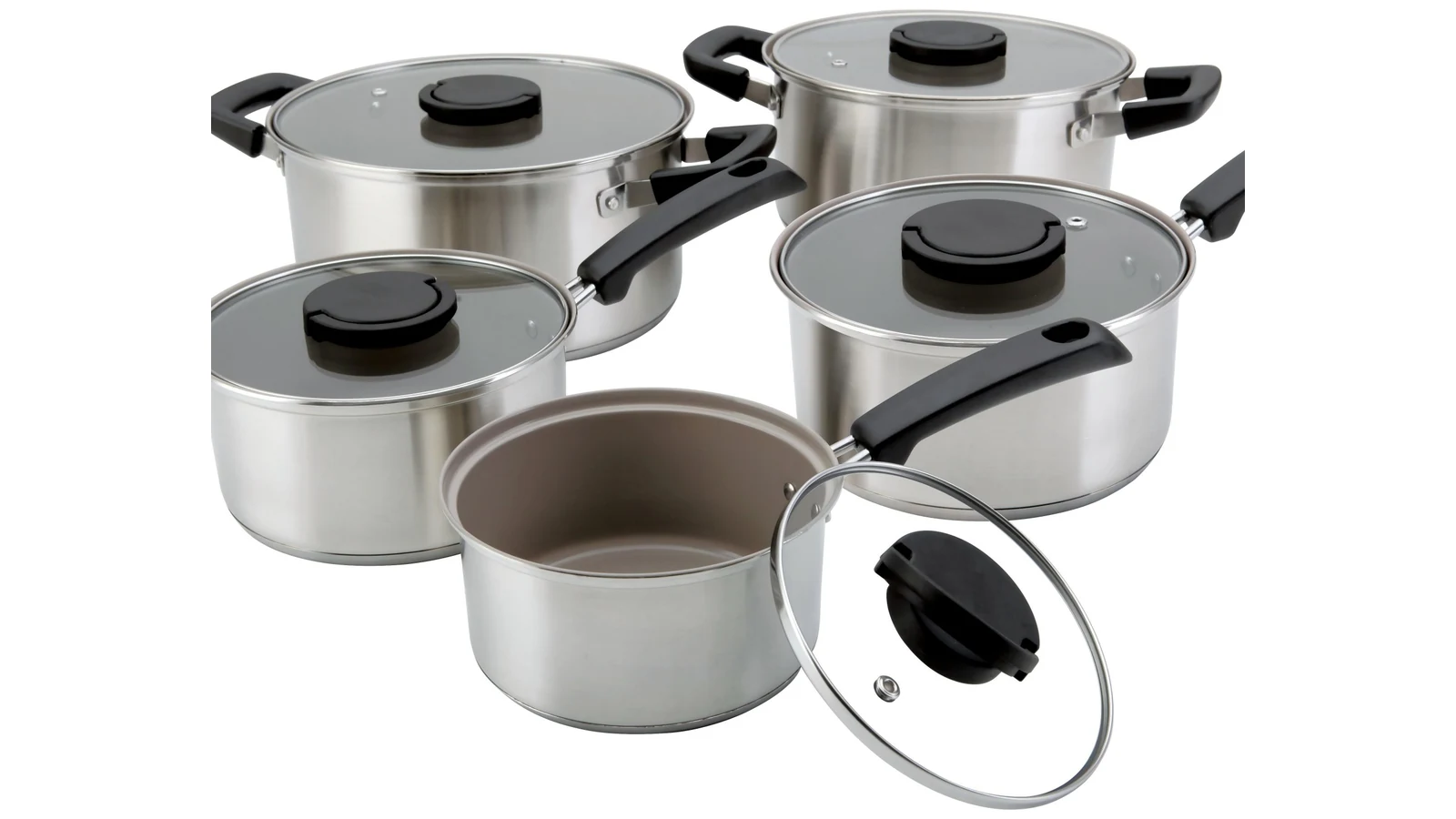
Saucepans and casseroles are where an induction base earns its cost: they are the pieces a customer puts on the hob and notices. Counting titles that name induction explicitly, in the product extract this piece was written against: 20 saucepan and casserole SKUs across ten series, of which seven titles carry the claim — so it is already being made on a third of the range, model by model. Steamers are split, at 8 SKUs and one title with the claim. Kettles stand at 0 of 10 titles even though the extract lists a composite multi-layer base as a standard feature across the range — so the gap here is in the wording of the claim, not in the build. Ask which base each kettle is actually pressed with before you rule the line in or out.
Those counts describe a catalogue, not a capability: if a shape or capacity you need is not in it, the question to ask is what your factory actually runs and what its tooling covers, because an "induction ready" line that exists in a brochure is not the same as a die that exists on the floor. The product-line build-out guide covers how to sequence that conversation, and the range itself shows which constructions are already in production.
The sentence to take to a supplier is not "is it induction compatible". It is "which layer is magnetic, how thick is it, how wide is it, and what document says so".
Common questions
Is 304 stainless steel induction compatible?
Not as a body material. Annealed 304 is austenitic, with a relative magnetic permeability of essentially 1 — 1.0, or slightly more — against roughly 14 for a ferromagnetic steel, so an induction field has almost nothing to couple to and the wall stays cold. A 304 pan can still be fully induction-ready, because the part that couples is a separate ferritic layer, normally a 430 cap bonded into the base. That is why two pans with identical 304 bodies can behave differently on the same hob: the difference is in what was bonded underneath, not in the grade named on the quotation.
Does a magnet sticking to a pan prove it works on induction?
It proves there is ferromagnetic material somewhere in the base. It does not prove the magnetic area is large enough for the cooking zone, that the layer is continuous, that the bond will survive thermal cycling, or that the base is still flat. Cold-worked austenitic bodies also pull a magnet weakly, especially at the corner radius, so a weak pull is not evidence of a cheap grade. Use the magnet to confirm the presence of a ferritic layer, then settle performance with base diameter, flatness and a detection test on the hob sizes you actually sell into.
What is an impact-bonded induction base?
A construction in which the pot body is drawn as a single layer of stainless, then an aluminium disc is placed against the bottom, a thin stainless cover disc is placed over it, and the stack is pressed under high tonnage so the aluminium flows and bonds to both steel faces. The cover disc is normally a ferritic grade such as 430 (sold as 18/0), and it is the part the induction coil couples to. The aluminium does the heat spreading. Because the joint is made by pressure rather than by a melted filler, the interface is continuous, but it is still the place where repeated thermal shock does damage.
Why does an induction hob fail to detect a stainless steel pan?
Pan detection needs a magnetic load large enough for the zone. Four causes cover most cases: the pan has no ferritic layer, the ferromagnetic area is much smaller than the base, the base is warped so it no longer sits flat on the glass, or the base is below the zone's minimum diameter. Manufacturers publish those minimums per zone, and they are not trivial: one manual lists 90 mm of pan base for a 145 mm zone and 130 mm for a 210 mm zone. A pan that passes a magnet test can still fail all four of the others.
Written by
Potobelo Editorial Team
Sourcing and engineering staff at Potobelo, a stainless steel cookware brand built on 30 years of Zoombo manufacturing in Guangdong, China. We write from inside the plant that makes the product, not from reviewing it.