
10 Questions to Ask a Manufacturer of Stainless Steel Cookware
A sourcing decision is settled long before the purchase order, by the answers a factory will put in writing. This is the checklist procurement and QC teams use to vet a stainless steel cookware manufacturer before signing: entity, grade, construction, compliance, tooling, price, samples, inspection, packaging and terms — what a weak answer sounds like, and the document that closes each question.
 Potobelo Editorial Team15 min read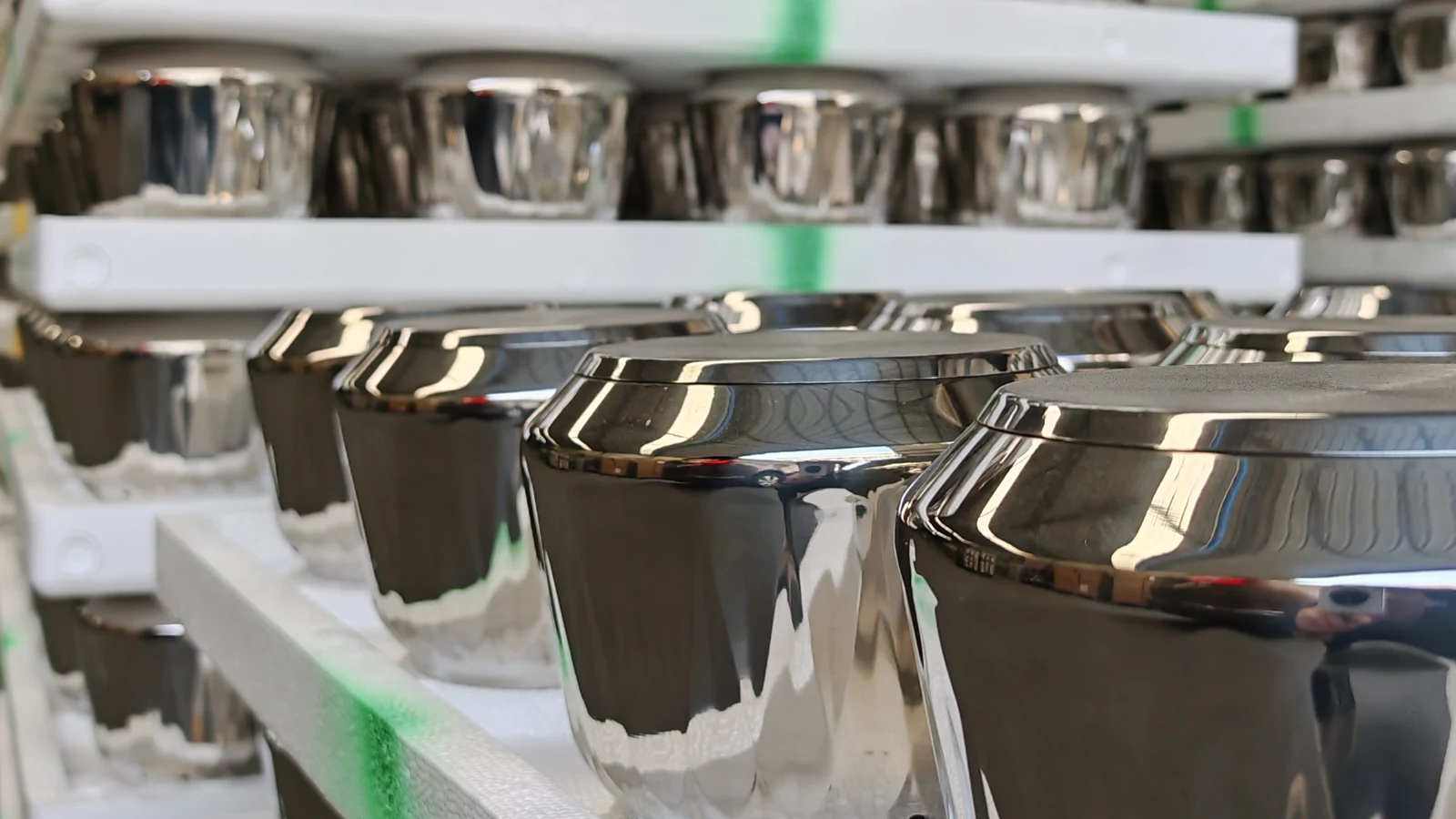
The short answer: what a signature actually commits you to
A signed order is not a purchase. It is a bet that the company quoting you is the company that will make the goods, in the steel you specified, at the tolerances you approved, at a price that survives the next move in stainless. Almost none of that is on the quotation.
Three of them carry most of the risk, and they are the three a sales email never volunteers: who owns the plant, what the grade actually is, and who owns the tooling. Get those wrong and the other seven become paperwork attached to a problem; get them right and the rest is arithmetic.
The working phrase is "questions to ask a cookware factory", and every question below is handled the same way: the question, what a weak answer sounds like, and what to ask for in writing. That last column decides whether a dispute is arguable. A factory that will not answer in writing has told you something, even when the spoken answer sounded right.
What "questions to ask a manufacturer" should actually screen for
Most lists written for that phrase are aimed at someone buying a product rather than someone placing an order. The ten below screen three separate things.
What you are screening | The question behind it | How it fails quietly |
|---|---|---|
Identity | Is the entity signing the contract the entity running the machines? | Quotation, invoice and export documents name three different companies |
Capability | Can the line hold the specification at volume, not only in the first article? | A good sample is approved, production drifts, and nobody holds a signed reference |
Contractability | Will the factory accept enforceable terms on price validity, inspection, tooling and replacement? | Terms are agreed in chat; nothing reaches the order confirmation |
A good answer is specific, dated and checkable. "We are a manufacturer" is none of those. Naming the forming line your product runs on, the mill the steel comes from and the certificate that travels with each heat is all three — and verifiable without a plant visit.
These ten questions sit downstream of the sourcing process itself. If you have not settled the order in which a sourcing decision should be made, the sourcing sequence that runs underneath these questions covers the stages these checks belong to.
1. Who owns the plant, and who actually makes your goods?
Ask for the legal entity that will appear on the invoice and the plant address where the goods will be made, then check whether either matches the company that sent the quotation. Beyond that: which department runs your product, whether any stage is subcontracted, and whether the contracting entity is the factory or a trading arm.
A weak answer names a city rather than a plant, or says "we are a factory" and then quotes from a port with no address. Another weak answer is a trading company that never says so. A declared trading partner is workable; an undeclared one is a supplier you cannot audit, because you do not know who to audit.
In writing, ask for the registered entity name, the plant address, and a statement of which production stages are performed in house and which are not. If any stage is subcontracted, get the subcontractor named. Then compare the entity name across the quotation, the order confirmation, the bank details and the export documents — the quickest way to find a mismatch is to notice the money is going somewhere else. If you are weighing a factory against a trader, factory or trading arm is the distinction to settle first; when comparing several factories, the screening logic is in choosing between shortlisted cookware manufacturers.
2. Which stainless grade, and how can you prove it for each batch?
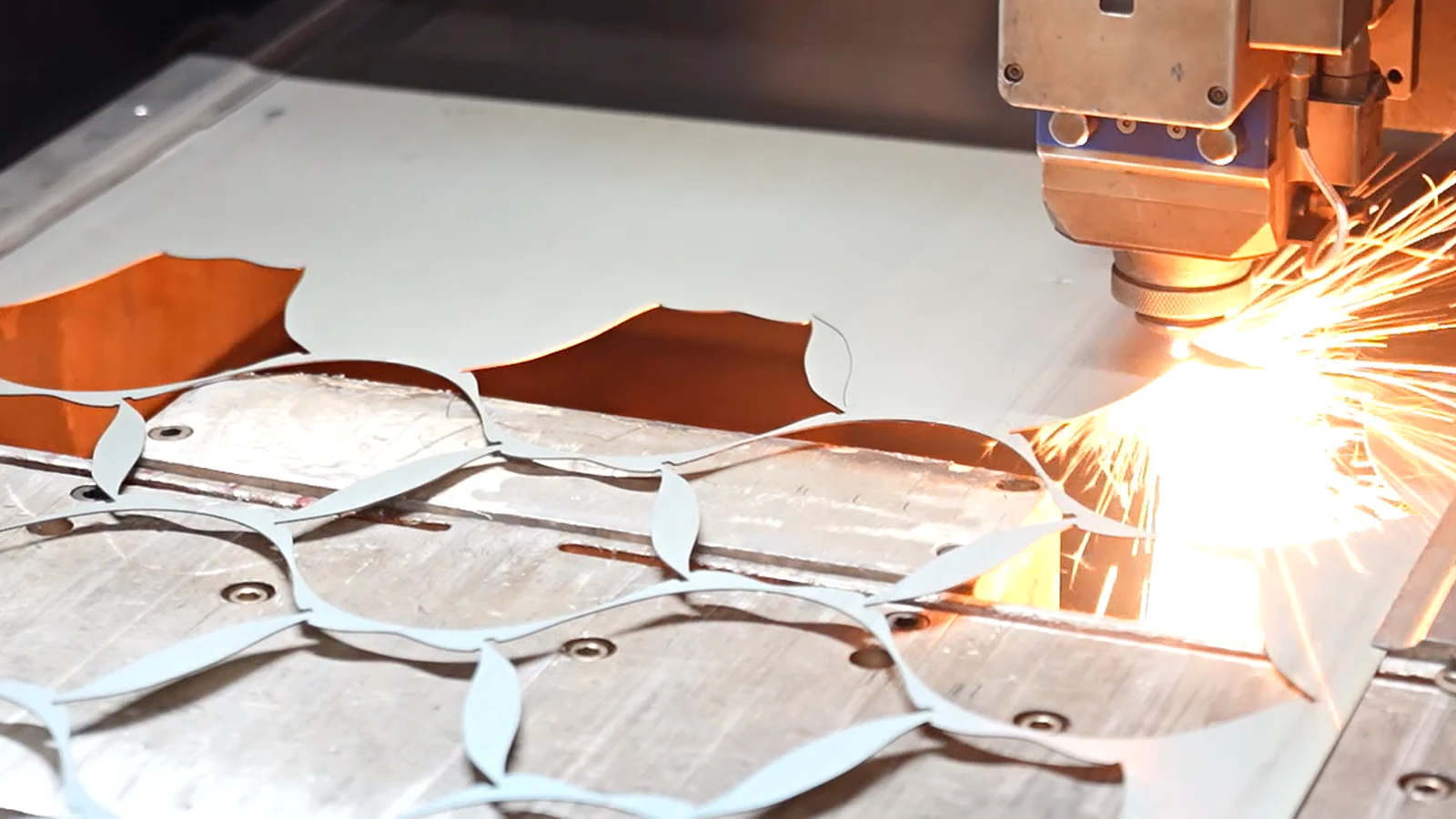
"Food-grade stainless" is not a grade. Ask for the grade by name — 201, 304 (18/8), 18/10 — and for which part of the article uses it: the food-contact surface, the magnetic outer layer that makes the base induction-compatible, or the base. A single pan can legitimately use more than one.
A weak answer is a grade adjective with nothing behind it: "18/10 quality", "food-grade 304", "German steel". Those phrases describe a marketing position, not a material. The next-weakest answer is a certificate from one old shipment offered as proof for all of them.
In writing, ask for a mill certificate for the heat — the melt batch of coil the steel came from — carrying the grade and the chemical composition, and tie it to each production batch. For flat and strip product, the chemistry and mechanical requirements the certificate is written against are specified in ASTM A240/A240M, so the certificate can be checked against a published specification rather than taken on the supplier's word. Note the limit of it: a mill certificate speaks for the coil, while a finished-goods test speaks for one article under one set of conditions. A buyer usually needs both. On grades specifically, 201 and 304 are not interchangeable: 201 is widely used and marketed as food-grade, but it does not have established food-contact recognition in practice for the markets most importers ship into. That is a statement about recognition in practice, not about what any regime permits.
3. What construction and tolerances are you quoting?
This is the question that makes two quotations comparable. Ask for the layer sequence from the food-contact side outwards, the thickness of each layer in millimetres, and whether the cladding runs through the wall or stops at the base. The same layer count describes two different products depending on which one it is.
A weak answer is "3-ply", "thick base" or "high quality". A layer count with no thicknesses cannot be accepted or rejected, and a base described only as "thick" cannot be measured against a rival quotation.
In writing, ask for numbers: the layer sequence and each layer's thickness; base thickness under the centre; wall thickness at the rim; the flatness or warp tolerance for the base; and the rated capacity in litres with the fill level it is measured to. Add the interior finish and the handle attachment method if either is part of your line. Then ask the part that gets skipped: what tolerance will be held at volume, and what the factory does with a unit outside it. A specification sheet without tolerances is a description, not a specification — and when the first container arrives thin at the rim, a description gives you nothing to reject against.
4. What does the food-contact paperwork actually prove?
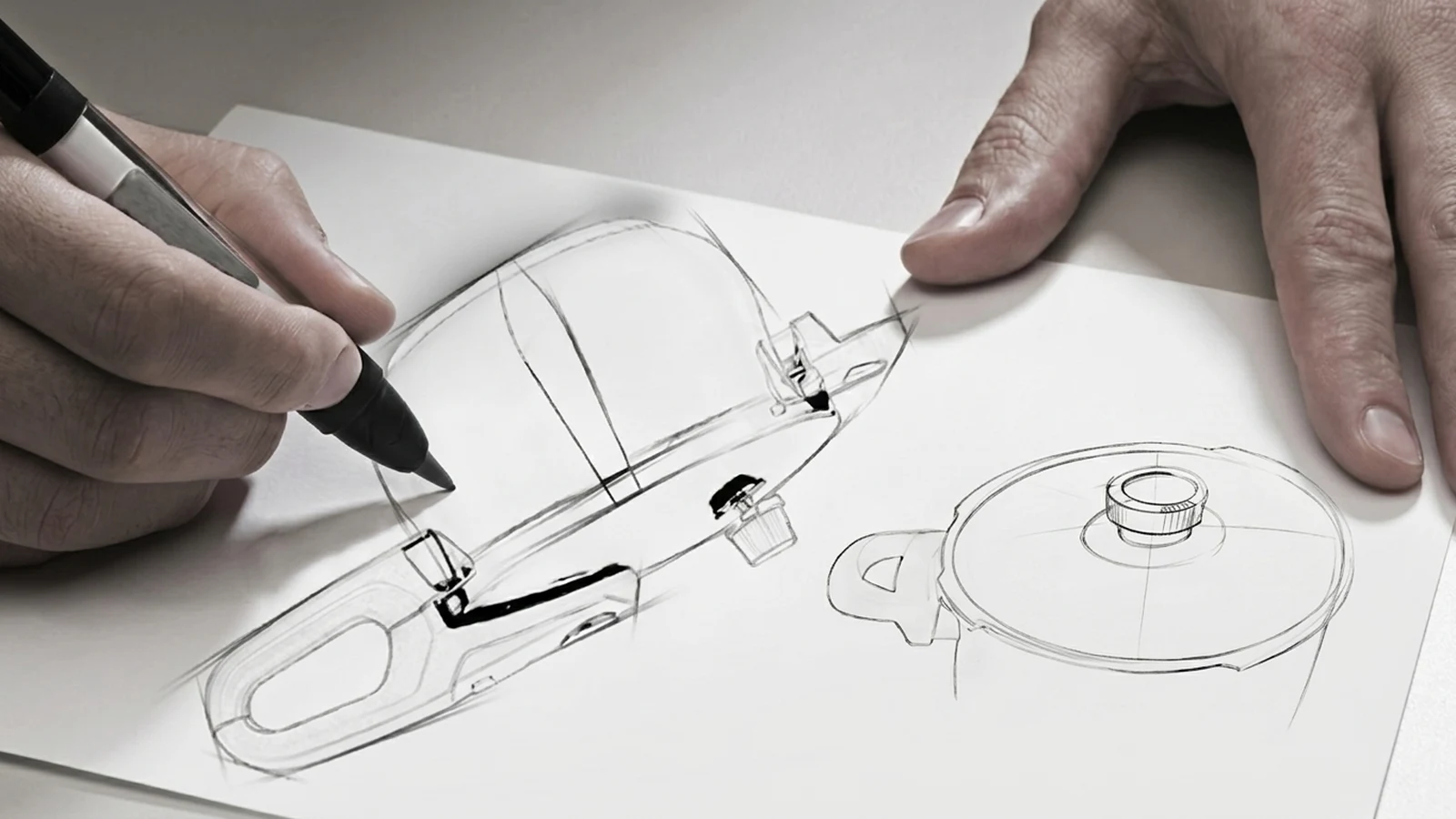
Certificates are the most over-read documents in sourcing. Ask which framework, which test, which article and which conditions — then ask to see the report rather than a logo.
A weak answer is "we are FDA and LFGB approved" in one line, or a certificate image with no scope, article name or test conditions.
In writing, ask for the test report that applies to your article, the framework it was run under, and its date. Three things shape an honest answer. The EU's framework Regulation 1935/2004 governs migration behaviour and operates with no grade whitelist — compliance is shown by migration testing, not by naming a grade. In the United States, the FDA's food-contact position on a material is established case by case and, for stainless steel, by series with a chromium content of 16% or more — not by a published grade list and not by a certificate. China's GB 4806.9 uses specific release limits for metals, again not a grade list.
So what does paperwork prove? That a sample passed the tests that were run, under the conditions that were run. It does not prove the next container, which is why the report belongs beside a per-batch document and a retained reference sample; the durability side is covered separately in what stainless steel does over its working life. Whatever the market, the rule binds the party placing the product on the market, so the specification has to be yours, in writing, before the run.
5. Who owns the tooling, and where does it go if you leave?
Tooling questions get skipped because tooling often looks free. It rarely is: it is either charged once or amortised into the unit price, and which one you agreed to decides what you own.
A weak answer is "tooling is free for you" or "we make the mould in our own toolroom, don't worry". Both may be true, and both leave ownership unanswered.
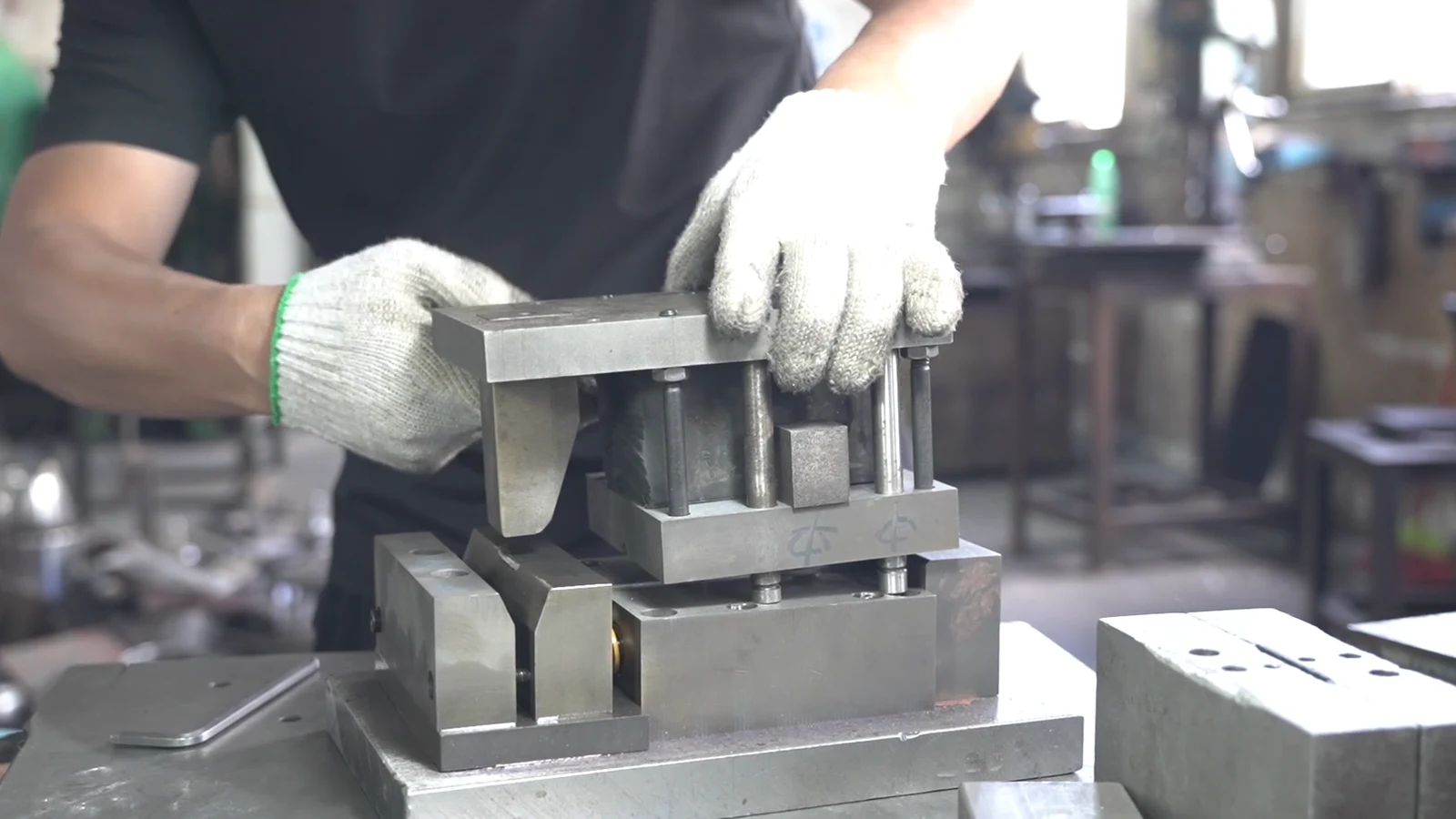
In writing, ask whether the tooling is made in house or bought in; whether the cost is amortised into the unit price or invoiced once; whether the tool is dedicated to your product or shared across models; who owns it; whether it can be transferred to another factory, and at what cost; and what happens to it if you do not reorder for twelve months. If the cost is amortised, ask what happens to the unit price once the amortisation period ends — otherwise the price never falls even though the tool has been paid for. If you will own the tool, write that down, with a defined condition and handover process. "Free" tooling you cannot take with you is a tool you paid for and do not own.
6. What drives the unit price, what is the MOQ, and how long is the quote valid?
A single number is not a quotation. Ask for the cost lines that move, the minimum order quantity per model, and a validity period.
A weak answer is a price with no breakup, an MOQ that changes between emails, or a quotation with no expiry — which is not a price at all but an opinion about the price.
In writing, ask for the composition of the unit price across the lines that move, and for the MOQ written per model and per finish rather than as one figure for the whole range. Stainless steel is a traded commodity, so ask how a steel-price move is handled: firm for a stated number of days, then re-quoted against a named reference or the mill invoice. Where the MOQ sits depends on the tooling and finishing economics of that model, which is why a single factory-wide number is usually rough.
Cost line | What it tracks | Why it moves |
|---|---|---|
Steel grade and weight | 201 vs 304, wall and base thickness | Grade and mass dominate material cost |
Forming and finishing | Drawn or spun body, polish grade, welds | Labour time per piece plus reject rate |
Assembly | Handles, knobs, lids, safety valves | Component sourcing and fitting time |
Packaging | Bulk or retail-ready, carton and print | Material, print setup and carton count |
Freight basis | FOB, CIF or DDP | Who books, insures and clears (see Q10) |
Numbers here have to come from your supplier in writing — any figure given in an article is out of date as soon as the steel market moves.
7. How does the approved sample become the mass-production reference?
A sample proves the tooling can make the product once. It does not prove the line can make it on every shift, for four weeks.
A weak answer is "the sample is exactly what production will be". That is an intention, not a mechanism. The next-weakest answer is a sample nobody signed and nobody kept.
In writing, ask who signs the sample, whether a sealed copy is retained by both sides, whether the retained copy is kept through the production run, how the first article off the line is compared against it, and what happens when a finished unit falls outside the agreed tolerances. Three things make a sample binding: a signature, a retained physical reference, and a recorded first-off comparison. A signed photograph is not a substitute for the retained unit, because colour, weight and the feel of a rim do not travel through a JPEG. The mechanics of holding sample and production to each other are set out in closing the gap between sample and mass production.
8. Where are the QC gates, and what are your inspection rights?
"Inspected" is not a plan. Ask where inspection happens, what it samples against, and what your right to check looks like before the container is sealed.
A weak answer is "we inspect 100% of every order" with no sampling plan behind it, or an inspection that happens only at the end, once the goods are already packed.
In writing, ask for the inspection points, in-process and pre-shipment; the sampling plan and its accept-or-reject level; and the way defects are classified, so that a scratch, a loose handle and a failed safety function are not one problem. In the trade, an acceptance quality limit run against a sampling standard such as ISO 2859-1 is how that level is normally expressed. Then settle the right itself: who may inspect, at which stage, whether a third-party inspector can attend before sealing, who pays for that inspection, and whether a failed inspection stops the shipment or starts a rework loop. Ask the same for the period after delivery: who pays for the remake, who pays the freight, and within how many days a problem must be raised. An inspection right you cannot exercise is just a sentence in a document.
9. What exactly will the cartons and labels carry?
Packaging is where a landed cost is quietly decided, and where a retail launch is quietly lost. Ask whether the line is retail-ready, with each unit in its own box, or bulk — and get the carton specification in numbers.
A weak answer is "standard export packing" or "we will pack as you prefer". Both defer every decision to the moment the goods are already made.
In writing, ask for the master carton dimensions and maximum gross weight, units per carton and per pallet, whether each unit is individually boxed, and the artwork files the factory will print from. Specify the label content the destination market requires of the importer — product identity, origin, importer details, warnings — and say who owns the barcode or GTIN. Then ask for a carton proof before the run starts: a printed box and label sample is cheap, while a corrected print plate after four thousand cartons is not. The difference between retail-ready and bulk packing, and what each one costs you, is set out in retail-ready packaging. Labelling requirements are the importing party's to define; the factory's job is to print what you specified and to prove it before the run.
10. What are the lead-time, payment and after-sales terms?
The last question decides whether the previous nine survive contact with a calendar.
A weak answer is "about 30 days, T/T, we will support you". A lead time with no start point is a number without a clock, and a payment term with no schedule is a request.
In writing, ask the lead time with its start point named — order confirmation, deposit received, artwork approved, or sample signed off — because a delay in any of those moves the delivery date, and the wording usually says so. Ask for daily or weekly capacity so the lead time is checkable against your quantity, and ask what happens in peak season, when your order competes for the same line as everyone else's. Then the commercial terms: the payment schedule and what the deposit secures; the delivery term under Incoterms 2020 and who books, insures and clears; the export documents you will receive; the claims window and process; and the availability of wear parts such as handles, knobs and safety valves. Replacement policy belongs on this list too: a replacement that arrives free but lands on your freight account is not a remedy.
The ten questions on one page
If you keep one thing from this article, keep this table.
Question | A weak answer sounds like | Ask for in writing |
|---|---|---|
| "We are a factory", city only | Entity name, plant address, in-house vs subcontracted stages |
| "Food-grade stainless" | Grade by part, mill certificate per heat |
| "3-ply", "thick base" | Layer sequence and thicknesses in mm, flatness tolerance, capacity |
| "FDA and LFGB approved" | Test report with framework, article and conditions |
| "Tooling is free" | Ownership, amortisation, transfer and reorder terms |
| One number, no expiry | Cost lines, MOQ per model, quote validity and steel-price mechanism |
| "Same as the sample" | Signed retained reference, first-off comparison, tolerance response |
| "100% inspected" | Sampling plan and AQL level, defect classes, third-party access |
| "Standard export packing" | Carton spec, label content, artwork ownership, pre-run proof |
| "30 days, T/T" | Clock start, capacity, Incoterm, documents, claims window, wear parts |
Ten questions is not a long list. What makes it long is that each one has to end in a document — and a supplier who can produce all ten is one whose answers will still be true in the third year.
Where these answers land
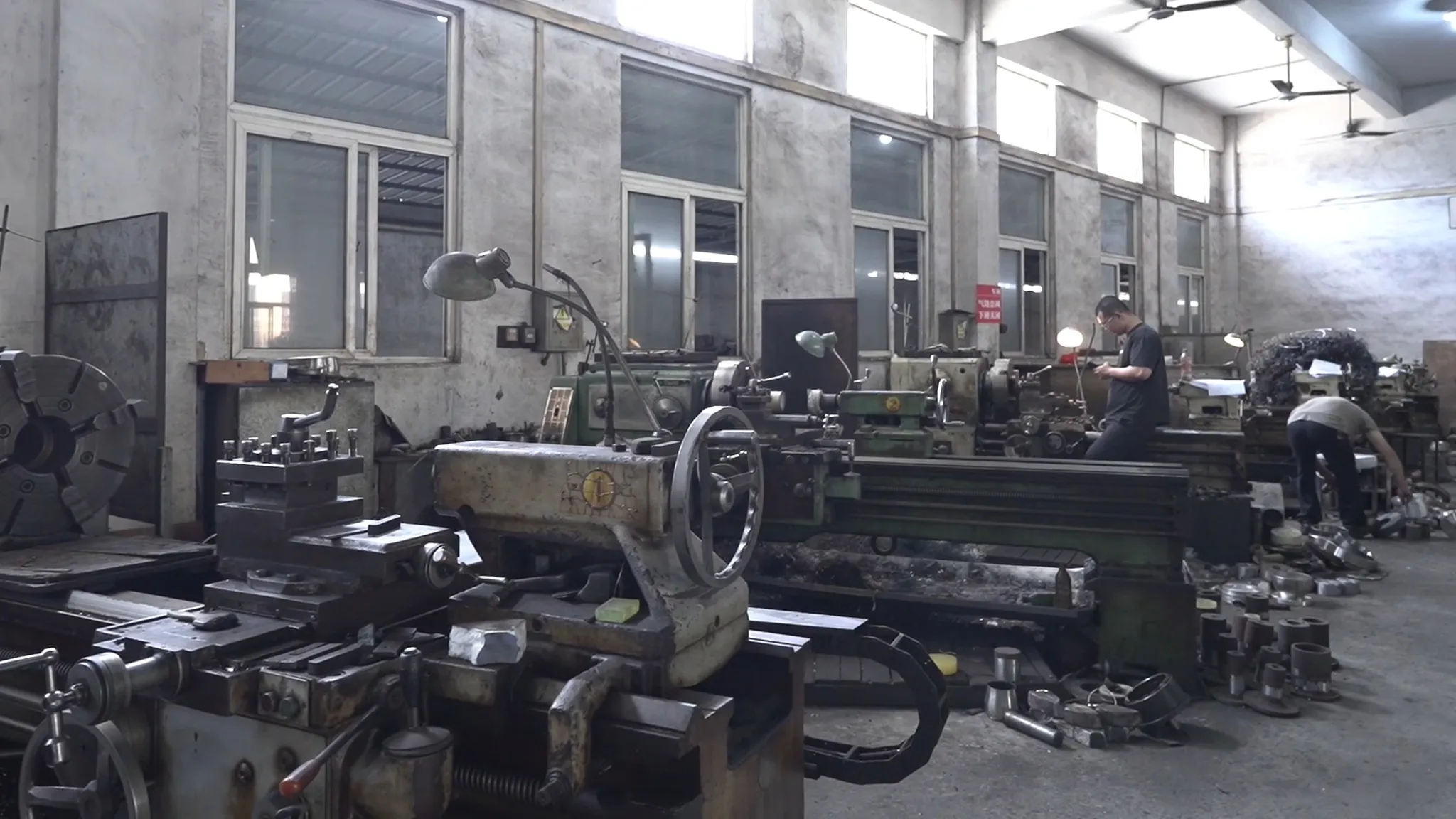
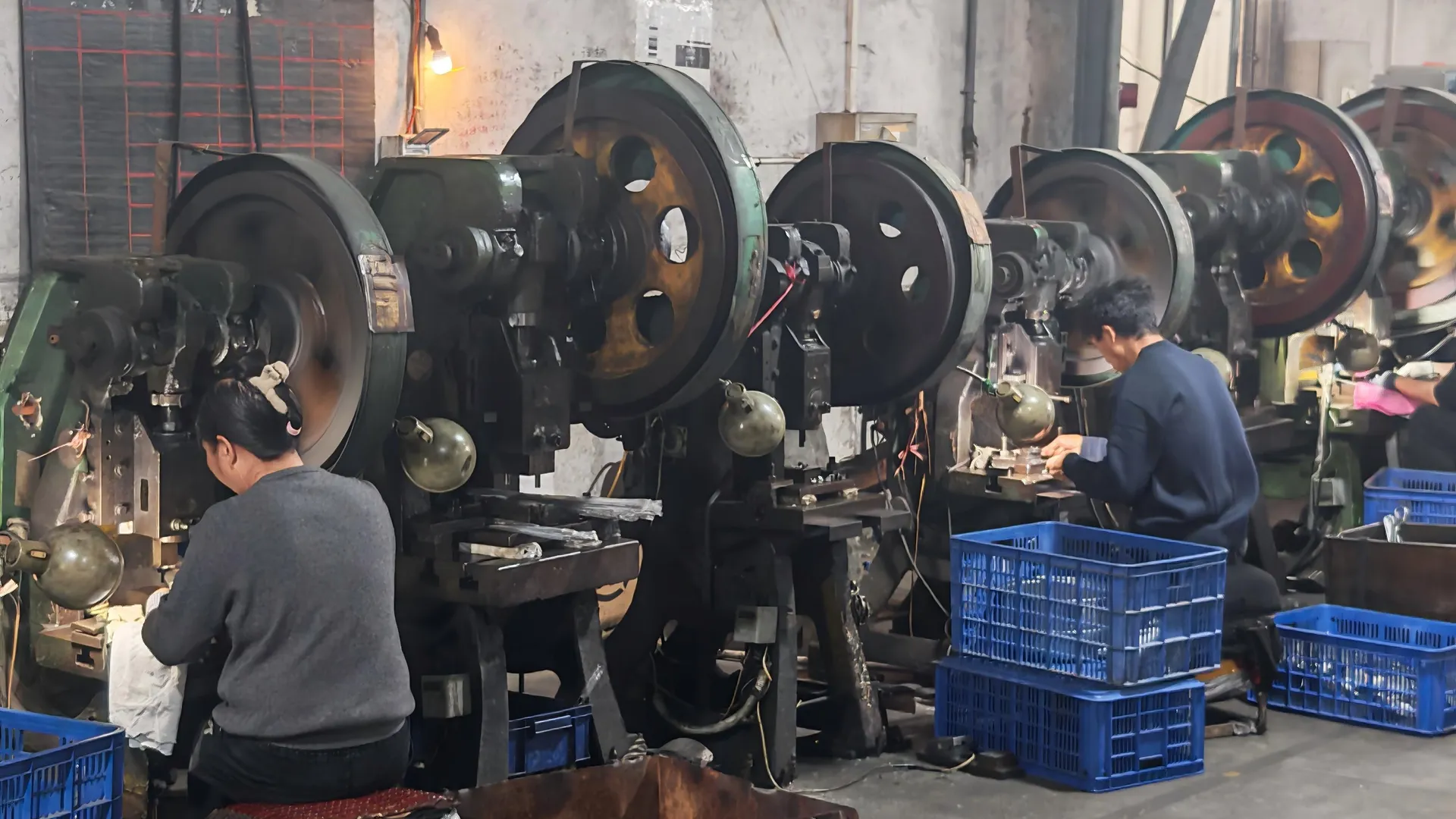
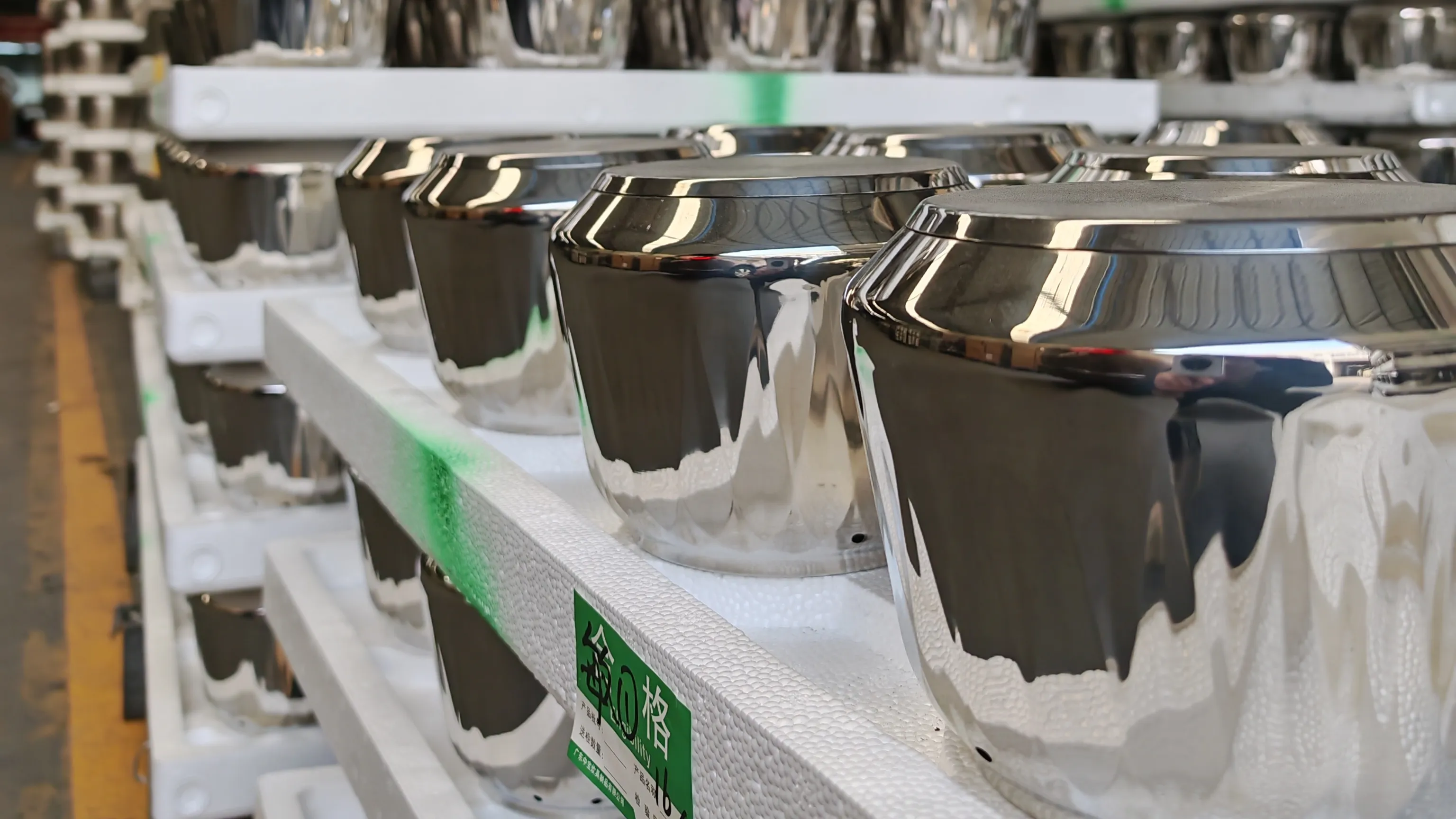
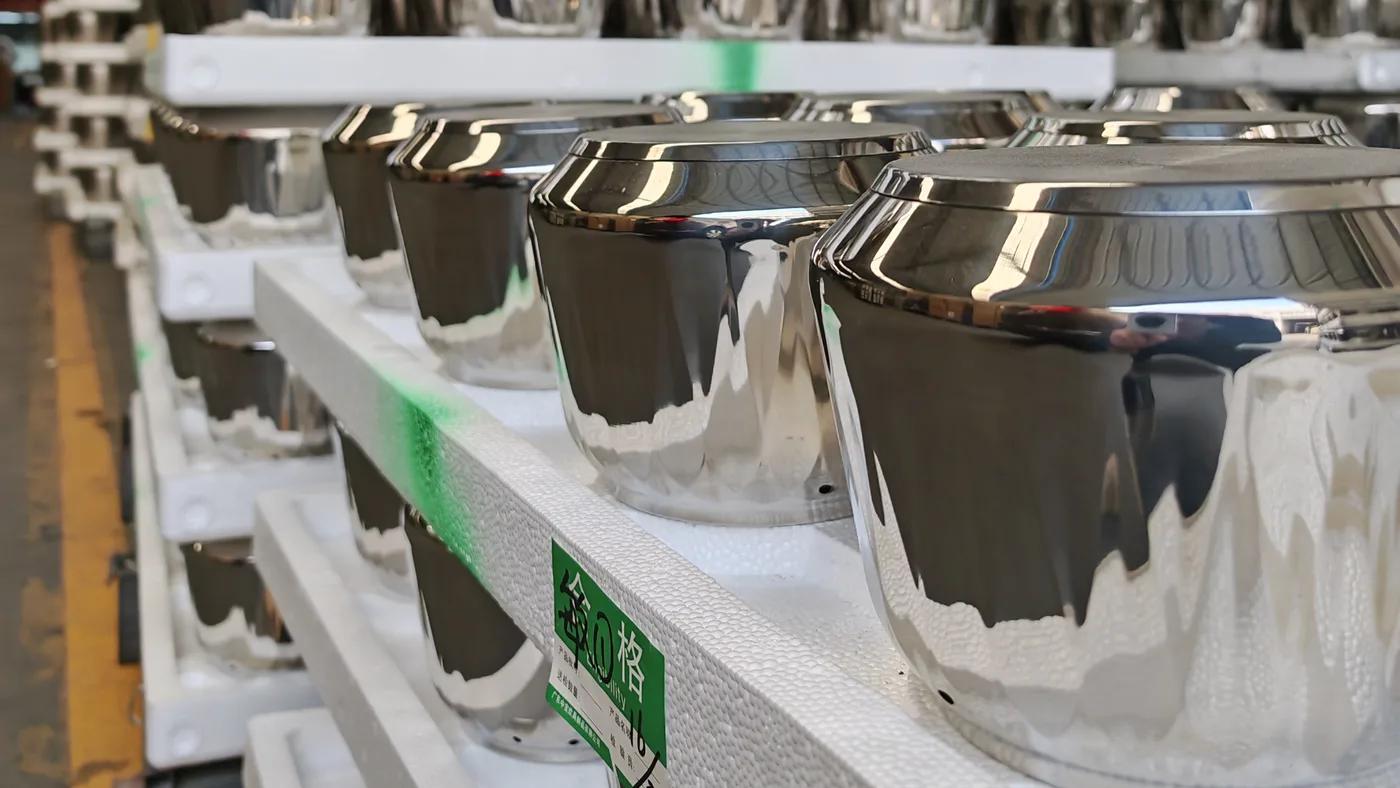
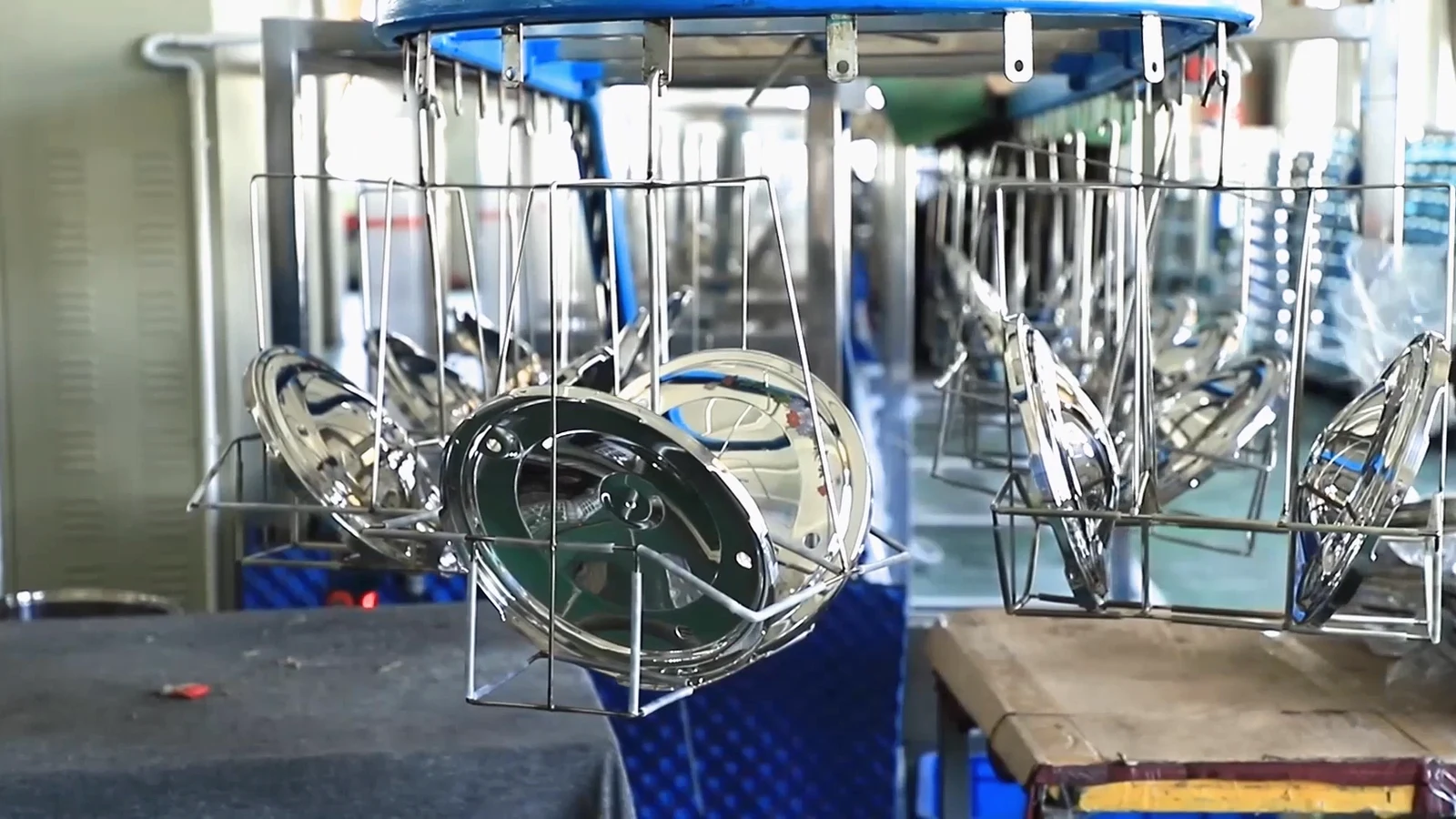
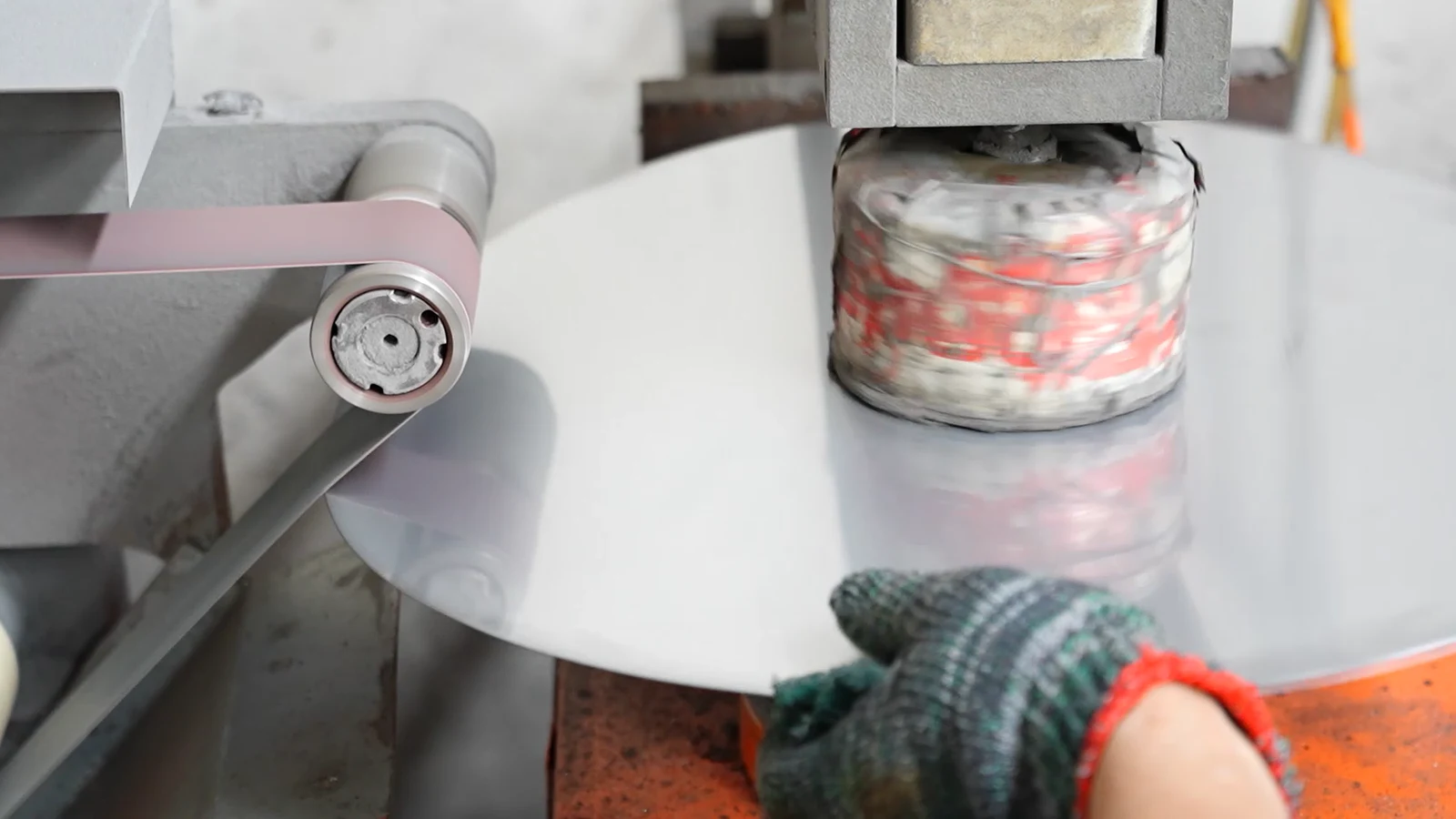
Put those ten questions to us and the answers come from one plant rather than a relay of traders. Potobelo manufactures stainless steel cookware — kettles, saucepans and casseroles, steamers and pressure cookers — out of a single site in Jieyang, Guangdong: 66,000+ m², 26,000 units a day across 70+ proprietary process lines, with tooling, forming, polishing, welding, finishing and packing in house, and 300+ patents behind the composite-base and pressure-cooker safety structures. Because those stages sit under one roof, the questions about who forms the blank, who owns the tool and who runs the finishing line have a short answer.
That matters most for the last question. A supplier who can name their line, their steel source and their tooling position can also tell you which weeks of the year are tight, and can put the specification, the retained sample reference and the inspection plan in writing before a purchase order exists. What you should take away is smaller than any capability list: ask the ten, ask for the documents, and treat the questions that will not be answered in writing as answers in themselves.
Common questions
What should I ask a cookware manufacturer before placing an order?
Ask for ten answers in writing, not only in conversation: which legal entity owns the plant and who runs your product; the stainless grade by part, plus a mill certificate for the heat; construction and tolerances in millimetres; the food-contact test report with its framework and conditions; who owns the tooling; what drives the price and the MOQ per model; how the approved sample is compared to production; the QC gates and your inspection rights; the carton and label specification; and the lead time with its start point, payment schedule and after-sales window.
How do I verify the stainless steel grade a factory is actually using?
Ask for the grade by name — 201, 304 (18/8) or 18/10 — and for which part of the item uses it, because the food-contact layer, the magnetic outer layer and the base can differ. Then ask for a mill certificate for the heat, the melt batch of coil the steel came from, rather than a certificate from one old shipment. The certificate carries the grade and the chemical composition and is written against a published specification such as ASTM A240/A240M, so it can be checked rather than trusted. Note that it describes the coil, not one finished pot.
Who owns the moulds and tooling when a factory makes my product?
Tooling is rarely free: it is either invoiced once or amortised into the unit price. Ask whether the tool is made in house or bought in, whether it is dedicated to your product, who owns it, whether it can be transferred to another factory and at what cost, and what happens if you do not reorder for a year. If the cost is amortised, ask what happens to the unit price once that period ends, otherwise the price never falls even though the tool is paid for. Tooling you cannot take with you is tooling you paid for and do not own.
What is a realistic MOQ for stainless steel cookware, and how long should a quotation stay valid?
Treat both as supplier-specific facts to collect in writing, not as published industry standards. Minimum order quantity normally varies by model, finish and packaging, because it follows the tooling and finishing economics of that item, so a single factory-wide figure is usually rough — ask for the MOQ per model and per finish. Quotation validity matters just as much: stainless steel is a traded commodity, and a quote with no expiry is not a price. Ask how a steel-price move is handled: firm for a stated number of days, then re-quoted against a named reference or the mill invoice.
Written by
Potobelo Editorial Team
Sourcing and engineering staff at Potobelo, a stainless steel cookware brand built on 30 years of Zoombo manufacturing in Guangdong, China. We write from inside the plant that makes the product, not from reviewing it.