
What Is MOQ? Why a Higher Minimum Order Costs Less per Unit
For importers, distributors and private-label buyers who have been quoted a minimum order quantity and want to know what the number is made of. This piece defines MOQ, itemises the fixed cost a cookware minimum actually covers, and shows the arithmetic — spread over batch size, in line hours rather than prices — that decides whether a bigger order is more expensive or less.
 Potobelo Editorial Team16 min read
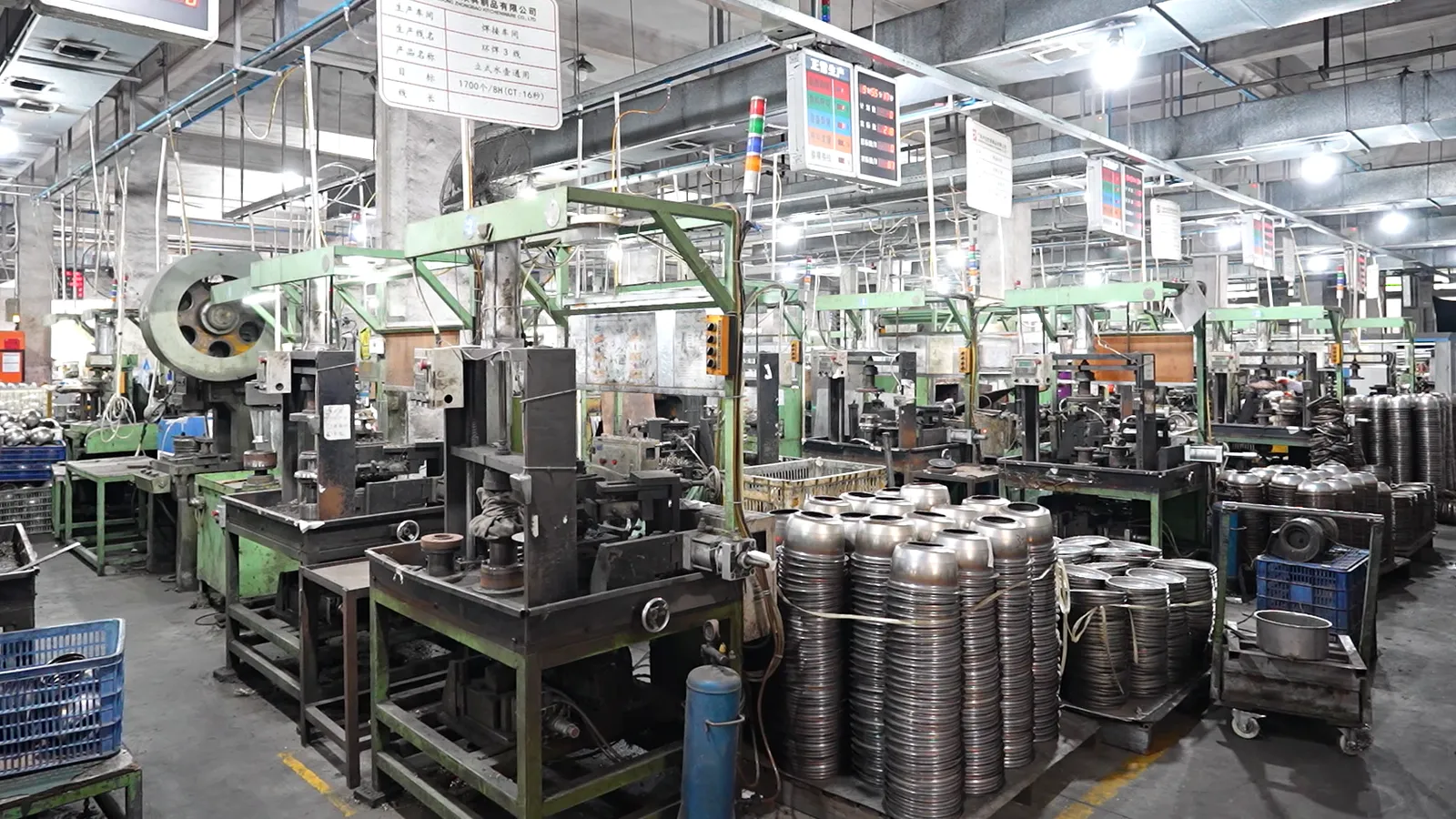
MOQ stands for minimum order quantity: the smallest quantity of one item a supplier will schedule in a single order and still produce at the price it quoted. That is the short answer to "what is MOQ". The expensive part is what the number is made of.
A 200-piece order and a 1,200-piece order of the same saucepan do not differ by 1,000 pieces of steel. They differ by how many times a factory has to install a die, align a press, approve a first article, load a finishing line and set up a packing run for one model. Each is a fixed cost per run, and spreading it over six times fewer pieces puts it on every unit you sell.
A higher minimum is not automatically a worse deal. Below a certain batch size you are not buying cookware more cheaply — you are buying the factory's changeover time and paying for all of it. What follows is the arithmetic, and the rule for your own order.
What is MOQ — and what it is not
Minimum order quantity (MOQ) is the smallest quantity of a single item a supplier will accept in one order and still produce at the quoted price. It is stated in units, not money, and a factory normally states it per model.
The confusion lives in the unit. "What does MOQ 1000 mean?" is a real question and no glossary answers it: 1,000 of what, measured how. At a cookware factory a quantity only means something when it names its scope — per model, per finish, per packing format, or per purchase order — and those four give four different numbers from the same line. The MOQ meaning in manufacturing is narrower than the acronym suggests: a production run, not an inventory rule. Ours is per model, and this piece returns to that.
Term | What it measures | Who sets it | What it does to your order |
|---|---|---|---|
MOQ (minimum order quantity) | Units of one item, per model | The supplier, from its setup structure | Fixes the smallest batch it will schedule |
MOV (minimum order value) | Money, in currency | The supplier or distributor | Can be met with a mix of cheap and expensive items |
Batch / run size | Units in one continuous run | Production planning | Usually larger than the MOQ; the MOQ is a floor, not a plan |
EOQ (economic order quantity) | Your cost-optimal order size | You, from demand and holding cost | Says what you should order; the MOQ says what you can |
MOQ is not a deposit — a deposit is a payment term, and the two get conflated because they arrive in the same email. It is not a quality signal either: a high minimum and a low minimum both appear at good factories and bad ones, and what the number reveals is the setup structure behind the quote. Nor is it a fixed law. A stock model whose die already exists has a different floor from a model that needs a new one, and both are legitimate answers provided the supplier says which you are being quoted. This page is for importers, distributors, retail buyers and private-label owners placing a first or repeat production order; if you are buying one carton from a marketplace, it is not for you. For the wider sequence it sits inside, the full sourcing guide runs from first enquiry to first shipment.
Why a factory sets a minimum at all
The minimum is not one setup. It is a stack of them, and the stack is why cookware carries a higher floor than products formed in a single step.
- Blanking and draw dies. A body is not pressed from flat sheet in one hit: it is blanked, drawn through stages, trimmed and, on a composite base, bonded and impact-pressed. Each stage has a die set to install and prove.
- Press setup and first article. Die in, press aligned, trial pieces measured, first article signed off, run, then strip-down and die return. Hours of work, identical at 200 pieces and 6,000.
- The steel coil. Material arrives as coil cut to blank length for one body, and the mill sold it at a mill minimum. Run 200 pieces and most of a coil becomes remnant stock.
- The finishing batch. Bodies and lids travel on fixtures through polishing and then through a plating bath or a PVD chamber. A fixture holds a fixed number of parts, and you cannot run a third of a load: bath chemistry and vacuum cycles are both set up for a full load.
- First-article scrap, inspection and packing. Pieces off a freshly set line are the likeliest to be reworked or scrapped — a burden per setup. Sampling then works from lot size without sampling in proportion, so inspection cost per unit rises as the batch falls, and printed colour boxes carry a print minimum of their own.
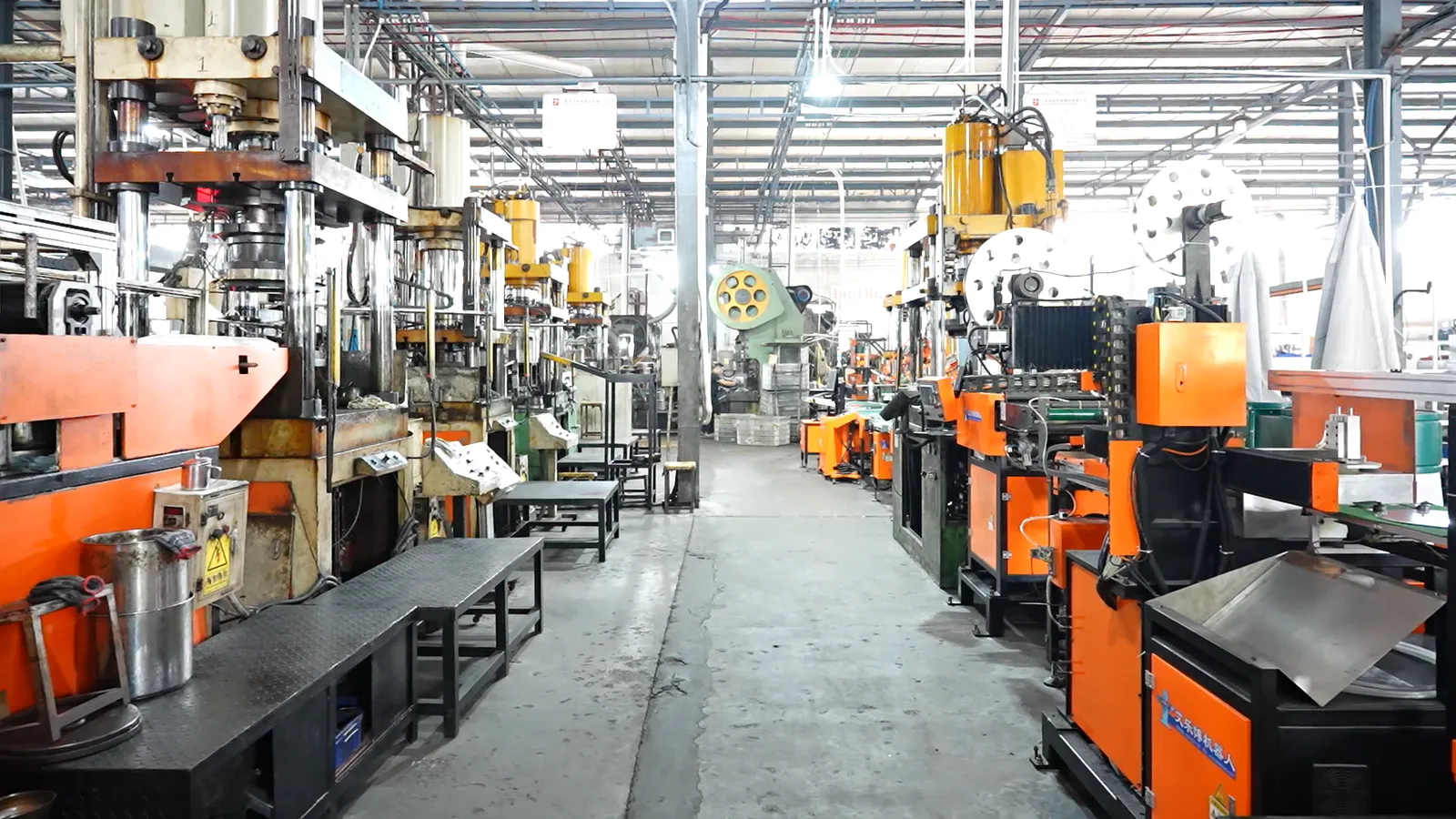
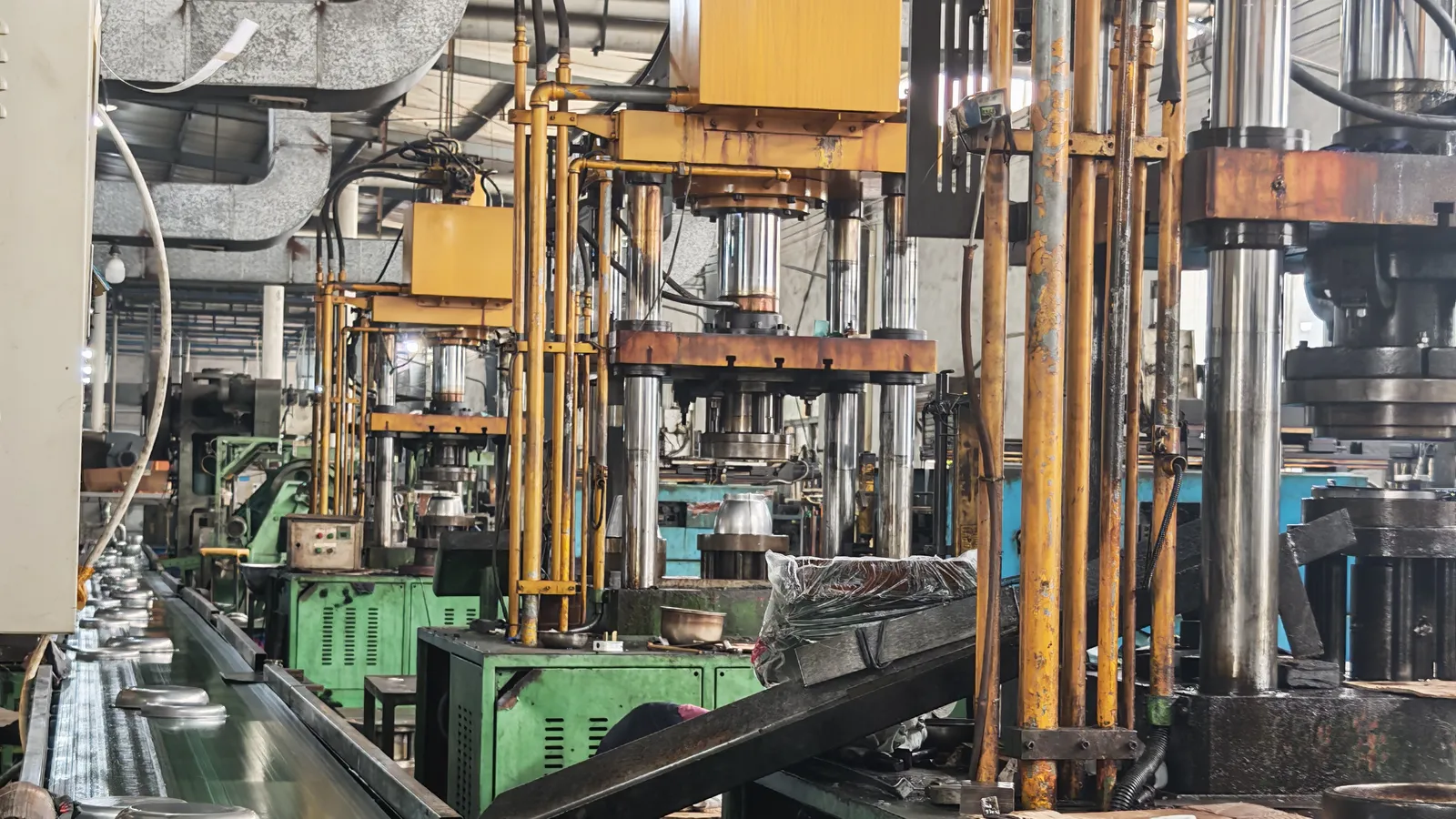
Each line in this aisle is set for one body. Setting it is a block of hours that the batch behind it has to carry.
That stack is the real answer to "why 1,200 and not 200": setup is not avoided by running less, only divided by less, and a supplier without a floor either declines the short run or prices the changeover back in as a surcharge. The changeover-reduction discipline known as single-minute exchange of die exists for exactly this reason — setup is a fixed cost per run, so the only arguments are how large the batch is and how short the changeover can be made.
The arithmetic: what a batch actually spreads
Divide a fixed burden by a batch — one production run of one model — and the answer is a hyperbola, not a discount. This is the calculation the MOQ pages do not show for any product, let alone one with this many setup points. Take an illustrative model: die installation and alignment, trial pieces, first-article approval and end-of-run strip-down, adding to 10 line-hours per model per run on a line running about 600 pieces an hour — assumptions, not a measurement of any particular order. Setup time ÷ batch size is the whole formula, and ten line-hours is 600 line-minutes.
Batch (pieces) | Changeover burden per unit | Run time at 600 pcs/hour | Setup time as a multiple of run time |
|---|---|---|---|
200 | 3.0 min | 0.3 h | 30 × |
500 | 1.2 min | 0.8 h | 12 × |
1,200 | 0.5 min | 2.0 h | 5 × |
3,000 | 0.2 min | 5.0 h | 2 × |
6,000 | 0.1 min | 10.0 h | 1 × |
Read the last column, because it is the one buyers never see. At 200 pieces the line spends thirty hours being prepared for every hour it spends producing. At 1,200 the ratio is five to one. At 6,000 it finally spends as long running as it did setting up — the point where the fixed burden has been diluted to something a unit price can absorb.
Two things follow. The per-unit share of setup halves every time the batch doubles, though the gains flatten: falling from 200 to 1,200 removes 2.5 minutes per unit, while 1,200 to 6,000 removes only 0.4. And the same quantity does not carry the same burden if it is split. 1,200 pieces as one model is ten line-hours. As six models at 200 each it is sixty — six changeovers for the same output, and 3.0 minutes of setup per unit instead of 0.5.
Where 1,200 pieces per model comes from
Potobelo's floor is 1,200 pieces per model, quoted per model, and the number sits where it does because of the two curves above rather than because of a policy.
At 1,200 the changeover burden is down to half a minute a piece and the setup-to-run ratio is five to one — small enough that the other fixed points (coil remnant, finishing load, print minimum) start to bind instead. Below roughly that zone the changeover is too large a share of the run to absorb quietly, which is why the floor is stated rather than settled case by case.
The number is not an industry standard, which is the part most buyers get wrong. Some published ranges for stainless cookware sit lower, around 500 to 1,000 pieces, and those figures are not wrong — they describe a different regime. A stock model from an existing die, in a stock finish and stock pack, has no die to amortise and no print run to buy, so its floor is lower and always will be. A custom model with new tooling, a named polish grade and retail-ready packaging is above 1,200. Quotes are comparable only when they name the same scope. Four levers move the floor without changing the product: stock tooling (the die is already amortised), shared dies (one die, several buyers, changeover divided across a group), open-tooling ranges (choose a body size that is already tooled), and a staged first order (fewer models at the full per-model minimum, widened on reorder).
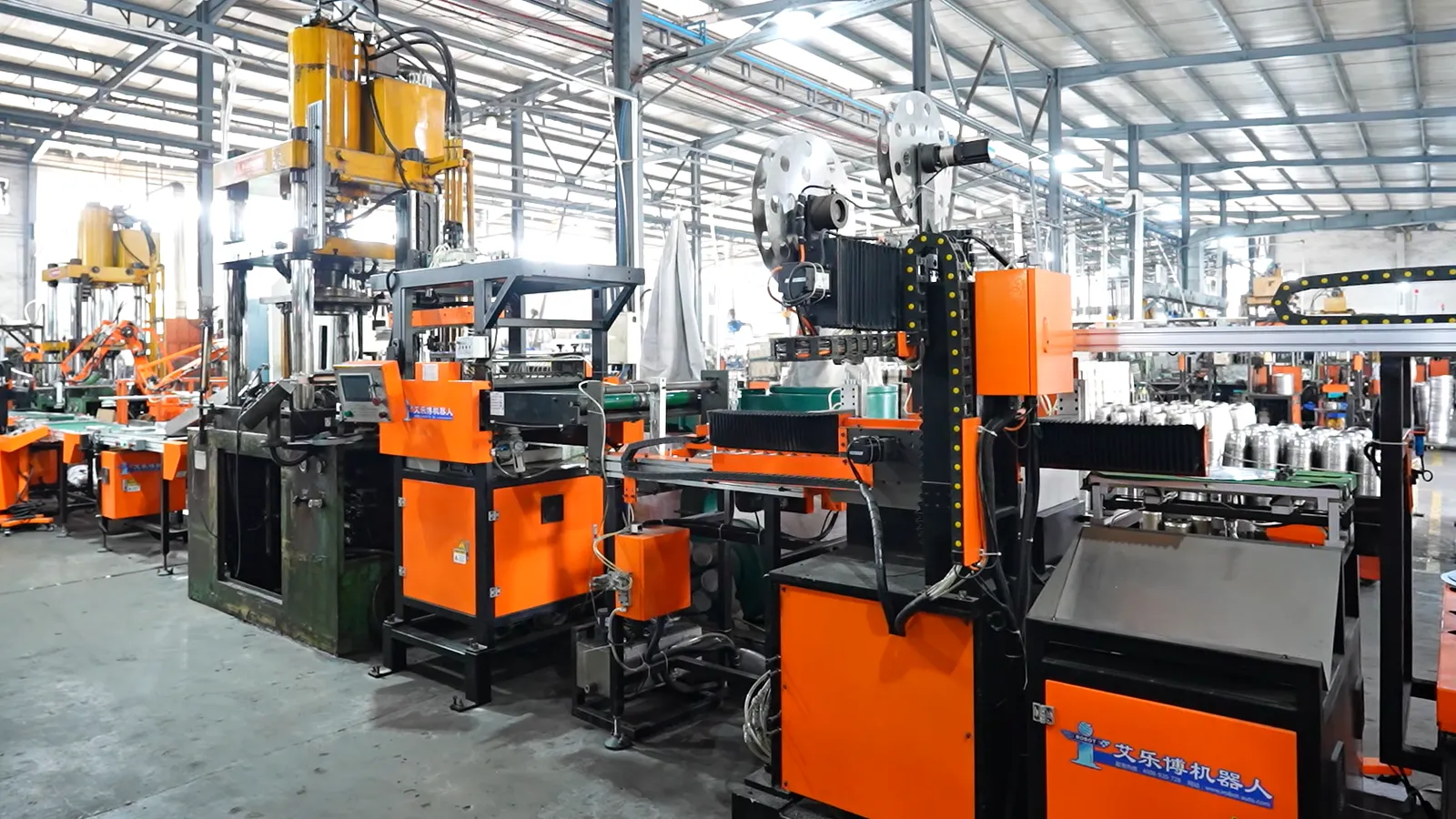
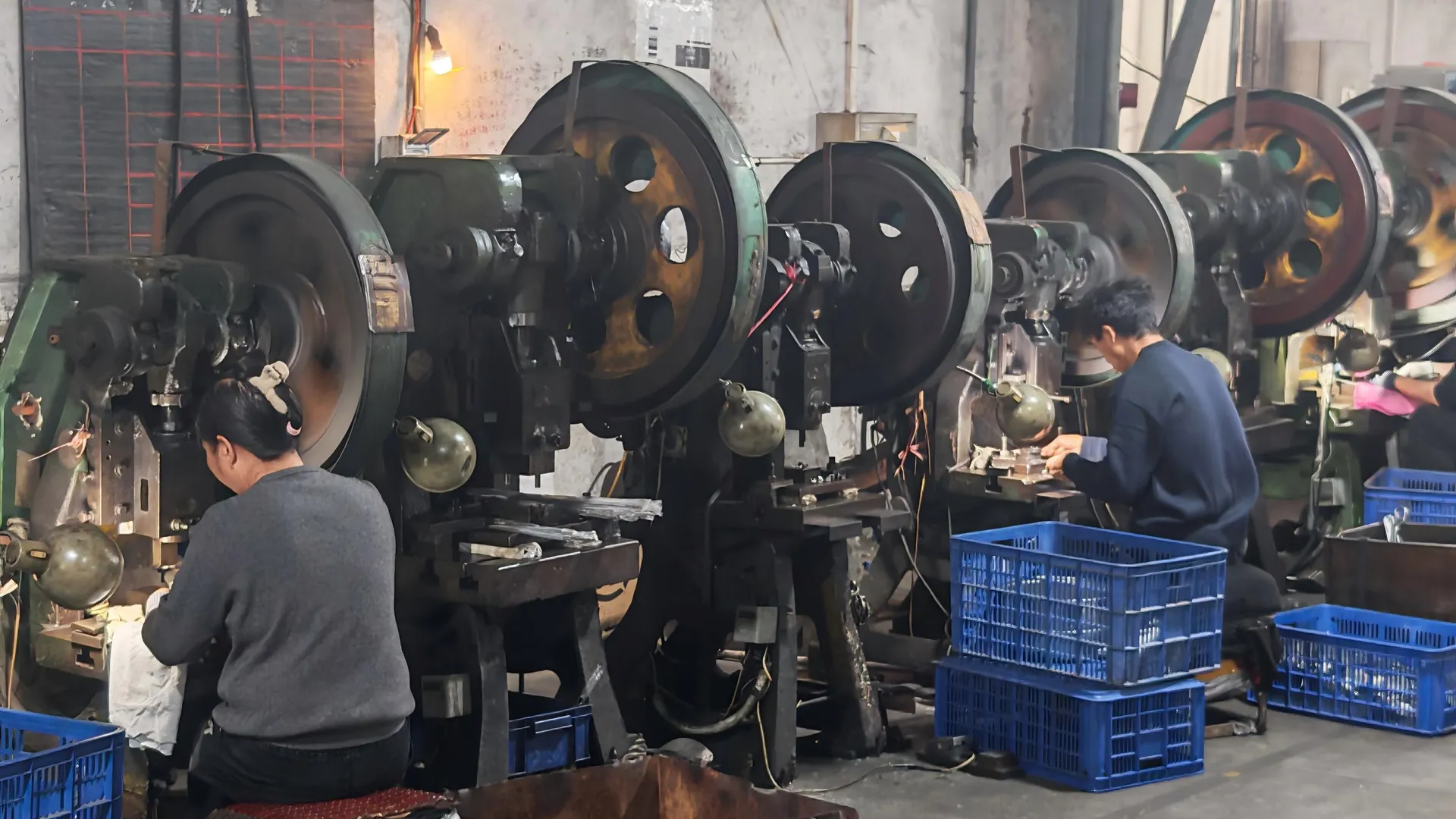
The run rate in the table is set by equipment like this. Faster lines make the changeover burden relatively larger, not smaller.
Per model, not per order
This is the correction that changes every plan built on "a 1,200-piece minimum". The number is per model, so it constrains the width of your first assortment, not the size of your purchase order.
Three models at 1,200 each is an order of 3,600 pieces. One model at 1,200 is 1,200 pieces and a part-load. Start with fewer models, deeper: the per-unit penalty of a thin model is permanent, while a thin assortment can be widened on the second order once sell-through exists.
The word "model" hides three more scopes. Per finish: mirror-polished and satin bodies do not share a batch, so 1,200 of each is two changeovers. Per packing format: a polybag, a printed colour box and a retail-ready shelf pack are three runs, and splitting 1,200 pieces across three can break the print minimum on all three. Per purchase order: two POs of 600 are not one batch of 1,200 unless the supplier holds and combines them.
One practical consequence: 1,200 pieces of a single model is a few pallets, not a container. When a first order cannot fill a box from one model, the answer is usually to mix models rather than inflate one you have not sold — mixed container shipping works through the load and paperwork side of that.
The hidden costs of chasing the lowest MOQ
Every low minimum is paid for somewhere, and rarely in the unit price alone.
- The unit price carries the setup. The same changeover split over fewer pieces is recovered in price or in a surcharge line. Nothing is free; it is relocated. A low minimum usually comes from an existing die, so the shape, handle position and lid fit were chosen by someone else.
- Small lots give weaker quality statistics. Sample size rises with lot size but far more slowly than the lot does, so a small lot carries a much higher inspection cost per unit — and a small sample supports a weaker inference about the defect rate. The plans behind that practice are the ANSI/ASQ Z1.4 and Z1.9 standards.
- Finish matching drifts between small batches. Two batches of the same polish or plating run months apart can differ enough to be visible side by side on a shelf.
- Container fill. Two pallets pay the fixed part of the freight across a fraction of the volume, and that lands on landed cost per unit — the number a unit-price comparison always omits.
- Reorder stability. When capacity is tight, allocation follows the programmes that keep lines loaded, and the buyer whose order never grows is the first to be moved.
- The print run has its own minimum. A low order quantity does not lower it; it moves you to a stock pack, which is a different product on the shelf.
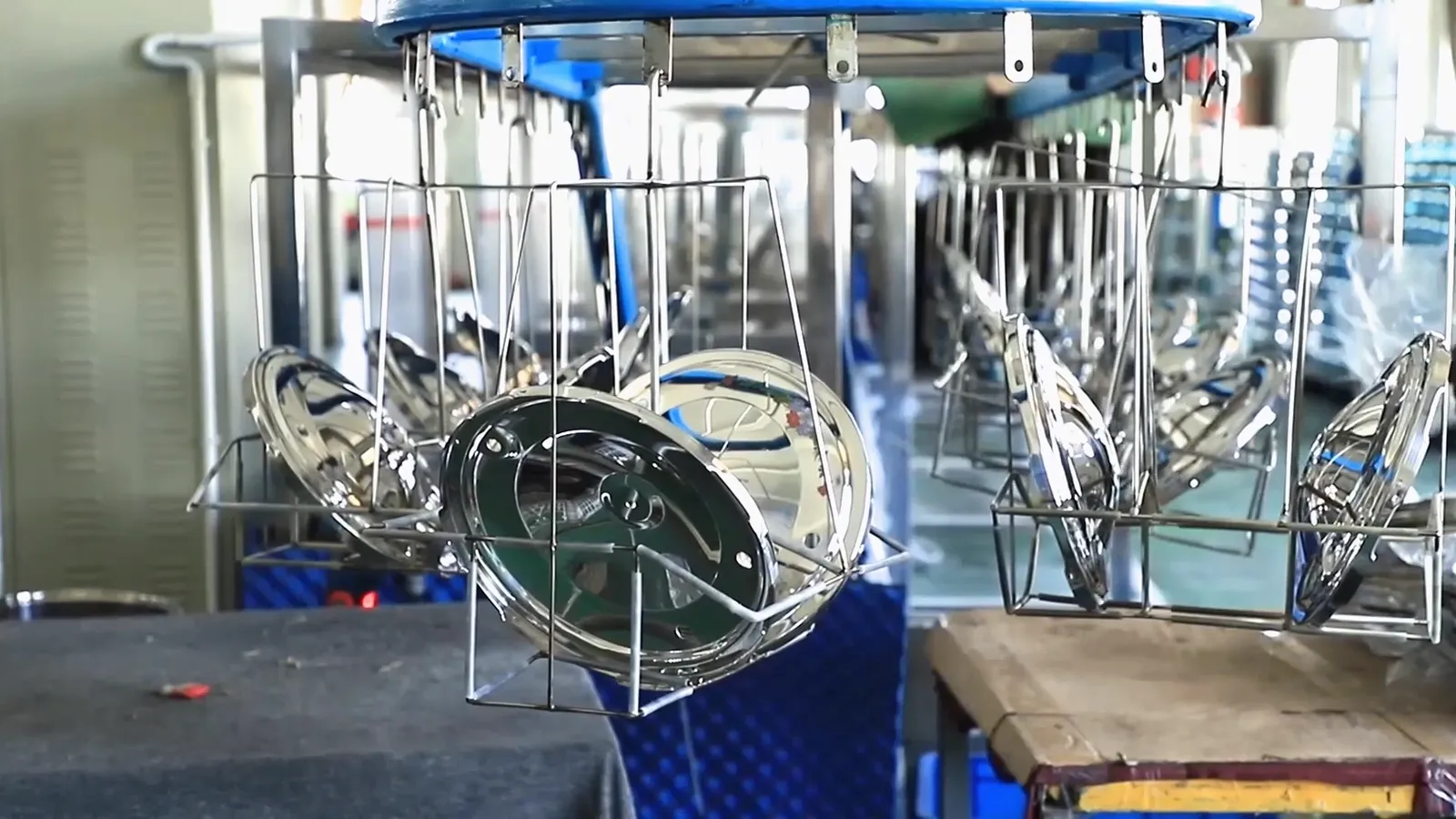
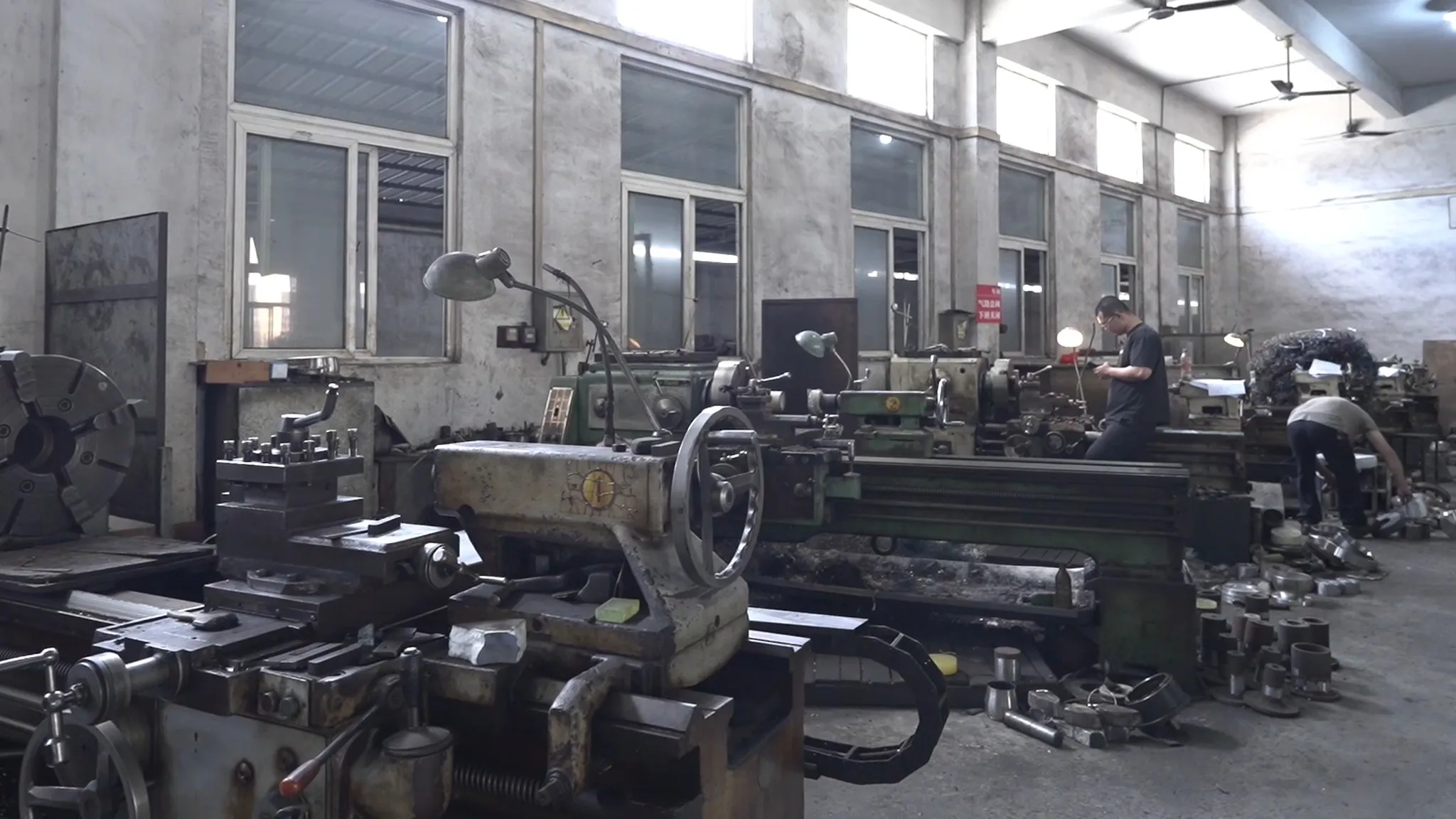
A finishing line loads by the fixture, not by the piece. That is why finish is a scope of the MOQ and a source of drift between batches.
The comparison that matters is not factory against trader but what each quote includes. A trading company and a manufacturer can quote the same model at very different minimums, and the gap is almost always which of these six items has been moved out of the number.
The MOQ economics: unit price against carrying cost
The buyer's problem mirrors the factory's: a bigger purchase batch lowers the unit price and raises the cost of the cash sitting in your warehouse. Both halves are computable without a price list.
Start with the carrying rate. Inventory carrying cost — capital, storage, insurance, handling, obsolescence — is commonly planned at roughly 20 to 25 percent of inventory value per year, the convention being to express it as a percentage of purchase cost; treat the band as an assumption you can defend to your own finance team. The only other input is how long the average unit sits still: a batch covering twelve months of sell-through leaves the average unit held about six months, and four months of cover leaves it held about two, on the assumption that sell-through is roughly even.
Batch covers | Average months held | Carrying cost at 22%/yr | Price saving the bigger batch must beat |
|---|---|---|---|
4 months | 2 | 3.7 % | 3.7 % |
6 months | 3 | 5.5 % | 5.5 % |
12 months | 6 | 11.0 % | 11.0 % |
18 months | 9 | 16.5 % | 16.5 % |
The table is that break-even, and it usually surprises people in one direction: a batch covering a year has to buy its discount at better than about 11 percent, while a batch covering four months has to beat under 4 percent. Then weigh the number against your own margin: the same 3.7 percent is worth about twice as much on an 18 percent gross margin as on 36. The scale that looks like a bargain at 3,000 pieces is often worse than 1,200 repeated, because the second 1,800 units are bought before anyone knows whether the first 1,200 sold.
Two refinements keep it honest. Inventory turnover is the same number from the other side: twelve months of cover is one turn a year. And the classical economic order quantity model balances the cost of placing an order against the cost of holding stock — MOQ and EOQ are not rivals. EOQ says what you would order if you could order anything; the MOQ is the constraint it has to respect.
Two lines belong in the same calculation. Volume discounts are tiered, not continuous — the step between brackets is a cliff, so the right batch is often just above one. And the freight term decides who pays for the part-empty box: FOB, CIF and DDP allocate cost and risk differently, and a landed cost per unit built on FOB numbers flatters a load that ships half full. Overstock is not a warehouse problem in the end; it is working capital that cannot be spent on the next model.
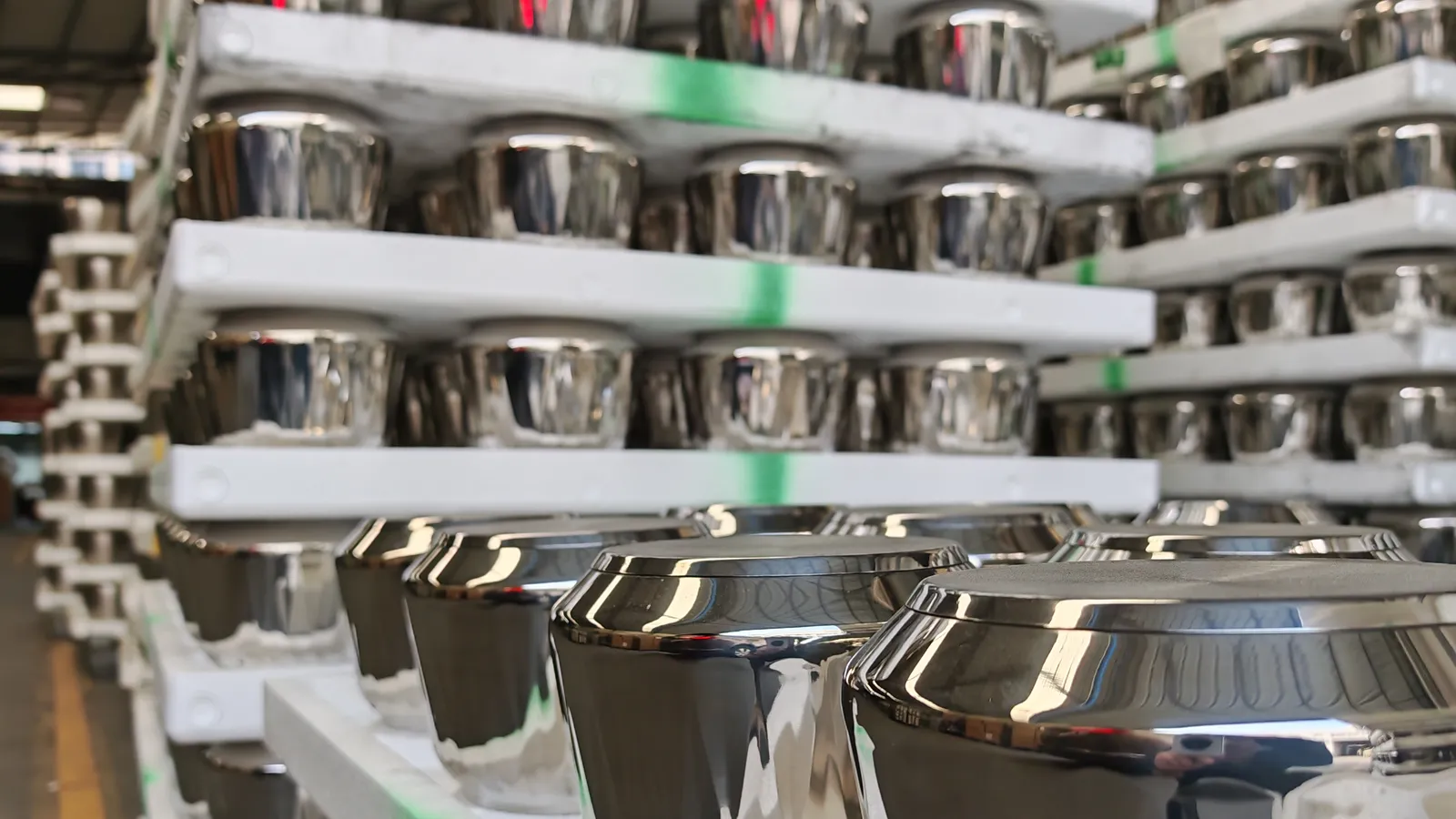
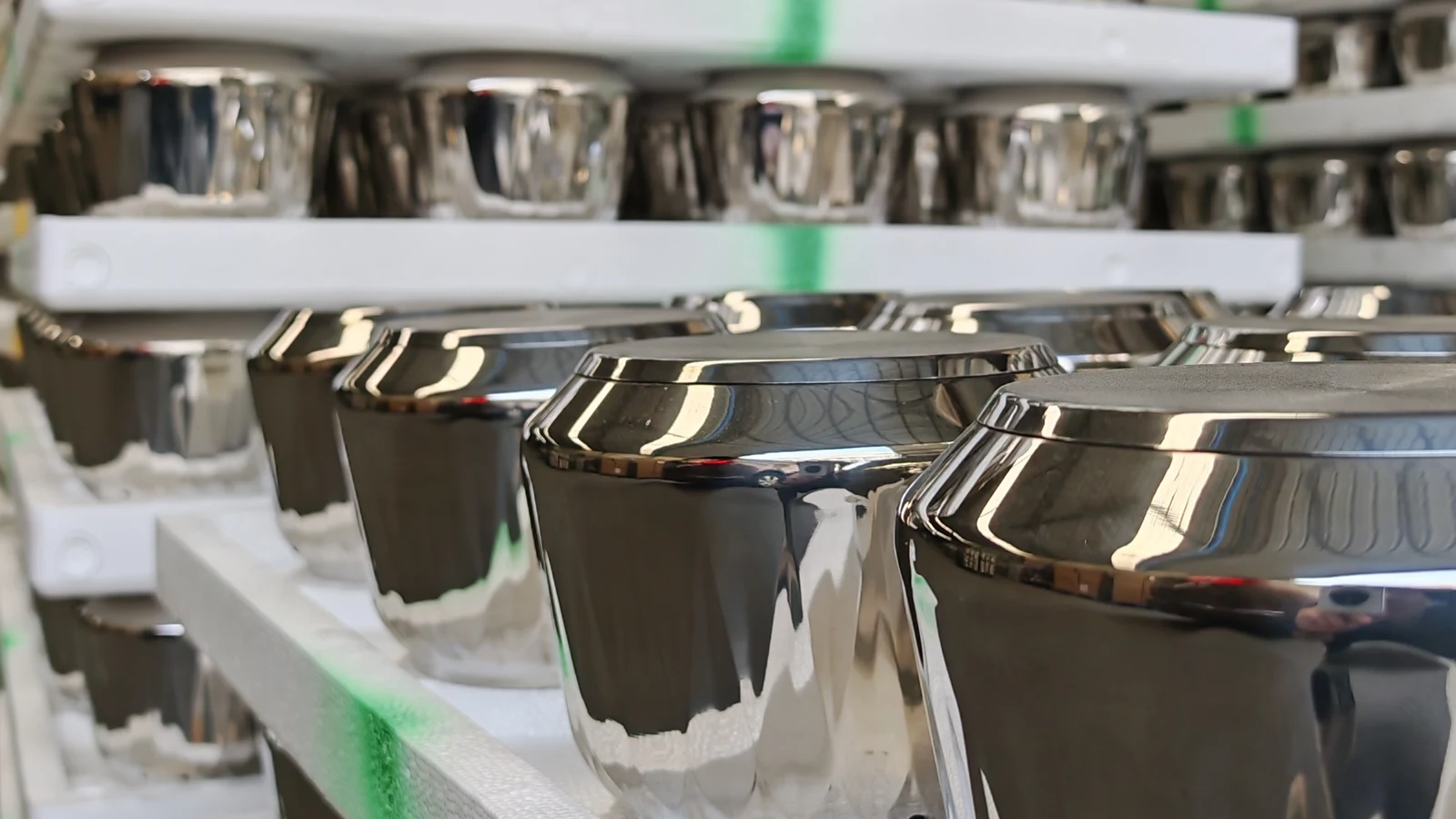
Polished bodies racked between stages. Every rack is inventory somebody is financing, whether it sits in a factory or a warehouse.
When a small order really is the right order
A small batch at a premium can be correct, and pretending otherwise is how a buyer ends up with a container of unsold cookware. The conditions are specific, which is what makes them usable.
A genuinely small order is right when demand is unproven — a new market, price point or shape — because the information is worth more than the setup you save. It is right when market paperwork is not yet in place, since committing to a full batch before the test reports and declarations for your destination are in hand puts the batch at risk; those documents come from recognised labs against recognised methods, and timing them against a production run is due diligence, not a formality. It is right when cash is the binding constraint, for a stock model from an existing die where no tooling is being amortised, and for a chain test order, where 200 pieces across eight stores is the cheapest market research available.
What to watch in each case: the SKU you test may not be the SKU you scale, because a test run on someone else's open tooling may force the reorder onto a different body, a new die and a new sample approval; the small-order unit price is not the factory's cost, since the setup is spread thin across it, which makes it a poor benchmark to negotiate against; and sampling de-risks more cheaply than a small batch does — a pre-production sample takes 7 to 10 days here and answers fit, finish and drawing questions before any tooling commitment, the subject of sample versus mass production.
The flip conditions are equally specific. Once a model has sold through two reorder cycles at a predictable rate, once the destination paperwork is in hand, and once the batch you would buy covers under about six months of that rate, the premium has stopped buying information and started buying nothing.
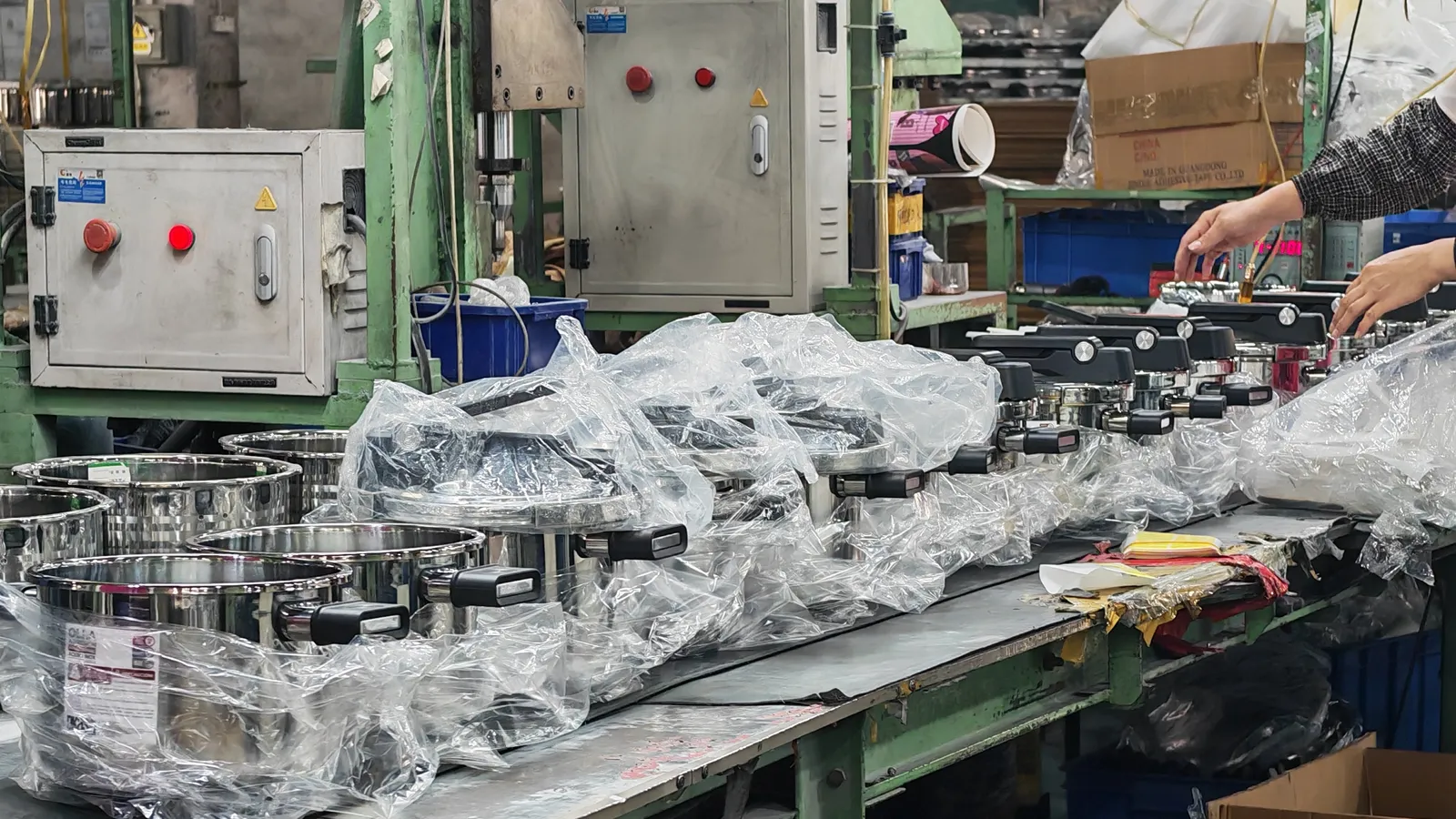
The packing bench is where a run ends and a batch becomes cartons — the last of the fixed points a small order pays for.
Seven questions to ask before you accept a minimum
A minimum is a quotation of structure, so interrogate the structure rather than the number.
- Is this per model, per finish, per packing format, or per purchase order? Get it in writing; the scope is the number's unit.
- Which cost binds at this quantity — the die, the coil, the finishing load, or line time? A supplier who can name it can tell you what changes above it.
- Is the tooling new, shared or existing — and who owns it? If you pay for a die, ownership and the right to move it belong in the terms.
- What is the changeover time on the line that will run my model? Ten hours and forty produce very different floors from the same equipment.
- What is the smallest batch without a surcharge, and what does the ladder look like below it? A published scale is a serious answer; "we will see" is not.
- What is the sampling and approval sequence before the batch starts? Ours runs 7 to 10 days, with bulk production at 30 to 50 working days after sample approval, and the schedule hangs off that approval.
- Can models mix in one order or one container? That answer decides whether a per-model minimum is a barrier or a shopping list.
Those seven sit alongside a longer list — the ten questions worth asking a cookware manufacturer covers lead time, packaging and compliance as well — and if you are still narrowing the field, choosing a manufacturer covers the capability checks that come first.
The point is not to win an argument about 1,200 pieces: it is to read a minimum as a statement about which fixed costs the supplier carries, and how many units the batch must spread them over. Once you can see the stack, "can you do 200" becomes "what am I buying at 200".
Common questions
What is MOQ in manufacturing?
MOQ stands for minimum order quantity: the smallest quantity of one item a supplier will schedule in a single order and still produce at the price it quoted. At a cookware factory it is normally stated per model, not per purchase order, and in units rather than money. It is not a minimum order value, which is a currency figure, and it is not a deposit, which is a payment term. A minimum exists because setting up a line for one model carries a fixed cost that does not shrink with the batch.
Is a 1,200-piece MOQ per model or per order?
Ours is per model, which means a purchase order covering three models carries three separate minimums and totals 3,600 pieces. The distinction matters because a factory schedules by model: each one needs its own die installation, press setup, first-article approval and finishing batch. If a quote states a number without saying whether it is per model, per finish, per packing format or per purchase order, ask before you plan a container around it. Per model is the stricter of the four and the one that governs the changeover count.
Why do Chinese cookware factories have higher minimums than trading companies?
A factory pays for the setup once, at its own risk, and recovers it across the batch it runs, so a small run leaves it holding most of that cost. A trading company does not own a line: it buys from a factory that is already running the model for someone else and moves your order into an existing batch, which is why the smaller minimum is available and why the unit price carries the aggregation. The trade is optionality against price and control. Neither number is a quality signal, and a low minimum tells you about the supply chain behind the quote, not about the goods.
Is it worth paying more per unit to order a smaller batch?
Sometimes. Run the two costs against each other instead of comparing unit prices. A batch that covers twelve months of sell-through leaves the average unit sitting in your warehouse for about six months, so at a carrying rate of roughly 22 percent a year the stock itself costs about a tenth of its value. A smaller, more frequent order has to beat that number with its unit-price premium. If the batch covers only four months, the carrying cost of the average unit drops to about 3.7 percent, and a small premium becomes cheap.
Written by
Potobelo Editorial Team
Sourcing and engineering staff at Potobelo, a stainless steel cookware brand built on 30 years of Zoombo manufacturing in Guangdong, China. We write from inside the plant that makes the product, not from reviewing it.