
Cookware Manufacturer vs Trading Company: How to Tell the Difference
Most suppliers that tell you "we are a factory" when you source cookware from China are trading companies — and either answer can be the right partner, as long as you know which one you are buying from. This guide shows wholesale importers and brand owners how to tell the difference with licence checks and factory-floor questions, and when each supplier type genuinely fits.
 Potobelo Editorial Team12 min read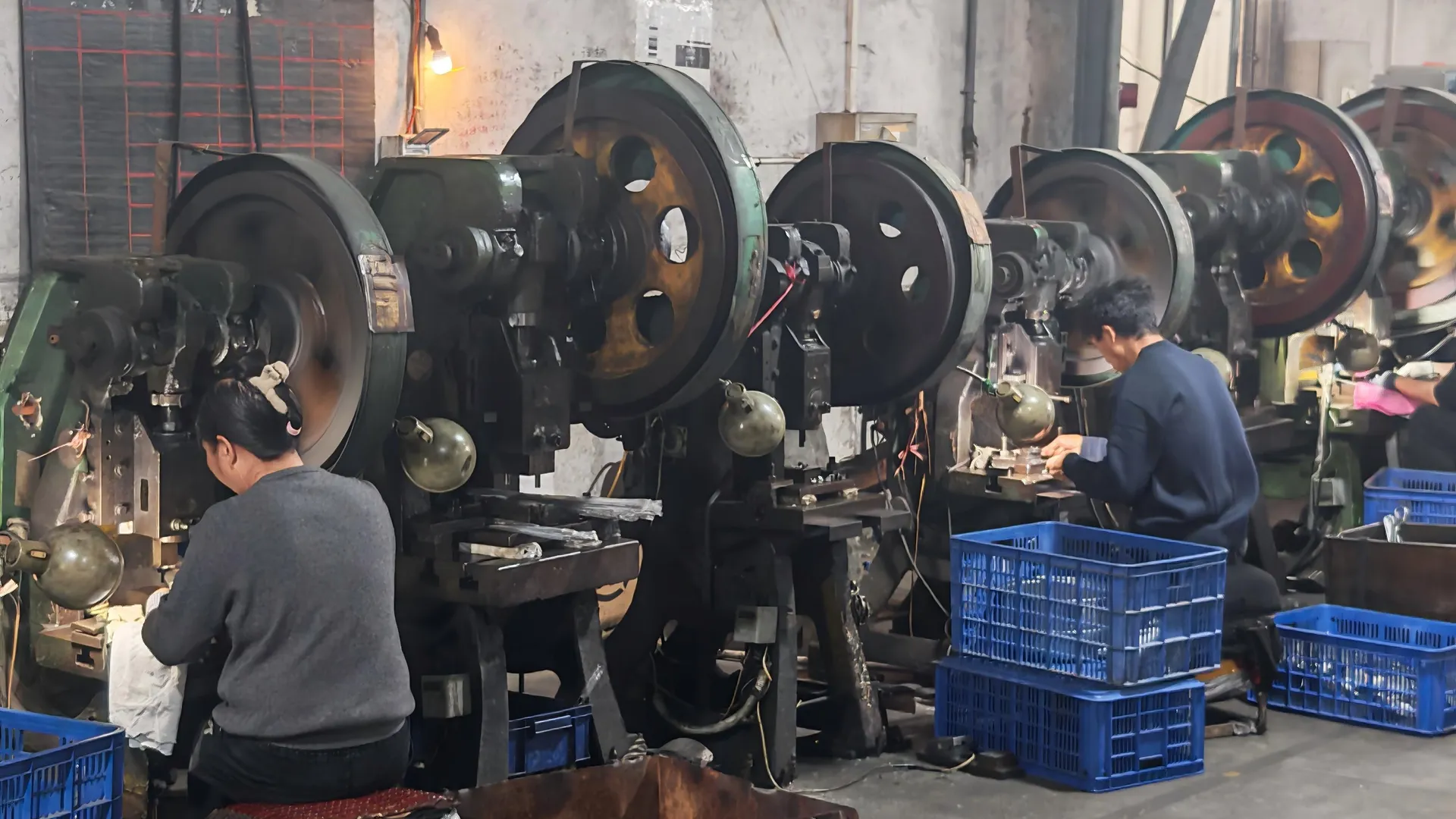
Manufacturer vs trading company: why the distinction matters
If you wholesale cookware, the first question about any new supplier is not price, MOQ or lead time. It is whether the company you are emailing actually makes the pots, or buys them from a factory and resells them to you. This guide — written from the manufacturer side of the comparison — shows you how to tell a manufacturer from a trading company, and when each is the right partner. Potobelo is the export brand of Zoombo, a stainless-steel cookware factory in Jieyang, Guangdong; that position is disclosed because it shapes what we know and what we recommend. The checks below work either way, and we tell you where a trading company genuinely wins.
The distinction matters because it decides three things about your order. First, price structure: a trading company layers a margin between you and the factory that made the goods. Second, control: only the factory can authorise a specification change mid-run, fix a tooling problem, or tell you why a batch ran late. Third — and most expensive to learn — responsibility: when a container fails inspection, the middleman has no production line to correct, only a relationship with whoever actually made it. Confusing the two is the most common mistake in this category, and our guide to sourcing cookware from China covers the full buying process around it.
What each term actually means in cookware sourcing
A manufacturer owns or operates the facility that forms, welds, polishes and assembles the product. In stainless cookware that means real, addressable capability: coil stock, presses and deep-drawing lines, polishing stations, welding or brazing cells, a packing line — and the workers who run them. A trading company buys finished goods from factories — often several, across several product categories — and resells them under its own name.
The boundary is blurred on purpose, and this is where buyers get lost:
- Many trading companies call themselves factories in their marketing, because buyers filter for "manufacturer" on B2B marketplaces.
- Many real factories run a separate export arm that quotes under a trading name — technically a trader, but with the factory behind it.
- Many factories buy in components: a plant that presses bodies but imports handles, lids and glass is still a factory. A factory that makes kettles beautifully may subcontract pressure cookers to a neighbour.
So "are you a factory?" is the wrong question. The right one is narrower: which parts of this item do you make in your own building, and who makes the rest? Everything below is built to answer that.
Manufacturer vs trading company at a glance
Dimension | Cookware manufacturer | Trading company |
|---|---|---|
Production | Owns forming, polishing, assembly lines for the goods it sells | Buys finished goods from factories; owns no production line |
Price structure | Factory price; you sit close to material and labour cost | Adds a margin on the factory price — sourcing guides commonly cite 5–30% |
MOQ | Higher; set by production economics (die setup, coil buying, line changeover) | Can consolidate and take smaller, mixed orders |
Customisation / OEM-ODM | Executes spec changes, tooling, material and finish directly | Relays your spec to the factory it works with |
Quality responsibility | Fixes defects at the source; reorders run on the same line | Holds a relationship, not a line — defect correction is one step removed |
Compliance documents | Certificates and test reports issued in the factory's own name | Documents pass through; origin harder to verify |
Communication | Technical but often slower in English | Usually fast, fluent, and available in your time zone |
One honest caveat: the 5–30% range is the figure repeated across independent sourcing guides, not a number we can audit from here. Use it as a planning assumption, then price the same specification through both channels and compare the total — including who pays when something goes wrong.
Five checks that tell a cookware factory from a trader
No single signal is conclusive, because every one of them can be faked — a trader can register a broad licence, borrow a factory for a visit, or buy photos. What holds is the combination. Run these in order, cheapest first.
1. Read the business licence. Every Chinese company has one, and its registered scope of business (经营范围) states what the company is legally registered to do. Manufacturing verbs — production, processing, forming — point to a factory; sales, trade and import/export point to a trading company. Cross-check the registered address against the address you would visit: an office tower is not a plant. Third-party guides on verifying Chinese suppliers treat the licence as the most reliable documentary signal, and we agree — with the caveat that scopes can legally be written broadly, so treat the licence as one input, not a verdict.
2. Compare the claim with the paperwork a real factory must carry. Certificates are a favourite disguise: many trading companies hold ISO 9001, which is worth having but only certifies a quality-management system — ISO 9001 says nothing about who owns a production line. Ask which entity name appears on the factory's export licence, its VAT registration and its test reports. When three documents carry three different company names, you are dealing with a chain, and you should know where it starts.
3. Ask for registry-scale proof of people. Manufacturing employs machine operators, polishers and inspectors in numbers that track production capacity; a pure trading desk employs sales, documentation and management. Some buyers cross-check registered social-insurance counts against the workforce a supplier's marketing implies — and the answer to "how many people work on your floor?" is revealing either way.
4. Ask for a live, unedited look at the line. A single-take video walk down the line making your product type, filmed by the person you are talking to, costs nothing and takes ten minutes. Real factories do this routinely — it is how they answer enquiries from buyers who cannot travel. Traders hesitate, offer a corporate film, or "arrange a visit" at a factory that is not theirs. If a supplier cannot show you the floor your order would run on, that is the answer you needed.
5. Verify on site before the big order. Your own visit, or a third-party factory audit if you cannot travel. This step confirms a shortlist of two, it does not survey a list of ten — run checks 1–4 first. The how-to guide on qualifying a stainless-steel cookware manufacturer takes this further with the capability questions that matter before you request pricing.
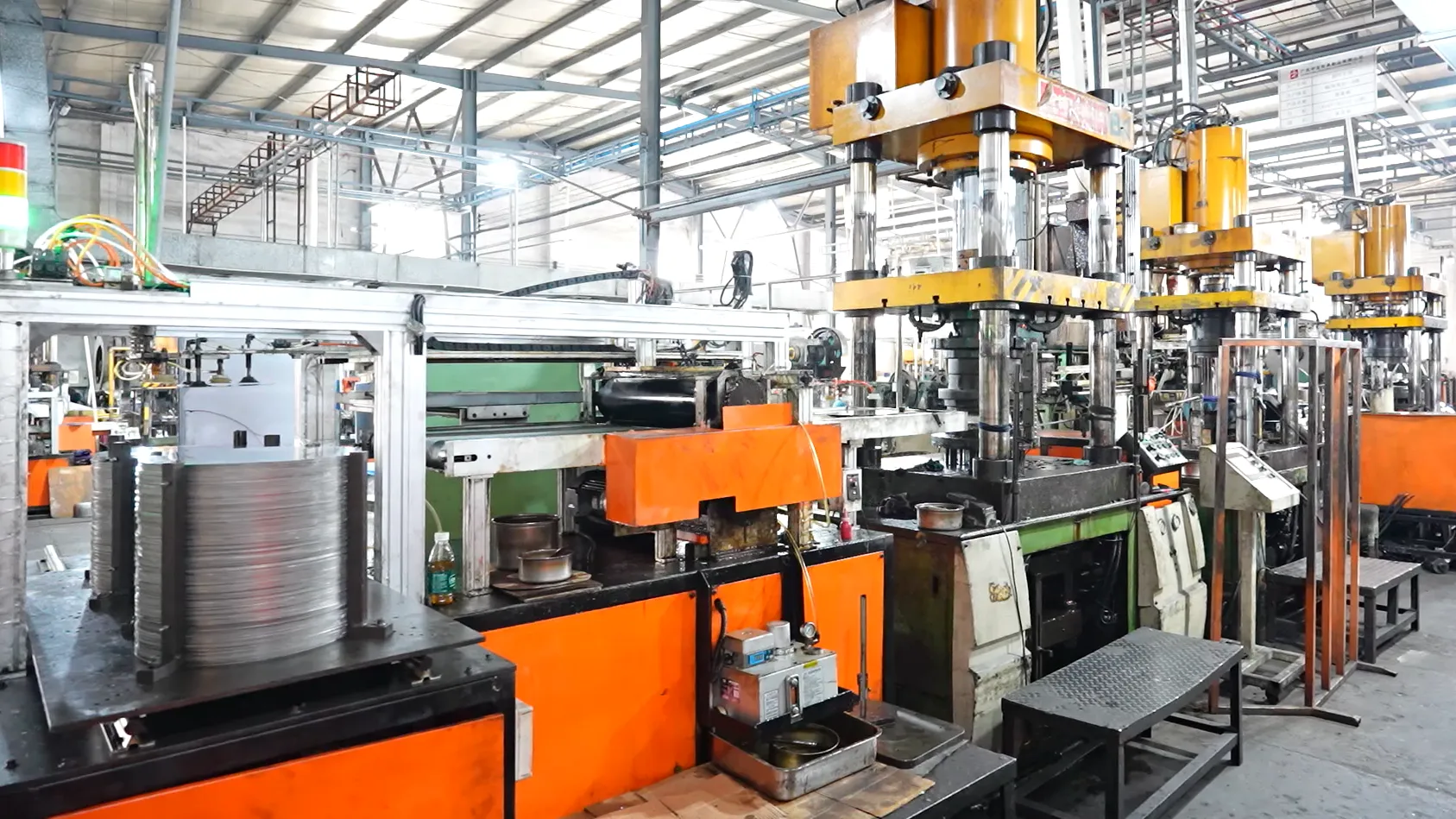
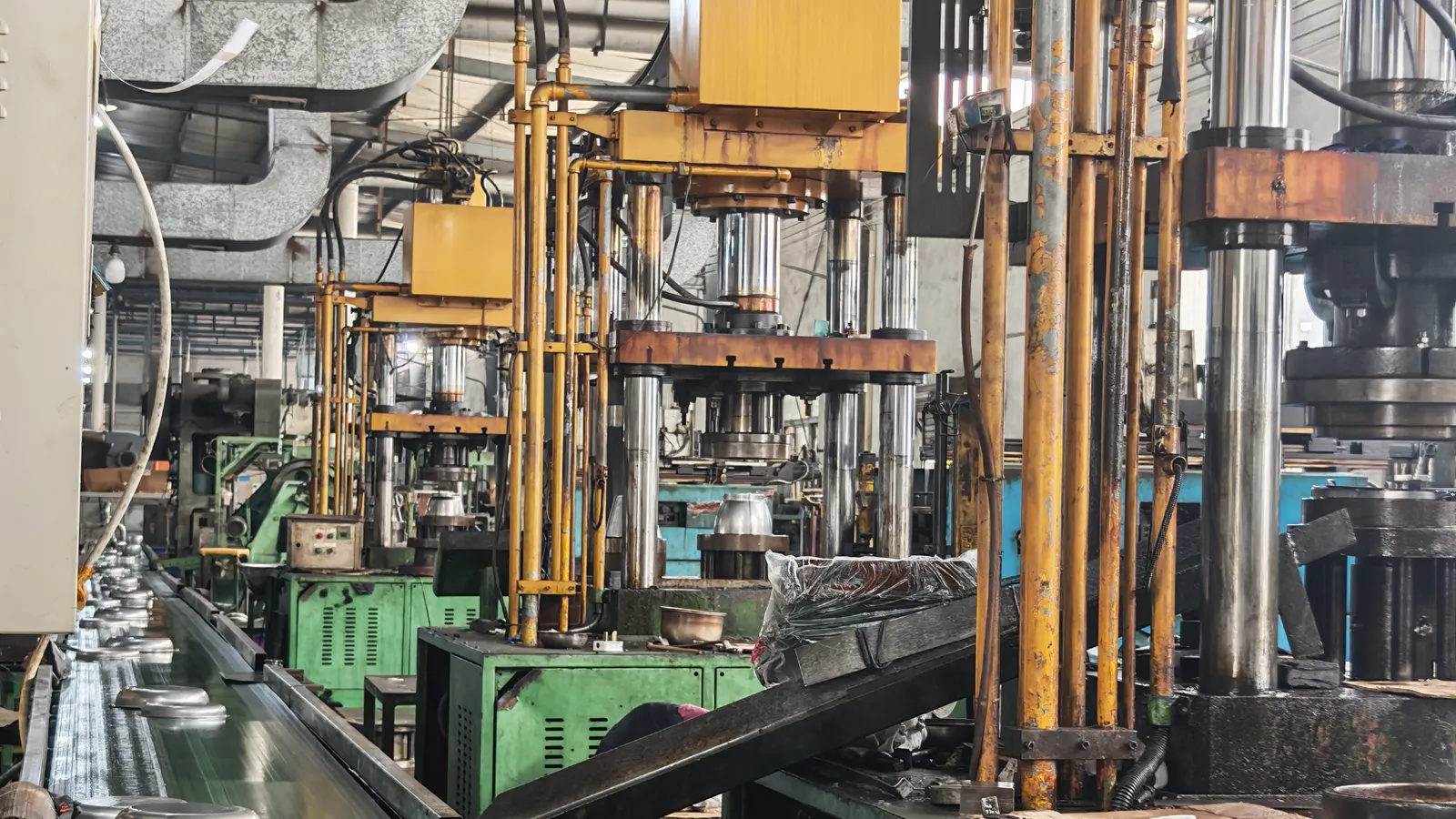
The automated stamping line that deep-draws bodies from coil. When a supplier owns a floor like this, it can show you — on video, on a call, or in person.
Questions only a cookware factory can answer
The fastest filter of all is technical. An engineer answers production questions in one message; an intermediary answers tomorrow morning, after asking someone else. Send a cookware-specific set:
- What tonnage is the press that forms this body, and how many draws does it take?
- Is the base impact-bonded (composite) or brazed, and is the bonding done in-house?
- Where do you source your stainless coil, and can you share the mill certificate for the grade you quote?
- Which parts are made in this building — body, lid, handle, base — and who makes the rest?
- What is your mould and tooling shop's turnaround for a modification?
- What is the realistic daily output on this model — the line, not the plant?
- How do you hold the surface finish between the sample run and a production run?
None of these are trick questions. The answers determine lead time, cost, and whether the container matches the sealed sample. If you get a one-line brush-off, a promise to "confirm with the factory", or a price-only response, you have learned what you needed to know. And if the questions themselves feel opaque, the material side is worth understanding first — 201 vs 304 stainless steel is where a surprising share of cookware disputes start.
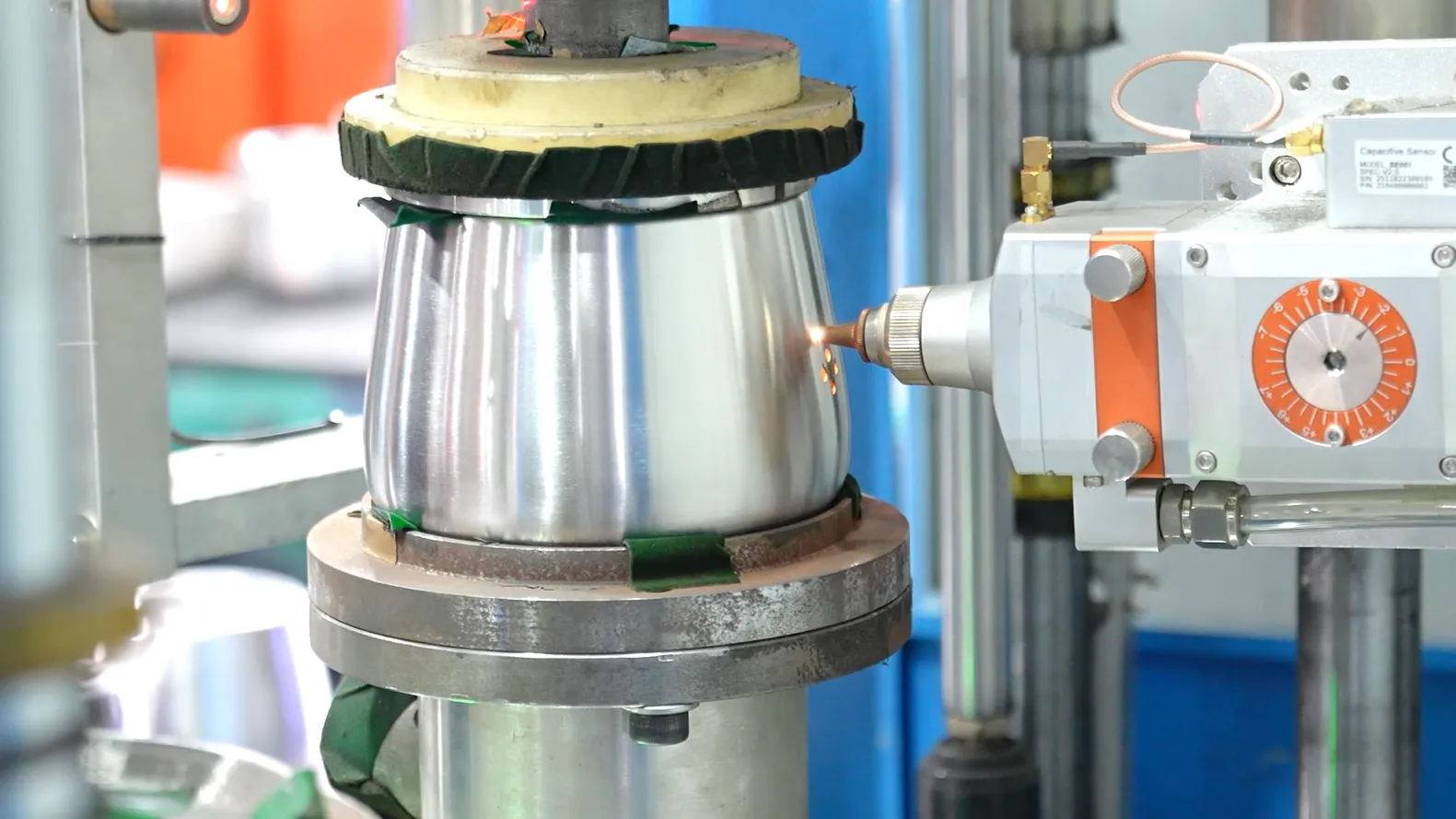
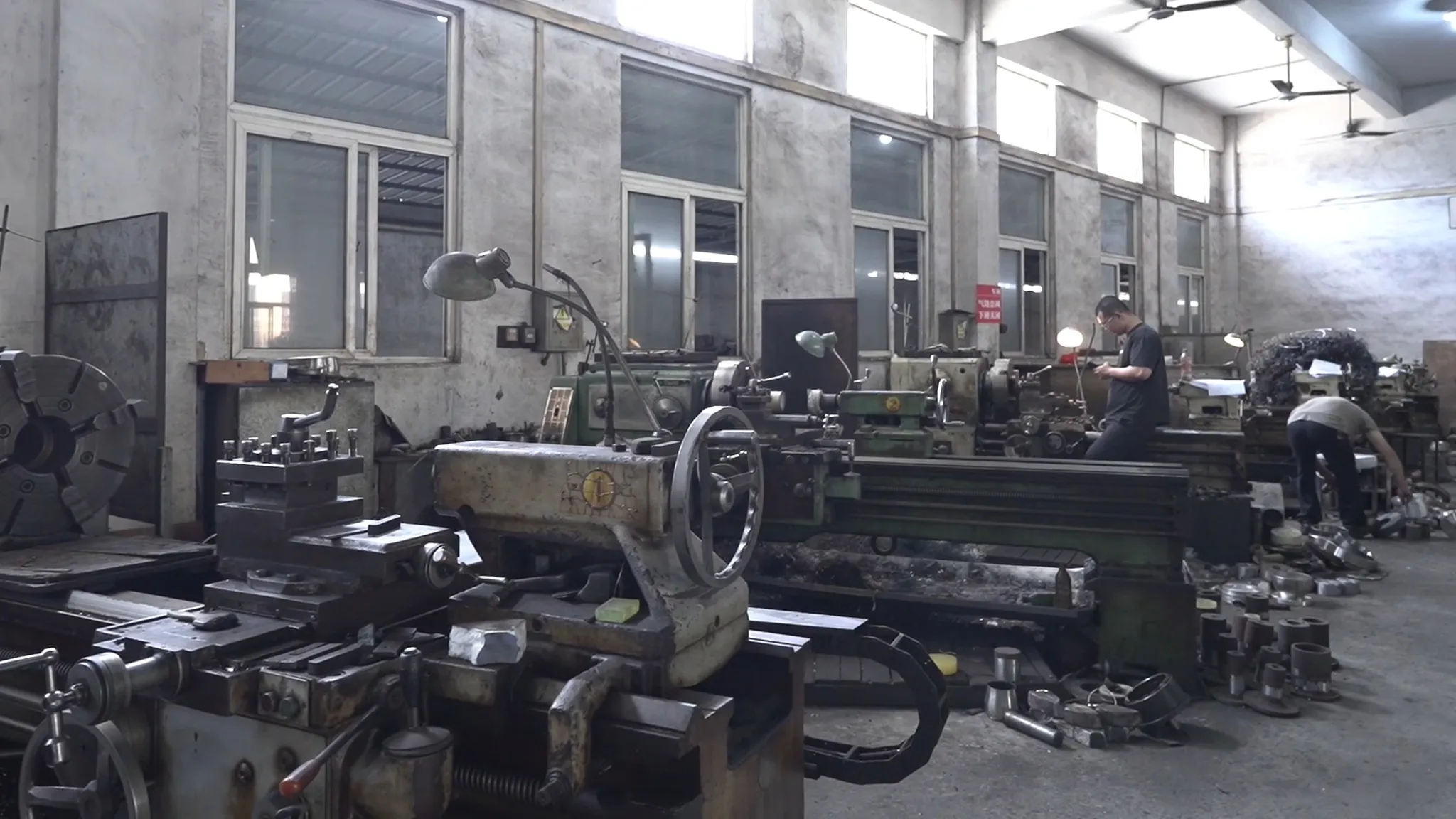
Brazing a kettle body on a rotating fixture. Whether a supplier owns a step like this, or buys it from the workshop next door, changes your lead time and your tolerance for mid-run changes.
Cookware-specific red flags
Some warnings only make sense inside this category:
- The grade bait-and-switch. Samples arrive in genuine 304; the bulk run is 201, a lower-nickel grade with no established food-contact recognition in practice for cookware surfaces in the US and EU markets. It saves the supplier real money and costs you recalls, so put the grade in writing per model, ask for the mill certificate, and test the first production batch if the order justifies it.
- The everything store. One supplier offers kettles, phone cases, LED lights and plastic chairs. Real cookware factories run variations of one process family — pots, kettles, steamers, pans. A catalogue spanning unrelated industries means procurement from multiple factories.
- The borrowed factory. Photos of a beautiful floor, but the signboards, uniforms and licence on the wall show a different company name. During any video walk, ask to see the company sign at the entrance and the licence on the wall.
- Certificates that name someone else. FDA, LFGB and CE test reports are issued to a specific entity. If the report names a factory you have never heard of and the supplier cannot explain the relationship, the compliance chain starts somewhere you cannot see. Understanding what stainless cookware grades and certificates actually certify helps you read these documents instead of nodding at them.
- The office-tower factory. Addresses in business centres — "Building 18, Floor 12" — cannot house a plant that forms stainless steel. Satellite-view the address before you invest in the relationship.
When a trading company is the better choice
A trading company is not a consolation prize, and a factory is not automatically the right answer. There are orders where the trader is the better partner, and an honest comparison names them:
- Your order is below a factory's MOQ. Factories set minimums from production economics. A trader aggregates several buyers' volumes and can take the 200-piece order a factory will not schedule.
- You are consolidating many categories in one shipment. Kettles from one city, steamers from another, accessories from a third — a trader choreographs that so you sign one contract, ship once, and talk to one person.
- This is your first test order. Before you invest in a factory relationship, a small trial through a trader tests your market and your specification at lower commitment.
- You need language and documentation support. Traders typically reply fast, in fluent English, during your hours, and they handle export paperwork that sinks first-time importers.
- Your product is genuinely multi-sourced. If no single factory makes what you sell, a trader is the structure that fits.
If you are just starting out, our guide to starting a cookware wholesale business covers how these first orders should be structured. The rule that keeps you safe in every one of these cases is disclosure: work with the trader gladly, but know who the factory is, and say so in writing if your market compliance requires it.
When only a manufacturer will do
The scales tip the other way when the order gets serious. Go direct to a verified manufacturer when you need:
- Volume economics. At container scale, the trader's margin sits between you and the cost of steel, and no negotiation with a middleman recovers it.
- Real customisation. New dimensions, a different base build, a custom handle or lid — executed, tested and corrected by the people who run the tooling.
- Private label you can defend. Your brand on a shelf depends on reorder consistency. A factory reproduces the run on the same line, with the same dies and the same material discipline; a trader re-buys it from whoever is available.
- Compliance traceability. Retail buyers and regulators ask who made the goods. A manufacturer issues certificates, mill certificates and test reports in its own name. In the EU, food-contact compliance is demonstrated by migration testing under the framework regulation (EC) 1935/2004 — there is no whitelist of "approved" grades, which is precisely why the test reports and the entity behind them matter.
- Speed of change. Specification changes, urgent schedules and problem-solving all travel faster with no relay in the middle.
None of this is an argument that bigger is better — for a 2,000-piece specialty run, a nimble smaller plant often beats a giant one. What a manufacturer offers is a defined capability and a single point of responsibility, and you should be able to extract both from any serious candidate. To show what that looks like in practice: the plant behind Potobelo runs about 66,000 square metres with 70+ production lines and around 26,000 pieces a day across pressure cookers, kettles, saucepans and steamers, with forming, bonding, polishing and packing in-house. We publish those numbers for one reason — they are the kind you should be able to get from any candidate that claims to be a factory, and compare. For brand owners, the OEM route at a manufacturer shows what customisation looks like when the factory executes it directly.
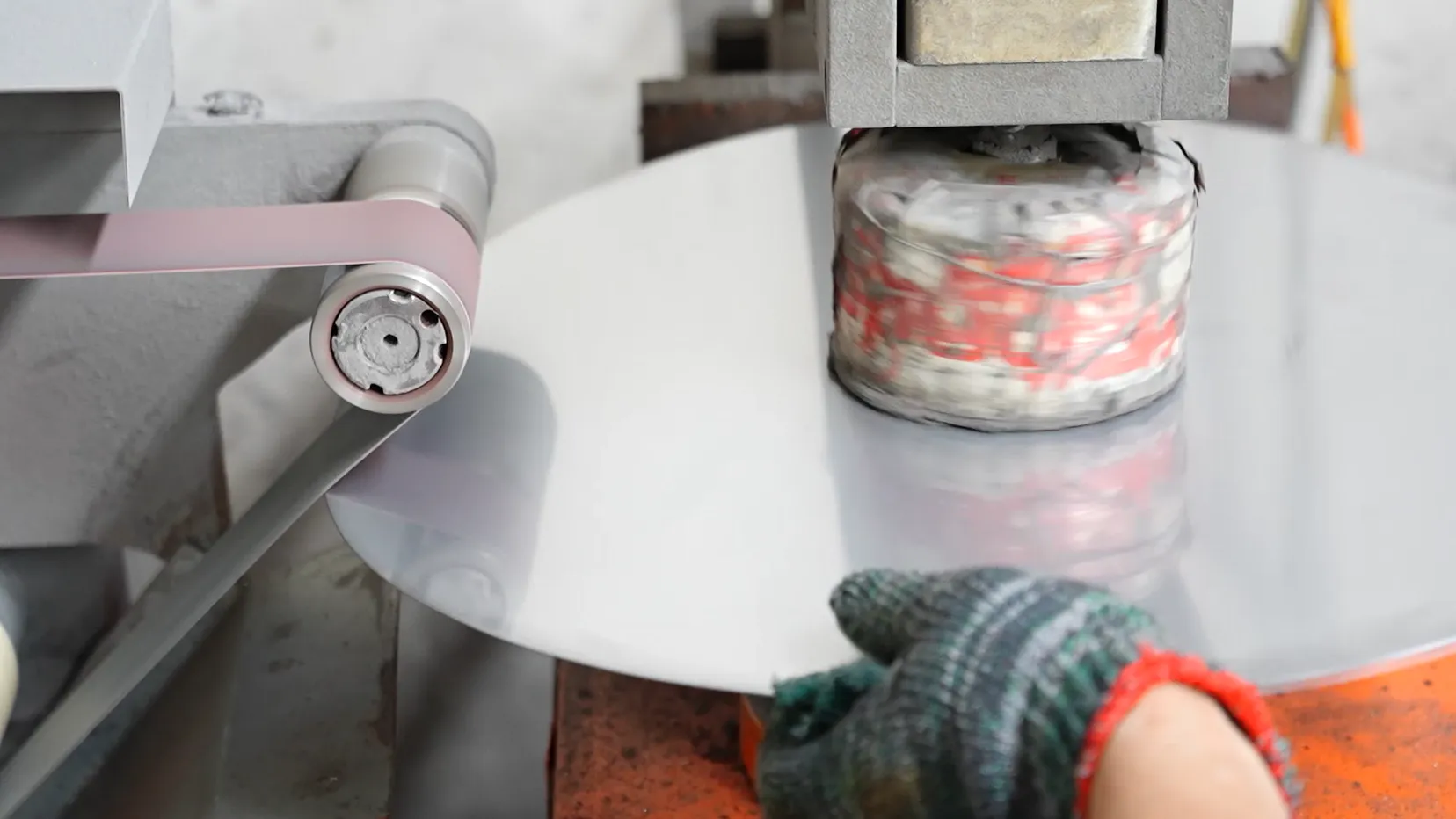
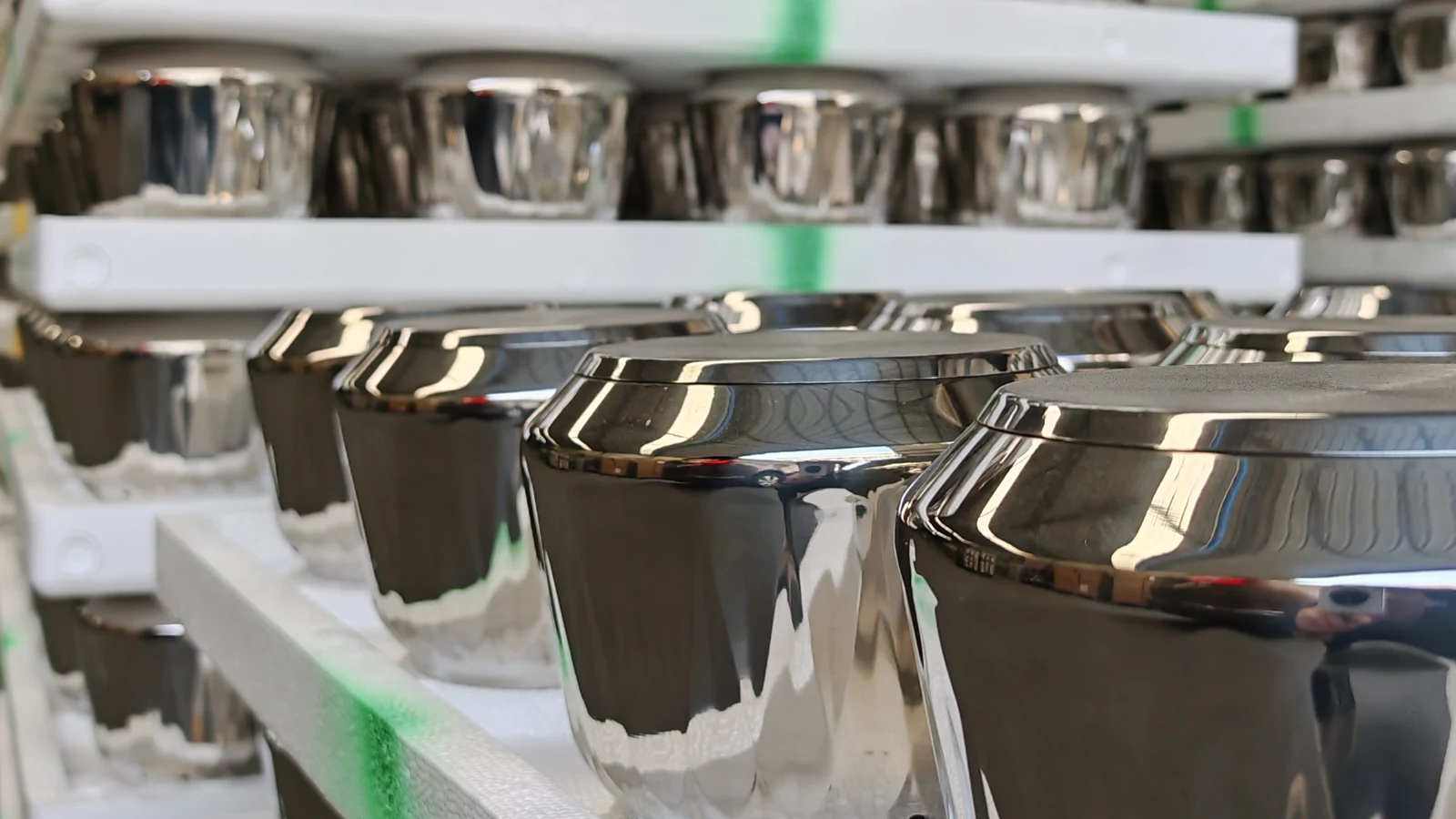
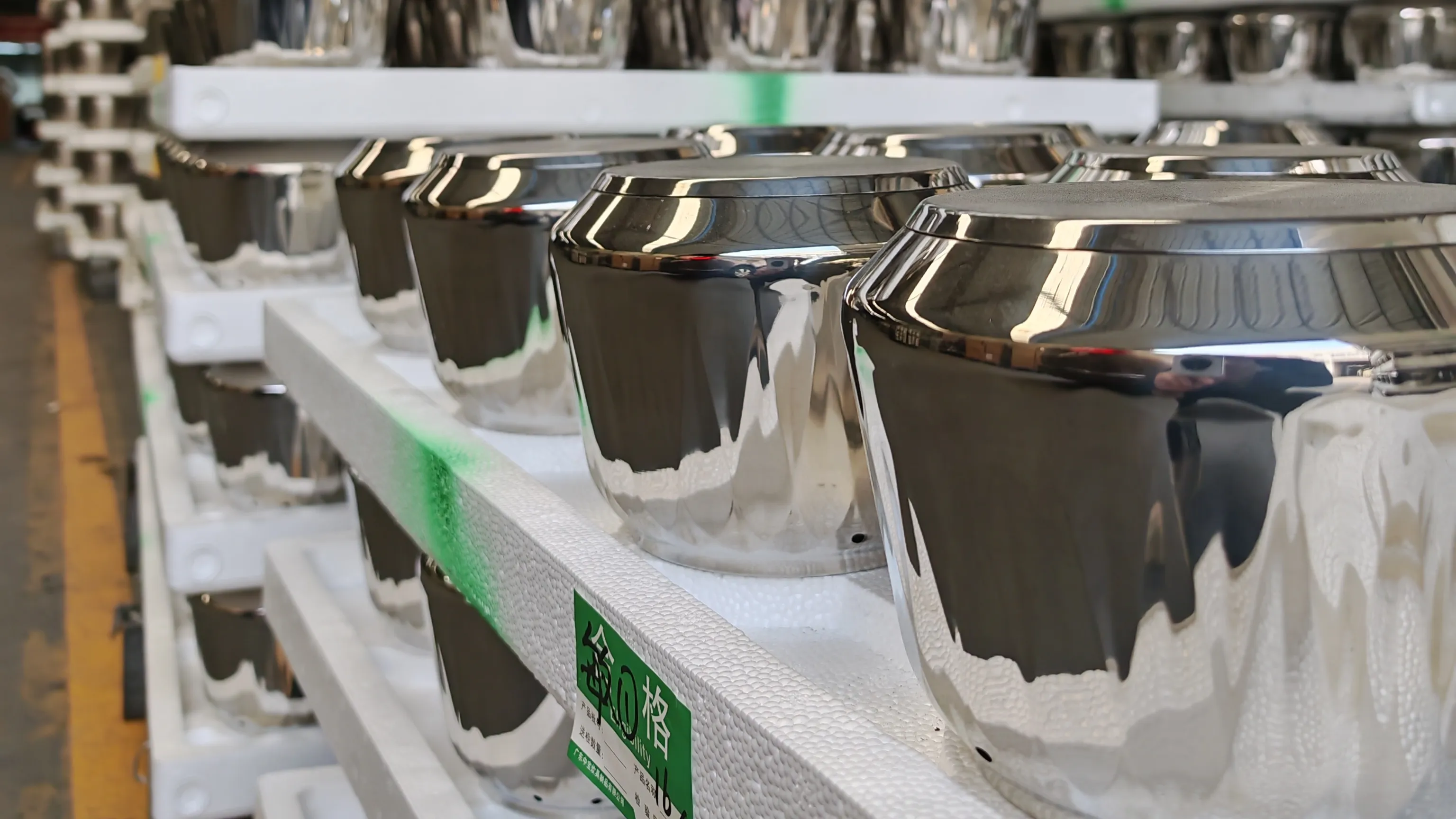
Surface finishing decides how a sample looks and how the pan behaves in a kitchen. Polishing is one of the first capabilities to verify, because it is also one of the easiest steps to outsource quietly.
A five-step verification sequence
Condensed into the order we would actually run them, before the first production order:
- Licence and registry — business scope, registered address, entity names on certificates. Ten minutes, filters most of the list.
- Production questions — the cookware question set above, by email. One round trip separates engineers from relays.
- Line video — a live, unedited walk making your product type. The willingness is itself evidence.
- Third-party audit or visit — only for the one or two survivors. Confirm, don't survey.
- Sealed sample plus batch test — agree the reference sample in writing, then verify the first production batch against it, including material grade if your order justifies independent testing.
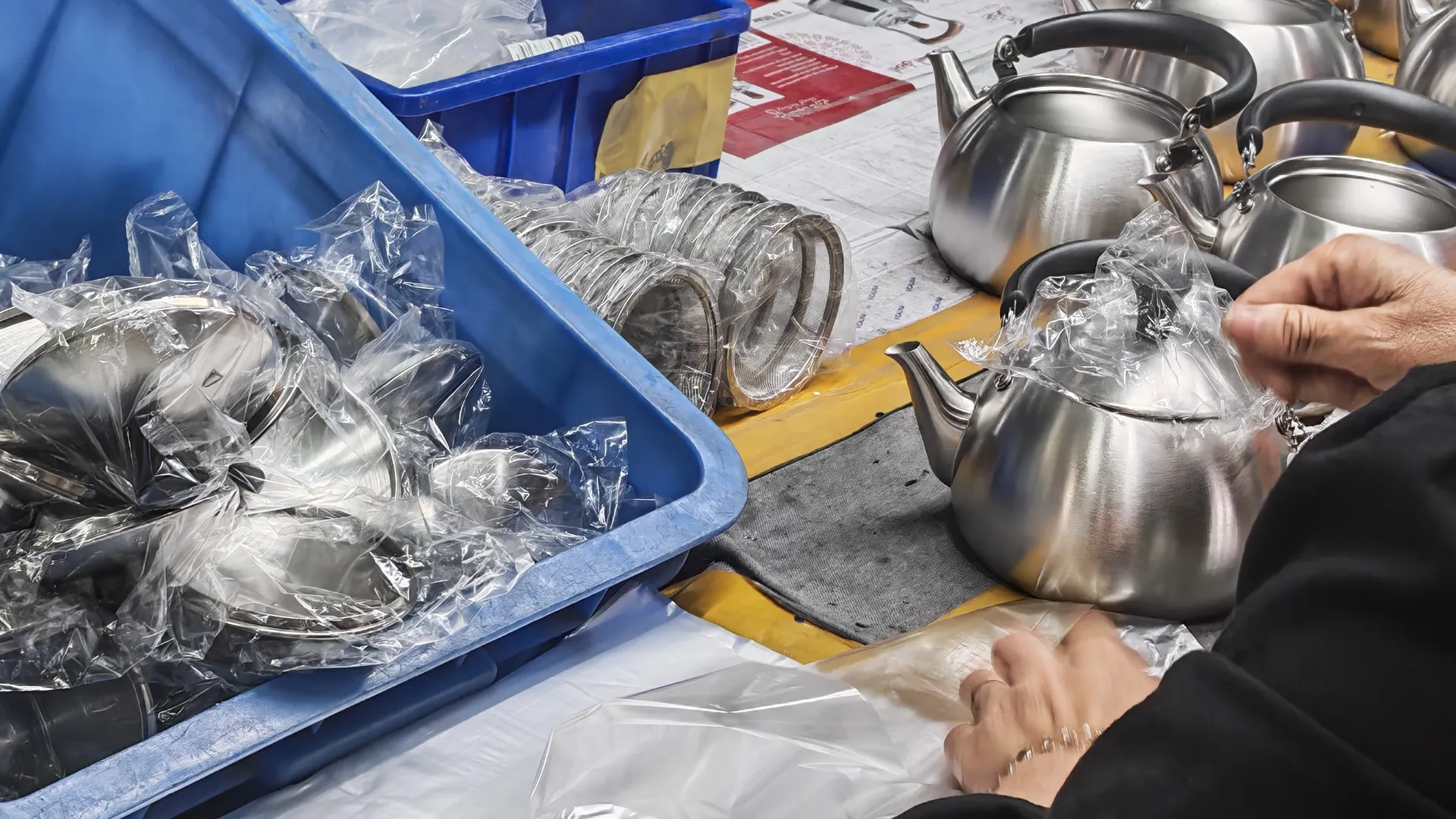
The last ten metres matter too. Whether packing and final inspection happen in the factory you contracted, or somewhere down a chain you cannot see, decides what arrives at your warehouse.
Bottom line: buy the capability, not the label
The label — "manufacturer" or "trading company" — is a starting point, not the conclusion. What you are actually buying is a defined capability and a clear line of responsibility: who owns the process, who answers when a run fails, and how many margins sit between you and the coil. A good trader earns its margin consolidating, documenting and communicating; a good manufacturer earns the direct relationship when you need volume, customisation or a brand you can reorder with confidence. Establish which one you are dealing with first — then judge the supplier on what it can do, in its own building, for your order.
Common questions
Is my supplier a manufacturer or a trading company?
The fastest documentary check is the supplier's Chinese business licence. A manufacturer's registered scope of business (经营范围) names production or processing of the goods; a trading company's names sales, trade or import/export. Cross-check the registered address against the address you would visit — an office building is not a plant. No single document is conclusive, because traders can register broad scopes, so add two further tests: ask a question only production can answer (press tonnage, how the composite base is bonded), and ask for an unedited video of the line making your product type.
Are trading companies in China reliable?
Many are. A trading company that has worked with the same factories for years can deliver consistent quality, honest communication and export documentation, especially for small or multi-category orders. The risk is not that traders exist — it is that some present themselves as the factory and add a margin while taking no responsibility for production. Reliability depends on whether the trader discloses what it is, names the actual factory, and can prove quality control there. If it will not say which factory makes your goods, treat that as the warning sign — not the trading model itself.
Do trading companies charge more than manufacturers?
Usually, yes — a trading company adds a margin on top of the factory price, commonly cited in sourcing guides as roughly 5% to 30% depending on the product and order size. But the comparison is not just unit price. A trader can consolidate small orders below factory MOQs, combine several product categories in one shipment, and handle documentation you would otherwise manage across multiple factories. If those services save you coordination time or let you place an order a factory would refuse, the effective cost can still favour the trader. Price the whole transaction, not the line item.
Can a trading company handle OEM or private label for cookware?
A trading company can relay your specification, artwork and packaging to the factory it works with; many private-label programmes run this way when the relationship is long-standing. The difference is control: specification changes, tooling corrections, material choices and reorder consistency depend on the factory, and the trader sits between you and it. For a logo or packaging change this rarely matters. For structural customisation — new dimensions, a different base build, a new handle or lid — you will get faster, more accurate answers from the manufacturer that runs the production line.
Written by
Potobelo Editorial Team
Sourcing and engineering staff at Potobelo, a stainless steel cookware brand built on 30 years of Zoombo manufacturing in Guangdong, China. We write from inside the plant that makes the product, not from reviewing it.