
Cookware Sourcing Mistakes Importers Make (and How to Avoid Them)
Most China sourcing mistakes in cookware are not made by the supplier. They are made in the buyer's own documents: a specification with no numbers, a sample that never touched the production tool, a carton size agreed after the price. This is a failure-mode catalogue from the factory side — nine mistakes, what each one actually costs, and the check you can run before the deposit leaves.
 Potobelo Editorial Team16 min read
The short answer: the expensive mistakes are in your own documents
In a factory's order review, most problems are visible before a single blank is cut: a specification line that says "good quality", a sample never built on the tool that will run the order, a carton size nobody fixed until the container was booked. None of these is fraud. They are gaps, and a line fills gaps by choosing whatever is cheapest that day.
That is why the generic advice about china sourcing mistakes — verify the supplier, inspect the goods, do not pay everything upfront — is correct and still not enough. Those lists are written about the supplier's behaviour. The failures that cost real money are written into the buyer's documents, and they are visible from the factory floor long before they are visible in a warehouse.
This is a catalogue of nine of them, read from the side of the plant that has to execute them. Each entry gives the same four lines: where in the chain it bites, what it actually costs, the check you can run this week, and the document that closes it. Depth on most stages is linked rather than repeated.
If you are still assembling the sequence, start with how to source cookware from China — this piece assumes you know the steps and want to know where they break; if you are new to how to import from china, take that page first and come back with a shortlist.
Mistake 1: A specification written for a colleague instead of for a press operator
A specification is not a description. It is a set of numbers a toolmaker can act on. "18/10 stainless, mirror finish, 3 litre, heavy bottom" is a description: four people in your own company would defend it and no two would measure the same object.
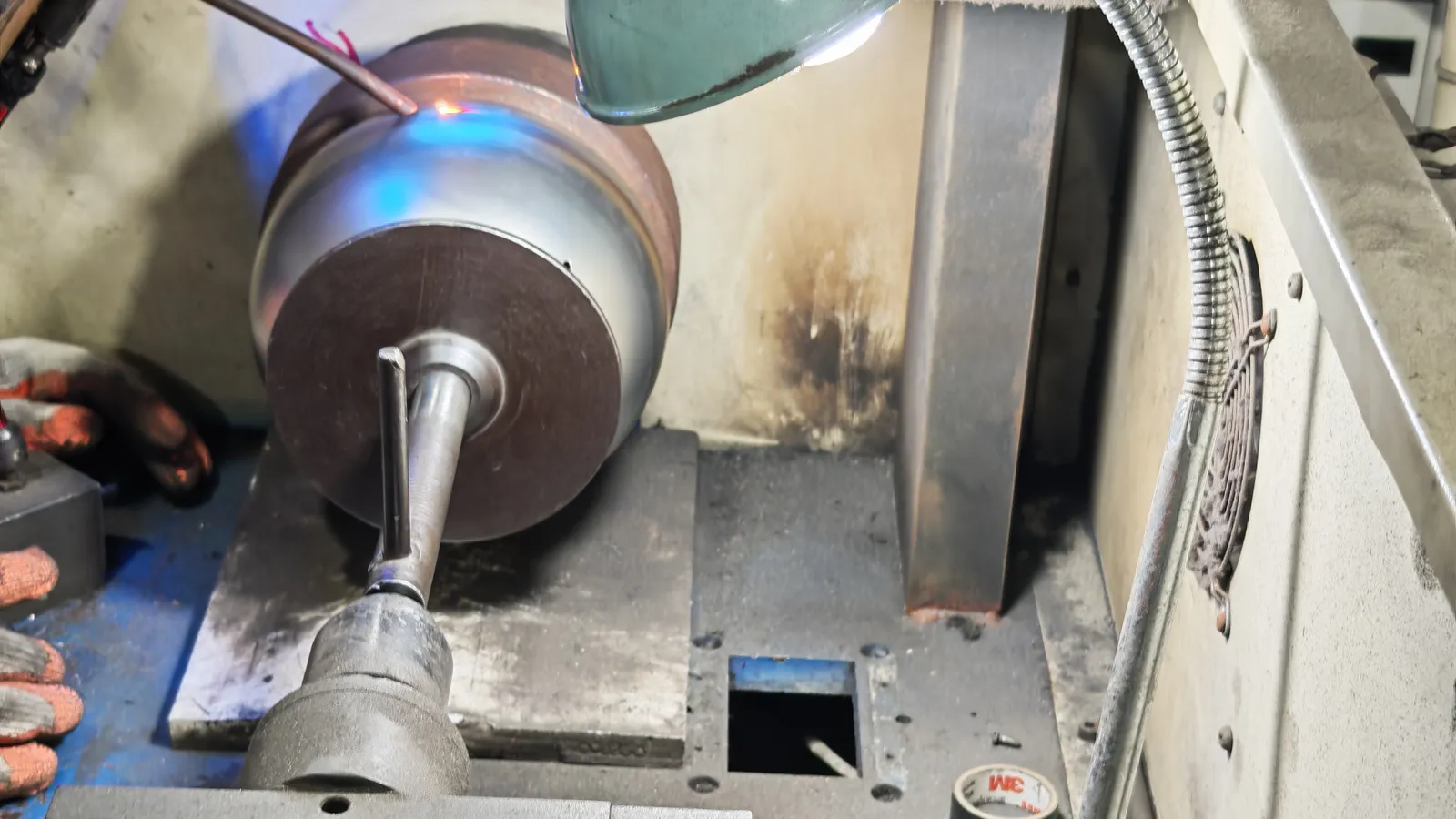
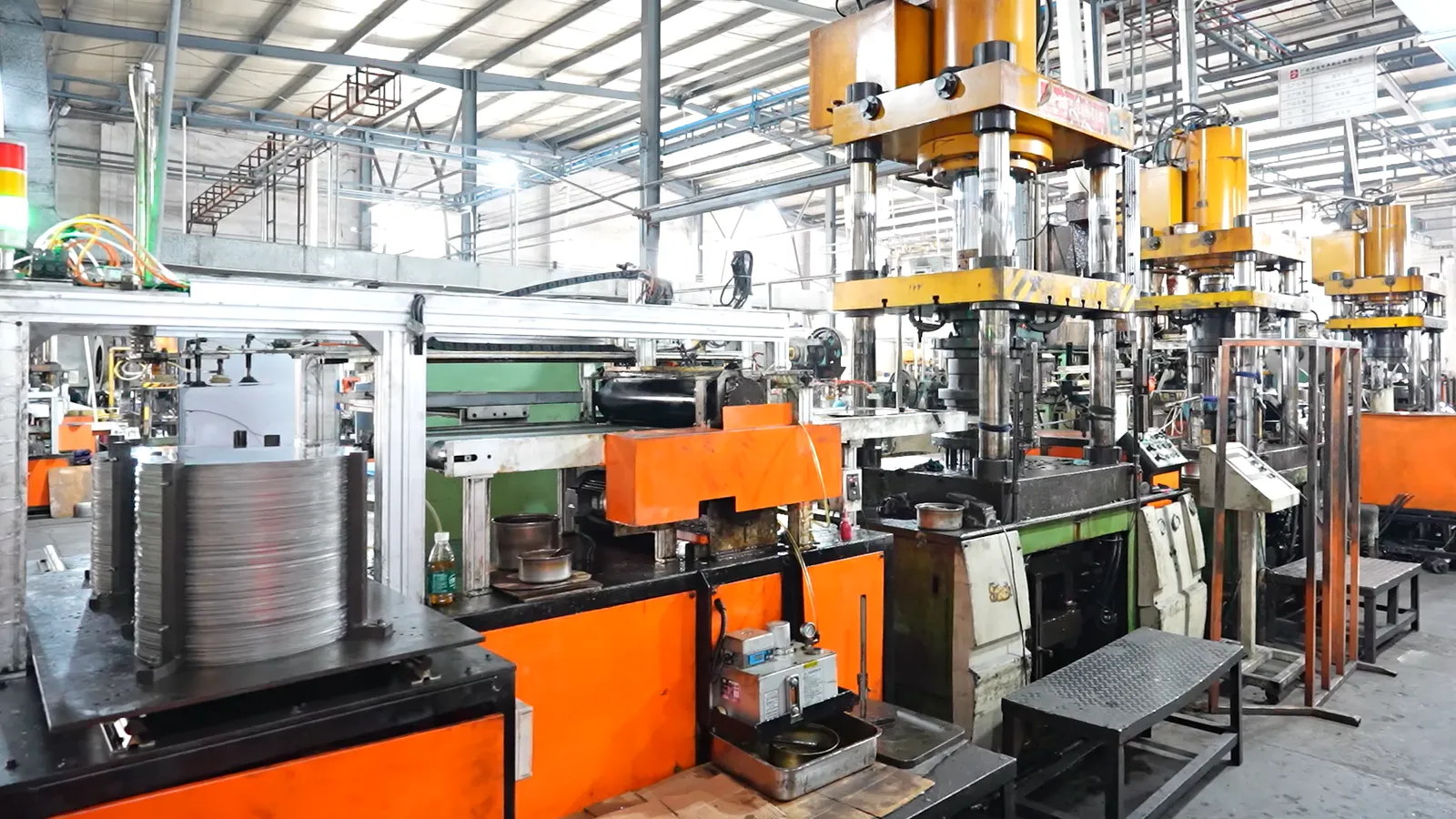
On the line, the gaps get filled by machinery. Body diameter is what selects the die — or the spinning mandrel, depending on how the body is formed — so "3 litre" resolves into whichever diameter the plant already has tooling for, which is not necessarily the diameter your shelf plan wanted. On a drawn body, wall thickness comes out of the clearance between punch and die; on a spun body it comes from the gauge of the blank and the number of passes — and neither is a word on a spec sheet. "Mirror finish" resolves into whatever grit and number of passes the polishing line is running that week. "Heavy bottom" resolves into a single-wall base or an impact-bonded composite base, and those are different products with different induction behaviour and different cost.
The items that cause the most disputes are the ones everybody assumes:
- Body diameter and height, with tolerances — not capacity alone.
- Wall thickness at rim and base — a drawn body is thinner where it stretched.
- Base construction — single wall, or an aluminium-cored composite bottom, and how many layers.
- Lid fit — seat clearance, tempered glass or not, and venting.
- Handle attachment — riveted or welded, and the torque it survives.
- Polish grade, by surface — body, lid, base, inside.
- Capacity measured how — brim-full or working; the two differ visibly.
The check, this week: hand your spec to a colleague who has never seen the product, with the sample and a caliper. If their numbers do not match yours, they will not match the factory's either.
The document: a one-page spec sheet with a dimensioned drawing, tolerances, material callout per part, and a photograph with callouts. Cookware specifications that survive a toolmaker's reading are short and numeric; one page with numbers beats six pages of adjectives. The question-by-question version is in the ten questions to settle before you sign.
Mistake 2: Pricing the unit and forgetting the tool that makes it
Every stainless cookware shape carries tooling: blanking and piercing dies, draw dies, spinning mandrels, trim dies, welding or brazing fixtures, polishing fixtures. Tooling is a fixed cost, recoverable from only two places — a separate invoice or the unit price.
When it sits inside the unit price it is amortised over an assumed quantity. Order half that quantity and the same die has to be paid for by half as many pieces: either the unit price steps up at reorder, or the factory absorbs the difference and looks for it in steel, polishing time or packing. That second path quietly produces "the second order was not the same".
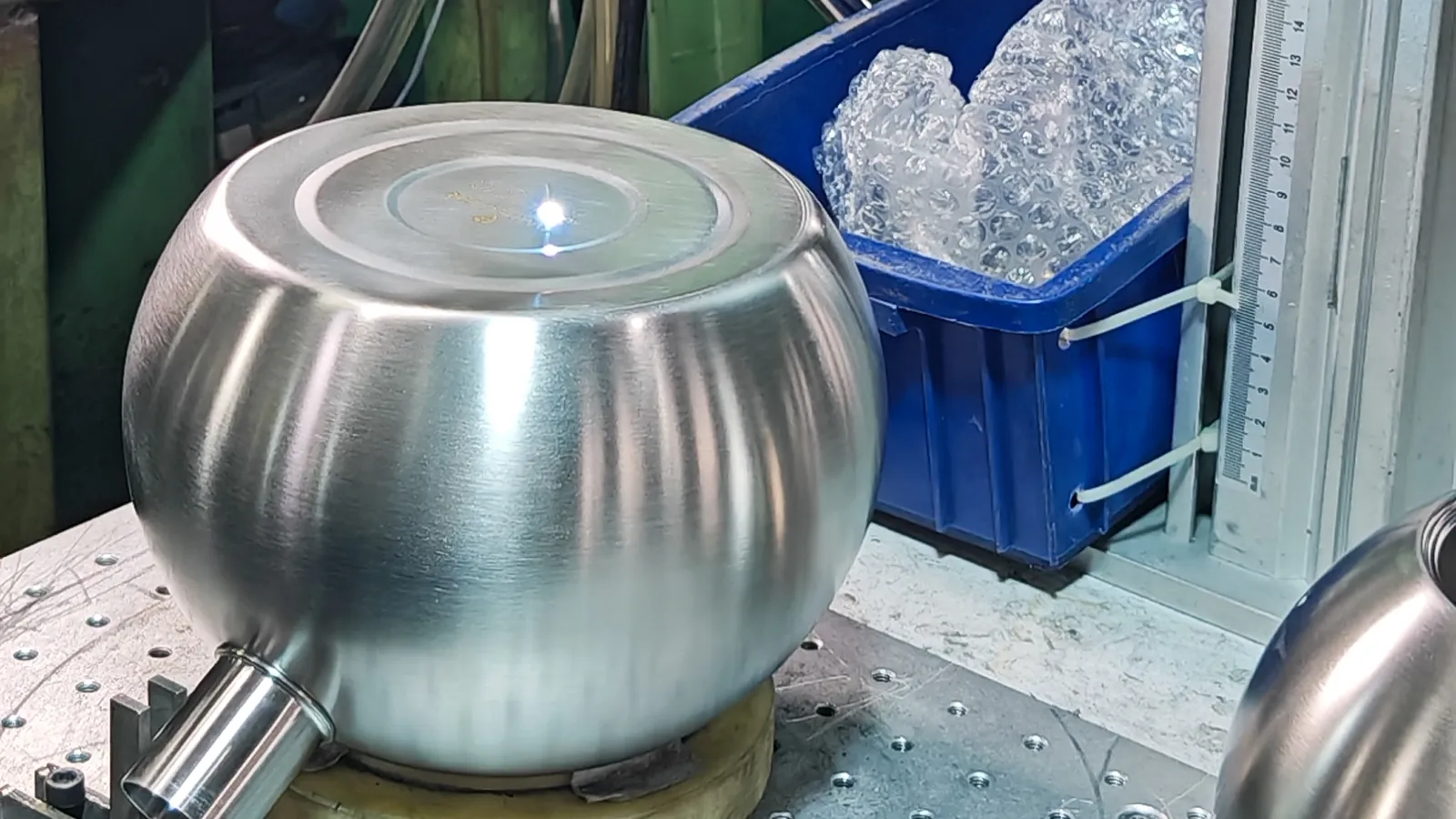
The negotiation error is not asking for a discount. It is comparing quotes that are not the same arithmetic: one amortises tooling into the unit price, another invoices it separately, so the cheaper-looking piece price can be the dearer order.
The check: ask for tooling as a separate line item, the amortisation quantity and term if bundled, and the price after the term. Then ask what happens if your second order is smaller, and who owns the tooling — and where it goes if you move.
The document: a quotation that itemises tooling, unit price, packaging and price basis, plus a clause on the price after amortisation. The economics of order size are set out in why a higher minimum order can cost less — this entry is only about the accounting mistake.
Mistake 3: Approving a sample that was never built on the production tool
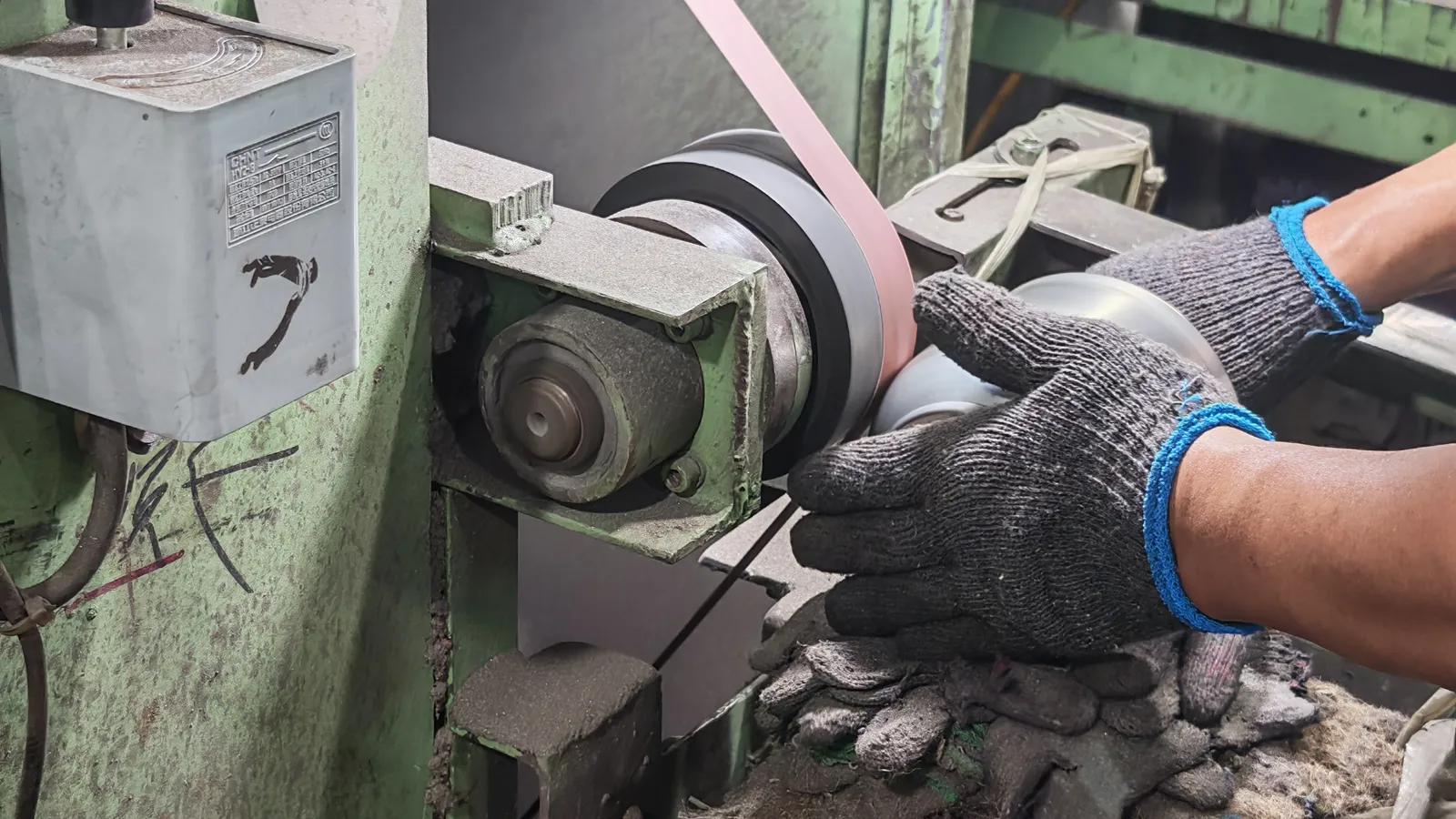
A first sample is a marketing object, even when nobody intends it to be: bench-ground by hand, polished with extra passes, welded by the steadiest operator, formed on a mandrel turned for one piece. All of it is legitimate craft. None of it transfers to a line running at rate.
So the sample proves the shape is possible. It does not prove the line can hold rim thickness, lid fit after polishing, handle weld position, or base flatness after the composite bottom is pressed on. The failures that appear at volume are precisely the ones hand finishing hides: an edge roll that is a little thicker, a lid that seats because it was fettled by hand, a handle that sits two millimetres off once it is welded in a fixture rather than on a bench.
The check: ask which die, mandrel and fixture the sample came off, and whether the same tooling will run the order. Ask for the sample's process route — the sequence of operations, not the material list. If the answer is "the sample is representative", ask what the representative tool is called.
The document: a golden sample sealed, signed and dated by both sides, plus one clause in the purchase order naming it as the acceptance reference and stating where the factory's copy is kept. A reference that lives only in a photograph is not a reference. The full mechanism — first article, pre-production sample, production comparison — is in sample versus mass production.
Mistake 4: Auditing a factory from photographs
A photograph of a shop floor proves that a shop floor exists. It does not prove the die for your part is in the rack, the gauges are calibrated, in-process checks are recorded, or the steel in the coil store traces to a heat number.
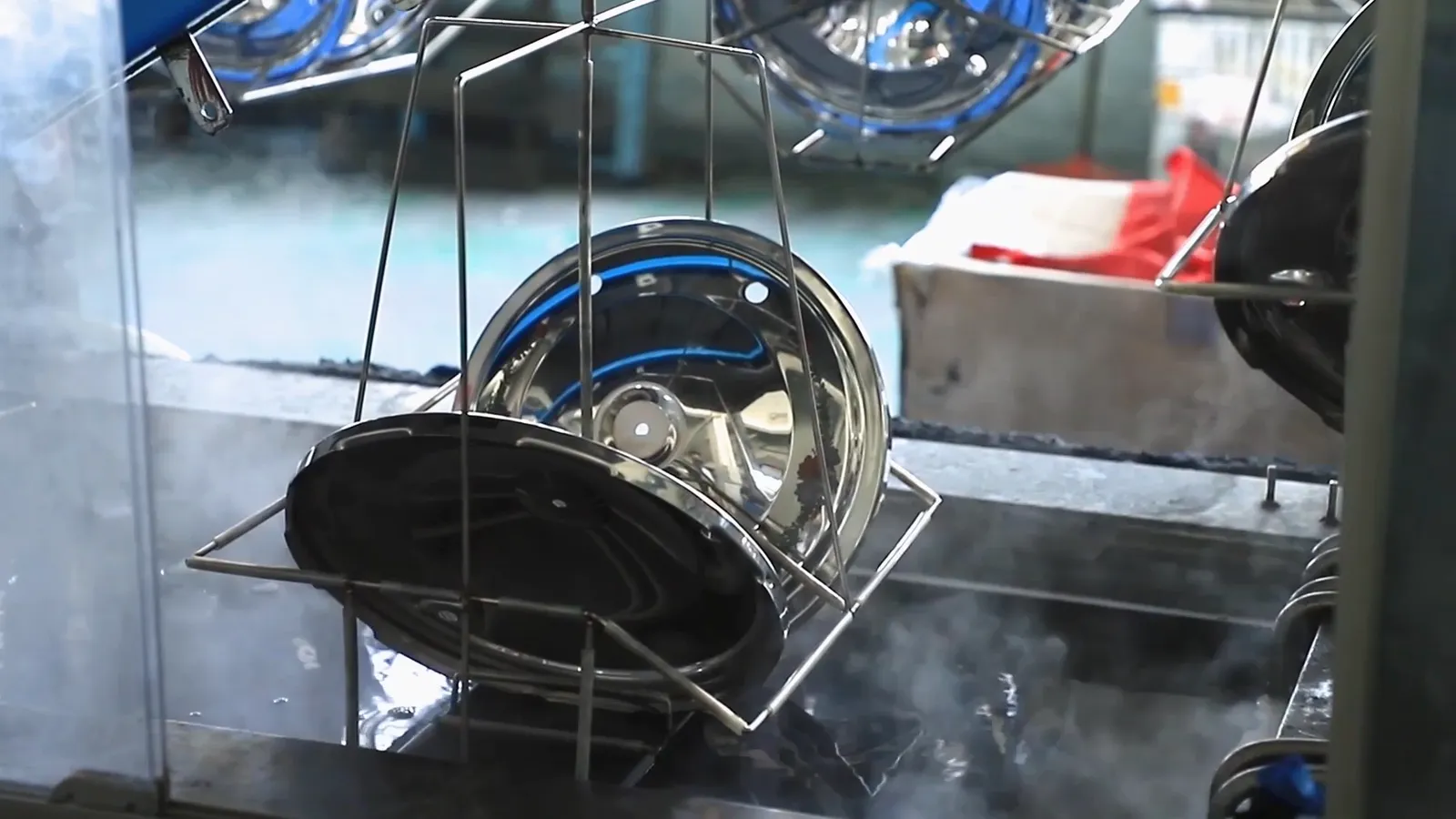
China supplier verification usually starts with the business licence, and it should — but the licence confirms an entity, not a capability. The gap between the two is where most first orders fail. Video calls close part of it if you direct them: have the die for your part pulled out and identified, look at the gauge crib and its calibration labels, ask for last month's in-process sheets for a similar SKU, and ask where rework goes.
Management-system certificates have the same shape of problem. ISO 9001 is evidence of a system within a stated scope, and the scope line is the part to read: a certificate that does not name cookware tells you less than the badge suggests. Audit summaries such as amfori BSCI carry a grade, a scope and a validity window; ours, for example, ran to August 2026 with a grade of C, so ask for the report that covers today — from us or from anyone else. A supplier who cannot produce a current one has told you something.
The check: ask for the certificate's scope sentence and validity date, and the audit summary's findings page, not its grade.
The document: an audit report you commissioned or a video walkthrough with a written list of what was shown. The audit method itself is in how to audit a cookware factory in China.
Mistake 5: Reading the lead time in the wrong calendar
Lead times when sourcing from china are quoted in working days and read in calendar days. Thirty to fifty working days is roughly six to ten calendar weeks — before inspection, before vessel booking, before the weeks lost to a national holiday.
The second half is the start event. A lead time with no defined start is not a commitment: deposit, sample approval and artwork approval can sit two or three weeks apart on the same order, and each party assumes the one that flatters it.
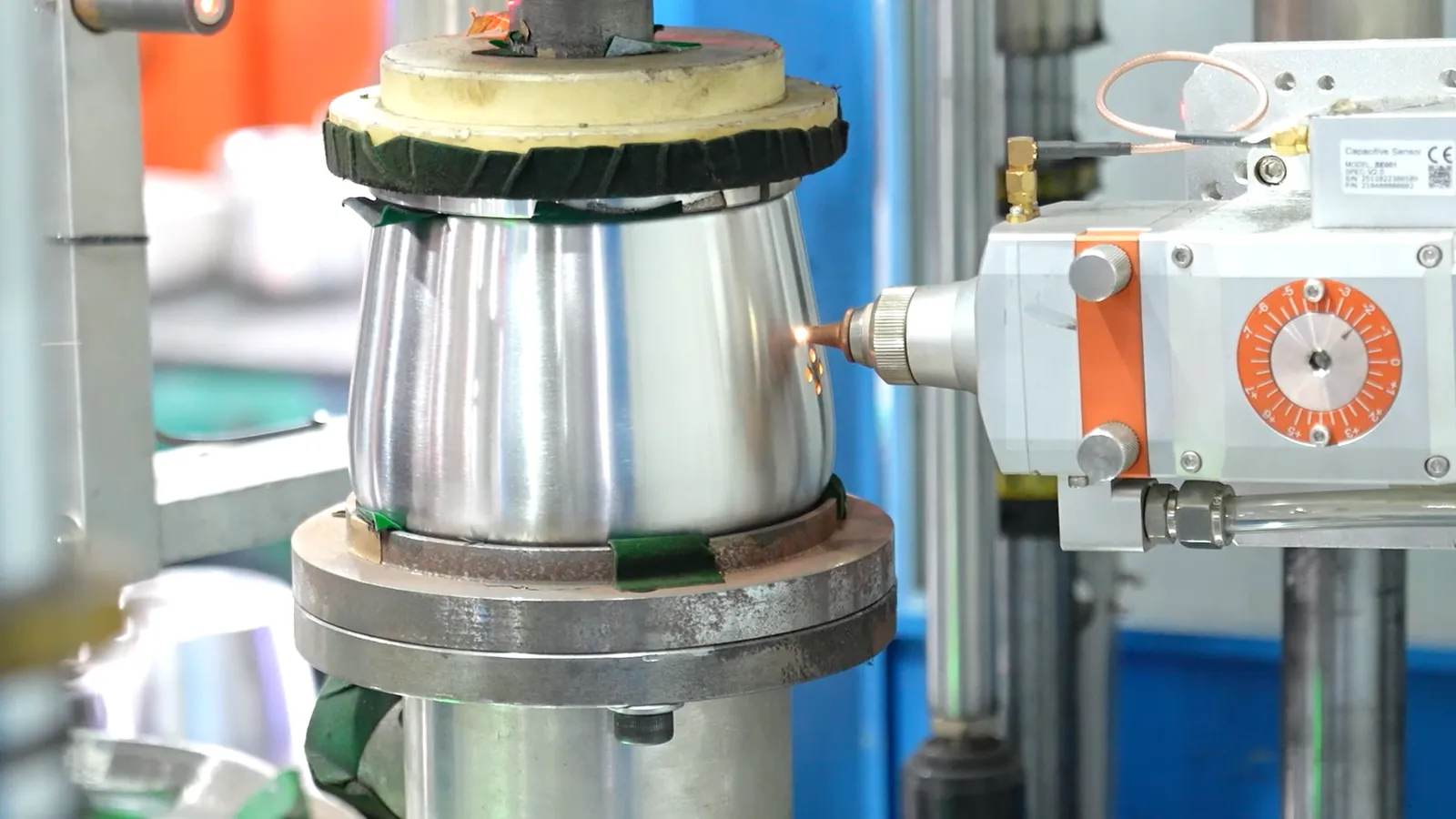
The third is capacity. Polishing, brazing and handle welding are labour-paced stations shared across models, so your slot depends on what else is on the floor that month. A plant does not slow down on purpose; it sequences, and your order sits in a queue you cannot see.
The check: rewrite the lead time in your own file as "X working days from the later of cleared deposit, signed golden sample and approved artwork", then ask for a ship date and work backwards through inspection, booking and transit.
The document: a lead-time clause with the start event named, and a ship-date confirmation once production starts.
Mistake 6: Designing the packaging after the price is agreed
The quotation is almost always built on "standard export carton". Then retail asks for a colour box, then a display carton, then a pallet spec — all after the unit price is fixed and before the container is booked.
Packaging is not decoration; it is geometry, and geometry sets freight. Change the master carton and you change units per carton, cartons per container, and therefore freight per unit. For cookware the effect is larger, because the products nest — a set that stacks inside itself uses a fraction of the cube of the same pieces packed singly, and glass lids and long handles force their own dividers.
The check: fix four numbers before you compare freight quotes — master carton dimensions, units per carton, gross weight, container type. Then ask each supplier for a packing list with carton dimensions attached to the quotation.
The document: a packaging specification sheet covering inner and master carton, markings, barcode placement and the transit test you expect the pack to survive. Transit performance is testable rather than arguable: the ISTA series defines packaged-product test protocols for exactly this purpose, and a supplier who has run them can tell you which one.
Depth on carton and shelf requirements is in retail-ready cookware packaging; the container-loading question follows from the same cube arithmetic.
Mistake 7: Buying certificates instead of buying evidence for your market
Certificates are the most collected and least read documents in sourcing. They prove that a named sample was tested to a named method, at a named laboratory, on a date — and buyers assume much more.
The frameworks behind them are different in kind, not only in strictness. In the European Union, Regulation 1935/2004 sets a general safety requirement: materials must not transfer constituents to food in quantities that could endanger health, change the composition of the food unacceptably, or deteriorate its organoleptic properties. It is a framework of migration behaviour, and it does not publish a whitelist of approved steel grades. In the United States, the FDA's food-contact framework evaluates food-contact substances, and stainless cookware is accepted in practice by alloy family and chromium content rather than by a certificate of grade. China's GB 4806.9 works on specific migration limits for metal elements.
That difference changes how the 201-versus-304 question should be asked. The useful statement is not that one grade is illegal; it is that 201 has no established food-contact acceptance practice in the target markets, while the 300 series — 18/8 and 18/10, chromium around 18% — carries a long acceptance record. That market-acceptance fact decides whether a retail buyer's compliance team accepts your file. The grade comparison is in 201 versus 304 stainless steel.
The check: read page one of the report — applicant, sample description, test items, conditions — and compare the sample description with the SKU you are buying. A report on a 20 cm saucepan does not cover a 10-litre pressure cooker, a different grade, or a different interior finish.
The document: a test report per SKU family per target market, plus a mill certificate for the steel heat. The broader compliance map is in food-grade stainless steel cookware.
Mistake 8: A price with no validity window, and payment terms with no leverage
Stainless steel is a traded commodity. The coil price behind your quotation is a date-stamped input, which makes a quotation without an expiry date an opening position rather than a price.
The payment side has the same structure. Paying the full amount before production removes every lever you have, because the only moment a factory can still rework your goods cheaply is before the balance is settled. The common shape — a deposit to start, the balance after a passed inspection — is not a courtesy to the buyer; it is what makes the inspection meaningful.
The check: ask how long the price is firm, and what it is re-quoted against when it expires — a named index, the mill invoice, or nothing. Then check that the inspection result, not the production finish date, triggers the balance.
The document: a quotation with a stated validity period and a re-quote mechanism, and payment terms tied to a named milestone. Incoterms belong in the same paragraph: FOB, CIF and DDP move who books, who insures and where risk passes, and comparing quotes that do not name a term is comparing nothing — the ICC's Incoterms 2020 rules are the reference text.
A unit price is also the only number most buyers compare, which is why the freight, duty and insurance lines sit outside the quote altogether:
Cost line | Usually outside a unit price | Who decides it |
|---|---|---|
Ocean freight and terminal handling | Yes, under FOB | Your forwarder, on your booking |
Import duty and tariffs | Yes, unless DDP | Your broker, from the HS code |
Marine insurance | Yes, unless CIF at minimum cover | You, on the cover you actually need |
The cost items a unit price hides is the arithmetic for the rest of it.
Mistake 9: Inspecting at the destination instead of at the line
Inspection at arrival audits a decision already made. The goods are yours, the mould is across an ocean, and the conversation is about money.
The alternative is a pre-shipment inspection against criteria you wrote, sampled to an agreed plan — AQL tables such as ISO 2859-1 exist for exactly this — with defect classes defined in the purchase order rather than negotiated at the inspection. For a first order, a during-production visit, timed to wherever your bottleneck sits, catches the systematic faults that a final inspection can only count. A third party such as SGS or Bureau Veritas earns its fee when the defect classes are in dispute — or when nobody on your side can be at the line on the day.
Cookware has its own short list for the annex: rim roundness, lid seat and vent, handle torque and play, polish defects under raking light, base flatness where it meets an induction plate, capacity against the spec, and marking permanence after a wash test.
The check: write the inspection annex before you place the order, and ask the factory which gates it self-checks and what it records.
The document: one page attached to the purchase order — sampling plan, defect classes, test list, reference sample, and who inspects. If your supplier resists a written annex, that is itself information.
The nine mistakes on one page — and what the factory needs from you
Mistake | Where it bites | The check you can run this week | The document that closes it |
|---|---|---|---|
Specification written for a colleague | Die and mandrel selection, wall thickness, polish grade | Have a colleague measure the sample against your spec; compare numbers | One-page spec sheet with a dimensioned drawing and tolerances |
Unit price without tooling | Amortisation quantity, reorder pricing | Ask for the tooling line, the amortisation term, and the price after it | Itemised quotation with tooling separated |
Sample not built on production tooling | Rim, lid fit, handle position, base flatness at volume | Ask which die the sample came off and which will run the order | Sealed golden sample named in the PO |
Audit by photograph | Die rack, gauge calibration, process records, traceability | Direct a video walkthrough to those four places | Commissioned audit report |
Lead time in the wrong calendar | Start event, shared bottleneck stations, holidays | Rewrite the clause with the start event; ask for a ship date | Lead-time clause plus ship-date confirmation |
Packaging designed last | Carton cube, units per container, freight per unit | Fix carton dimensions and units per carton before quoting freight | Packaging spec sheet attached to the PO |
Certificate without scope | SKU coverage, grade coverage, market framework | Read page one of the report; match sample description to SKU | Report per SKU family per market, plus mill certificate |
Price with no validity | Commodity movement, payment leverage | Ask the firm period and the re-quote basis | Quotation with validity and milestone-tied payment |
Inspection at destination | Rework impossible, dispute becomes financial | Write the inspection annex before ordering | Inspection annex to the PO |
Read down the right-hand column: every one of these is a document you can produce before a factory is chosen, which is why most china sourcing mistakes are visible there months before the steel is cut. That is the useful asymmetry in sourcing from china — the buyer controls the paperwork, and the paperwork is what a line executes.
From our side at Potobelo, the practical version is short. Our minimum is 1,200 pieces per model, sampling runs seven to ten days, and production runs thirty to fifty working days from the later of deposit, signed sample and approved artwork. The current range covers 48 SKUs across four lines — 10 pressure cookers, 10 kettles, 20 saucepans and casseroles, 8 steamers — with 304 on every cooking surface and 201 or 304 quoted on selected kettles and non-contact parts, plus composite bottoms and, on the pressure line, multiple safety structures. A fast inquiry needs four facts: target market, capacity and diameter, grade, and packaging direction.
If you want to see the finished range before you write a spec, start with the product lines, or send the cookware specifications you have and we will tell you which of the nine they leave open.
Common questions
What is the most common China sourcing mistake when buying cookware?
The most common mistake is a specification that describes the product instead of measuring it. A line like eighteen-ten stainless, mirror finish, three litres, heavy bottom leaves every choice to the factory: which die diameter the press has, what wall thickness the die clearance gives, which polishing grit the line is running that week. The factory is not being careless; it is filling gaps you left open. One page closes most of it — body diameter and height with tolerances, wall thickness at rim and base, base construction, lid fit, handle attachment, and polish grade by surface.
Why does the factory build a different diameter from the capacity I ordered?
Because capacity is a volume and diameter is a tooling decision. A three-litre body resolves into whichever diameter the plant already has a die or mandrel for, and the same volume can be built at more than one diameter by changing the height. If your shelf plan needs a specific diameter — to fit a carton, a display or a rival's footprint on the shelf — that number has to be on the drawing, with a tolerance, rather than inferred from the litre figure. Ask which diameter and which tool the factory intends to run before the quotation is issued, then check the drawing against the sample.
Do certificates prove that cookware is food-contact compliant for my market?
A certificate proves that a named sample was tested to a named method on a named date, and nothing wider than that. Read page one of the report — applicant, sample description, test items, conditions — and compare it with the SKU you are buying, because a report on a twenty-centimetre saucepan does not cover a ten-litre pressure cooker or another steel grade. Markets also differ in kind: the European Union regulates migration behaviour under Regulation 1935/2004 without listing approved steel grades, while GB 4806.9 sets specific migration limits for metal elements.
How long does a cookware order from China actually take?
Longer than the quotation suggests, because lead times are quoted in working days and read in calendar days. Thirty to fifty working days is roughly six to ten calendar weeks before inspection and vessel booking, and the clock starts later than most buyers assume. Pin the start event in writing — the later of cleared deposit, signed golden sample and approved artwork — then add the inspection window, the booking window and, for orders placed late in the year, the weeks lost around Chinese New Year. Ask for a ship date rather than a duration, and work backwards from it.
Written by
Potobelo Editorial Team
Sourcing and engineering staff at Potobelo, a stainless steel cookware brand built on 30 years of Zoombo manufacturing in Guangdong, China. We write from inside the plant that makes the product, not from reviewing it.