
Cookware Sets vs Open Stock: A Wholesale Strategy Guide
For importers and distributors deciding whether a season goes into boxed sets or open stock. This guide treats the choice as a distribution question: model count against minimum order, barcodes against configurations, breakage against spares, carton cube against price — plus the third option most buyers miss.
 Potobelo Editorial Team18 min read
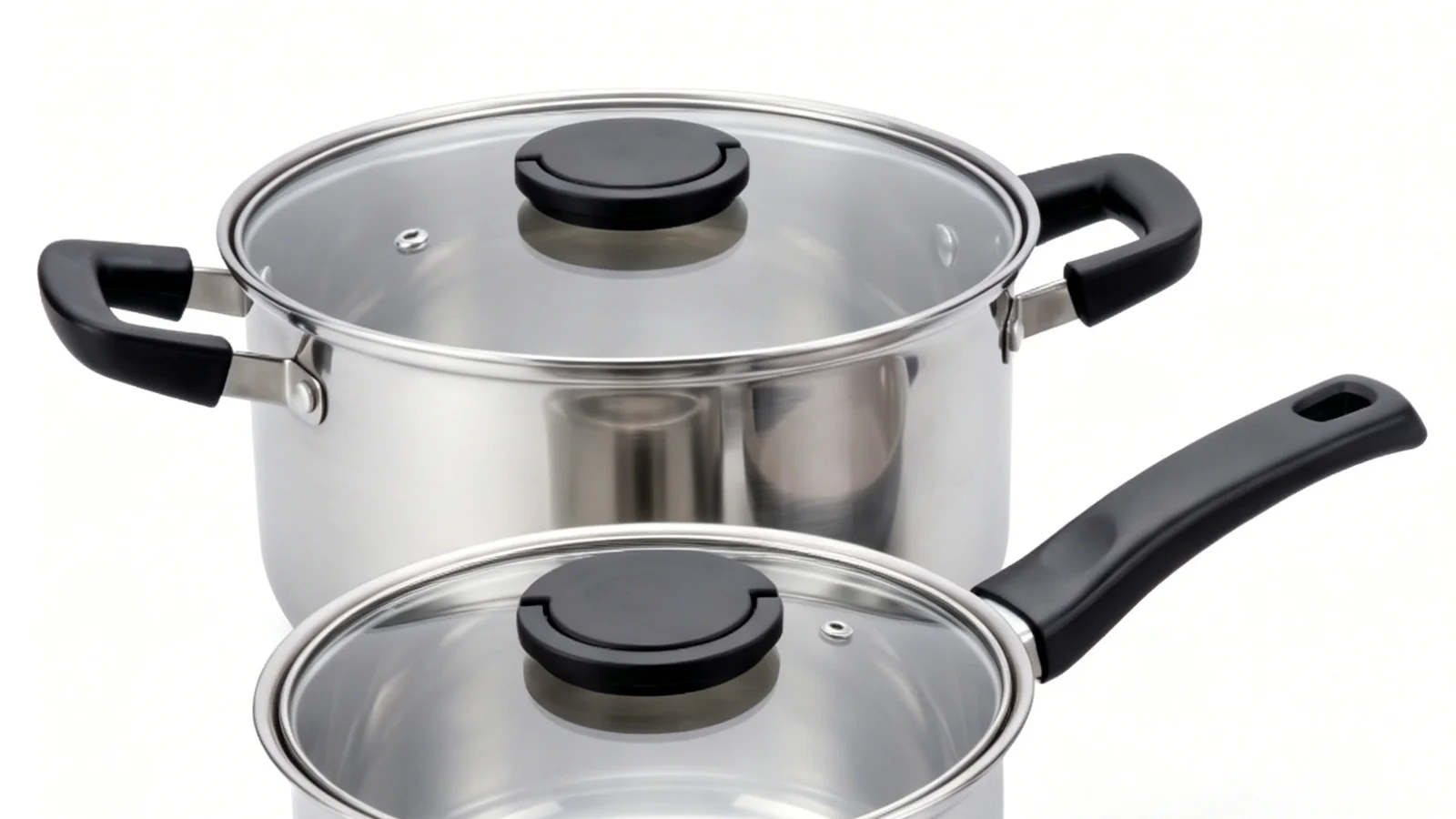
Open stock cookware means individual pieces sold as individual units: one saucepan, one casserole, one lid, each priced and shelved on its own. That is the retail meaning, and it is the one this guide uses, because it is the only version that tells a supplier what the channel will reorder. In the trade the same words also mean stock held for immediate shipment — a working-capital question, not a range-design one — and the two get mixed up constantly.
The decision this creates is not a packaging preference. A set and an open-stock range are two distribution machines. One sells a single unit with one barcode, one carton, one price and one return; the other sells a matrix of models where the money comes back through replacement. Choosing between them sets your model count, tooling bill, data entry, breakage exposure and the price you can defend.
A set is not a product. It is a configuration of pieces that already exist, assembled at packing — which is why most importers should sell both, from one production run.
What open stock cookware actually means
The question "what is open stock cookware" gets answered on retail sites as a category label, and the answer is thin: individual pots and pans, sold singly, for replacing a worn piece or adding one. Useful, but it stops where the sourcing decision starts.
Two things follow, and both cost money if you miss them. First, open stock is a demand signal, not a product family: a retailer listing stainless steel open stock cookware is telling you its customers buy one piece at a time and return for the second later. A retailer listing only boxed sets is telling you it sells occasions — weddings, moves, holidays — and does not want to carry depth.
Second, open stock has no single unit of sale: a distributor may buy twelve pieces across four diameters, a discounter a pallet of one diameter. Same words, opposite load plans.
There is a third model: kitting. Pieces are made as open stock, then some are packed together at the end of the line. One production run, two sellable formats, and the box becomes a packaging decision instead of a product decision.
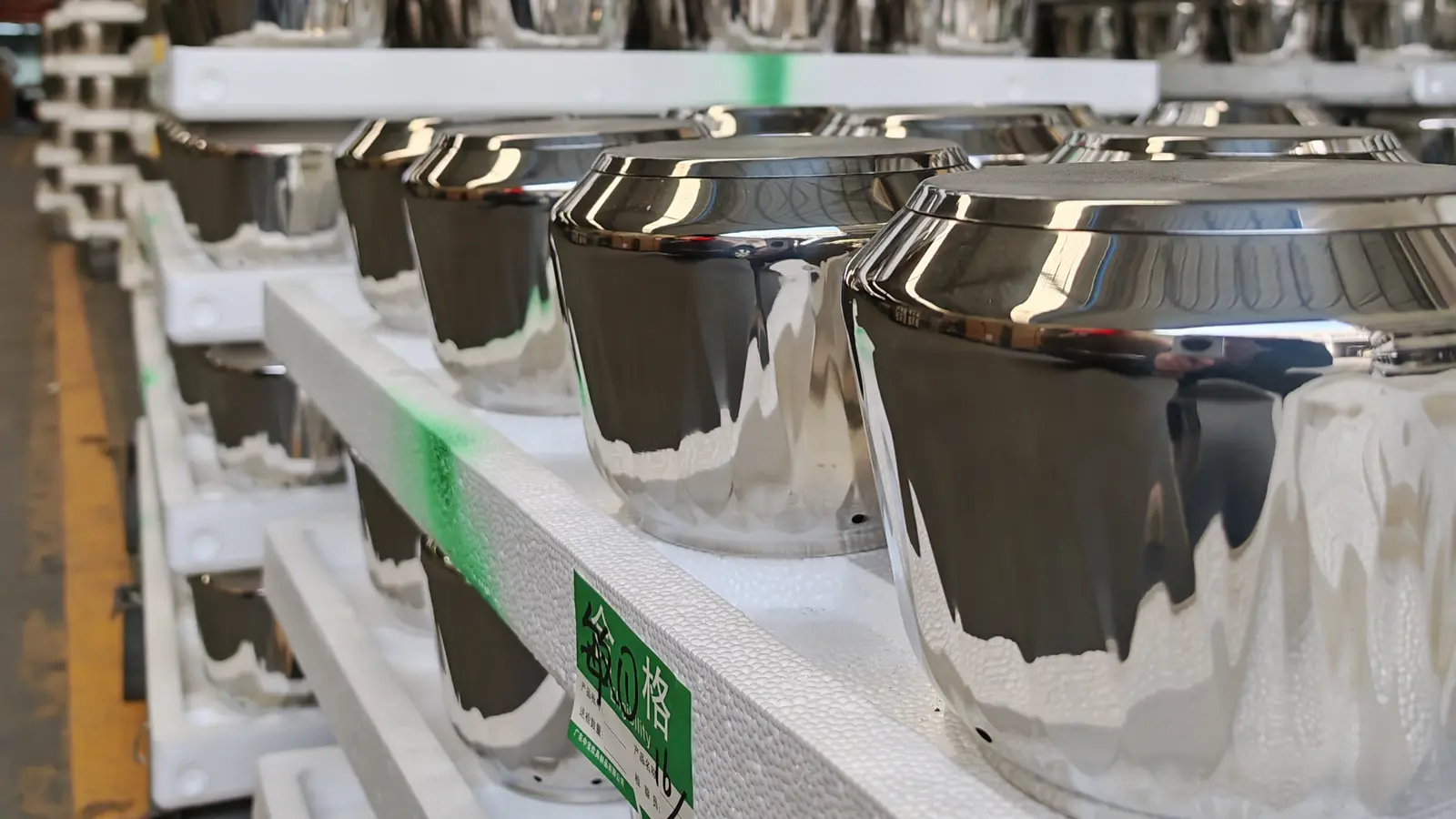
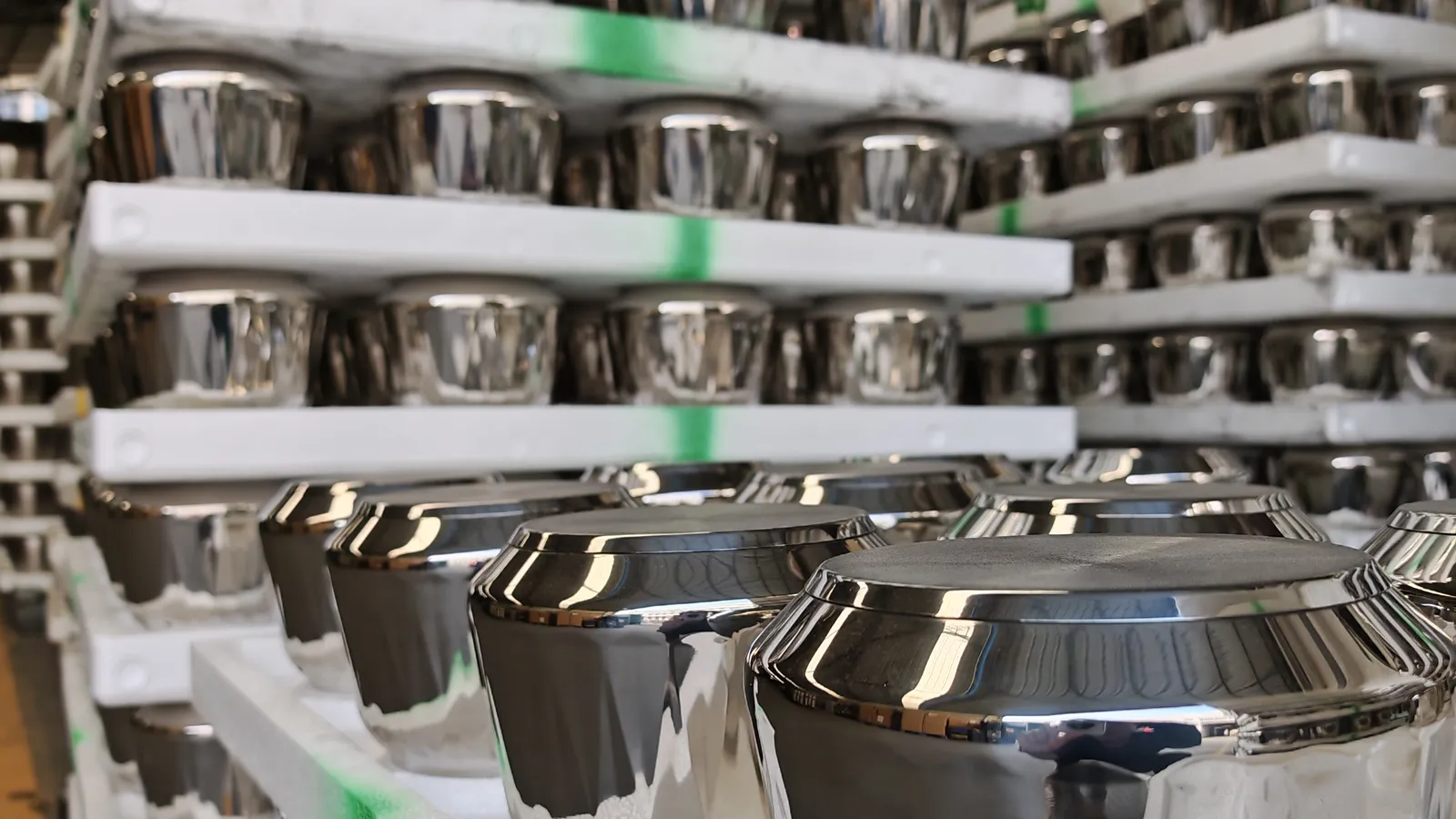
Bodies before assembly. No lids, no handles, no cartons — this is what open stock looks like inside a factory, where each diameter is its own item with its own count.
What changes when a piece becomes a set
Six things change the moment two pieces are packed together and sold as one unit. Everything later in this guide follows from one of them.
Dimension | One piece (open stock) | One set |
|---|---|---|
Unit of sale | A model and a diameter | A fixed configuration |
Barcode | One per model | One per configuration |
Carton | Standard, stackable, mixed freely | Larger, denser, one configuration per carton |
Minimum order | Per model | Per model, multiplied by the pieces in the set |
Return unit | The piece | The whole box |
Reorder logic | Fill a gap in a diameter ladder | Replace a complete starter or gift unit |
Read the middle column and the set looks efficient: fewer listings, photographs and data records, and a price a buyer can compare at a glance. Read the right column and the risk appears: one damaged piece withdraws a whole configuration, and one slow diameter drags four other pieces with it.
Which column wins depends on who is buying. The next four sections take that question apart — model count, kitting, barcode count and channel.
A set also ties a large body to a small one, so the stock pot a buyer would otherwise order on its own becomes the piece that sizes the whole carton — and the piece that decides how many units fit a pallet layer.
The broader question of which categories earn a place in a first range is handled in the wholesale buying guide; this piece stays on the sets-versus-singles axis.
Count models before you count pieces
A minimum order is quoted per model, never per set and never per order. Ours is 1,200 pieces per model, and that one fact reorganises the decision.
A five-piece set made from five different models commits 6,000 pieces. A four-piece set built from three models — two saucepans and a casserole sharing one lid — commits 3,600. A six-model open-stock range commits 7,200. So the question is never how many pieces a set contains, but how many models — and whether you can carry that many minimums in one order. Cookware sets wholesale is priced on that basis: per model, with the configuration multiplying the commitment.
Tooling runs underneath the same arithmetic. Every diameter and shape needs its own die set, and a die set is not a consumable: it is ground, fitted, aligned, then reworked as it wears. More models mean more dies in rotation, more changeover, and a smaller batch per model to absorb the setup. The press hall below is that sentence made physical.
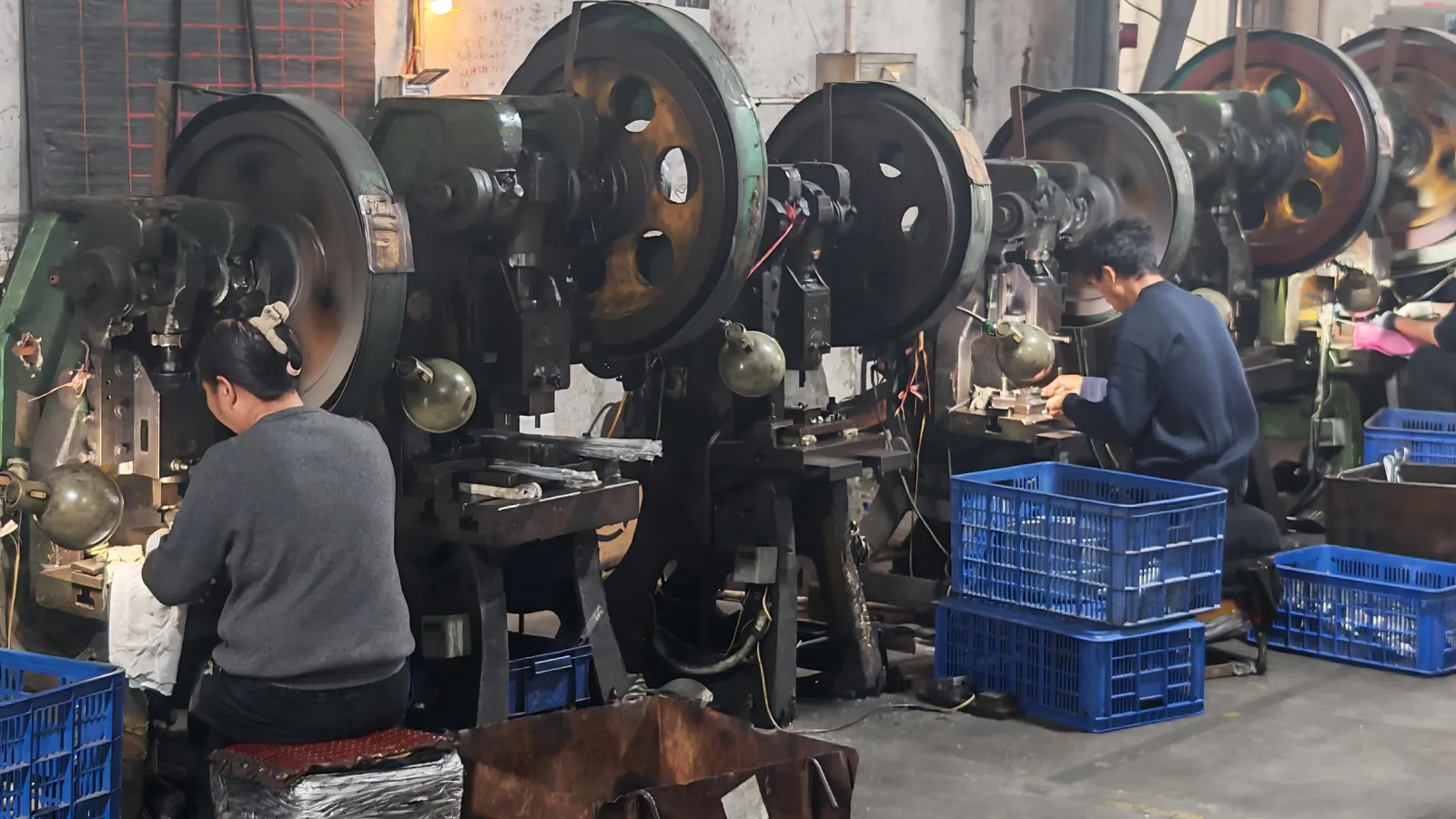
Each press carries one die at a time. A six-model range is six setups, six alignment checks and six batches to schedule — which is why model count, not piece count, is what a factory quotes against.
Three to five models is a working first range: enough to look like a product line, few enough to fill a container without spreading the order so thin that every model misses its minimum. It is also why the set often wins the first order when the entry channel is gift- or listing-led — five visible pieces, three models bought, one price point a buyer can hold in their head. A distributor-led first order usually starts the other way round: open stock in a few proven diameters, with the box added once the singles move.
What a minimum order is actually spreading is worked through in what a minimum order actually spreads. The point here is narrower: a set multiplies your model count before any price is discussed.
Inside the factory, a set is a packing decision
Break a set down and it stops being a product. It is a body, a lid, a handle pair, a knob, a printed box, an insert and a leaflet, each made or bought separately, each with its own minimum, meeting for the first time on a packing bench.
Three consequences follow.
The pieces are the same pieces. A saucepan sold loose and the identical saucepan in a gift box come off the same tooling, through the same polishing line, to the same specification. You can therefore sell both formats from one production run: make the pieces as open stock, then divert part of the batch to kitting. Steamers show it: one base, one lid and two baskets become a two-tier or three-tier unit depending on how many baskets go in the carton, with no new die.
A set exposes matching in a way loose pieces never do. Loose pieces are compared against a photograph; pieces in one box are compared against each other, by the person opening it. Lid fit, rim flatness, diameter consistency and finish get judged side by side: two pieces from different polishing passes, one mirror and one satin, read as a defect in a box and as two variants on a shelf. Finish consistency across a set is a specification line, not a finishing detail.
The box is a component with its own minimum. Printed cartons, foam or moulded-pulp inserts, sleeves and leaflets are bought in runs, and the run is often larger than the product minimum, because the printer prices per colour and per die. A set with a four-colour box and a moulded insert can be gated by packaging rather than by cookware — a constraint that appears on no product quotation.
The range this site sells in saucepans, casseroles and steamers shows how far a piece-level view gets you: 20 SKUs across 10 series in saucepans and casseroles — ten single-handle saucepans and ten deep twin-handle casseroles, mostly paired by series — plus 8 steamers. Capacity is not published per model, so a set is quoted by diameter and series, not by litre. There is no wide, low braising pan in the range, so a French-oven-plus-skillet set is built from what exists or the die is paid for.
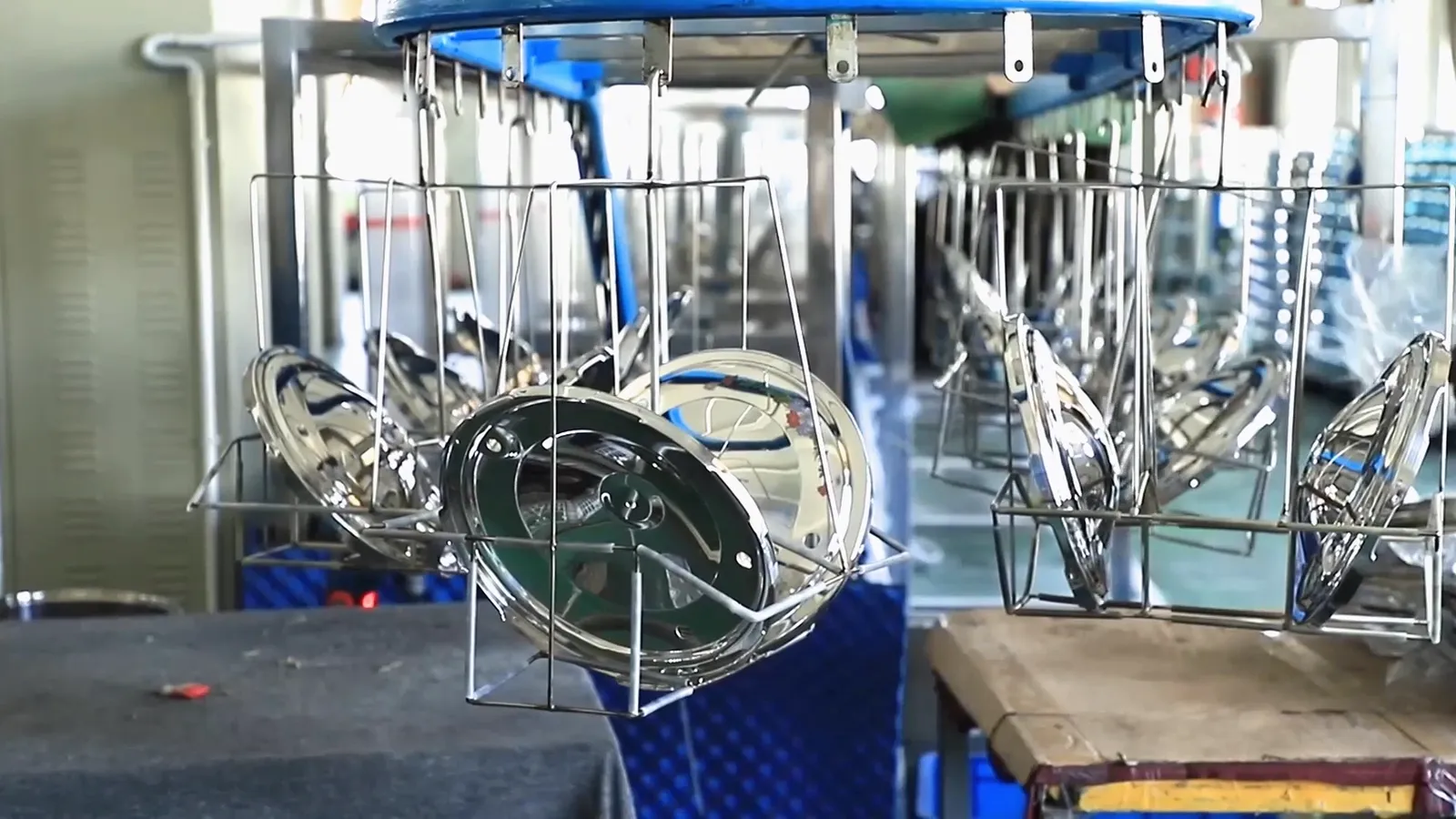
Lids travel as their own items — hung, finished, counted and stored separately — and only meet their bodies at packing. A lid that fits three bodies of the same diameter is one component doing three jobs; three diameters means three lids, three tools and three spares to hold.
The series and the pairs are listed on the saucepan and casserole range page.
One set, one barcode — and the configuration explosion
A barcode identifies a trade item at the point where it is priced, ordered or invoiced, which is how GS1 defines a GTIN. The definition is short; the consequence is not: every sellable configuration needs its own number, because the retailer's system has to tell a two-piece box from the same two pieces sold loose.
Configurations multiply: three bodies, two lid options (tempered glass and steel) and two box formats give twelve codes. Each code then needs its own record before a buyer will list it — dimensions, net and gross weight, carton cube, units per carton, cartons per pallet, country of origin, and a photograph that matches that code exactly.
Two decisions hide in the multiplication, and both are expensive to defer.
Whose prefix the numbers live under. Allocated under your own GS1 company prefix, the codes are your asset: you can move production between factories and keep the listing. Allocated under a retailer's or brand owner's prefix, you are printing somebody else's identity on the carton, and a packaging change becomes their change request. Neither is wrong; the mistake is not deciding, then discovering at artwork stage that the code on the dieline belongs to a party nobody asked.
Whether "mixed" is a code or a hope. Assorted colours, patterns and one-of-each cartons have to land on a defined code, or the retailer receives a pallet it cannot scan into inventory. A mixed carton is a legitimate configuration — it just needs its own number and its own carton mark.
The physical side of packaging belongs to a different problem: dielines, inner packing, transit testing and the labelling data retailers request are set out in retail-ready packaging. The job here is to price the decision — cookware set packaging is where a second minimum order hides, and where the code count doubles without a single new product.
Which channel buys which
The channel decides whether you ship open stock cookware or boxed sets far more reliably than the product does.
Channel | What it orders | What that costs you |
|---|---|---|
Mass retail and discount | Boxed sets for gifting and seasonal ends, plus a shallow open-stock ladder for replacements | Two formats, two data sets, a calendar that moves your volume |
Kitchenware specialists and distributors | Open stock by diameter, with depth mid-ladder | A model matrix held as stock, slow ends you discount yourself |
HoReCa and catering supply | Open stock, narrow and deep, with spares | Stable specification over years, a reorder book rather than a season |
E-commerce and DTC brands | A set as the hero listing, loose pieces behind it for repeats | Photography and copy per configuration, a parcel cube that sets shipping cost |
Private label and own-brand | A set as the flagship, open stock as catalogue depth | Artwork ownership, and a box minimum that arrives before the product minimum |
The row that surprises buyers is the first. Mass retail looks like a set channel, and at listing level it is: one facing, one price, one photograph. But the same retailer runs a claims and replacement process, and that process needs individual pieces to satisfy a customer who broke one part of a box. Somebody supplies those pieces as open stock, and the supplier who can ship both formats from one run keeps the account after the gift season ends. That is also why cookware gift sets are a calendar decision rather than a range decision: the configuration is fixed months before the volume arrives.
Commercial kitchens are the clearest case of the opposite logic: HoReCa buyers order and reorder by diameter, so a set is the wrong unit of sale almost by definition. How they order, and what they specify, is covered in how HoReCa buyers order cookware.
The breakage and spare-part ledger
Loose pieces fail one at a time; a set fails as a unit, and the unit is what comes back.
A customer chips a rim, or a courier puts a corner through the box, and the return is a complete configuration — one that cannot be resold at full price even when five of its six pieces are intact. The supplier's cost is not the damaged piece. It is the configuration, the return freight, the inspection, and the decision about what to do with the survivors.
Three controls keep that ledger from running away.
Spare parts are a percentage, not a favour. Sets need service components held against them — lids, knobs, handle sets — ordered as a share of the body count rather than added when a claim arrives. A supplier who cannot name that share has not run a set programme.
Common components are the cheapest insurance. One lid that fits every body in a diameter is one tool, one part number, one spare to hold. Three diameters is three of each. The saving is not in the lid; it is in the inventory behind it.
The same arithmetic holds for ranges you source elsewhere in nonstick or aluminium, with one difference on the spare side: a coated body wears through the coating rather than through a rim, and the lid is not the part that goes, so what you hold is a whole piece rather than a component.
Test the packed unit, not the piece. A set carton is heavier and its centre of gravity is higher, so a drop that a single-piece carton survives will split a set box at the corner. Packaged-product transit testing has published protocols for this — ISTA maintains the series many suppliers test against — and the specification line is "tested as a packed configuration", not "packed to survive".
Whether the replacement piece that arrives in year two matches the one in year one is a separate question, and it is a batch-consistency question: sample-to-production consistency is what makes a spare fit a body it was never packed with.
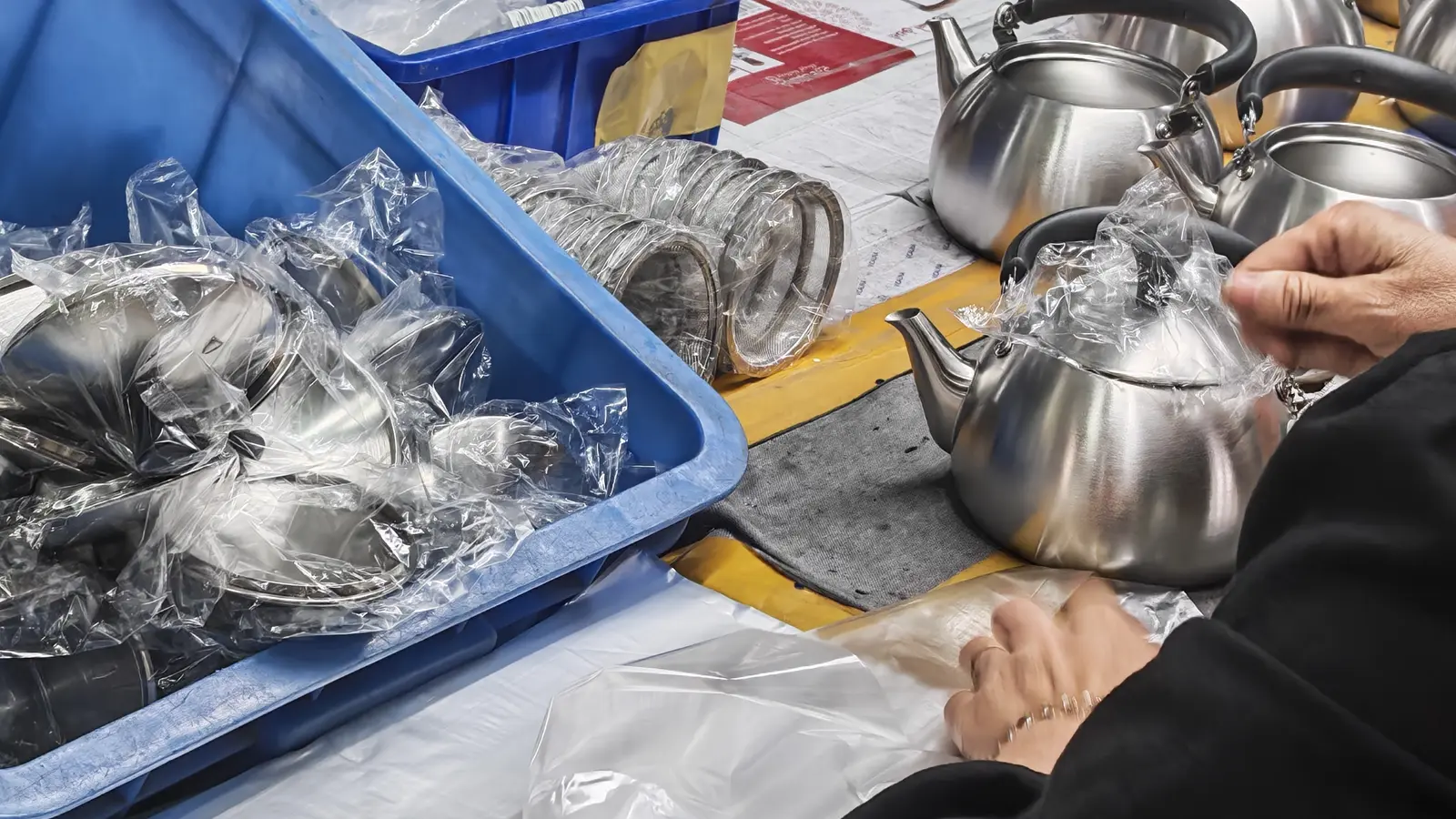
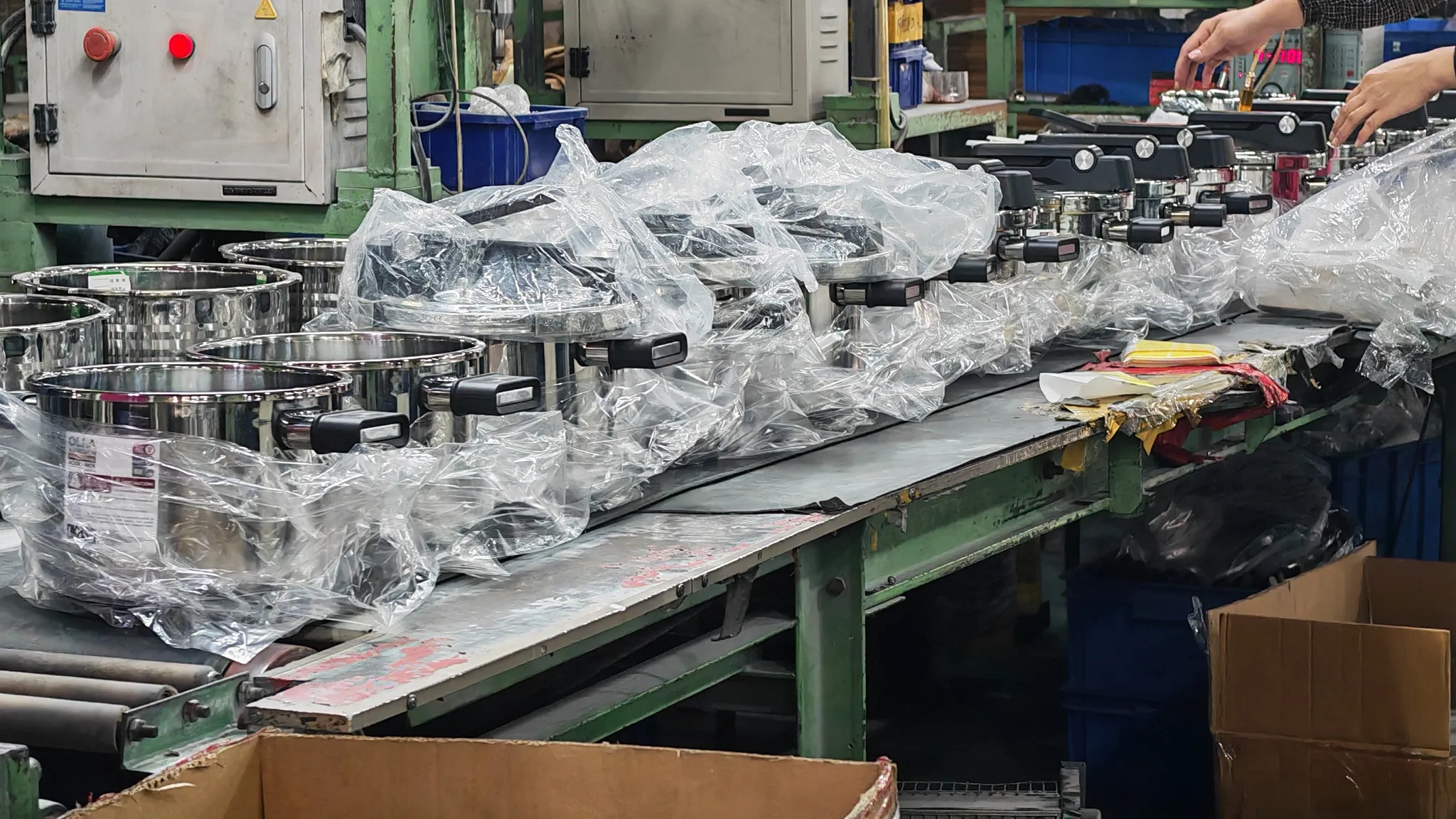
Components are bagged and counted before they meet. In a set programme those counts have to reconcile three ways: pieces in the box, spares held against it, replacements already promised.
Carton cube, cash, and the price you can defend
A set changes the physical economics before it changes the price. A stock pot decides the cube: one large body per set and the carton is sized around it. Inner packaging then eats what is left. A moulded insert and a printed box around five pieces add volume that carries no product, and volumetric weight is what a parcel carrier charges on. A set carton is also denser and less forgiving to stack: fewer units per pallet layer, and a pallet pattern that has to be designed rather than improvised.
Against that, a set fills a container faster. Fewer configurations mean fewer part-loads, fewer line items to count, and a loading plan that does not need a mixed-load exercise to complete. For a first order that would otherwise be four half-pallets, that is worth real money — and it is why mixing models inside one container is the alternative you compare against, not the default.
Then the price architecture, where most set programmes quietly lose money.
A set sells for less than the sum of its pieces and costs more than the sum of its pieces. Box, insert, kitting labour and extra handling are added to the same landed cost, while the price is set below the loose-piece total because that is what makes the set a proposition. Margin per piece is thinner. What you buy with it is a cheaper sale: one listing, one photograph, one data record, one shelf decision, one purchase order.
That trade is worth making when the alternative is not selling — a first range, a gift season, a marketplace listing that wants a bundle. It is a poor trade once you already have distribution, because you are giving away margin you did not need to give.
Cash follows the same logic: a set locks several diameters into one unit, so a slow diameter cannot be marked down on its own. Open stock lets you clear the tail piece by piece, and find out cheaply which diameter the tail is.
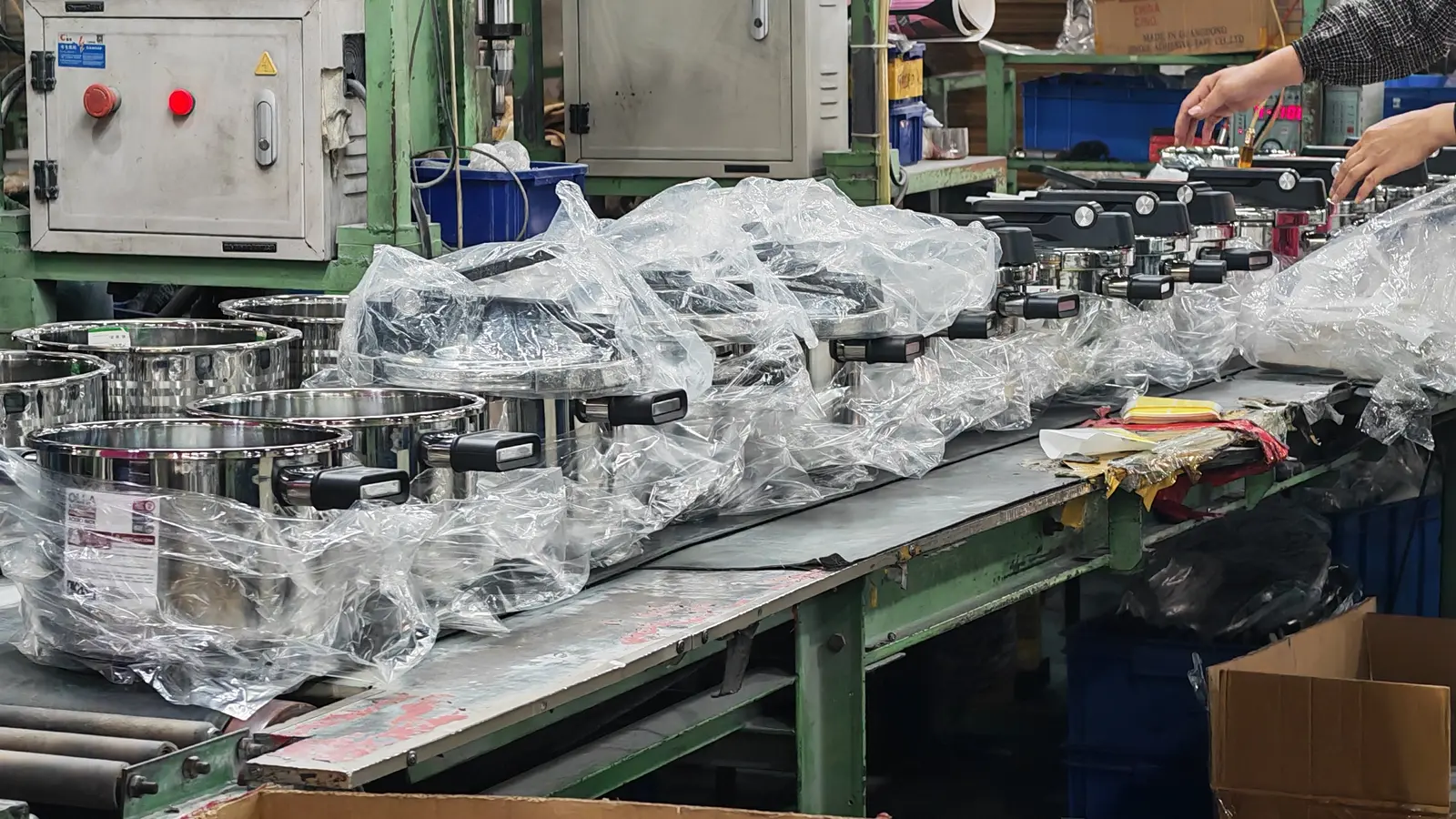
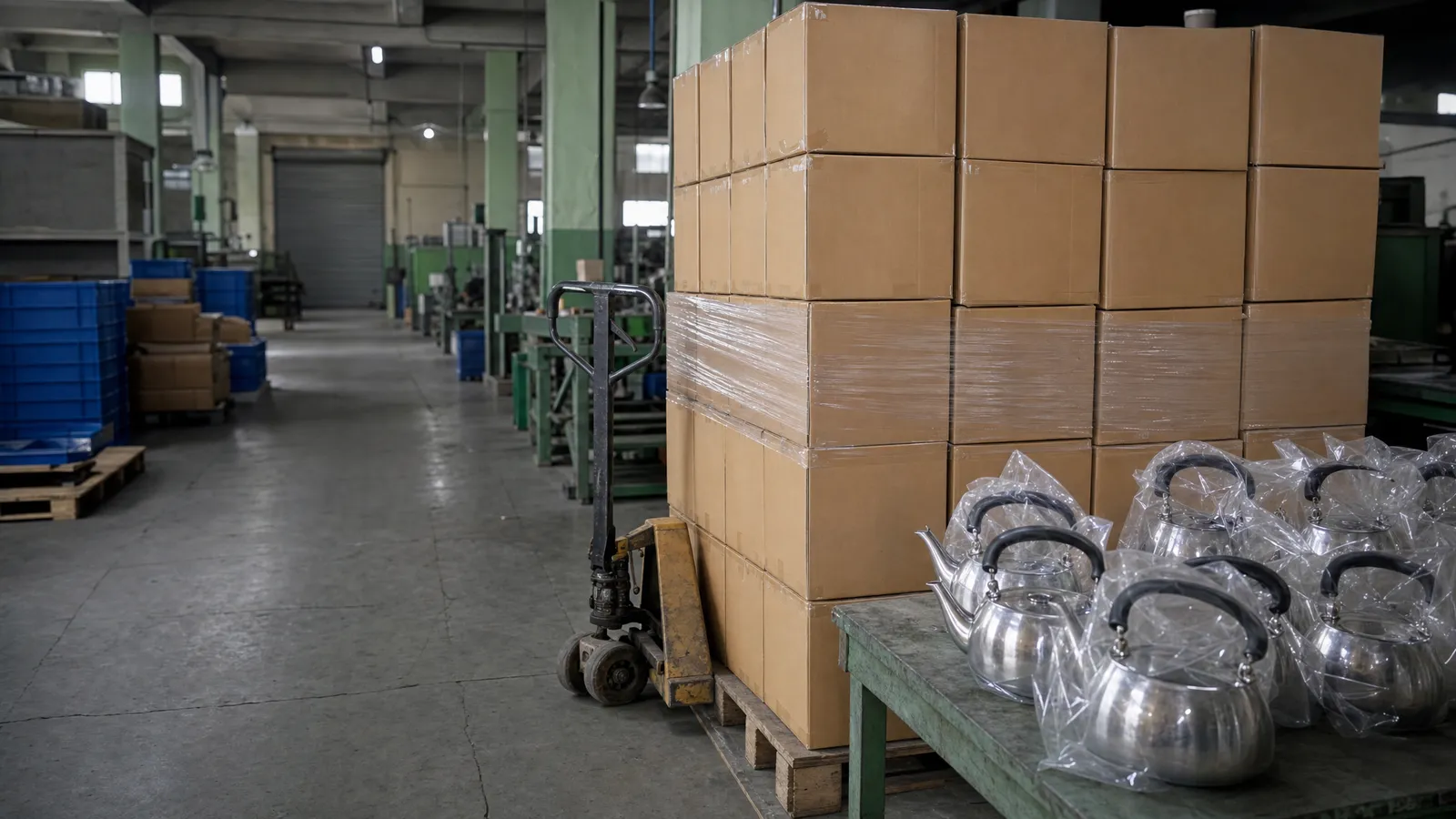
Carton count and cube are decided on this bench, not in the quotation. Two pieces per carton instead of three changes the freight on every unit in the order.
When to switch — and how to switch without a second tooling bill
The triggers for moving between open stock cookware and sets are observable rather than strategic.
Move from open stock to sets when a retail customer asks for a gift or seasonal SKU; a marketplace needs one link that sells a group; replacement demand flattens, which usually means the installed base is now large enough to gift into; or you already carry three models that assemble without a filler piece.
Break a set into open stock when returns concentrate on one component; one diameter in the set never moves while the rest sells; a distributor asks to reorder by diameter; or the set discount has started to eat the margin on the loose pieces.
The mechanics matter more than the triggers, because the expensive version of this decision is the one that pays for tooling twice.
Keep the pieces common. A set built from bodies you already sell loose, with a lid that already exists, costs a box and a kitting step. A set built from a new body costs a die, a sample round, a polishing programme and a new spare-part number — and if it fails, the die stays.
Fork at packing, not at production. The batch should be able to leave as loose pieces or as configurations, so the packing plan, carton marks and code allocation are settled before the production order is released.
Start with one hero set and the singles behind it when the first order is gift- or listing-led. That is the version of "both" a first order can afford: three models, one configuration, one extra carton specification, and a range that answers a gifting enquiry without committing the line to boxes. A distributor-led first order runs it the other way — singles first, on a narrow diameter ladder, with the box added once the repeat orders show which pieces move. How wide that first range should be is the subject of how wide a first range should be.
The enquiry: eight lines that decide the quotation
Most set enquiries arrive as a photograph and a piece count, which is why most quotations come back unusable.
Line | What to write |
|---|---|
| Pieces, diameters, series — and whether they also sell loose |
| Grade per component, not per set; flag any piece that differs |
| Lid type per body, whether one lid serves several bodies of the same diameter, venting |
| Inside and outside, and that they match across the set |
| Box format, print, insert, and who owns the artwork and the dieline |
| Whose GS1 prefix, how many configurations, what the carton mark must carry |
| Units per carton, cartons per pallet, pallet pattern, test standard for the packed unit |
| Minimum per model and per configuration; sample and production dates |
Two timing numbers belong on the same page. Sampling runs 7 to 10 days; production runs 30 to 50 working days from confirmation, so a retail window sets the enquiry date, not the other way round.
"Grade per component" is on that list because the range itself runs more than one grade: the saucepans, casseroles and steamers are SS304, the kettle line runs both SS304 and SS201, and the pressure cookers are SS304 throughout — so "stainless steel" on its own is not yet a specification, and the grade of each piece is.
One question is worth putting to your own broker before the packaging is printed: whether the set is entered as one line or as its components. The answer changes what you pay at the border. In the US the place to look is the Harmonized Tariff Schedule; other markets have their own schedule. Your broker confirms the treatment either way, because a retail set and its parts are not automatically the same entry.
Then inspect the first container, not the sample: count configurations against the packing list, check every box holds what its code says, compare finish across pieces from one box, and confirm the spares exist as units rather than as a quotation line. A sample proves a factory can build one good set. A container proves it can build forty thousand pieces and still have them match in a box.
The decision is arithmetic rather than taste. Count the models, count the codes, count what comes back when one piece fails — then choose the machine that matches the channel you are actually selling into. Sets and open stock are not rivals; they are two outputs of the same tooling, and the suppliers who serve importers well can produce either without asking you to pay for the die twice.
Common questions
What is open stock cookware?
Open stock cookware is cookware sold as individual pieces rather than as a fixed set: one saucepan, one casserole, one lid, each with its own price and its own place in a range. The term describes how a piece is sold, not how it is made — an open-stock saucepan and the identical saucepan inside a boxed set come off the same tooling. In the trade the same phrase is also used for stock held for immediate shipment, which is a different idea, so a supplier quoting open stock should say which sense is meant.
Is open stock cheaper than buying cookware sets?
Per piece, open stock usually costs more at the till because the buyer pays for one unit at a time with no set discount, while a set is priced below the sum of its parts. Per programme, the comparison reverses: a set carries a printed box, an insert, a separate barcode and a kitting step, so its total cost is higher than the same pieces sold loose. The cheaper option is the one that matches how your channel sells and how it handles replacements, which is why the two models are usually run side by side rather than chosen once.
How many pieces should a wholesale cookware set contain?
Three to five pieces is the working range for a first set, and the number should come from the models you can actually order rather than from a retail template. With a minimum of 1,200 pieces per model, a five-piece set made of five different models commits 6,000 pieces, so most first orders land on three pieces — typically a saucepan, a deep casserole and one lid that fits both because they share a diameter. A steamer built from a base, two baskets and a lid is a better example of a set that adds function without adding models.
Does each cookware set configuration need its own barcode?
Yes. A barcode identifies a trade item at the point where it is priced, ordered or invoiced, so every sellable configuration needs its own number: the same two bodies packed as separate pieces, as a two-piece gift box, and as a four-piece box with a steamer insert are three different codes. Configurations multiply quickly — three bodies, two lid options and two box formats give twelve codes, each needing its own dimensions, weights, carton count and country of origin before a retailer will list it.
Written by
Potobelo Editorial Team
Sourcing and engineering staff at Potobelo, a stainless steel cookware brand built on 30 years of Zoombo manufacturing in Guangdong, China. We write from inside the plant that makes the product, not from reviewing it.