
How Stainless Steel Cookware Is Made: From Coil to Finished Pot
Written for the people who sign off on a container, not the people who cook in it. This walks the full production chain — incoming coil, blanking, drawing, base construction, trimming, assembly, polishing, inspection, packing — and at each stage answers the same two questions: what is actually happening, and what does it decide on the quotation in front of you.
 Potobelo Editorial Team16 min read
The short answer: the chain, and the four stages that set your price
A stainless steel cookware manufacturing process reads like a long sequence and behaves like a short one. Between the coil in the warehouse and the pot in its carton are nine stages. Four of them account for most of the gap between two quotations built to the same drawing: how the blank is cut, how the base is built, how the surface is finished, and how the finished piece is packed. Grade sits above them — usually fixed before anyone compares, and moving the price more than any single stage. The remaining five decide whether the product is right.
That distinction matters in a negotiation: a double-digit spread between two quotations is rarely a labour-rate difference but a specification difference nobody wrote down — a thinner base, two polishing passes instead of four, a brazed disc where the other quoted impact bonding, a carton one size too small.
Stage | What leaves the station | What it decides on your quote |
|---|---|---|
| Coil with a mill certificate | Grade and gauge — the variable fixed before comparison |
| Circular blanks cut from strip | Material yield; scrap is a visible cost line |
| A formed body, one to three draws | Tooling amortisation, wall thickness, tolerance stack |
| Impact-bonded, brazed or clad base | The largest single price step; induction performance |
| Body at final height, rolled rim | Lid fit, and whether the edge is safe to handle |
| Assembled piece | Attachment method, test requirement, spare-part policy |
| Mirror or satin surface | Labour hours, rework rate, visible defect level |
| Tested, recorded batch | Who carries the cost of a reject |
| Cartons in a container | Carton cost, fill rate, damage risk in transit |
One caution first. Press tonnage, strokes per minute and yield percentages are not comparable between factories: tonnage depends on the die, blank diameter and alloy. Ask instead for numbers measured against your drawing — wall thickness at three heights, base flatness, first-off dimensions.
Stage 1: where the stainless steel cookware manufacturing process actually starts
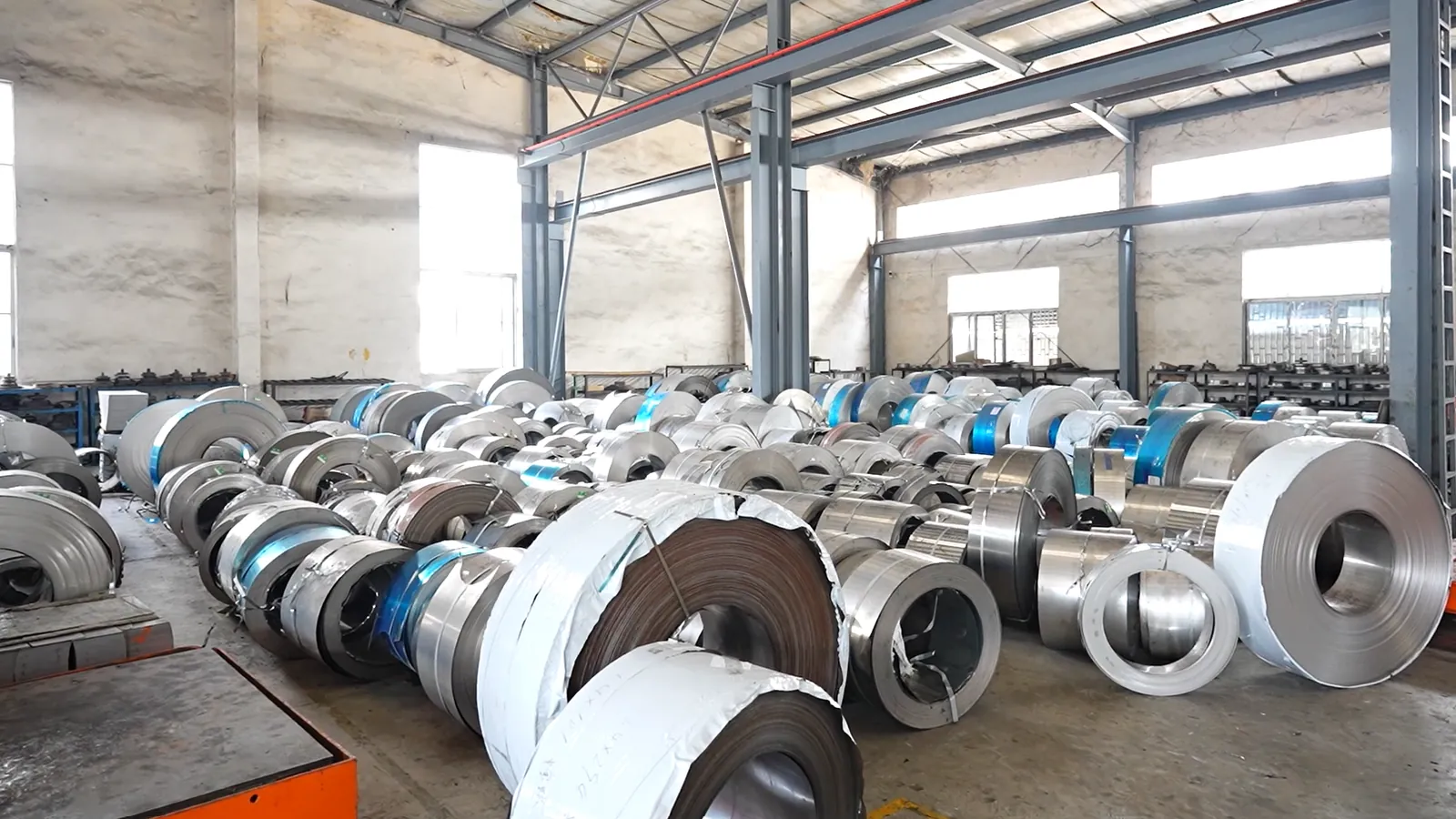
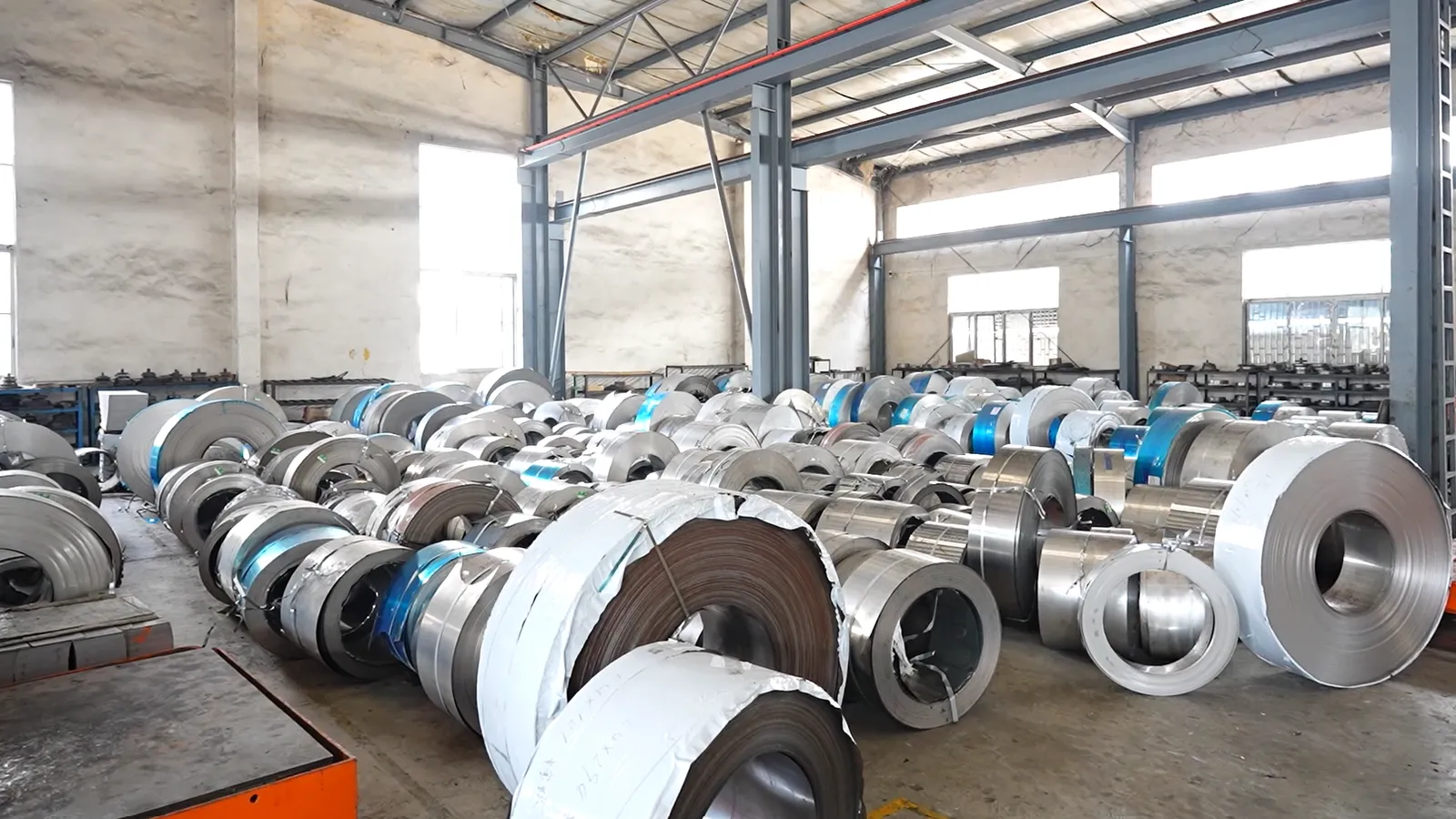
The coil is the first decision, because it is the one you cannot inspect later. Two grades run through most stainless cookware lines: 201 and 304. Both are austenitic grades defined in the same sheet and strip specification, ASTM A240/A240M, and both are used across a full cookware range, though not interchangeably at the top of it. Pressure cookers are normally specified in 304 only: the vessel holds pressure and heat through long cycles. Kettles and open vessels are where 201 commonly appears, sometimes alongside 304 in the same programme.
What separates them in practice is nickel. 201 substitutes manganese for part of the nickel, which lowers material cost and takes some corrosion resistance with it — a cost decision to document part by part and market by market, not a defect in itself: a kettle body and a pressure vessel carry different risk.
The document that matters is the mill certificate for the coil, not the certificate on the website. It reports the chemical composition of one heat, which is the only way to know what you actually bought. Factories that check incoming coil with an XRF gun do the same test faster; ask whether it runs per coil or per delivery, and whether the readings are kept. Our guide to stainless steel cookware grades maps that system.
Food contact is a separate question, and the one most often answered badly. In the EU, Regulation 1935/2004 is a migration framework: it requires that a material transfers no constituents to food in quantities that endanger health or change the food, and it publishes no list of approved stainless grades. In the US, the FDA regulates food contact substances through its notification and food additive framework, and industry practice assesses stainless by alloy series, chromium at 16% or more being the threshold usually cited. China's GB 4806.9 works on specific migration limits. None of the three hands you a grade to stamp on the box.
So the question to put to a supplier offering 201 for a food-contact surface is not "is this legal" but "which migration report covers my market, does it name my model, and who paid for it". 201 versus 304 takes the two side by side on composition and corrosion.
Stages 2 and 3: blanks, draws, and the tolerance stack
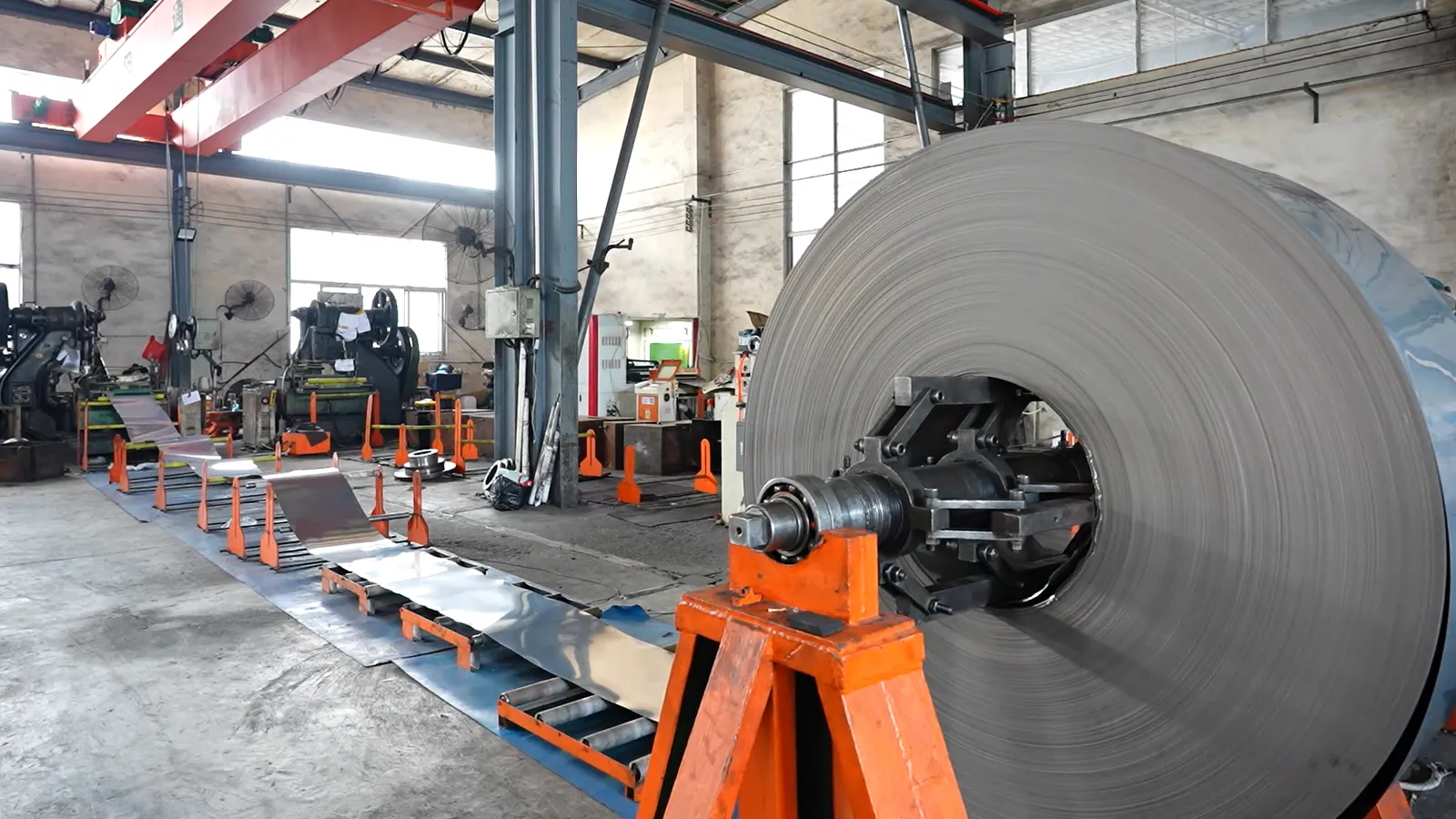
Blanking is the stage buyers skip and shouldn't. Strip comes off the decoiler into a press and a circular blank is punched out of it. The blank diameter is not the finished diameter: it allows for the material that thins as the walls are drawn up, plus a trim allowance that comes off later. Get it wrong and the pot is short at the rim or heavy at the base, and the material is already spent.
Two cost lines live here. The first is nesting: a die cut for one diameter wastes a fixed band of strip on every stroke, and on a 1,200-piece run that band is money. The second is scrap — the skeleton sells at scrap value, so a design demanding an awkward blank size carries a cost the quotation will not itemise.
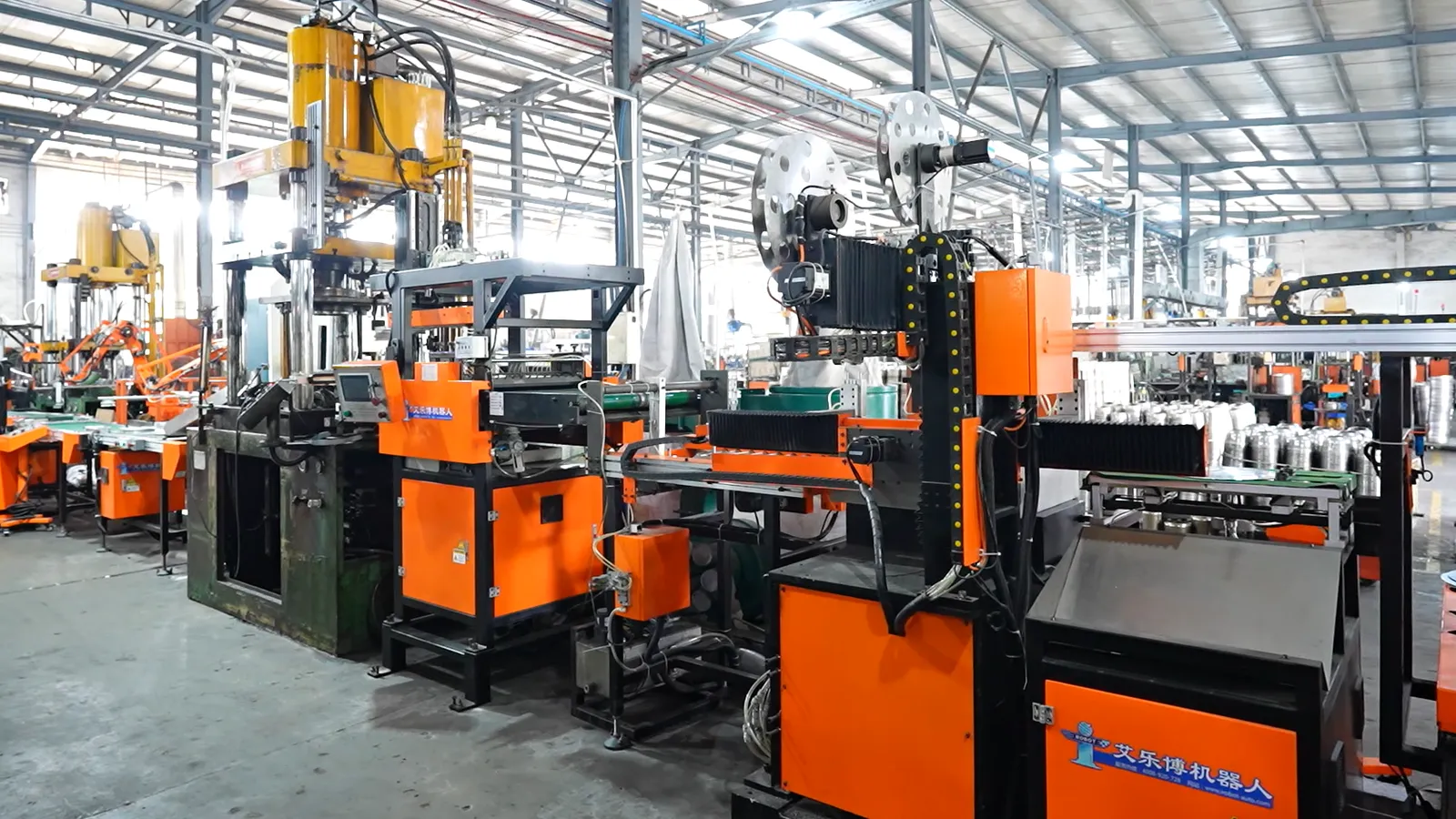
Then the body is drawn. A flat blank is pushed into a die by a punch and comes out as a cup; deep bodies need a second or third pass, and between passes the work-hardened steel may have to be annealed to restore ductility before it can be stretched again. Lubrication has to be right in both directions: too little and galling leaves marks the polishing line must remove; too much and it contaminates the interior.
This is where the tolerance stack is created — the tolerances that accumulate through each operation until they decide whether the lid fits — and why two factories can promise the same capacity and deliver different products. Wall thickness at the rim is thinner than at the base because of how the metal flows. Base flatness is set by the die and by handling after forming, and matters more than most buyers realise: a base that is not flat rocks on an induction hob and loses contact, which reads to the end user as a bad pan rather than an out-of-tolerance one.
What is worth asking: how many draws the body takes, whether an in-process anneal is used, wall thickness at rim, mid-wall and base, and what flatness is checked against. Ask who owns the die and what happens to it if you move suppliers: it is often the most valuable object in the relationship and rarely mentioned in the contract.
That die question is also the first private-label question. An OEM or ODM buyer is not only ordering a body: whose drawing was the die cut to, whose logo goes on the base, whose artwork on the carton, and what happens to the tooling when the programme ends? Ask before the price is agreed; the answer rarely changes afterwards.
Stage 4: the base — where induction compatibility is decided
If one stage explains a price difference between two otherwise identical quotations, it is this one. Stainless steel alone spreads heat poorly, so the base carries a second metal — almost always aluminium, sometimes copper — to move heat sideways. There are three ways to do it.
The base is where two quotations usually diverge. Settle the route before you compare anything else.
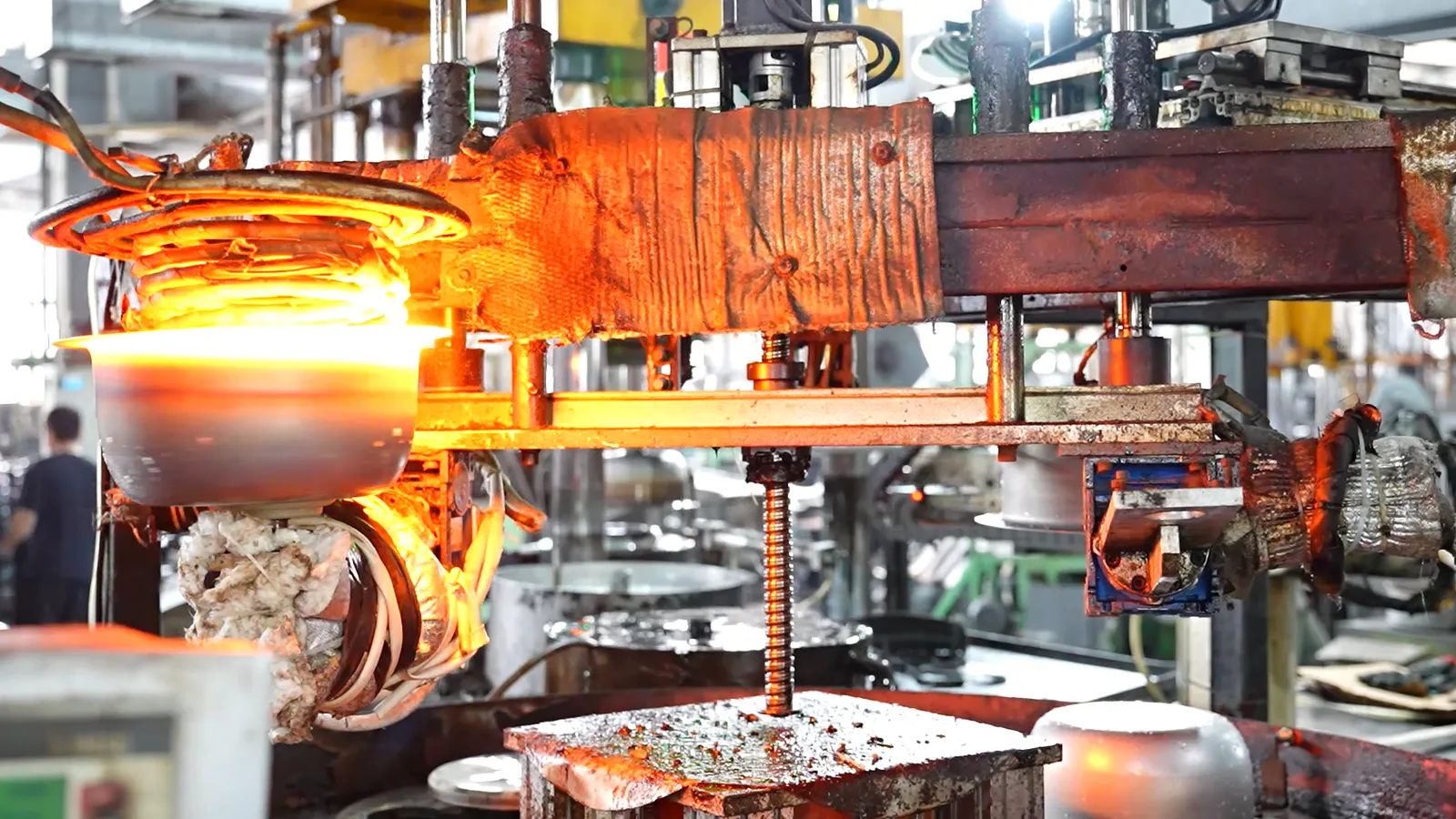
Impact bonding puts an aluminium disc under the pot bottom and fuses the two under pressure while an induction coil heats the assembly. The bond forms in the solid state: no filler metal, no flux. The body stays single-ply and the base carries the extra metal, which is why an impact-bonded pan is thick and flat at the bottom and comparatively light in the wall. The outer skin is a magnetic stainless grade, which is what makes the pan work on induction at all.
Brazing places a filler alloy between the disc and the bottom and runs the assembly through a furnace cycle. It is a joining process with a filler metal, and leaves a thin joint line at the base edge — a useful inspection point, because a starved or uneven fillet tells you the furnace profile drifted. It is cheaper at low volume and less tolerant of thermal shock.
Clad sheet solves the problem upstream: the mill bonds stainless, aluminium and stainless into one sheet and the body is drawn from it, so the core runs continuously from base to wall. It heats more evenly up the sides — which matters for a sauté pan, barely for a stock pot — and costs more.
Potobelo's own multi-layer base is impact bonded, one of the core processes run in house, and specified to work on gas, induction and electric ceramic hobs. That is one factory's route, not a claim that it suits every product: a stock pot may justify a clad build, a value kettle body a brazed disc.
What is worth asking: which route the quotation is built on, the base thickness in millimetres, how induction compatibility is tested and on what hob, and whether flatness is re-checked after thermal cycling — the property most worth testing rather than assuming. The consumer-facing version of the question is in induction-compatible cookware.
Stages 5 and 6: trimming, rim rolling, spinning, and attaching handles and lids
After forming, the body is trimmed to final height on a lathe or CNC trimmer, removing the wavy, work-hardened edge the draw left behind. Then the rim is either rolled — the cut edge folded into a smooth bead — or left cut. Rolled is what you want on anything a hand will lift: it closes the sharp edge, stiffens the rim and seats the lid. A roll with a gap is a defect, and one a buyer can find without instruments.
Not every body is drawn. Kettle bodies and bellied shapes are often spun: a disc clamped against a mandrel and worked by rollers until it takes the profile — different tooling, different labour, a different minimum quantity, which is why a kettle programme and a saucepan programme rarely share a price logic even on the same grade.
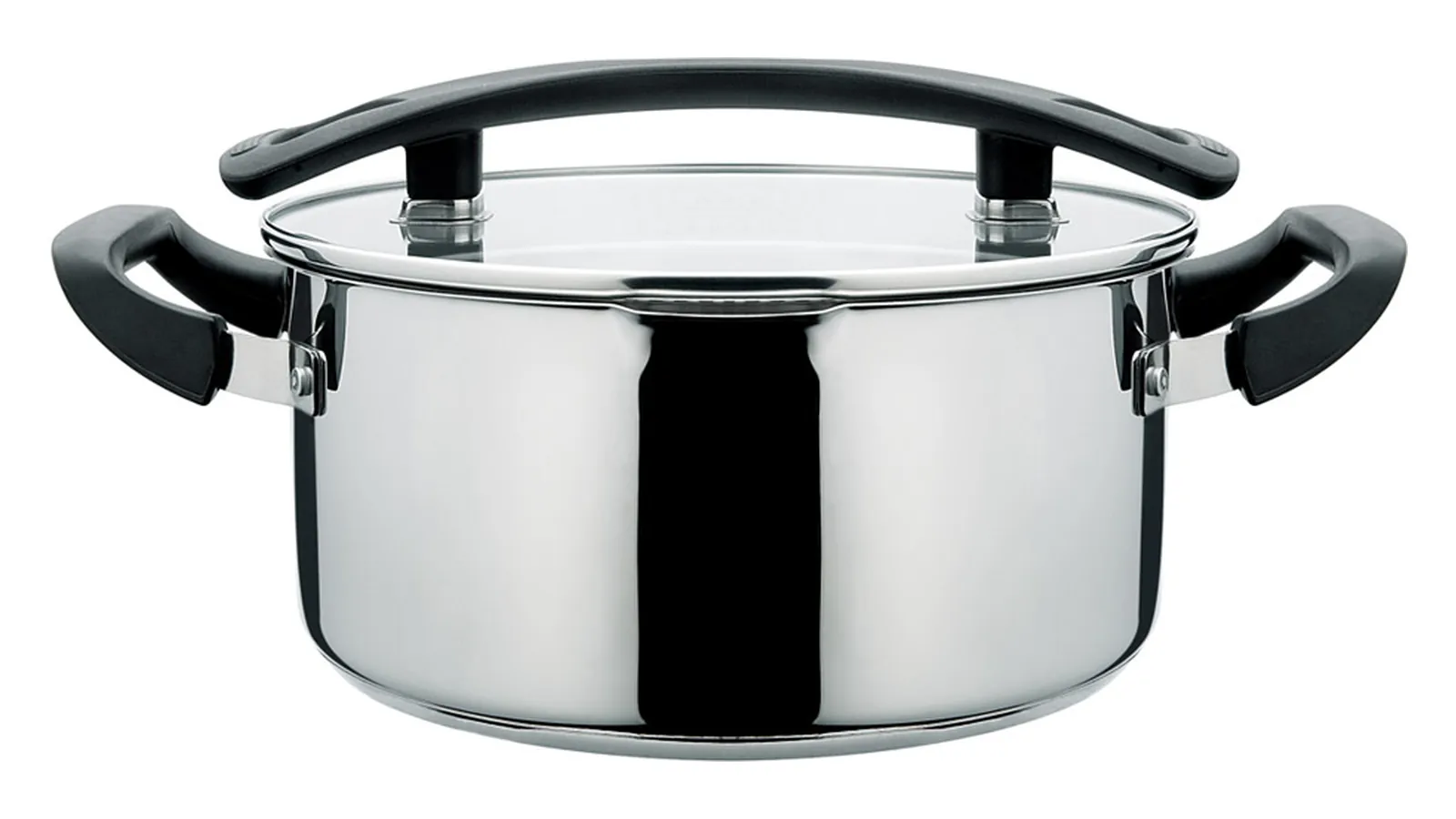
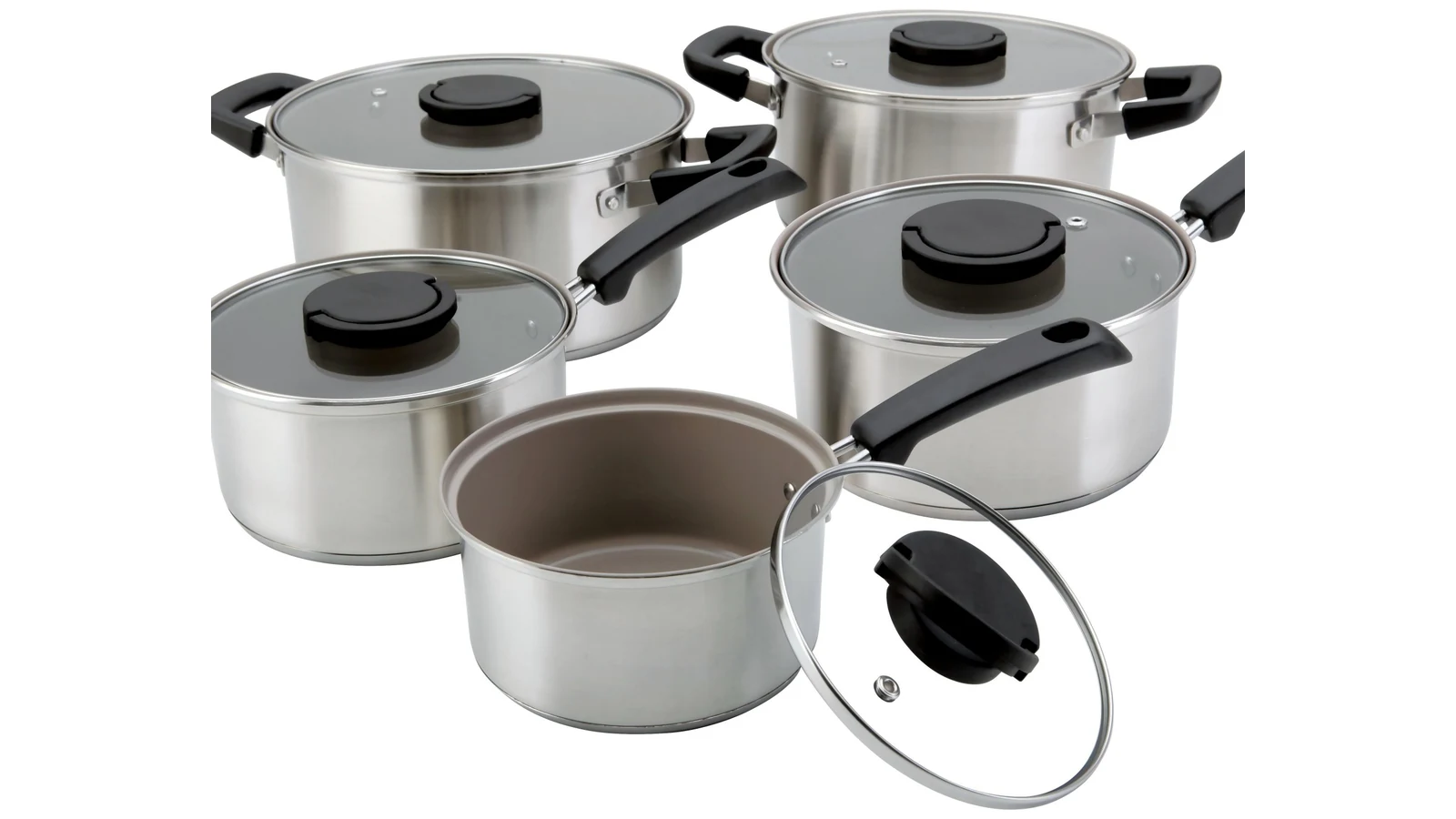
Attaching handles, spouts and lid knobs is where three joining methods get confused. Brazing uses a filler alloy that melts below the parent metal, applied with local heat — the usual method for handle lugs and kettle spouts, and not welding. Welding fuses the parent metal itself, used where a fully stainless joint is wanted. Riveting remains the most common handle attachment and the most repairable. Glass lids are a subassembly: disc, rim, gasket, press-fitted and checked.
Two things here are often bought in rather than made: glass lids, and handles or printed decoration. A supplier that assembles and packs but subcontracts those is not doing anything wrong, but your lead time becomes two lead times. Ask which stages are in house before comparing delivery dates.
What is worth asking: rolled or cut rim, which method attaches the handle and what test it must pass, whether the lid is matched to the body, and whether spare lids and handles are sold separately — a customer who loses a knob judges the brand by whether a replacement exists.
Stage 7: polishing — two lines, two cost structures
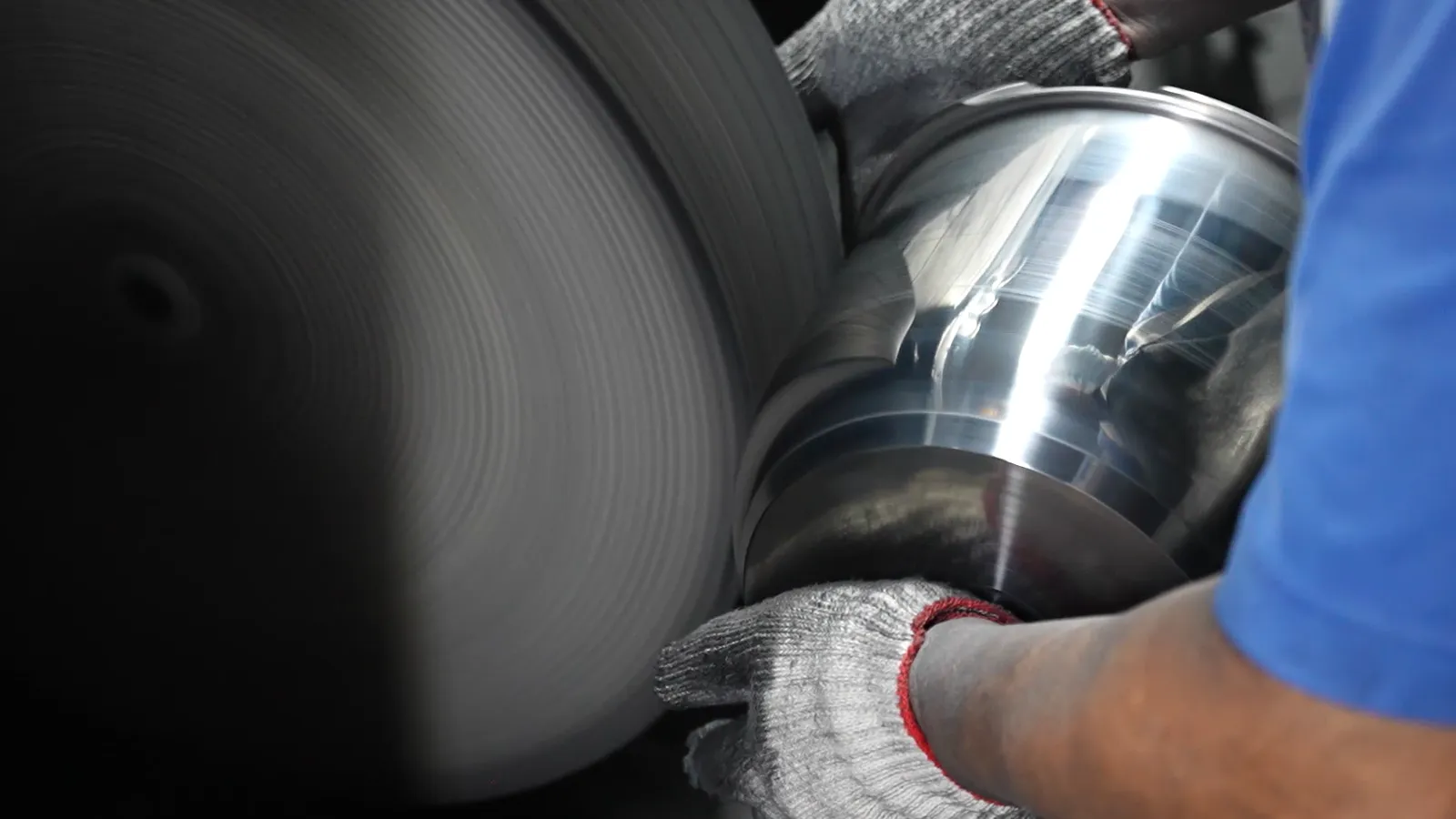
Polishing looks like one operation and is really two. Mirror finishing is progressive: the surface is worked through a sequence of abrasive steps, each removing the scratches of the last, until the reflection is clean. Every pass costs labour and consumable, and every pass can leave a swirl the inspector will catch. Satin or brushed finishing lays a directional grain that hides small marks, needs fewer passes and is far more forgiving of handling between stations.
That is why the same pot in two finishes can differ visibly in price with no material change, and why mirror is a promise about the whole line: it shows every mark made after it, so the packing bench has to treat the piece differently. Interior and exterior finishes are often specified separately.
Belt polishing is usually done by hand against a contact drum — a skilled manual operation whose consistency depends on the operator as much as the machine.
What is worth asking: which finish is specified on which surface, how many passes the mirror finish takes, who inspects under what lighting, and what happens to a piece that fails — reworked, downgraded or scrapped. That answer tells you how much of your order will arrive looking like the sample.
Stage 8: inspection, and the sample you actually approved
Inspection is not a final gate. On a line that runs properly it happens after each operation: wall thickness at several points, height and rim roundness, base flatness, the surface checked under directional light. Final inspection assembles records rather than discovering the truth.
Two artefacts matter more than any certificate. The first is the first-off: the first piece produced after a die change, measured against the drawing and signed before the run continues. If a factory cannot produce a first-off report, the run was never anchored to a dimension. The second is the reference sample — the signed, dated piece kept on the line and compared against production. Most "the sample was perfect and the bulk was not" complaints are not process failures; they are signing failures: nobody agreed in writing which of three samples was the standard.
Sampling inspection is usually agreed as an AQL level in the purchase order — shorthand for how many defects a lot may contain before rejection. The classification matters more than the number: which defects are critical, major and minor, and who decides. A wobbly base and a faint polish swirl are not the same problem.
Testing is a separate layer, driven by the destination market: migration testing under the relevant regime, a salt spray test if you specify one — ASTM B117 is the practice buyers name — and any retailer requirement. Paper comes in two shapes buyers conflate: a management-system certificate such as ISO 9001 describes how the plant controls its process; a test report describes your product, and only if it names your model.
What is worth asking: who measures, what is written down, how long records are kept, whether a copy comes with each lot, and whether you may send your own inspector. If you are still narrowing the list, how to choose a stainless steel cookware manufacturer covers this earlier.
Stage 9: packing and loading — where the last cost lands
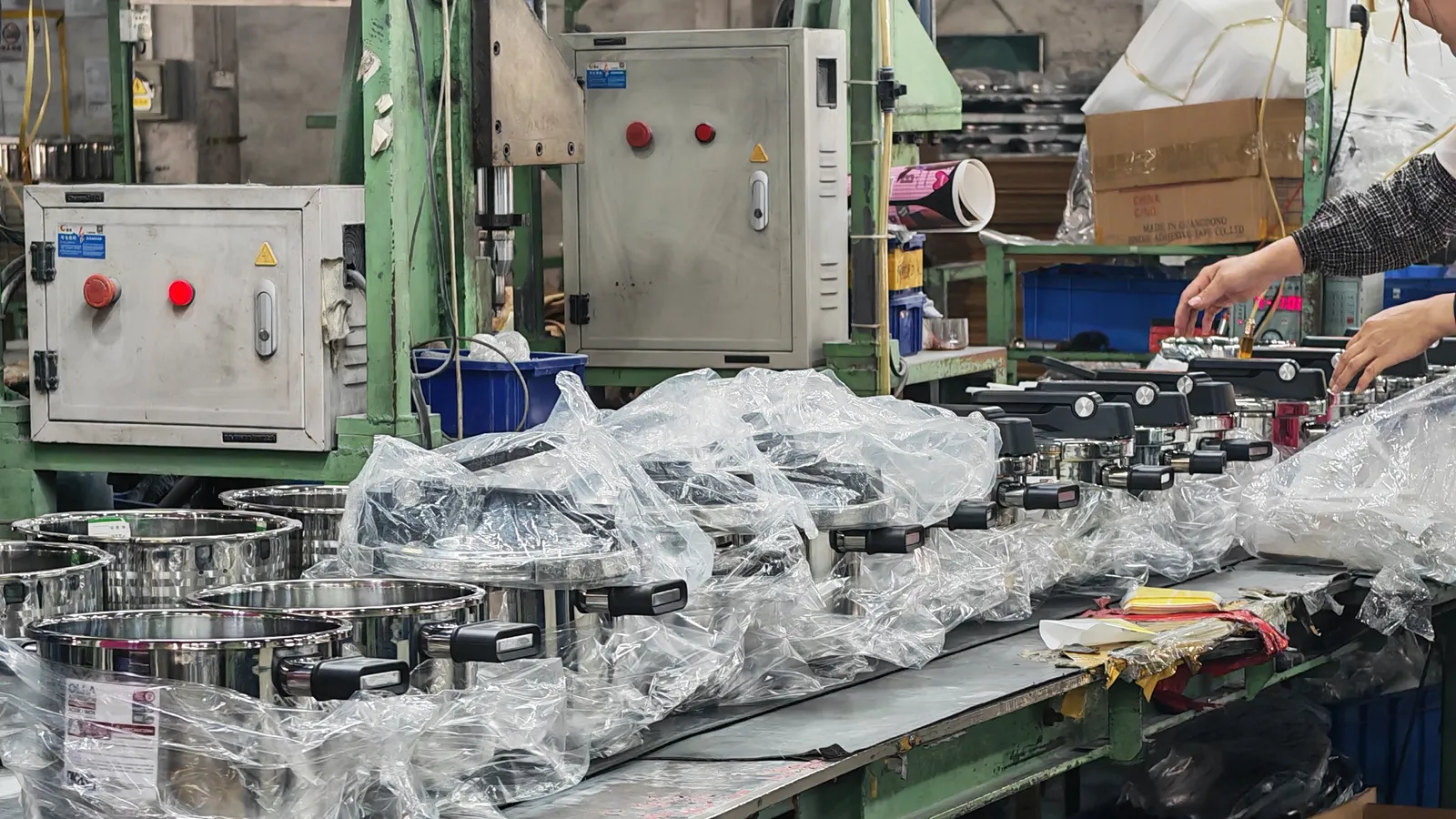
Packing is a process stage, not an afterthought, and the last one that changes what the goods cost. Stainless on stainless scratches in transit, so every piece needs an inner layer: a poly bag, tissue, a foam interleaf between nested pieces, or a moulded insert. Skimping here does not show in the unit price you compare; it shows in landed cost and in the claim rate three months later.
The carton is a specification like any other: board grade, internal dimensions, units per carton, print, and whether it must survive a drop test for your retail customer. Carton dimensions then decide the container fill rate — a carton 10 mm too wide can cost a row per layer, and a row across a 40-foot container is a freight number. Mixed programmes add models, carton sizes and one loading plan; ask for the plan as a drawing. Our notes on retail-ready cookware packaging go further.
What is worth asking: the carton specification and whether it has been drop-tested, units per master carton, the loading plan per container, who bears the cost of transit damage, and whether the packing line photographs the loaded container with a carton count. That photograph is the cheapest insurance in the chain.
The RFQ sheet: what to send with your first enquiry
The point of these questions is comparability, not interrogation. Two quotations only compete if they are priced against the same specification, and the specification is usually incomplete in exactly the places where the money is.
Ask | Stage it tests | What it changes in the quote |
|---|---|---|
Grade per part, with mill certificate per coil lot | 1 | Material cost; whether 201 is substituted silently |
Blank diameter, nesting and scrap treatment | 2 | Material yield, the quietest cost line in the quote |
Number of draws and whether an in-process anneal is used | 3 | Tooling, cycle, and whether thin walls will crack |
Base route, base thickness in millimetres, induction test method | 4 | The largest price step between two suppliers |
Rolled or cut rim; wall thickness at rim, mid-wall, base | 5 | Lid fit and perceived quality at unboxing |
Handle attachment method and the test it must pass | 6 | Liability exposure and the spare-part policy |
Finish on interior and exterior, plus pass count | 7 | Labour hours and the rework rate you inherit |
AQL level, defect classification, who inspects | 8 | Who pays for a reject, and how many to expect |
Carton specification, drop test, units per master carton | 9 | Packing cost, fill rate, damage claims |
Whose drawing the die was cut to; logo, artwork and tooling ownership | OEM / private label | Whether you can move the programme later |
MOQ per model, and how tooling is amortised | All | Whether a small first order is priced as a sample or a loss |
Two answers do more work than the rest. The base route tells you which product you are actually buying; the MOQ structure tells you whether the factory wants a relationship or a transaction — the arithmetic behind a higher minimum is set out in MOQ economics. Everything else confirms or contradicts those two.
What the answers tell you
The stage list is the same in every factory that does all of it. What differs is which stages a factory can show you, in order, with a record attached. A plant that names its base route without hedging, produces a first-off report unasked and hands over loading photographs as a matter of course is describing how it will behave on your third order.
That is the thing worth buying. Certificates can be borrowed for a meeting and a sample can be polished by hand; a line that measures, records and keeps the records is much harder to fake, and the only version of quality that survives a reorder.
Potobelo runs most of this chain in house — incoming coil, forming, impact-bonded bases, polishing, assembly and packing — in a 66,000 m² plant shipping 26,000 pieces a day. If you would rather test the chain than read about it, start with a specification conversation.
Common questions
How long does stainless steel cookware manufacturing take?
Sampling and mass production are separate clocks and should be quoted separately. A pre-production sample typically runs 7–10 days from an agreed specification; mass production runs 30–50 working days from confirmation, and that clock starts when the approved sample, the artwork and the deposit are all in hand. Custom tooling adds time before either clock starts, because a new die has to be cut, tried and measured on a first-off piece.
What is the difference between an impact-bonded base and a brazed base?
An impact-bonded base joins an aluminium disc to the pot bottom under pressure while an induction coil heats the assembly, so the bond forms in the solid state with no filler metal. A brazed base places a filler alloy between the disc and the bottom and runs the piece through a furnace, leaving a thin joint line visible at the base edge. Mechanically, one has nothing to reflow and the other can be inspected at that edge. Which holds flatness better across thermal cycles is a question for a test report, not for a supplier's assertion.
Is 201 stainless steel acceptable for cookware?
It depends on the market and the part. 201 is an austenitic grade with manganese replacing part of the nickel, which makes it cheaper and slightly less corrosion resistant than 304. In practice it has no established food-contact recognition in several major markets and is often shipped without a migration test report for the destination, so a buyer specifying it for a food-contact surface should ask which report covers that market and who paid for it. For pressure vessels, 304 is the usual specification.
How can I verify that a factory actually performed the stages it claims?
Ask for the paper trail rather than a factory tour video. A mill certificate per coil lot, a first-off dimensional report signed before the run continues, in-process thickness and flatness readings, a final inspection report against an agreed sampling level, and loading photographs with carton counts are all producible by any factory that runs the process properly. The tell is not whether the documents exist but whether they are offered before you ask and whether the numbers match the specification you approved.
Written by
Potobelo Editorial Team
Sourcing and engineering staff at Potobelo, a stainless steel cookware brand built on 30 years of Zoombo manufacturing in Guangdong, China. We write from inside the plant that makes the product, not from reviewing it.