
Is Stainless Steel a Ferrous or Non-Ferrous Metal?
Stainless steel is a ferrous alloy, and a magnet will not tell you so. This is what the distinction actually changes for a buyer: which words belong on a purchase order, what an EN 10204 3.1 certificate proves and does not, why a hand-held XRF gun answers the grade question that a magnet cannot, and which parts of a pan are legitimately not iron at all.
 Potobelo Editorial Team16 min read
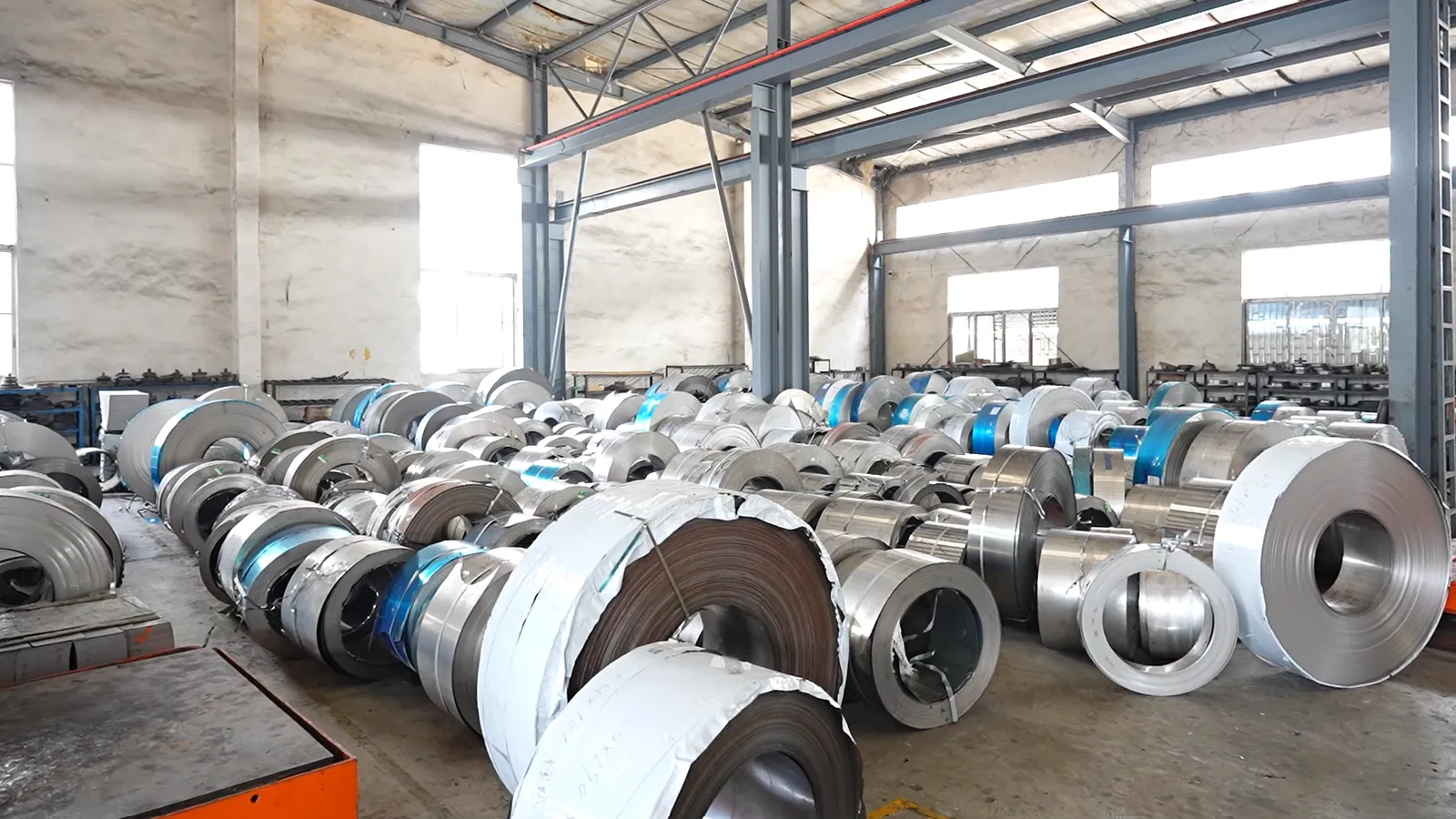
The answer is yes, and the confusion is not silly
Stainless steel is a ferrous metal. Not ferrous in some strained technical sense that nobody outside a metallurgy department uses — ferrous in the only sense the word has: iron is its base element. A 304 pan body that reads non-magnetic across the wall and a 430 induction cap that a magnet grabs are both iron-based alloys from the same family.
The confusion is understandable, which is why it survives. In a scrap yard, "ferrous" means the pile a magnet picks up, and stainless is sorted and priced apart from it. On a shop floor, "non-magnetic" becomes shorthand for "good stainless". Neither habit is metallurgy: one is a sorting convention, the other a rough grade hint, and both get carried into purchase orders where they turn into claims that cannot be tested.
Ferrous tells you what the metal is made of. Magnetic tells you how it behaves in a field. A specification that uses one word to mean the other cannot be accepted or rejected.
For a cookware buyer the distinction is not academic, because a pan is one purchase order and one customs line but not one material. The body is iron-based. The disc under the base is usually aluminium. The cap under the disc is iron-based again, and magnetic. The handle grip may be phenolic, wood or a zinc alloy. Get the words right and the specification becomes checkable; get them wrong and you have written a document that a supplier can satisfy while shipping something else.
What the word means in the standard that settles it
Two definitions do most of the work, and both come from the terminology standard the steel trade uses, ASTM A941. Steel is defined there as a material that conforms to a specification requiring, by mass percent, more iron than any other element. Stainless steel is defined as a steel requiring a minimum chromium content of 10.5 percent or more and a maximum carbon content below 1.20 percent.
Read those two sentences together and the question closes. Stainless steel is a steel, and a steel is defined by iron being its principal element. The chromium is what makes it stainless: at 10.5 percent and above it forms the self-repairing chromium-oxide film that keeps the surface passive, and that oxide layer — not the iron beneath it — is what the chromium contributes. None of that makes the metal non-ferrous. There is no grade of stainless steel in which iron stops being the base element; if iron were not the base, it would not be steel.
Everything else in this article follows from that, including the four terms that get mixed up in specifications:
Term | The question it answers | The question it does not answer |
|---|---|---|
Ferrous / non-ferrous | What is this part made of? Is iron the base element, or is another metal the base? | Whether a magnet will stick to it |
Magnetic / non-magnetic | How does this part respond to a magnetic field, in this condition? | What it is made of |
Austenitic / ferritic / martensitic | Which crystal structure does this steel have at room temperature? | Whether it is iron-based — all three are |
304 / 201 / 430 | Which grade within that structure, with which chemistry? | Whether the part you were shipped is that grade |
The last row is the one buyers actually need, and it is the reason the other three matter: a grade is a chemical specification, and chemistry is what a test can confirm. Words like "ferrous" and "magnetic" describe a category and a behaviour, and neither one can confirm anything about a specific carton.
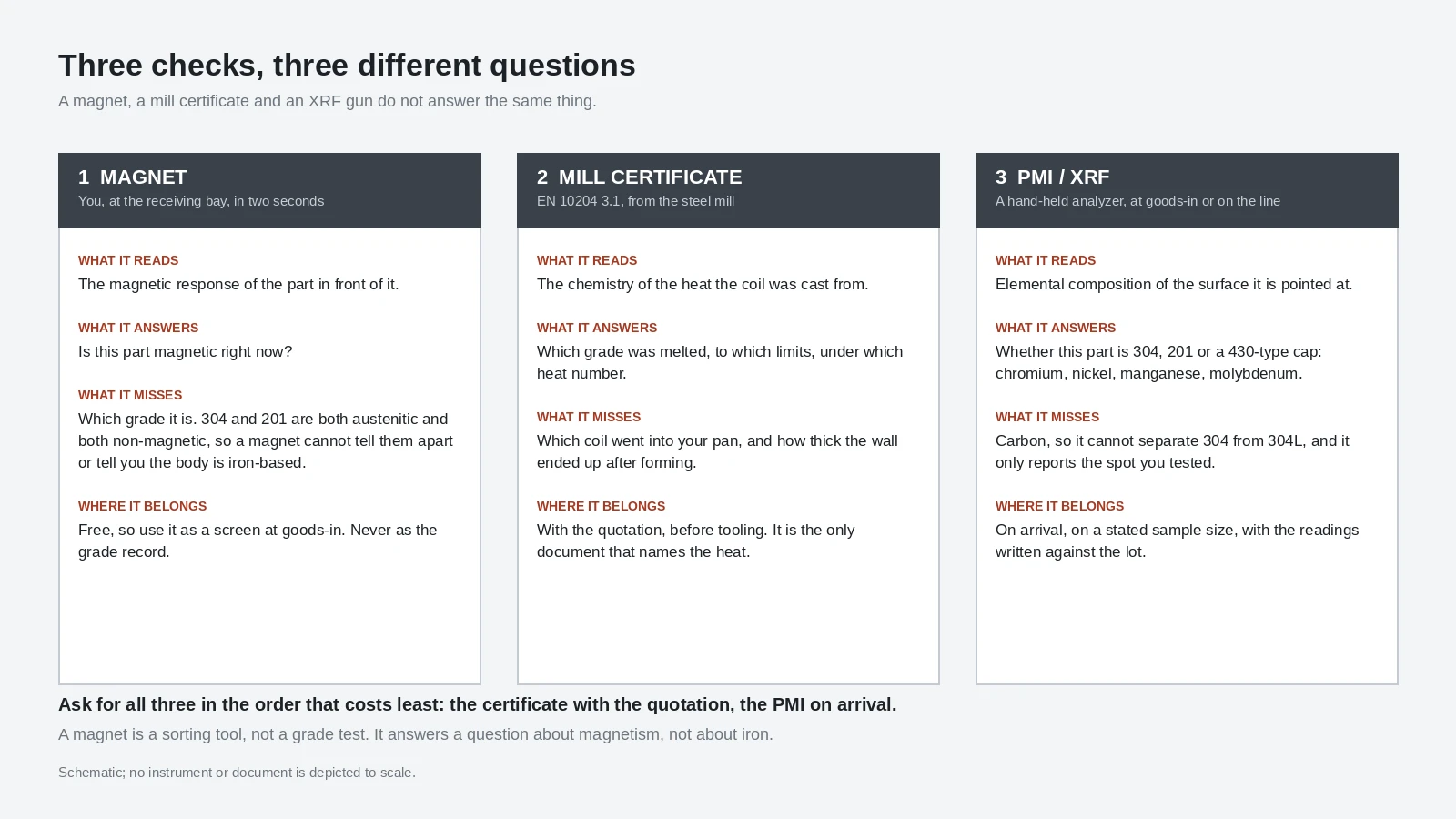
What a magnet reads, and what it does not
A magnet reads one property: whether the alloy in front of it is ferromagnetic in the condition it is in. That divides stainless steels along structural lines, not composition lines.
The austenitic family is the one that reads as non-magnetic: 304 and 316 in the 300 series, and the 201 grade of the 200 series that appears in a lot of value-priced cookware. The British Stainless Steel Association describes austenitic grades as "non-magnetic" in the sense that their response to a hand-held magnet is negligible, with relative permeability in the range of 1.003 to 1.05 in the fully annealed condition. Ferritic grades such as 430, and martensitic grades such as 410, sit far above that range and hold a magnet hard.
So a magnet separates austenitic from ferritic. It does not separate ferrous from non-ferrous, because every grade in both groups is ferrous.
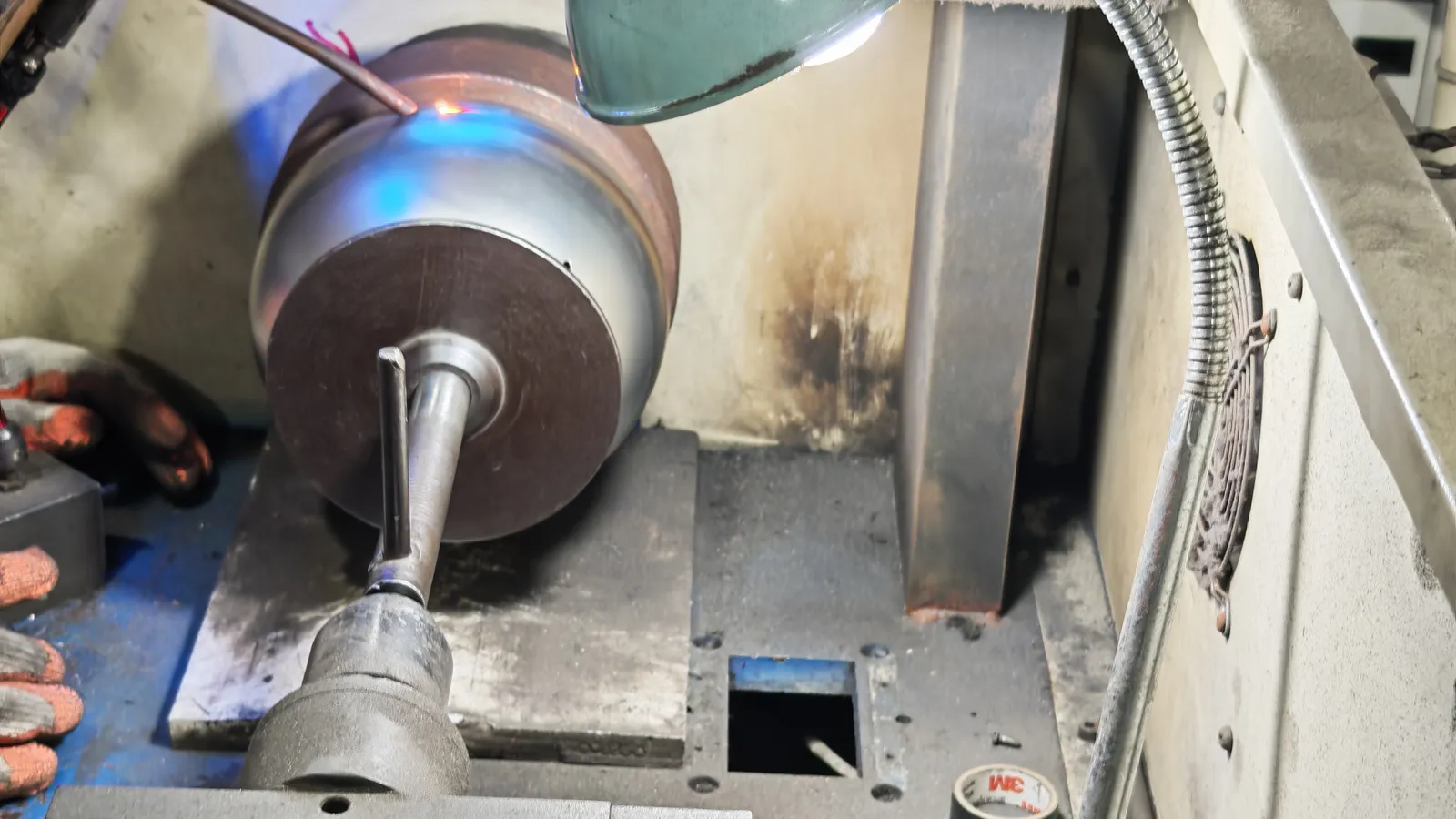
There is a second trap that matters specifically in cookware, and it is a good one to know before a QC argument starts. Deep drawing and spinning strain the steel, and strain can transform a little of the austenite into martensite at the points of highest deformation. The result is a 304 pan body that reads non-magnetic across the wall and faintly magnetic at a drawn corner or a spun rim. The magnet has not found a different alloy. It has found work hardening.
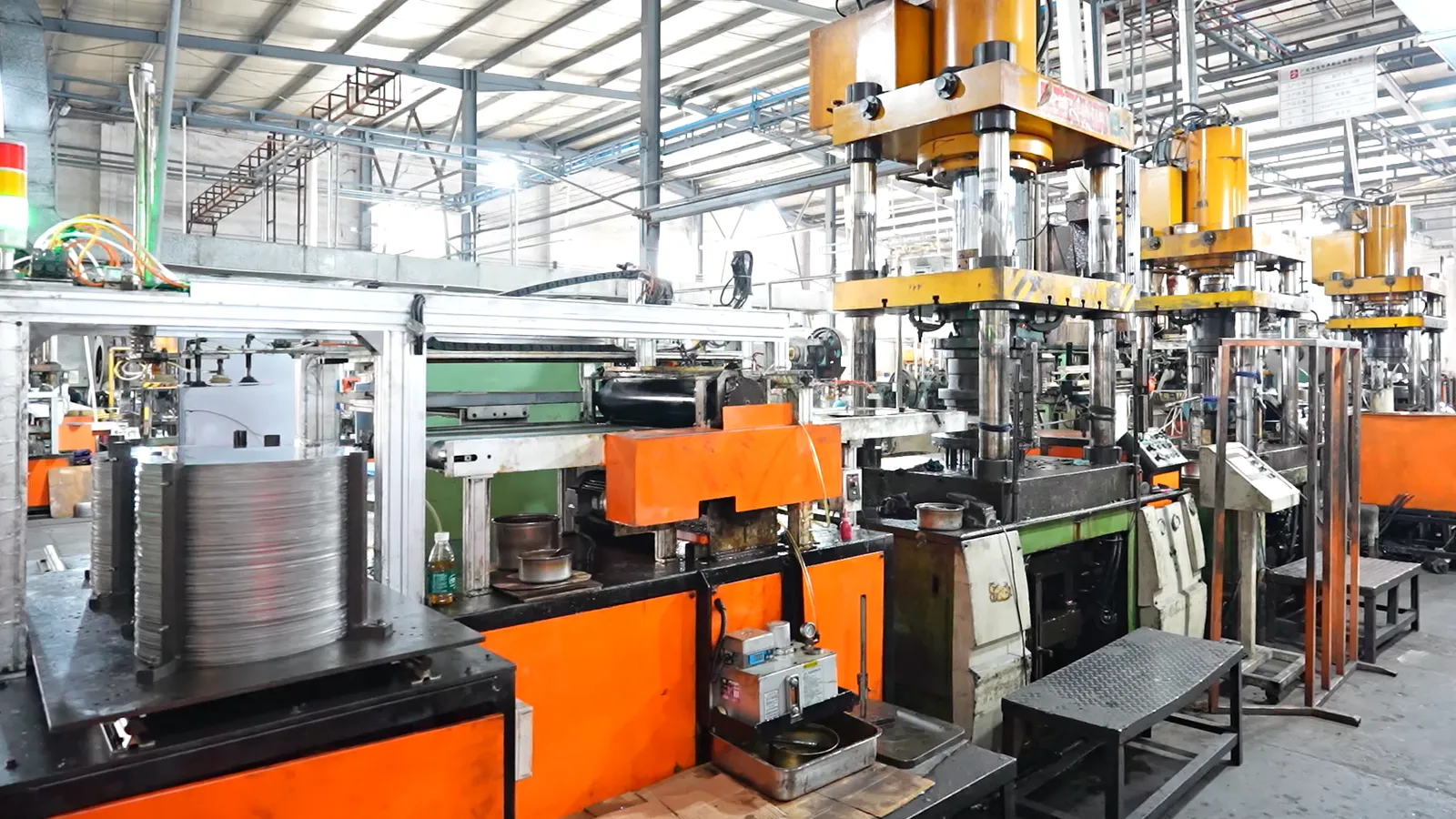
The draw is where that strain enters a 304 body. A magnet on the finished wall is reading the forming history of the part, not the grade it was bought as.
Where magnetic response is genuinely useful, it is useful as a screen:
- Checking that a disc base has a ferritic cap at all. A magnet on the outside of the base of an impact-bonded pan will hold if there is a 430-type cap; it will not hold on a bare stainless base. What it cannot tell you is cap thickness or how much of the base the cap covers, which is what actually decides induction behaviour. What induction hobs ask of a pan is the article for that side of the question.
- Sorting mixed scrap or returned goods into austenitic and ferritic streams before anyone spends money on analysis.
- Spotting an obvious substitution — a body that grabs a magnet when the specification says 304 warrants a PMI check, not a rejection letter.
Where it misleads is anywhere it is asked to stand in for a grade certificate. And it misleads in the expensive direction as often as the cheap one: 201 and 304 are both austenitic and both shrug off a magnet, so the test that "passes" a genuine 304 body also passes a 201 body sold at 304 prices.
Three claims that get read as the wrong kind of claim
Most ferrous confusion in sourcing is not a chemistry problem. It is a sentence that was true about one part being applied to the whole article.
A magnet used as a grade test. The buyer's inspector checks the body, the magnet does not stick, the lot is signed off as "non-magnetic stainless — as specified". That sentence is compatible with 304, with 201, with 316 and with a 304L body, and it excludes nothing you were trying to exclude. If the grade matters, it has to be tested as chemistry, which is the next two sections.
"Non-ferrous" language about a component, read as a statement about the body. This is the most common one, and it is usually not dishonest. A factory describing a composite base will say the disc is aluminium — non-ferrous, correctly. A coating supplier will say there is no iron in the lining. A handle supplier will say the grip is a non-ferrous die-casting. Each statement is true about its part. The failure happens when it is copied onto a specification sheet, a product description or a customs document as a property of the pan, because now the document says a stainless steel pot is non-ferrous, and the next person to read it has to decide whether the writer meant the disc or the body.
Components that genuinely are not ferrous. These exist in almost every cookware item, and knowing which ones are allowed to be is what makes a specification unambiguous:
- The aluminium disc core under an impact-bonded or encapsulated base — the single most common non-ferrous metal in a stainless pan, and the reason the word turns up at all.
- Zinc-alloy handle castings on some models, and phenolic or wood grips on others — non-ferrous or non-metal, and a design decision rather than a defect.
- Glass lids, knobs and gaskets — not metal, so the ferrous question does not apply to them.
- Non-stick coatings, where a pan has one — a polymer layer, not a metal.
- Brass or copper fittings, on the models that use them for a spout, a whistle or a decorative band.
None of that changes what the body is. It does mean that "is this pan ferrous" has no useful answer until you say which part, which is exactly why the specification should name the part.
A pan is not one metal
Once you accept that the article is an assembly, the ferrous question stops being a riddle and becomes a table. The construction below is the common one for a stainless saucepan with a disc base; how that base is bonded is a separate decision from what it is made of.
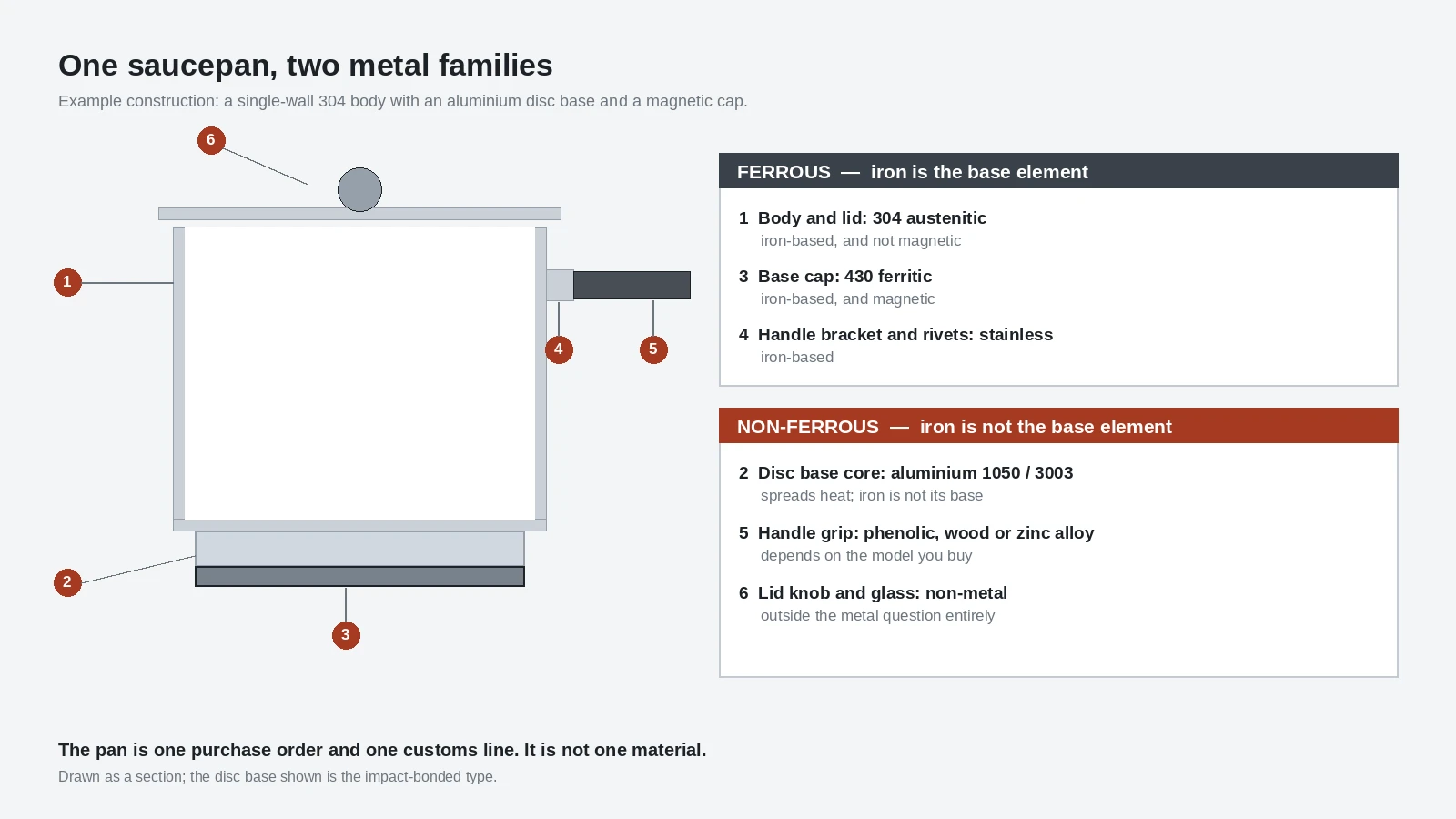
Part | Typical material | Iron-based? | Why the buyer cares |
|---|---|---|---|
Body and lid | 304 or 201 austenitic stainless | Yes | Food-contact surface; the grade claim lives here |
Base core | Aluminium 1050 or 3003 | No | Spreads heat across the base; source of the "non-ferrous" wording |
Induction cap | 430-type ferritic stainless | Yes, and magnetic | What the hob couples to |
Handle bracket, rivets | Stainless | Yes | Load path at the joint; a weak point in thin-wall pans |
Handle grip | Phenolic, wood or zinc alloy | No | Heat insulation; a design choice |
Lid knob, glass | Phenolic, tempered glass | Not metal | Outside the question |
Two practical readings follow. First, an "all stainless" claim and a "non-ferrous base" claim can both be true of the same pan, because they are about different parts — so a specification that says only one of them has left the other part undefined. Second, the aluminium core is a commercial fact, not a compromise: it is there because stainless steel is a poor lateral heat conductor, and the disc is what stops the base from having a hot ring under the burner.
If you are buying an all-metal pan with no aluminium anywhere, that is a different product with a different price. The specification has to say so, because nothing in the word "stainless" excludes an aluminium core.
What the mill certificate proves, and what it does not
The document that carries the ferrous fact in writing is the mill certificate. For stainless steel bought from a mill, the usual document is an EN 10204 3.1 inspection certificate, and the BSSA's summary of EN 10204 certificate types describes it as a statement of compliance with the order carrying the results of specific inspection — issued and signed by the manufacturer's representative, who must be independent of the manufacturing department.
What arrives with that signature is the heat analysis: the chemical composition of the cast the coil came from, against a named grade and product standard, under a heat number. That is what makes the ferrous claim checkable. "304" on a quotation is a word; "304, with the heat number and the chemistry against the grade limits" on a certificate is a record.
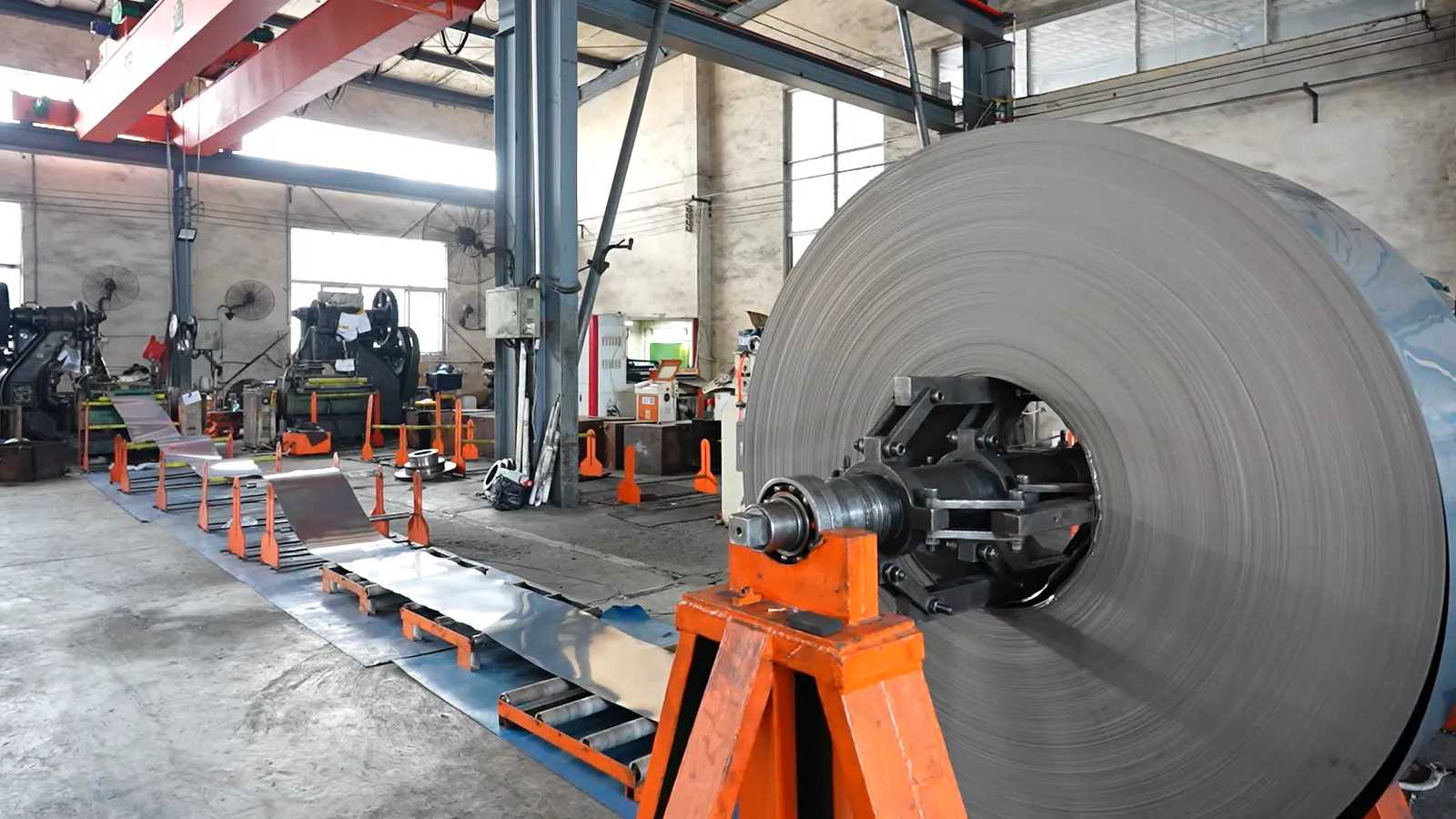
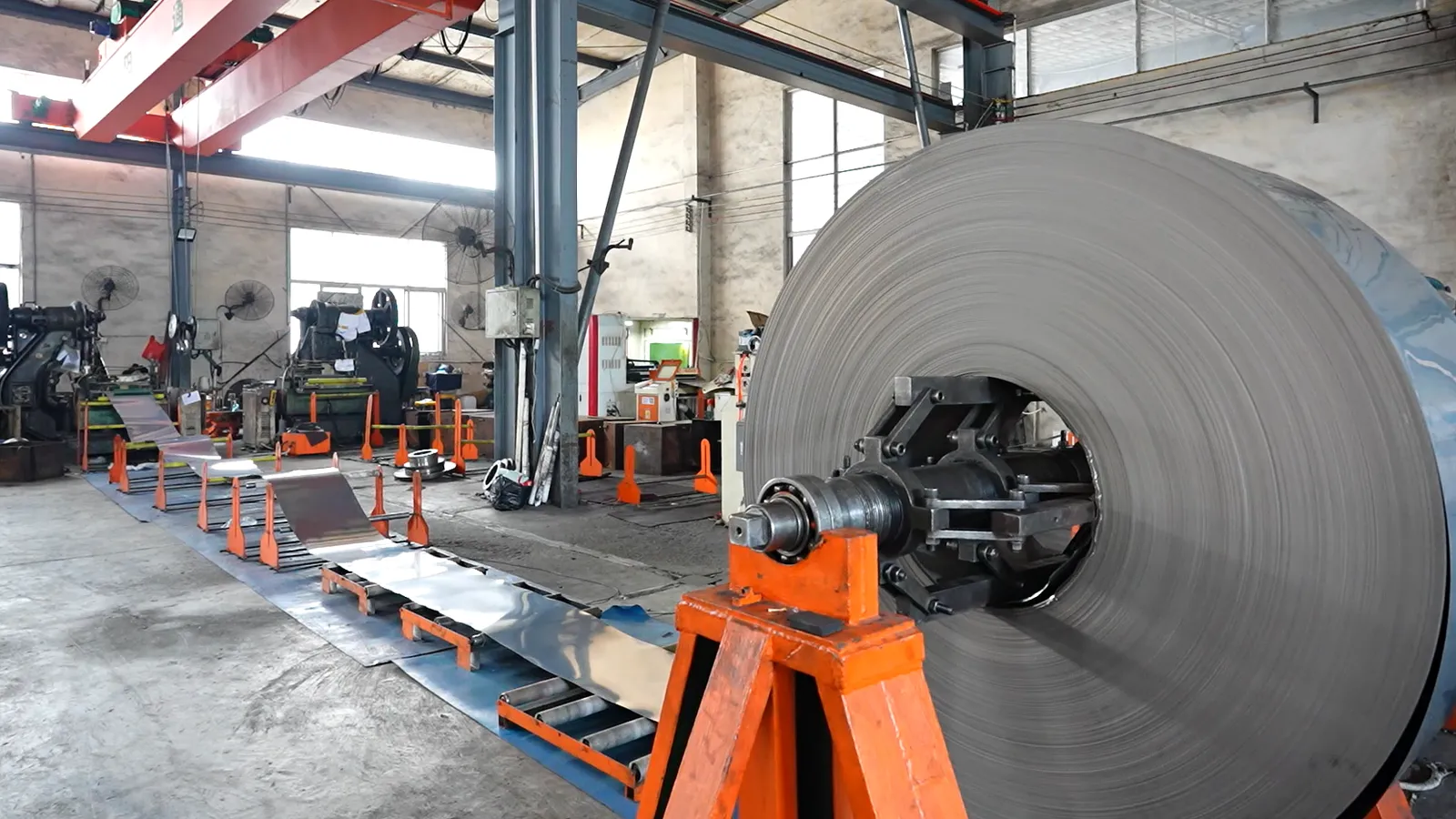
The strip on the decoiler is the last point in the process where the heat number and the metal are physically together. After forming, the coil number exists only in whatever the factory wrote down.
Three limits are worth stating plainly, because they are where buyers over-claim:
- It certifies the coil, not the pan. A 3.1 certificate says what the mill melted. It does not say that this coil went into your run. That link is lot traceability — heat number recorded against the production lot and the carton — and it is a factory-side control, not a mill document.
- It says nothing about the wall. Chemistry tolerance is not thickness tolerance. A certified 304 coil can be drawn to a wall thinner than your drawing specifies, and the certificate will still be perfectly valid.
- It covers the parts the mill supplied. A composite base has an aluminium disc, a ferritic cap and a body from three different supply chains. The certificate set for a pan is a stack of documents, not one, and a supplier who sends one page for a three-metal article has answered a third of the question.
PMI: the check that tests the part, not the paperwork
Positive material identification is the incoming test that answers the question a magnet cannot: what is this part made of? A hand-held XRF analyzer, the instrument class used for PMI, reads elemental composition non-destructively on the production floor or at goods-in, in seconds per reading.
For cookware it does three useful things. It separates 201 from 304, because the difference between those grades is largely nickel replaced by manganese, and both of those elements read clearly. It separates either of them from a 430-type cap, since chromium and the absence of nickel tell the two families apart. And it turns "the supplier says it is 304" into a number written against a lot.
Its limits are just as specific. Hand-held XRF does not read carbon, so it will not distinguish 304 from 304L, which matters if a customer specification names the low-carbon variant. It reports only the spot you test, so a coated, painted or heavily contaminated surface gives a reading about the contamination. It needs a clean, bare area, and it needs the instrument verified against a certified reference before the readings mean anything.
The protocol that holds up is short: agree the sample size and the test locations before the first shipment, take the readings on bare metal, write each result against the lot and the heat number, and keep the printout with the certificate. Whether you buy the analyzer or use a testing service is a volume decision. Whether the readings are recorded is not.
Where the line changes a purchase order
Four places, and only one of them is about metallurgy.
Customs classification follows the article and its metal. The Harmonized System separates iron and steel articles from aluminium articles into different chapters, which is why the body metal is a classification input and not a marketing one — the EU's Common Customs Tariff is organised the same way. A stainless pan and an aluminium pan with the same function do not sit in the same place, and a description that muddles the body material creates a classification question your broker has to resolve rather than a saving.
Scrap and end-of-life value. Stainless is bought and sold as its own grade stream, priced on nickel and chromium content rather than as general ferrous scrap. That convention is where most of the everyday confusion started, and it is worth knowing because a market that recycles cookware will value the grade, not the word.
Induction claims. The ferritic cap is a ferrous component doing a specific job. A specification that says "induction ready" without naming the cap grade, its thickness and its coverage is a claim about a category, and the category is broad enough to include pans that heat badly.
Food contact. This one is a separate question that the ferrous distinction does not settle. Neither the EU framework nor the US route publishes a list of approved stainless grades; the EU regime governs migration behaviour and the FDA route assesses stainless by series and chromium content, while China's GB 4806.9 works on specific release limits. In practice, that means "food grade" is a claim to be evidenced with migration data for the grades actually in the product, not a status the word confers. What makes stainless steel cookware food grade is the article for that, and the grade families themselves are covered in the grades guide.
The document that ties all four together is the purchase order, which is why the specification section below is the practical output of this whole discussion. Sourcing cookware from China covers the wider sequence the PO sits inside; this article is about getting one line of it right.
What to hand your supplier, line by line
A specification a factory can accept or reject needs the parts named. These are the lines that carry the ferrous question:
- Body metal and grade. "304 austenitic stainless" or "201 austenitic stainless", as a grade plus a standard — not "stainless steel", and not "non-magnetic stainless".
- Body thickness, finished. Measured at agreed points on the wall and the base, with a tolerance. Chemistry does not constrain this.
- Base construction and core alloy. Impact-bonded disc, encapsulated disc or clad; aluminium 1050 or 3003; disc diameter as a share of the base diameter.
- Cap grade and coverage. 430-type ferritic, with a minimum thickness and a stated coverage of the base area.
- Which parts may be non-ferrous. Name them: the disc core, the handle grip, the lid knob. Anything not on the list is expected to be stainless, and that sentence is what makes an "all stainless" claim enforceable.
- Test evidence, named. EN 10204 3.1 certificate per heat with the heat number; PMI on arrival at an agreed sample size; both recorded against the lot.
- Traceability. Heat number → production lot → carton, with the marking method stated.
- Marking and documents that travel. What is stamped on the article, what is printed on the carton, and what is in the document pack — because a grade claim that exists only in an email is not a record.
Eight lines. None of them is exotic, and every one of them is cheaper to agree before tooling than to argue about after a container has landed.
What to ask before you trust a grade claim
Five questions sort a supplier faster than a factory tour, and none of them requires you to own an analyzer:
- Can you send the mill certificate for the heat used on my sample, with the heat number visible?
- Which parts of this article are not stainless, and what are they made of?
- Do you run PMI on incoming coil or on finished parts, at what sample size, and can I see a record?
- If my specification says 304 and your line has 201 in stock, what in your process stops the substitution?
- Will the heat number appear on the carton, or only on the certificate?
A factory that answers the first, second and fifth without hesitating has a traceability system. One that answers "all stainless, very good quality" has a brochure.
Potobelo runs food-contact 304 and 201 stainless across four lines — pressure cookers, water kettles, saucepans/casseroles and steamers, 48 SKUs in all — with a composite multi-layer base as standard, sampling in 7–10 days, production in 30–50 working days and a minimum of 1,200 pieces per model. The pressure-cooker range is specified in 304. If the grade on your drawing is the part you are least willing to leave to a magnet, that is the conversation to have before tooling, and the audit questions in what a cookware factory audit should actually check are the next step after it.
The word "ferrous" is settled in one sentence. What it costs to get wrong is settled in the specification.
Common questions
Is stainless steel ferrous or non-ferrous?
Stainless steel is ferrous. Ferrous means that iron is the base element, and every stainless grade is an iron-based alloy with chromium added — at least 10.5 percent of it, under the ASTM A941 definition of stainless steel. Non-ferrous metals are those where iron is not the base element — aluminium, copper, brass, zinc — even if trace iron appears in them. The confusion comes from magnetism: austenitic grades like 304 and 201 are non-magnetic, so people assume they must be non-ferrous. They are not. Magnetism describes how a metal responds to a field; ferrous describes what it is made of.
If stainless steel contains iron, why is some of it non-magnetic?
Stainless steel can be non-magnetic even though it is iron-based, because magnetism follows crystal structure rather than the presence of iron. Austenitic grades — the 300 series (304, 316) and the 200-series 201 grade common in value-priced cookware — respond negligibly to a hand-held magnet, with relative permeability near 1.0. Ferritic grades such as 430 and martensitic grades such as 410 have a different structure and are strongly magnetic. All of them are iron-based. A 304 pan body will not hold a magnet; the 430 cap on its base will.
How do I check that a pan body is really 304 rather than 201?
Use positive material identification, not a magnet. A hand-held XRF analyzer reads the elemental composition of the surface it is pointed at, which separates 201 from 304 on nickel and manganese content, and separates either of them from a 430-type cap. A magnet cannot do this, because 201 and 304 are both austenitic and both effectively non-magnetic. Note the limits: XRF does not read carbon, so it will not separate 304 from 304L, and it only reports the spot you tested. Clean the surface, verify the instrument against a reference, and record the readings against the lot.
What documents should I ask for to prove the grade of a stainless pan?
Two documents, and they answer different questions. An EN 10204 3.1 inspection certificate from the steel mill reports the chemical analysis of the heat the coil was cast from, and carries the heat number that makes the coil traceable; ask for it with the quotation. Positive material identification on arrival then tests the finished part, which is the only way to know what actually went into your run rather than what was ordered. Neither document covers wall thickness after forming, so measure that separately on the sample and on the production run.
Written by
Potobelo Editorial Team
Sourcing and engineering staff at Potobelo, a stainless steel cookware brand built on 30 years of Zoombo manufacturing in Guangdong, China. We write from inside the plant that makes the product, not from reviewing it.